
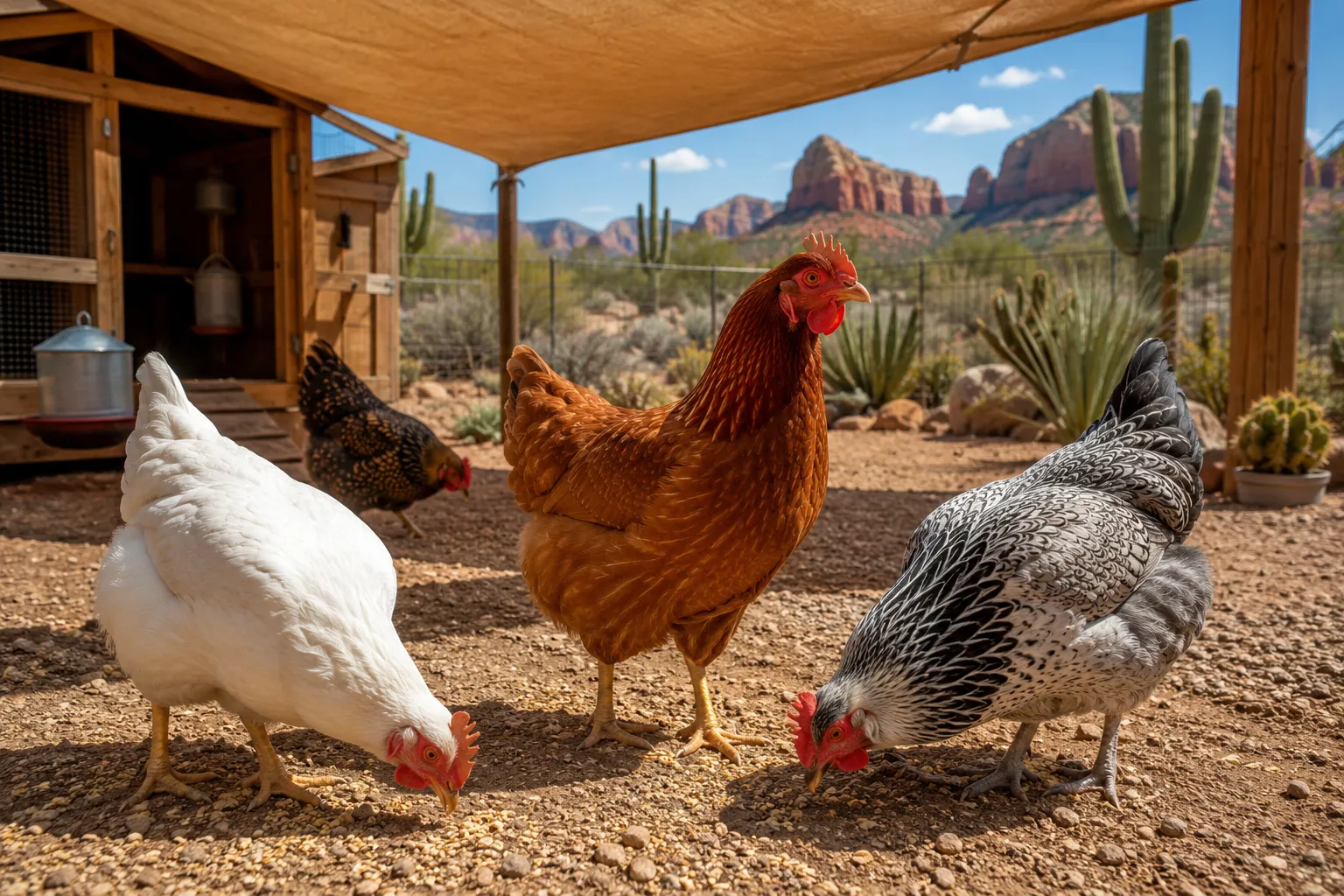
Quick Answer
The best heat-tolerant chicken breeds for hot climates include Leghorns, Rhode Island Reds, Andalusians, Welsummers, and Easter Eggers, all of which feature large combs for heat dissipation, lighter body weights, and proven track records in temperatures exceeding 100°F. These breeds originated in Mediterranean or warm-climate regions and have evolved physical traits that help them regulate body temperature efficiently. While no chicken thrives without proper shade, water, and ventilation, these breeds maintain egg production and health better than cold-hardy varieties when summer temperatures soar.
Key Takeaways
- Mediterranean breeds like Leghorns and Andalusians excel in heat due to large combs, light bodies, and active foraging behavior that evolved in warm climates
- Rhode Island Reds and Welsummers balance heat tolerance with cold hardiness, making them ideal for regions with temperature extremes in both directions
- Large single combs act as radiators to dissipate body heat, while heavy feathering and small combs trap heat and cause overheating
- Heat-tolerant breeds still require shade, fresh water, and ventilation when temperatures exceed 90°F to prevent heat stress and death
- Silkies and Cochins rank among the worst breeds for hot weather due to excessive feathering and small body-to-feather ratios
- Bantam chickens often handle heat better than standard sizes because smaller bodies dissipate heat more efficiently
- Egg production typically drops 10-20% during peak summer heat even in heat-tolerant breeds, but rebounds when temperatures moderate
- Common mistakes include assuming heat-tolerant means heat-proof and failing to provide adequate cooling infrastructure during extreme weather events
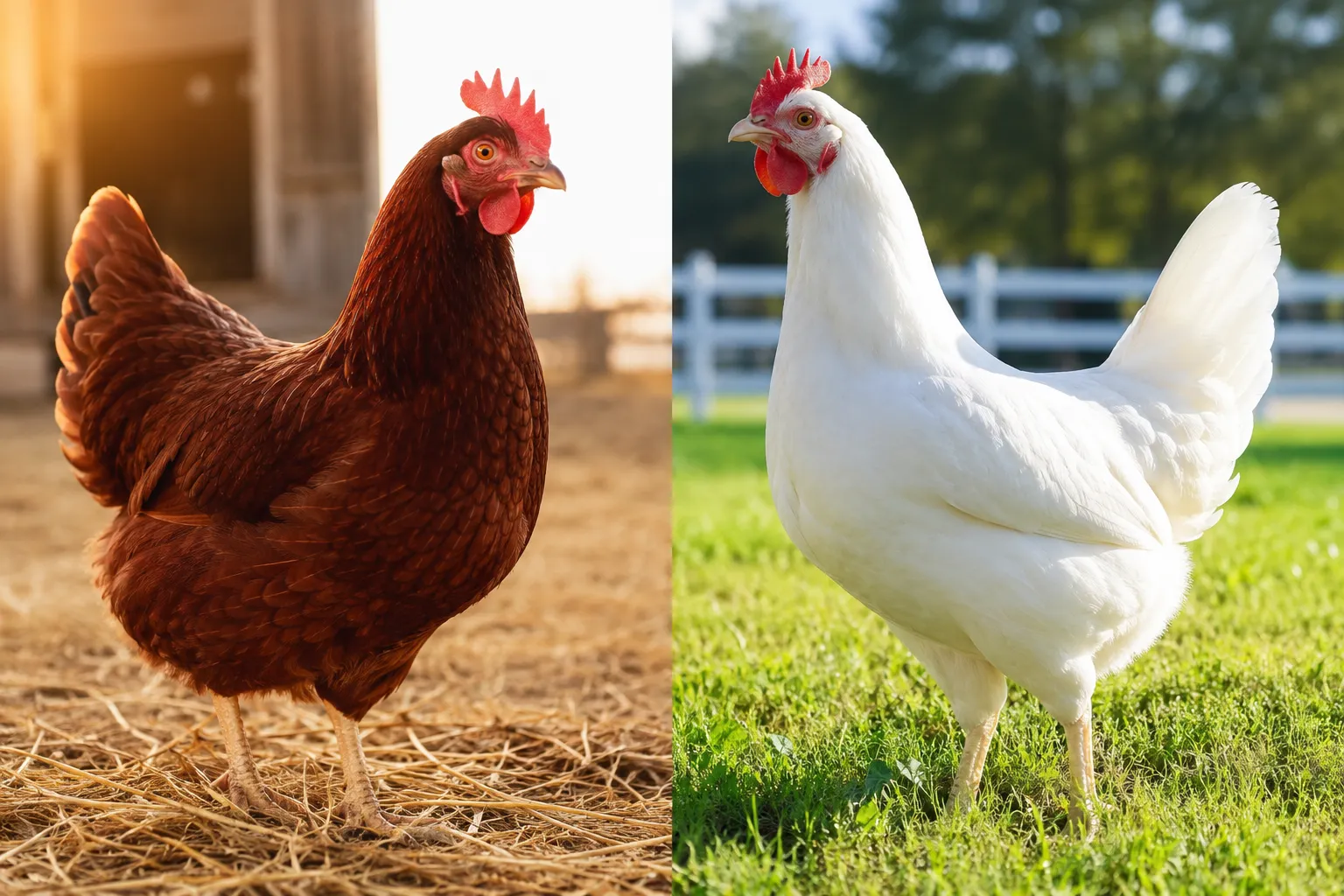
What Makes a Chicken Breed Heat Tolerant
A chicken breed’s heat tolerance depends on specific physical traits that help dissipate body heat efficiently. The most important feature is comb size and type, with large single combs acting as natural radiators that release excess heat through increased blood flow to the surface. Breeds with small pea combs or rose combs retain more body heat and struggle in temperatures above 95°F.
Key physical traits of heat-tolerant breeds:
- Large single combs with extensive surface area for heat dissipation
- Lighter body weight (4-6 pounds for hens) requiring less energy to cool
- Tight, sleek feathering rather than fluffy down that traps heat
- Active foraging behavior that allows them to seek shade and cooler ground
- Light-colored feathers that reflect rather than absorb solar radiation
- Mediterranean or tropical ancestry indicating generations of adaptation to warm climates
Chickens lack sweat glands and cool themselves primarily through panting and radiating heat from their combs and wattles. Breeds developed in northern Europe for cold climates have the opposite traits: small combs to prevent frostbite, heavy bodies for insulation, and dense feathering that becomes a liability when temperatures climb. Choose breeds based on your hottest summer temperatures, not your coldest winter days, because chickens tolerate cold far better than extreme heat.
Best Chicken Breeds for Hot Climates Like Arizona or Texas
For regions where summer temperatures regularly exceed 100°F, Leghorns, Andalusians, and Minorcas top the list as the most heat-resilient breeds. These Mediterranean breeds were developed in Spain, Italy, and coastal regions where hot, dry summers are the norm, and they maintain egg production and activity levels that would cause heat stress in cold-climate breeds.
Top heat-tolerant breeds ranked by performance:
- White Leghorn – The gold standard for hot climates, with large combs, light 4-pound bodies, and proven performance in commercial operations across the Southwest
- Blue Andalusian – Striking blue-gray plumage, excellent foragers, and exceptional heat tolerance with 200+ eggs per year even in desert conditions
- Welsummer – Dutch breed that handles both heat and cold well, dark brown eggs, calm temperament suitable for beginners
- Rhode Island Red – Dual-purpose breed balancing meat and eggs, adapts to temperature extremes better than most heritage breeds
- Easter Egger – Mixed heritage often includes Mediterranean genetics, colorful eggs, variable heat tolerance but generally good in hot climates
- Barred Plymouth Rock – Moderate heat tolerance, excellent for beginners, barred pattern provides some solar reflection
- Black Australorp – Despite dark feathers, handles heat reasonably well due to large comb and active nature
Choose Leghorns or Andalusians if your primary concern is maximum heat tolerance and you experience sustained periods above 105°F. Choose Rhode Island Reds or Welsummers if you need a breed that handles both 110°F summers and occasional freezing winters without special accommodations.
Rhode Island Red vs Leghorn for Hot Weather
Rhode Island Reds tolerate heat well but Leghorns outperform them in extreme temperatures above 105°F due to lighter body weight and larger comb-to-body ratio. A Leghorn hen weighs approximately 4 pounds compared to a Rhode Island Red’s 6.5 pounds, meaning the Leghorn has less body mass to cool and can dissipate heat more efficiently through its proportionally larger comb.
Direct comparison:
| Feature | White Leghorn | Rhode Island Red |
|---|---|---|
| Heat tolerance | Excellent (to 115°F) | Very good (to 105°F) |
| Body weight | 4-4.5 lbs | 6-6.5 lbs |
| Comb type | Large single | Medium single |
| Egg production | 280-320/year | 250-280/year |
| Cold tolerance | Poor (needs protection below 20°F) | Excellent (to -10°F) |
| Temperament | Flighty, active | Calm, docile |
| Meat value | Minimal | Good dual-purpose |
Choose Leghorns if you live in consistently hot climates like southern Arizona, southern Texas, or southern California where winter temperatures rarely drop below freezing. Choose Rhode Island Reds if you experience temperature swings from below freezing to above 100°F and want a single breed that handles both extremes without requiring separate winter and summer flocks.
The Rhode Island Red’s heavier body and denser feathering make it a better dual-purpose bird for meat production, while the Leghorn’s entire genetic selection focused on egg production in hot commercial environments. Both breeds maintain good laying rates through summer heat, but Leghorns show less stress behavior (panting, wing-spreading) at the same temperatures.
Do Heat-Tolerant Chickens Still Need Shade and Water
Yes, even the most heat-tolerant breeds require constant access to shade, fresh cool water, and adequate ventilation to survive temperatures above 90°F. Heat tolerance means these breeds handle high temperatures better than cold-climate breeds, not that they’re immune to heat stress or heat stroke. Chickens begin experiencing heat stress at 85°F and can die within hours at temperatures above 105°F without proper cooling infrastructure.
Essential heat management for all breeds:
- Shade coverage for at least 75% of the run area during peak sun hours (10 AM – 4 PM)
- Fresh water changed 2-3 times daily, with multiple waterers to prevent crowding
- Ventilation in coops with cross-breeze and no enclosed hot spots
- Cooling stations such as shallow water pans, misters, or frozen water bottles
- Dust bathing areas in shaded spots where chickens can cool their bodies
- Electrolyte supplements added to water during heat waves above 100°F
A common fatal mistake is assuming that because a breed is “heat-tolerant,” it doesn’t need the same cooling infrastructure as other breeds. In reality, heat-tolerant breeds simply maintain normal behavior and egg production at temperatures where cold-climate breeds would stop laying and show severe stress. All chickens will die of heat stroke without shade and water, regardless of breed.
During extreme heat events above 110°F, even Leghorns and Andalusians benefit from additional cooling measures like frozen treats, increased air circulation with fans, and bringing birds into air-conditioned spaces if heat persists for multiple days.
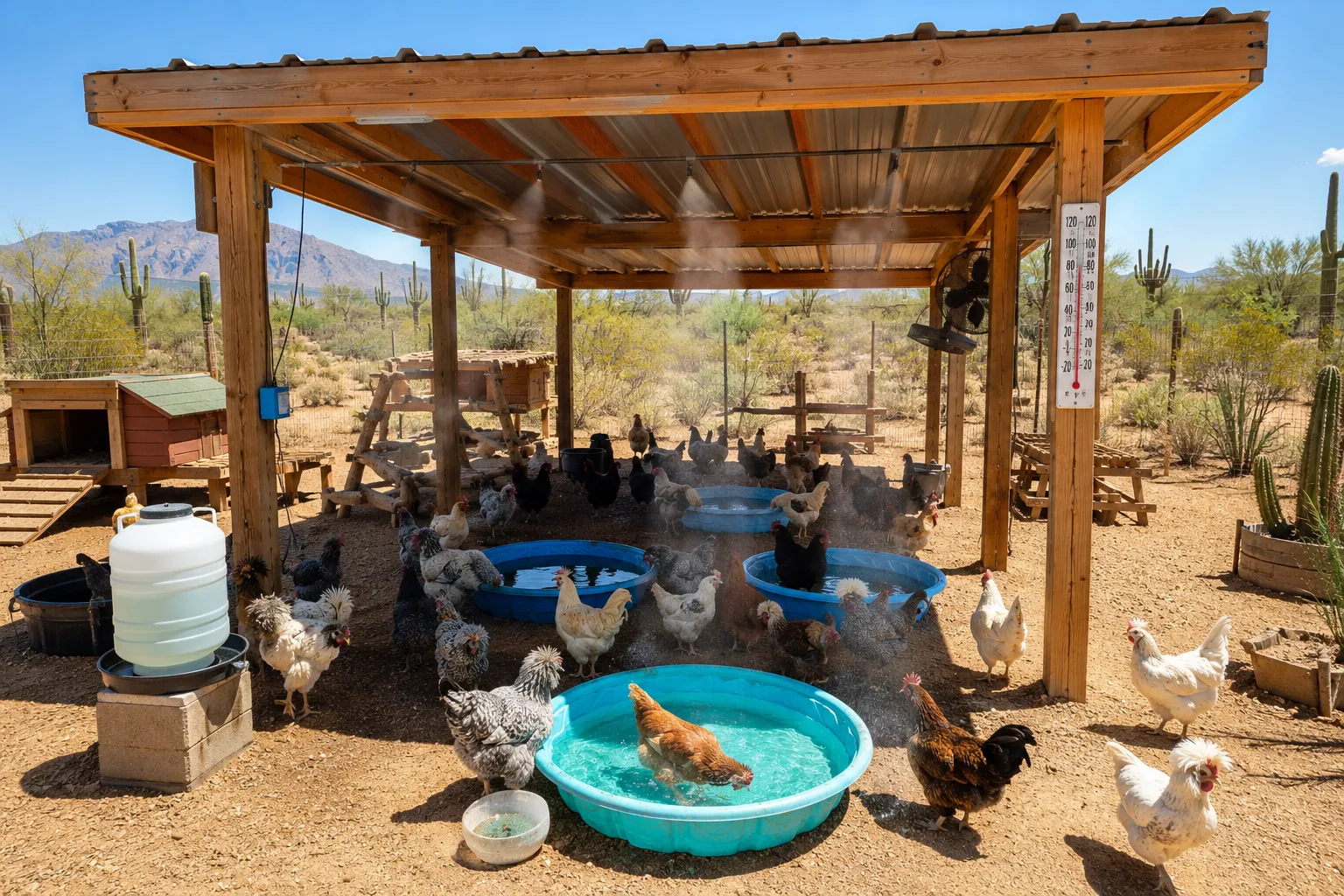
Where to Buy Heat-Tolerant Chicken Breeds Near Me
Heat-tolerant chicken breeds are available from local feed stores, regional hatcheries, and online hatcheries that ship day-old chicks nationwide. Local feed stores typically stock chicks from February through May in southern states and March through June in northern regions, with Leghorns, Rhode Island Reds, and Easter Eggers being the most commonly available heat-tolerant varieties.
Best sources by purchase method:
Local feed stores – Call ahead in late winter to reserve specific breeds, as popular varieties sell out quickly. Stores typically order from regional hatcheries and receive shipments weekly during spring. Advantage: see birds before buying, no shipping stress.
Regional hatcheries – Search for hatcheries within 500 miles of your location that allow pickup or offer short-distance shipping. Many hatcheries in Texas, Arizona, and California specialize in heat-tolerant breeds suited to local climates. Advantage: larger breed selection, healthier chicks than chain stores.
Online hatcheries – Major hatcheries ship nationwide with minimum orders (usually 4-6 chicks for warmth during transit). Order 8-12 weeks before your desired arrival date, as popular breeds sell out months in advance. Advantage: widest breed selection, detailed breed information.
Breed-specific breeders – Search online directories or local poultry clubs for breeders specializing in Mediterranean breeds. These birds often have better genetics and heat tolerance than hatchery stock. Advantage: superior quality, breeder support.
Choose local sources if you’re a beginner and want to minimize chick mortality from shipping stress. Choose online hatcheries if you want specific rare breeds like Andalusians or Minorcas that local stores don’t carry. Most hatcheries require minimum orders of 4-6 chicks for shipping, so plan to purchase more birds than you ultimately need or coordinate orders with other local chicken keepers.
How Much Do Heat-Tolerant Chickens Cost
Day-old chicks of heat-tolerant breeds cost between $3 and $8 per bird from hatcheries, with common breeds like Leghorns and Rhode Island Reds at the lower end and rare breeds like Andalusians or Minorcas at the higher end. Started pullets (young hens 16-20 weeks old, ready to lay) cost $25-$40 per bird, while show-quality breeding stock from specialized breeders can cost $50-$150 per bird.
Price breakdown by source and age:
- Hatchery day-old chicks – $3-$5 for common breeds (Leghorn, Rhode Island Red), $6-$8 for rare breeds (Andalusian, Minorca)
- Feed store chicks – $4-$7 per chick, limited breed selection, seasonal availability only
- Started pullets – $25-$40 per bird, immediate egg production, lower mortality risk
- Breeding stock – $50-$150 per bird from specialized breeders, superior genetics and conformation
- Shipping costs – $20-$50 flat rate for hatchery orders, regardless of quantity
Total first-year costs for a small backyard flock of 6 heat-tolerant hens include approximately $30-$50 for chicks, $300-$500 for coop and run construction, $150-$200 for feed, and $50-$100 for feeders, waterers, and supplies. Heat-tolerant breeds don’t cost more to purchase than cold-hardy breeds, but they may require additional investment in shade structures, misters, or ventilation systems depending on your climate.
Buy day-old chicks if you want the lowest upfront cost and don’t mind the 16-20 week wait for eggs. Buy started pullets if you want eggs immediately and are willing to pay a premium to skip the brooding phase and reduce mortality risk. Pullets also allow you to confirm you’re getting hens rather than accidentally raising roosters, which happens with approximately 10% of “sexed” day-old chicks.
Can Cold-Hardy Breeds Survive in Hot Weather
Cold-hardy breeds like Brahmas, Cochins, and Orpingtons can survive in hot weather with intensive management but will show significant stress and reduced productivity compared to heat-tolerant breeds. These breeds evolved in northern climates with dense feathering, small combs, and heavy bodies that trap heat rather than dissipate it, making them poorly suited to sustained temperatures above 90°F.
Challenges with cold-hardy breeds in heat:
- Excessive panting and wing-spreading starting at 85°F compared to 95°F for heat-tolerant breeds
- Reduced egg production dropping 30-50% during summer months versus 10-20% for Mediterranean breeds
- Higher mortality risk during heat waves, especially for heavily feathered breeds like Cochins
- Behavioral changes including reduced foraging, increased time in shade, and decreased activity
- Feather picking as birds attempt to cool themselves by removing insulation
If you already own cold-hardy breeds in a hot climate, provide extra cooling infrastructure including multiple shade structures, frozen treats, misters, and fans in the coop. Consider shearing heavily feathered breeds in summer, though this is controversial and may cause stress. Monitor birds closely during heat waves and be prepared to bring them into air-conditioned spaces if temperatures exceed 105°F for extended periods.
Avoid purchasing cold-hardy breeds if your summer temperatures regularly exceed 95°F and you want a low-maintenance flock. The extra management required to keep these birds comfortable and productive in heat negates any benefits they might offer in cold weather, especially since most heat-tolerant breeds handle moderate cold (down to 20°F) perfectly well with basic coop insulation.
What Are the Worst Chicken Breeds for Hot Climates
The worst chicken breeds for hot climates are heavily feathered, cold-adapted varieties including Silkies, Cochins, Brahmas, Wyandottes, and Faverolles. These breeds feature small combs that can’t dissipate heat effectively, dense fluffy feathering that traps body heat, and heavy bodies that require more energy to cool, making them prone to heat stress and death in temperatures above 95°F.
Breeds to avoid in hot climates:
Silkies – Fluffy feathers lack barbicels (hooks that hold feathers together), creating an insulating layer that traps heat. Small walnut combs provide minimal heat dissipation. High mortality risk above 95°F.
Cochins – Extremely heavy feathering including fully feathered legs, small pea combs, and docile nature that reduces heat-seeking behavior. Require intensive cooling management in any climate with summer temperatures above 90°F.
Brahmas – Largest chicken breed (10-12 pounds), heavily feathered including legs and feet, small pea combs. The combination of massive body size and insulating feathers makes heat dissipation nearly impossible.
Wyandottes – Rose combs provide minimal surface area for cooling, dense feathering, and moderate body size. Better than Cochins but still struggle above 95°F.
Faverolles – Bearded breeds with feathering around the face that traps heat near the head, feathered legs, and small V-shaped combs.
Common mistake: Purchasing these breeds because they’re “beginner-friendly” or “docile” without considering climate compatibility. A Silkie that thrives in Oregon or Washington will require constant intervention to survive in Arizona or Texas, turning a beginner-friendly breed into a high-maintenance liability.
Are Silkies Good in Heat or Do They Overheat
Silkies are among the worst breeds for hot weather and overheat easily in temperatures above 90°F due to their unique fluffy feathers that lack barbicels and create an insulating layer similar to down. Their small walnut combs provide minimal surface area for heat dissipation, and their docile, sedentary nature means they’re less likely to actively seek shade or cooling areas compared to active Mediterranean breeds.
Why Silkies struggle in heat:
- Fluffy feathers trap air and body heat like a down comforter, preventing natural cooling
- Small walnut combs offer approximately 60% less surface area than single combs for heat dissipation
- Dark skin (black or dark gray) absorbs more heat than the pink skin of most breeds
- Sedentary temperament reduces heat-seeking behavior and shade utilization
- Feathered legs and feet add additional insulation where heat should escape
If you’re committed to keeping Silkies in a hot climate, provide air-conditioned housing during heat waves, multiple cooling stations with shallow water pans, and consider carefully trimming excess feathering (though this is controversial and may stress birds). Monitor Silkies constantly when temperatures exceed 90°F, as they can progress from normal to heat stroke within 30-60 minutes.
Choose literally any Mediterranean breed instead if you live in a hot climate and want chickens that don’t require intensive daily management during summer. The Silkie’s ornamental appeal and friendly temperament don’t compensate for the constant vigilance required to prevent heat-related deaths in warm regions.
Common Mistakes When Raising Chickens in Extreme Heat
The most common fatal mistake when raising chickens in extreme heat is assuming that heat-tolerant breeds don’t need cooling infrastructure or that basic shade is sufficient for temperatures above 100°F. Even Leghorns and Andalusians will die of heat stroke without adequate water, ventilation, and shade when temperatures exceed 105°F for extended periods.
Critical mistakes that cause heat-related deaths:
Insufficient water access – Providing only one waterer for multiple birds leads to competition and dehydration. Use at least one waterer per 4-6 birds, placed in shaded areas, and change water 2-3 times daily as it heats up.
Inadequate shade – A small covered area isn’t enough when temperatures exceed 100°F. Provide shade covering at least 75% of the run, with multiple shaded areas so subordinate birds aren’t blocked by dominant flock members.
Poor coop ventilation – Coops designed for cold climates with minimal ventilation become ovens in hot weather. Coops need cross-ventilation with openings on opposite walls and roof vents to prevent heat buildup.
Overcrowding – Standard recommendations of 3-4 square feet per bird in the coop and 8-10 square feet per bird in the run are minimums for moderate climates. Hot climates require 50% more space to reduce body heat concentration.
Ignoring early warning signs – Panting with open beaks, holding wings away from body, reduced activity, and pale combs indicate heat stress. Waiting until birds are lethargic or collapsed means heat stroke has progressed to a potentially fatal stage.
Feeding during peak heat – Digestion generates body heat. Feed in early morning and evening rather than midday, and reduce high-protein feeds during heat waves as protein metabolism generates more heat than carbohydrates.
Black or dark-colored coops – Dark surfaces absorb solar radiation and can be 20-30°F hotter than light-colored surfaces. Paint coops white or light colors and use reflective roofing materials.
Do Heat-Tolerant Chickens Lay Fewer Eggs in Summer
Heat-tolerant chickens typically experience a 10-20% reduction in egg production during peak summer heat compared to spring and fall, while cold-hardy breeds may stop laying entirely when temperatures exceed 95°F. This production drop occurs because chickens divert energy from egg production to cooling mechanisms like panting and increased blood flow to combs and wattles.
Expected production changes by temperature:
- Below 85°F – Normal production for heat-tolerant breeds
- 85-95°F – 10-15% production decrease, eggs may be slightly smaller
- 95-105°F – 15-25% production decrease, some birds may skip days
- Above 105°F – 25-40% production decrease, focus shifts entirely to survival
Egg production typically rebounds within 1-2 weeks after temperatures moderate, though prolonged heat stress (multiple weeks above 100°F) can cause molting and extended production breaks. Providing electrolytes, reducing protein in feed during peak heat, and ensuring constant access to cool water helps minimize production losses.
Common mistake: Increasing protein feed to boost production during heat waves. High-protein feeds generate more metabolic heat during digestion, worsening heat stress. Instead, maintain standard layer feed (16-18% protein) and add cooling treats like watermelon or frozen vegetables.
Mediterranean breeds like Leghorns were specifically selected for consistent egg production in hot commercial environments, making them the best choice if maintaining summer egg production is a priority. Even these breeds will reduce production during extreme heat, but they’ll outperform all other breeds under the same conditions.
Best Chickens for Beginners in Southern States
For beginners in southern states with hot summers, Rhode Island Reds, Welsummers, and Easter Eggers offer the best combination of heat tolerance, hardiness, calm temperament, and forgiving management requirements. These breeds handle both temperature extremes and beginner mistakes better than high-strung Mediterranean breeds or delicate ornamental varieties.
Top beginner breeds for hot climates ranked:
- Rhode Island Red – Calm, hardy, dual-purpose, handles heat and cold, consistent layers, widely available, disease-resistant
- Welsummer – Friendly, beautiful dark brown eggs, good heat tolerance, calm enough for children, moderate layers
- Easter Egger – Colorful eggs, variable appearance, generally heat-tolerant, friendly, fun for families
- Barred Plymouth Rock – Docile, good layers, moderate heat tolerance, classic backyard breed
- Black Australorp – Calm, excellent layers, surprisingly good heat tolerance despite dark feathers
Avoid as a beginner in hot climates: White Leghorns (too flighty and nervous for beginners despite excellent heat tolerance), Silkies (require intensive heat management), Brahmas (poor heat tolerance), and any bantam breeds until you have experience with standard sizes.
Choose Rhode Island Reds if you want a single breed that handles everything well without excelling at any one trait. Choose Welsummers if egg color matters and you’re willing to accept slightly lower production for beautiful dark brown eggs. Choose Easter Eggers if you have children who will enjoy colorful blue or green eggs and variable appearance.
All three recommended breeds tolerate beginner mistakes like inconsistent feeding schedules, imperfect coop conditions, and learning-curve management errors better than more specialized breeds. They’re also widely available at feed stores, reducing the need to navigate online hatchery ordering as a first-time chicken keeper.
How to Keep Chickens Cool When It’s Over 100 Degrees
When temperatures exceed 100°F, chickens require active cooling interventions beyond basic shade and water to prevent heat stress and death. The most effective cooling methods include frozen treats, misters or sprinklers, increased ventilation with fans, and providing shallow water pans for wading.
Emergency cooling strategies for extreme heat:
Frozen treats – Freeze watermelon, berries, or vegetables in blocks of ice and provide multiple times daily. Chickens will peck at the ice and eat the treats as they thaw, providing both cooling and hydration.
Misters and sprinklers – Install misters in shaded run areas or run sprinklers for 10-15 minutes every 2-3 hours. Wet ground and air provide evaporative cooling. Avoid soaking birds directly as wet feathers reduce insulation.
Fans and ventilation – Place box fans in coop windows or run areas to increase air circulation. Ensure fans are protected from weather and positioned where chickens can’t reach electrical cords.
Shallow water pans – Provide multiple shallow pans (2-3 inches deep) where chickens can wade and cool their feet and legs. Change water frequently as it heats up.
Electrolyte water – Add commercial poultry electrolytes or make your own (1 cup sugar, 1 teaspoon salt, 1 teaspoon baking soda per gallon of water) to replace minerals lost through panting.
Reduce coop density – If possible, allow birds to roost outside in shaded, protected areas rather than forcing them into enclosed coops where heat accumulates.
Frozen water bottles – Place multiple frozen gallon jugs in the coop and run. Chickens will rest near them to absorb radiant cooling.
Choose cooling methods based on your setup: Misters work best in dry climates where evaporative cooling is effective, while fans are essential in humid climates where evaporation is limited. Combine multiple strategies during heat waves above 105°F, and monitor birds every 2-3 hours for signs of heat stress.
Are Bantam Chickens Better in Heat Than Standard Size
Bantam chickens generally handle heat better than standard-sized chickens of the same breed because their smaller body mass (typically 1-2 pounds versus 4-8 pounds for standards) requires less energy to cool and dissipates heat more efficiently. However, breed matters more than size, so a bantam Cochin will still struggle in heat compared to a standard Leghorn.
Advantages of bantams in hot climates:
- Smaller body mass cools faster and requires less water for thermoregulation
- Higher surface-area-to-volume ratio allows more efficient heat dissipation
- Lower feed requirements mean less metabolic heat generated during digestion
- Less crowding in coops and runs, reducing concentrated body heat
- Easier to provide emergency cooling by bringing birds indoors during extreme heat
Disadvantages of bantams:
- Smaller eggs (approximately 60% the size of standard eggs)
- More vulnerable to predators due to size
- Can be flighty and harder to handle than calm standard breeds
- Less meat value if dual-purpose production matters
Choose bantam versions of heat-tolerant breeds if you have limited space, want lower feed costs, and don’t mind smaller eggs. A bantam Leghorn or bantam Andalusian combines the heat tolerance of Mediterranean genetics with the cooling advantages of small body size. Avoid bantam versions of cold-hardy breeds like bantam Cochins or bantam Brahmas, as the breed’s poor heat tolerance outweighs any size advantage.
The best strategy for extreme heat is choosing a heat-tolerant breed first, then deciding between standard and bantam size based on space, egg size preferences, and management style. A standard Leghorn will always outperform a bantam Cochin in hot weather, regardless of size advantages.
FAQ
What temperature is too hot for chickens?
Chickens begin experiencing heat stress at 85°F and face serious health risks above 95°F. Temperatures above 105°F can cause heat stroke and death within hours without proper cooling infrastructure, even in heat-tolerant breeds.
Can I mix heat-tolerant and cold-hardy breeds in the same flock?
Yes, but you’ll need to manage for the most vulnerable birds during temperature extremes. Cold-hardy breeds will require extra cooling in summer while heat-tolerant breeds may need supplemental heat in winter, increasing overall management complexity.
Do roosters handle heat differently than hens?
Roosters of heat-tolerant breeds handle heat similarly to hens, though their larger combs may provide slightly better heat dissipation. Avoid roosters of cold-hardy breeds in hot climates as their larger body size increases heat stress risk.
How quickly can chickens die from heat stroke?
Chickens can progress from normal to heat stroke to death within 1-3 hours in temperatures above 105°F without shade and water. Heat stroke requires immediate intervention including moving birds to cool areas and providing electrolyte water.
Should I clip feathers to help chickens stay cool?
Feather clipping is controversial and generally not recommended. Feathers provide some protection from direct sun, and clipping causes stress. Focus instead on providing proper cooling infrastructure rather than modifying the birds.
Do heat-tolerant chickens need less water than other breeds?
No, heat-tolerant chickens need the same or more water than cold-hardy breeds because they remain more active in heat. Expect chickens to drink 2-3 times their normal water intake when temperatures exceed 95°F.
Can I raise meat chickens in hot climates?
Commercial meat breeds (Cornish Cross) are extremely heat-sensitive due to rapid growth and heavy bodies. Heritage meat breeds like Freedom Rangers handle heat better but still require intensive cooling management in climates above 95°F.
Will my chickens stop laying permanently after heat stress?
No, egg production typically rebounds within 1-2 weeks after temperatures moderate. Severe prolonged heat stress may trigger molting, causing a 2-3 month production break, but laying will resume after molt completion.
Are white chickens cooler than dark chickens?
Light-colored feathers reflect more solar radiation than dark feathers, providing a small cooling advantage. However, comb size and body type matter far more than feather color for overall heat tolerance.
Do I need air conditioning for chickens in hot climates?
Most heat-tolerant breeds don’t require air conditioning with proper shade, water, and ventilation. Reserve air conditioning for emergency heat waves above 110°F or for cold-hardy breeds in hot climates.
Can chickens swim to cool off?
Chickens can wade in shallow water but cannot swim and will drown in deep water. Provide shallow pans (2-3 inches deep) for wading but never deep pools or ponds without secure ramps and supervision.
How do I know if my chicken is experiencing heat stroke?
Signs include extreme panting with open beak, wings held away from body, lethargy, pale comb, loss of balance, and collapse. Heat stroke requires immediate cooling by moving the bird to shade, offering cool water, and applying cool (not cold) water to feet and legs.
Conclusion
Selecting the best heat-tolerant chicken breeds for your flock starts with understanding your climate’s summer temperature extremes and choosing breeds with proven performance in those conditions. Mediterranean breeds like Leghorns and Andalusians excel in sustained heat above 100°F, while dual-purpose breeds like Rhode Island Reds and Welsummers balance heat tolerance with cold hardiness for regions with temperature swings. Avoid heavily feathered cold-climate breeds like Silkies and Cochins in hot regions, as they require intensive management to survive summer heat.
Remember that heat tolerance is a breed trait, not a substitute for proper management. Even the most heat-adapted chickens need constant access to shade covering at least 75% of their run, fresh cool water changed multiple times daily, and adequate ventilation in coops. During extreme heat above 105°F, provide additional cooling through frozen treats, misters, fans, and shallow wading pans.
Take action now: Assess your climate’s typical summer highs, choose breeds that evolved in similar conditions, and invest in cooling infrastructure before summer arrives. Start with beginner-friendly heat-tolerant breeds like Rhode Island Reds or Welsummers if you’re new to chicken keeping, or choose specialized Mediterranean breeds like Leghorns if maximum heat tolerance is your priority. Your chickens will reward proper breed selection and heat management with consistent egg production, good health, and years of backyard enjoyment even in the hottest climates.


