
Quick Answer
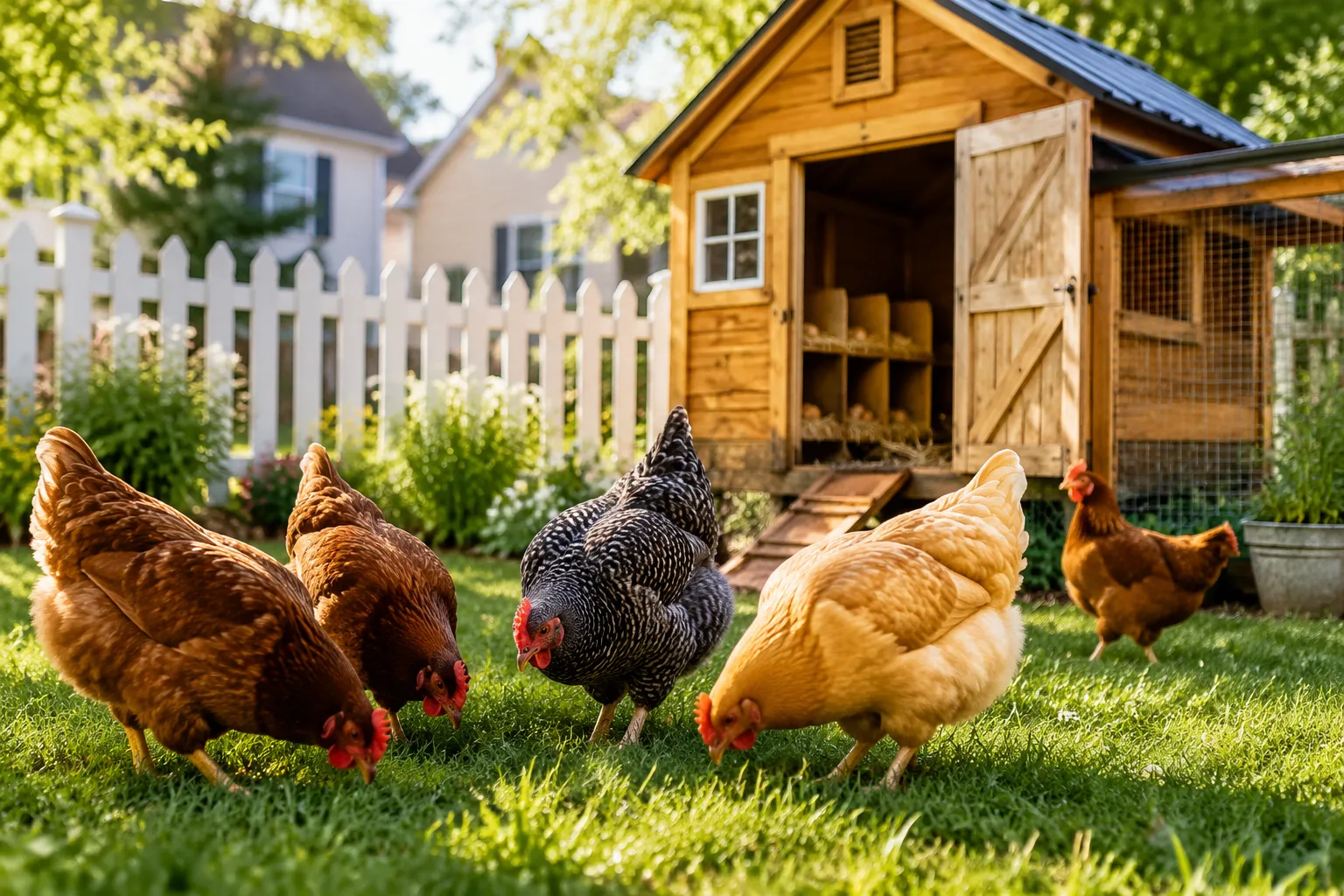
Most beginners should start with 4 to 6 chickens. This number provides enough eggs for a small family, ensures healthy flock dynamics so chickens don’t get lonely, and keeps costs manageable while you learn the basics of chicken care. Starting with fewer than three chickens can lead to stress and loneliness, while more than six increases the complexity and expense for someone just learning.
Key Takeaways
- Start with 4-6 chickens for the best balance of eggs, social dynamics, and manageable learning curve
- Never keep just one chicken, they’re social animals and will become stressed and unhealthy when isolated
- Three chickens is the minimum for a healthy flock, but four or more is better for resilience if one dies
- Each chicken needs 3-4 square feet inside the coop and 8-10 square feet in the outdoor run
- Expect 4-5 eggs per week per hen during peak laying years, so 4 hens provide roughly 16-20 eggs weekly
- Starting costs range from $500-$1,200 for coop, chickens, and initial supplies for a small flock
- Begin with adult hens (point-of-lay pullets) rather than chicks if you’re a complete beginner
- You don’t need a rooster for egg production, hens lay eggs without male chickens present
- Common beginner mistakes include underestimating space needs, starting with too few birds, and choosing high-maintenance breeds
How Many Chickens Should a Beginner Start With?
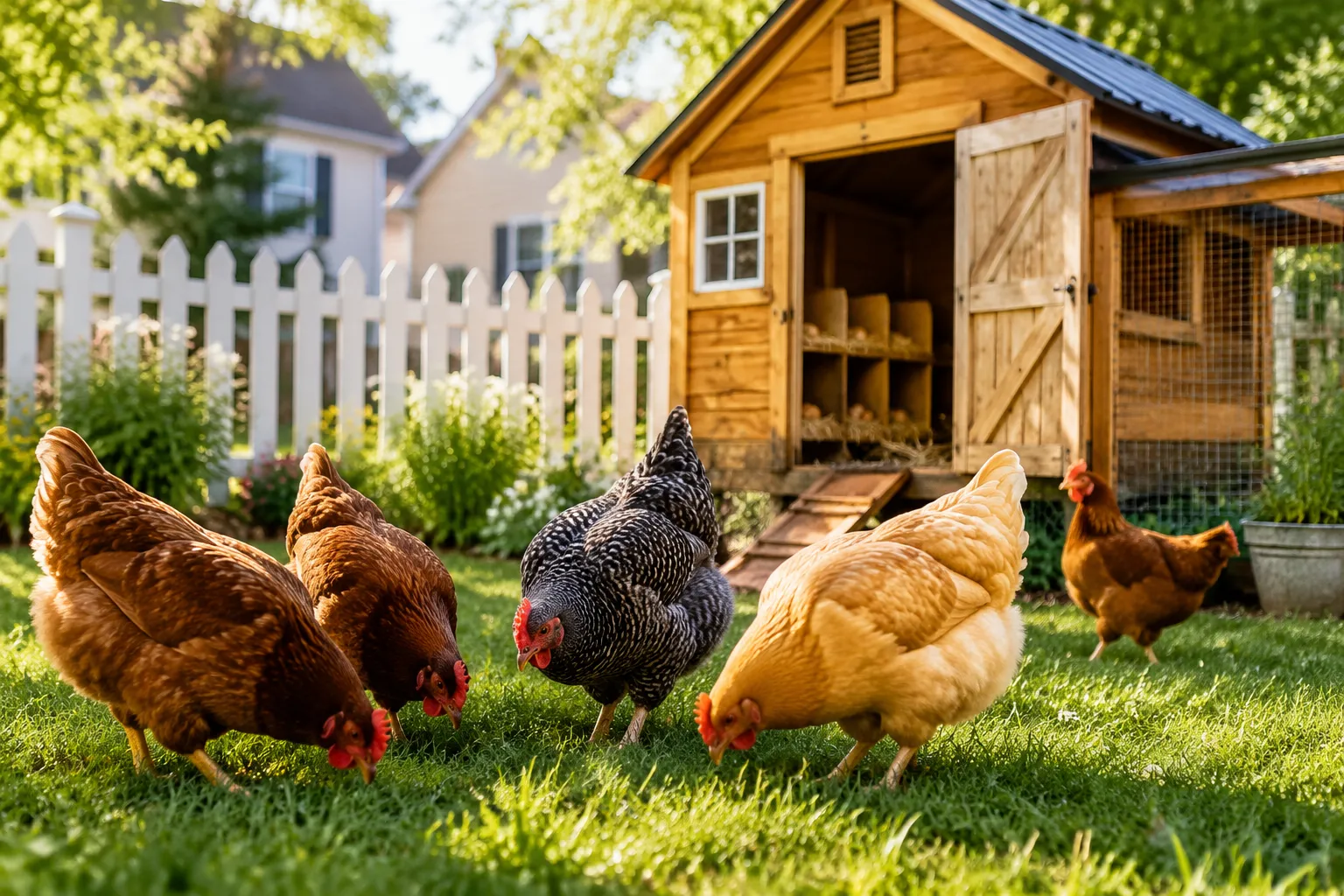
For most beginners, starting with 4 to 6 chickens is ideal. This range gives you enough birds to maintain healthy social dynamics, provides a steady supply of eggs for a household, and remains manageable while you’re learning the ropes of chicken keeping.
Here’s why this number works:
- Social structure: Chickens are flock animals with complex social hierarchies. With 4-6 birds, you’ll see natural behaviors without overwhelming aggression
- Egg production: Four laying hens typically produce 16-20 eggs per week during peak season, enough for most families
- Loss buffer: If one chicken dies or stops laying, you still have a viable flock
- Learning curve: Six chickens are manageable for daily feeding, watering, and coop cleaning while you build confidence
- Cost control: Initial setup costs scale with flock size, and 4-6 birds keep expenses reasonable
Choose 4 chickens if you have limited space, want just enough eggs for your household, or are testing whether chicken keeping suits your lifestyle.
Choose 6 chickens if you have more yard space, want extra eggs to share with neighbors, or want a bigger buffer against losses.
What Is the Minimum Number of Chickens You Can Keep Together?
The absolute minimum is three chickens, but this is cutting it close. Chickens are highly social creatures that establish pecking orders and rely on flock companionship for mental and physical health.
With only two chickens, problems emerge:
- One bird often becomes dominant and may bully the other relentlessly
- If one dies, the survivor is left completely alone and will experience severe stress
- Pair dynamics are unstable, chickens naturally seek group settings
With three chickens, you have:
- A basic social structure that allows for more balanced interactions
- A small buffer if one bird passes away (leaving you with two temporarily)
- Lower risk of persistent bullying compared to a pair
However, three is still risky for beginners. If one chicken dies unexpectedly, you’re left scrambling to integrate new birds or dealing with a stressed pair.
Common mistake: Assuming chickens are like other pets that do fine alone or in pairs. Unlike cats or dogs, chickens have evolved as flock animals and genuinely suffer without adequate social groups.
Is 3 Chickens Enough for a Backyard Flock?
Three chickens can work, but it’s the bare minimum and not ideal for beginners. While three birds will establish a pecking order and provide some eggs, this setup leaves little room for error.
Practical considerations with three chickens:
- Egg production: Expect 12-15 eggs per week during peak laying, enough for a couple or small family
- Vulnerability: One death leaves you with only two birds, forcing you to quickly add more or risk the remaining pair’s wellbeing
- Social dynamics: Three birds can work, but you may see more pronounced bullying if one bird becomes the target of the other two
- Integration challenges: Adding new chickens to a tiny flock of three is harder than integrating into a group of five or six
Choose three chickens only if you have severe space constraints, local ordinances limit your flock size, or you’re in a trial phase and plan to expand soon.
Better approach: Start with four or five chickens to give yourself breathing room and more stable flock dynamics from day one.
How Many Chickens Do I Need for Eggs for a Family of 4?
For a family of four, plan on 4 to 6 laying hens to meet typical egg consumption. The average American household uses about 18-24 eggs per week for breakfast, baking, and cooking.
Here’s the math:
- One healthy hen lays approximately 4-5 eggs per week during peak production (ages 1-3 years)
- Four hens produce roughly 16-20 eggs per week
- Six hens produce approximately 24-30 eggs per week
Factors that affect production:
- Season: Egg laying drops significantly in winter due to reduced daylight
- Age: Hens lay most prolifically in their first two years, then production gradually declines
- Breed: Some breeds (Leghorns, Rhode Island Reds) are prolific layers; others (Silkies, Cochins) lay fewer eggs
- Stress and health: Poor nutrition, predators, or illness can halt laying
Choose 4 hens if your family eats eggs moderately (3-4 eggs per person weekly) and you’re okay with buying supplemental eggs in winter.
Choose 6 hens if your family loves eggs, you want extras for baking or sharing, or you want consistent production year-round despite seasonal drops.
Starting With 2 Chickens vs 6 Chickens: Pros and Cons
Choosing between a tiny flock and a more substantial one involves trade-offs in cost, effort, and flock health.
Starting With 2 Chickens
Pros:
- Lowest initial cost for coop and supplies
- Minimal daily maintenance time
- Suitable for very small yards or strict local limits
Cons:
- High risk of loneliness and stress
- Unstable social dynamics with frequent bullying
- No buffer if one bird dies
- Insufficient eggs for most households (8-10 per week)
- Difficult to integrate new birds later
Verdict: Not recommended for beginners. The risks outweigh the cost savings.
Starting With 6 Chickens
Pros:
- Healthy, stable flock dynamics
- Ample egg production (24-30 per week)
- Buffer against losses or non-layers
- Easier to observe natural chicken behaviors
- More forgiving for beginner mistakes
Cons:
- Higher upfront costs ($700-$1,200 for setup)
- Requires larger coop and run space (minimum 24 sq ft coop, 60 sq ft run)
- More daily feeding, watering, and cleaning
- May produce more eggs than a small household needs
Verdict: Ideal for most beginners who have adequate space and budget. The stability and resilience make learning easier.

How Much Does It Cost to Start a Small Backyard Chicken Coop?
Expect to spend $500 to $1,200 to start a backyard flock of 4-6 chickens, depending on whether you build or buy your coop and the quality of supplies you choose.
Breakdown of Initial Costs
Coop and run: $300-$800
- Pre-built coops: $400-$800 for 4-6 bird capacity
- DIY coop from new lumber: $200-$400
- Used/repurposed materials: $100-$200
Chickens: $60-$180
- Point-of-lay pullets (16-20 weeks old): $15-$30 each
- Day-old chicks: $3-$8 each (but require brooder setup)
Feeders and waterers: $30-$60
- Gravity feeders and waterers prevent waste and stay cleaner
Bedding and nesting materials: $20-$40
- Pine shavings, straw, or hemp bedding for initial setup
Feed (first month): $25-$40
- Layer feed, scratch grains, and grit
Miscellaneous supplies: $50-$100
- Heat lamp (if starting with chicks), first aid kit, predator-proofing hardware, treats
Ongoing Monthly Costs
- Feed: $20-$35 for 4-6 chickens
- Bedding: $10-$15
- Occasional supplies: $5-$10 (supplements, treats, replacements)
Money-saving tip: Start with adult pullets instead of chicks to avoid brooder costs, and build your own coop using reclaimed materials if you’re handy.
What Happens If You Only Have One Chicken By Itself?
A solitary chicken will experience severe stress, depression, and health problems. Chickens are not solitary animals, they’ve evolved over thousands of years to live in flocks with complex social structures.
Signs of a lonely chicken:
- Excessive vocalization: Constant distress calls trying to locate flock mates
- Lethargy and depression: Reduced activity, poor appetite, listless behavior
- Feather pecking: Self-destructive behaviors from stress and boredom
- Weakened immune system: Stress makes chickens more susceptible to illness
- Reduced egg production: Lonely hens often stop laying entirely
If you’re down to one chicken due to predator attacks or illness:
- Add new companions immediately, ideally at least two more birds to rebuild a small flock
- Quarantine new birds first for 30 days to prevent disease transmission
- Introduce gradually using a see-but-not-touch barrier for several days before full integration
- Consider rehoming your single bird to an existing flock if you can’t add more chickens
Never plan to keep just one chicken as a pet, even if you spend time with it daily. Human companionship cannot replace flock dynamics.
Do Chickens Get Lonely If You Only Have a Few?
Chickens can thrive with a small flock of 3-6 birds, but they do need multiple companions to feel secure and exhibit natural behaviors. Loneliness in chickens isn’t about flock size as much as having adequate social structure.
What chickens need socially:
- Pecking order establishment: A hierarchy that provides structure and reduces constant conflict
- Dust bathing partners: Chickens prefer to dust bathe in groups
- Foraging companions: They naturally forage together and alert each other to food and danger
- Roosting buddies: Chickens huddle together on roosts at night for warmth and security
A flock of four chickens can be just as content as a flock of twenty, provided:
- They have enough space to avoid constant conflict
- The group includes compatible personalities (not all aggressive birds)
- They’re protected from predators and environmental stress
- They receive proper nutrition and care
Red flag: If you notice one bird being persistently isolated, chased, or pecked by the others, your flock may have a bullying problem that requires intervention (separating the aggressor, adding more birds to diffuse tension, or rehoming).
Common Mistakes When Getting Chickens for the First Time
Beginners often stumble over the same pitfalls. Avoiding these mistakes will make your first year of chicken keeping much smoother.
Starting With Too Few Birds
The mistake: Buying just 2-3 chickens to “keep it simple.”
Why it backfires: Small flocks are fragile. One death leaves you with an unstable or lonely group, forcing emergency additions and stressful integrations.
Better approach: Start with 4-6 birds to build in resilience from day one.
Underestimating Space Requirements
The mistake: Cramming chickens into a too-small coop because “they’re outside most of the day.”
Why it backfires: Overcrowding causes stress, aggression, disease, and feather pecking. Chickens also spend more time inside during bad weather and winter.
Better approach: Provide at least 3-4 square feet per bird inside the coop and 8-10 square feet per bird in the run.
Choosing High-Maintenance or Aggressive Breeds
The mistake: Selecting chickens based on appearance without researching temperament and care needs.
Why it backfires: Some breeds (Asil, Old English Game) are aggressive. Others (Silkies, Polish) require extra grooming and predator protection.
Better approach: Start with beginner-friendly breeds like Rhode Island Reds, Plymouth Rocks, Orpingtons, or Australorps, all are docile, hardy, and good layers.
Skipping Predator-Proofing
The mistake: Assuming a basic fence or coop is enough to keep chickens safe.
Why it backfires: Raccoons, foxes, hawks, and even neighborhood dogs kill thousands of backyard chickens annually. Predators are persistent and clever.
Better approach: Use hardware cloth (not chicken wire), bury fencing 12 inches deep, secure all coop openings, and add locks that predators can’t manipulate.
Starting With Chicks Instead of Pullets
The mistake: Buying adorable day-old chicks without understanding the 5-6 month wait for eggs and the brooder setup required.
Why it backfires: Chicks need heat lamps, special feed, and constant monitoring for weeks. Many beginners lose chicks to temperature issues or illness.
Better approach: Buy point-of-lay pullets (16-22 weeks old) that will start laying within weeks and don’t need brooder equipment.
How Much Space Do 4 Chickens Need in a Coop?
Four chickens need a minimum of 12-16 square feet inside the coop and 32-40 square feet in the outdoor run. These are minimum standards, more space is always better and reduces behavioral problems.
Coop Interior Space
Minimum: 3-4 square feet per bird
- Four chickens: 12-16 square feet
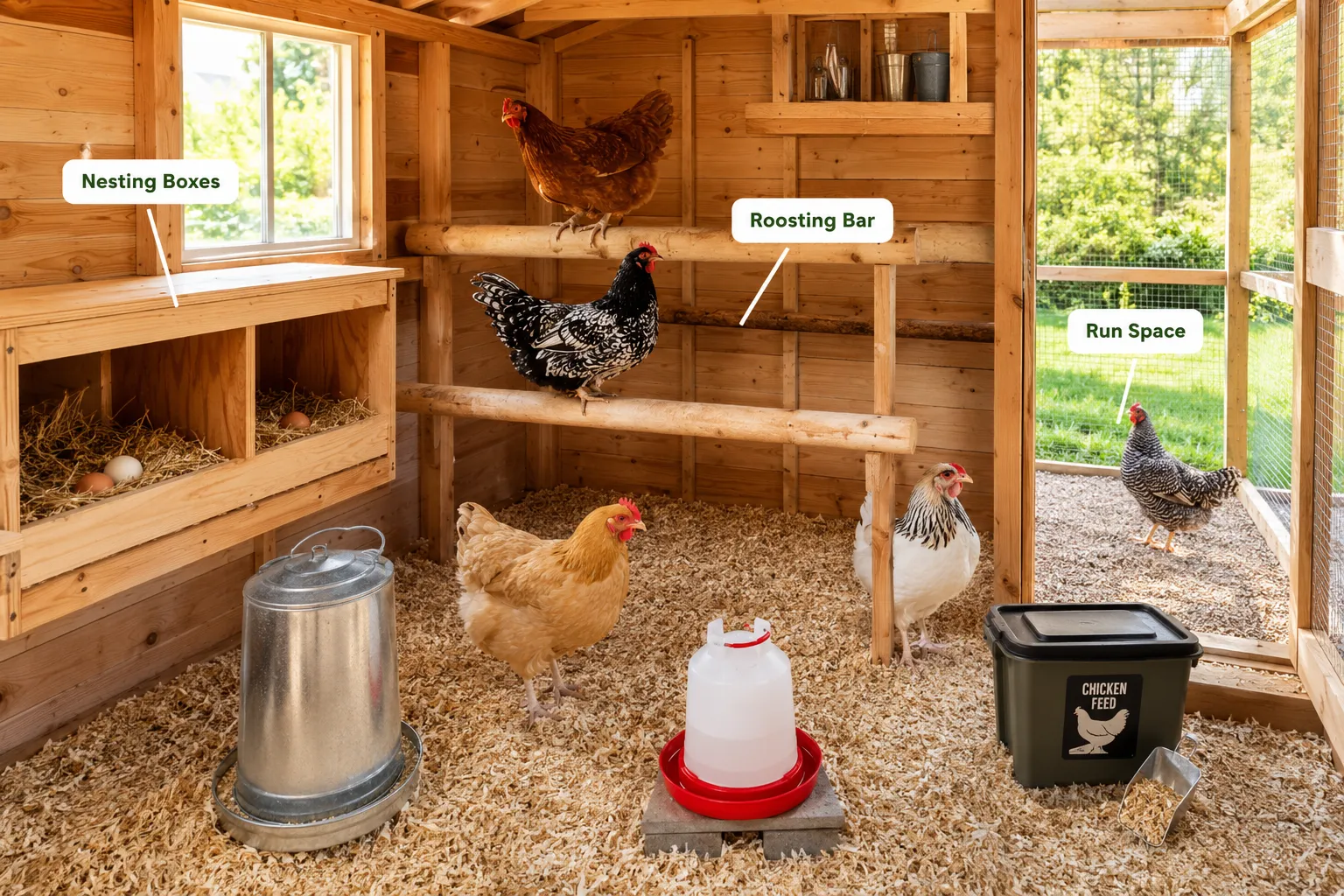
- This allows room for roosting bars, nesting boxes, feeders, and floor space
Ideal: 5-6 square feet per bird
- Four chickens: 20-24 square feet
- Extra space reduces aggression, improves air quality, and makes cleaning easier
Outdoor Run Space
Minimum: 8-10 square feet per bird
- Four chickens: 32-40 square feet
- Provides room for foraging, dust bathing, and exercise
Ideal: 15-20 square feet per bird or free-range access
- Four chickens: 60-80 square feet or supervised yard time
- More space means healthier, happier chickens with better foraging opportunities
Vertical Space Matters Too
Chickens naturally roost at different heights and appreciate vertical space:
- Roosting bars: 8-12 inches of bar space per bird, placed 2-4 feet off the ground
- Nesting boxes: One box per 3-4 hens, placed lower than roosts
- Perches and platforms: Add variety for exercise and entertainment
Common mistake: Building a coop with adequate floor space but insufficient roosting bar length, forcing chickens to crowd together at night and fight for spots.
Should Beginners Start With Chicks or Adult Chickens?
Beginners should start with point-of-lay pullets (young hens 16-22 weeks old) rather than day-old chicks. Pullets are more forgiving for new chicken keepers and start producing eggs within weeks instead of months.
Starting With Chicks
Pros:
- Lower upfront cost ($3-$8 per chick vs. $15-$30 per pullet)
- Wider breed selection
- Chicks raised by you may be friendlier
- Adorable and fun to watch grow
Cons:
- Requires brooder setup with heat lamp ($50-$100 in equipment)
- Constant temperature monitoring for 6-8 weeks
- Higher mortality rate, chicks are fragile
- 5-6 month wait before first eggs
- Gender uncertainty (straight-run chicks may include roosters)
Best for: Experienced chicken keepers, people who enjoy the full raising process, or those with time and patience for brooding.
Starting With Pullets
Pros:
- No brooder equipment needed
- Start laying eggs within 2-6 weeks
- Hardier and easier to care for
- Gender guaranteed (you’re buying confirmed hens)
- Immediate integration into outdoor coop
Cons:
- Higher initial cost per bird
- Less bonding time (though daily handling still creates friendly birds)
- Limited breed availability depending on season and local hatcheries
Best for: Beginners, people who want eggs quickly, or anyone without time for brooding chicks.
Compromise option: Start with pullets for your first flock. Once you’re comfortable with basic chicken care, try raising chicks the following spring.
What If One of My Chickens Dies and I Only Have 3 Left?
If you lose one bird from a flock of four, leaving you with three, assess the situation before deciding whether to add more chickens immediately. Three chickens can function as a flock, but you’ll want to add at least one or two more birds soon to maintain stability.
Immediate Steps After a Loss
- Determine cause of death: Predator attack, illness, injury, or age? This affects whether you need to quarantine or improve security before adding birds
- Monitor remaining birds: Watch for signs of illness if the death was disease-related
- Provide extra attention: Chickens grieve and may be stressed after losing a flock mate
When to Add New Birds
Add birds immediately if:
- You’re down to two chickens (they need companions urgently)
- The death was from injury or predation (not contagious)
- Your remaining birds are healthy and active
Wait 30 days before adding birds if:
- The death was from illness or unknown causes
- You need time to observe remaining birds for symptoms
- You’re addressing predator or coop issues first
How to Integrate New Chickens
Introducing new birds to an established flock requires patience:
- Quarantine new birds for 30 days in a separate area to prevent disease transmission
- Use a see-but-not-touch barrier for 5-7 days so birds can observe each other safely
- Introduce in neutral territory or add new birds to the roost at night when chickens are calmer
- Supervise initial interactions and provide multiple food and water stations to reduce competition
- Expect some pecking order disputes, this is normal, but intervene if blood is drawn
Pro tip: Adding two new birds instead of one makes integration easier, as the newcomers have each other for support while the flock adjusts.
Are Chickens Good for Beginners With No Farm Experience?
Yes, chickens are excellent starter livestock for beginners with zero farm experience. They’re relatively low-maintenance, forgiving of minor mistakes, and provide tangible rewards (fresh eggs) that make the learning curve enjoyable.
Why Chickens Are Beginner-Friendly
- Simple daily care: Feed, water, collect eggs, and check for problems, usually 15-30 minutes per day
- Modest space requirements: A small backyard is sufficient for 4-6 birds
- Affordable startup: Much cheaper than goats, pigs, or cattle
- Immediate payoff: Fresh eggs within weeks if you start with pullets
- Educational: Great for teaching kids about responsibility and where food comes from
- Pest control: Chickens eat ticks, mosquitoes, and garden pests
Skills You’ll Learn
Keeping chickens teaches valuable homesteading skills:
- Animal husbandry basics: Recognizing health problems, understanding behavior, providing proper nutrition
- Predator management: Securing structures, identifying threats, problem-solving
- Seasonal planning: Managing egg production through winter, preparing for weather extremes
- Waste management: Composting chicken manure for garden fertilizer
Realistic Expectations
Chickens are beginner-friendly, but not zero-effort:
- Daily commitment: Chickens need care every single day, including weekends and vacations
- Predator vigilance: You’ll need to secure your coop and stay alert to threats
- Occasional health issues: Chickens get sick, injured, or egg-bound and may need intervention
- Lifespan commitment: Chickens live 5-10 years, and egg production declines after age 3
Choose chickens if you want a manageable introduction to animal care, have a small yard, and are ready for daily responsibility.
Skip chickens if you travel frequently without reliable help, have strict HOA rules, or aren’t prepared for the occasional messy or sad aspects of animal keeping.
How Many Roosters Do You Need With 6 Hens?
You don’t need any roosters for a backyard flock of six hens. Hens lay eggs consistently without a rooster present, the eggs are simply unfertilized and won’t develop into chicks.
Reasons to Skip Roosters
Most beginners should avoid roosters entirely:
- Noise: Roosters crow loudly starting at dawn (and throughout the day), which annoys neighbors and may violate local ordinances
- Aggression: Roosters can become territorial and attack people, especially children
- Hen stress: Too many roosters over-mate hens, causing feather loss and injuries
- No egg benefit: Roosters don’t increase egg production
When You Might Want a Rooster
Consider one rooster only if:
- You want to hatch fertile eggs and raise chicks
- You have a large flock (12+ hens) and want flock protection
- You live in a rural area where noise isn’t an issue
- Local laws permit roosters
Rooster-to-Hen Ratio
If you do keep a rooster, the ideal ratio is 1 rooster per 8-12 hens. With only six hens, one rooster will over-mate them, causing stress and injury.
For a flock of 6 hens: Skip the rooster entirely, or wait until your flock grows to at least 8-10 birds.
Common mistake: Buying straight-run chicks (unsexed) and ending up with multiple roosters. Always buy sexed chicks or pullets to avoid this problem.
Conclusion
Starting your backyard chicken journey with the right flock size sets you up for success. For most beginners, 4 to 6 chickens is the sweet spot, enough birds to maintain healthy social dynamics, provide plenty of eggs, and give you a buffer against losses while keeping costs and daily care manageable.
Remember these key principles:
- Never keep fewer than three chickens, and four is better
- Provide adequate space (3-4 square feet per bird in the coop, 8-10 in the run)
- Start with point-of-lay pullets rather than chicks for an easier learning curve
- Choose beginner-friendly breeds known for docile temperaments and reliable laying
- Skip the rooster unless you have specific reasons and a larger flock
Your next steps:
- Check local regulations to confirm chickens are allowed and learn any flock size limits
- Plan your coop based on the number of birds you’ll keep, ensuring adequate space
- Budget for startup costs ($500-$1,200 for a small flock with coop and supplies)
- Research breeds and find a reputable local hatchery or feed store
- Prepare your coop completely before bringing chickens home
- Start with 4-6 pullets and enjoy the learning process
Chickens are forgiving teachers. Even if you make mistakes along the way, starting with the right number of birds gives you the best foundation for a healthy, productive, and enjoyable flock for years to come. Welcome to the rewarding world of backyard chicken keeping!
FAQ
Can I keep just 2 chickens in my backyard?
While possible, keeping only 2 chickens is not recommended. Chickens are flock animals that need social groups of at least 3-4 birds for healthy dynamics. With only two, you risk bullying, stress, and if one dies, you’re left with a lonely, distressed bird.
How many chickens do I need for a dozen eggs per week?
You’ll need 3-4 laying hens to consistently produce a dozen eggs weekly. Each healthy hen lays approximately 4-5 eggs per week during peak production, though this varies by breed, season, and age.
Is it better to start with 3 or 4 chickens?
Starting with 4 chickens is better than 3. While three is the minimum for a flock, four provides a buffer if one bird dies or stops laying, and creates more stable social dynamics with less risk of persistent bullying.
Do I need a rooster for my hens to lay eggs?
No, hens lay eggs without a rooster present. Roosters are only necessary if you want fertile eggs to hatch into chicks. For backyard egg production, roosters are unnecessary and often problematic due to noise and aggression.
What happens if I start with 6 chickens and one dies?
If you start with 6 chickens and lose one, you’ll still have a healthy flock of 5 birds with stable social dynamics. This is one advantage of starting with a slightly larger flock, you have a buffer against losses without needing immediate replacements.
How much does it cost to keep 4 chickens per month?
Expect to spend $30-50 per month for 4 chickens, including feed ($20-35), bedding ($10-15), and occasional supplies. Costs vary based on feed quality, local prices, and whether your chickens free-range to supplement their diet.
Can chickens live alone if they have human interaction?
No, chickens cannot thrive alone even with daily human interaction. They need other chickens to establish pecking orders, dust bathe together, forage as a group, and roost at night. Human companionship cannot replace flock dynamics.
Should I get all the same breed or mix breeds?
Mixing breeds is fine and often beneficial for beginners. Different breeds add visual variety and can balance flock dynamics. Just avoid mixing extremely large breeds with bantams, and choose breeds with similar temperaments to reduce aggression.
How long do backyard chickens live?
Backyard chickens typically live 5-10 years with proper care, though some breeds live longer. Egg production peaks in the first 2-3 years and gradually declines, but hens continue laying at reduced rates throughout their lives.
What’s the best age to buy chickens as a beginner?
Point-of-lay pullets (16-22 weeks old) are best for beginners. They’re hardy, don’t require brooder equipment, and start laying eggs within 2-6 weeks. Day-old chicks are cheaper but require more equipment, expertise, and a 5-6 month wait for eggs.
Can I add more chickens to my flock later?
Yes, but integration requires careful management. Quarantine new birds for 30 days, then introduce them gradually using barriers so birds can see but not touch each other. Adding 2+ birds at once is easier than introducing a single chicken.
How many nesting boxes do I need for 4 chickens?
You need 1-2 nesting boxes for 4 chickens. The general rule is one box per 3-4 hens, as chickens often share favorite boxes rather than each using their own. Make boxes 12×12 inches and place them lower than roosting bars.


