
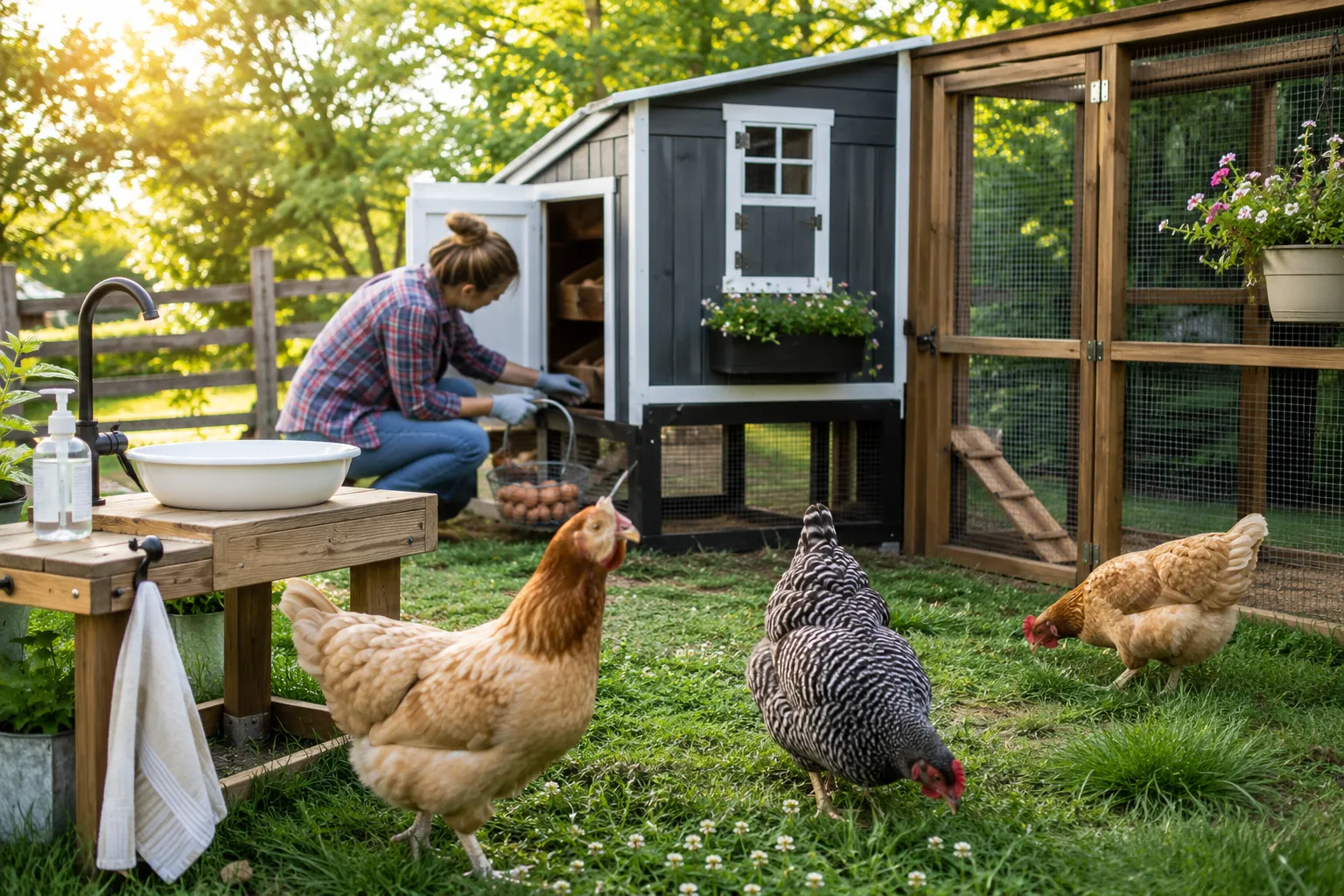
Quick Answer: Chicken salmonella safety requires understanding that all chickens can carry Salmonella bacteria without showing symptoms, and humans contract it through direct contact with birds, their environment, or contaminated eggs, not just by eating them. Proper hand hygiene, coop sanitation, and safe egg handling are the three pillars of prevention for backyard chicken keepers.
Key Takeaways
- All chickens can carry Salmonella in their intestines without appearing sick, making every flock a potential source
- Humans get salmonella from chickens through touching the birds, their feathers, coop surfaces, or handling contaminated eggs, not just from eating undercooked poultry
- Children under 5, adults over 65, and immunocompromised individuals face higher risks and should take extra precautions or avoid direct chicken contact
- Washing hands with soap for at least 20 seconds after any chicken contact is the single most effective prevention measure
- Baby chicks carry higher Salmonella rates than adult birds, making them particularly risky for young children to handle
- Salmonella bacteria can survive on coop surfaces for weeks to months, requiring regular deep cleaning with disinfectants
- Backyard eggs are not inherently more dangerous than store-bought eggs if handled properly, but they lack the commercial washing process
- Chickens rarely show symptoms of Salmonella infection, while humans experience severe diarrhea, fever, and abdominal cramps
- Vaccination reduces but does not eliminate Salmonella in chickens, so biosecurity practices remain essential
- Common mistakes include letting chickens in the house, not having dedicated coop shoes, and washing eggs before storage
What Is Salmonella in Chickens and How Do Humans Get It
Salmonella is a group of bacteria that naturally lives in the intestinal tracts of chickens and other poultry without causing them harm. Humans contract salmonellosis (the infection) when these bacteria enter the mouth through contaminated hands, surfaces, or food.
The transmission pathways are more varied than most new keepers realize:
- Direct contact: Touching chickens, chicks, or ducklings transfers bacteria from their feathers, feet, and bodies to your hands
- Environmental contamination: Coop surfaces, feeders, waterers, eggs, and even dust particles carry the bacteria
- Fecal-oral route: Chicken droppings contain high concentrations of Salmonella, which spreads to everything in the coop
- Egg contamination: Bacteria can be on eggshells (from contact with droppings) or occasionally inside eggs if the hen’s ovaries are infected
The bacteria doesn’t need to be visible. A chicken that looks perfectly healthy and clean can still shed millions of Salmonella cells in its droppings daily. This is why chicken salmonella safety practices matter for every keeper, regardless of flock size or bird health.
Common mistake: Assuming only sick-looking chickens pose a risk. In reality, healthy birds are the primary source of human infections because keepers let their guard down around them.
Can You Get Salmonella From Touching Chickens or Just Eating Eggs
You can absolutely get Salmonella from simply touching chickens, their environment, or handling eggs, eating is not required for infection. The bacteria transfers to your hands and then enters your body when you touch your mouth, nose, eyes, or handle food without washing first.
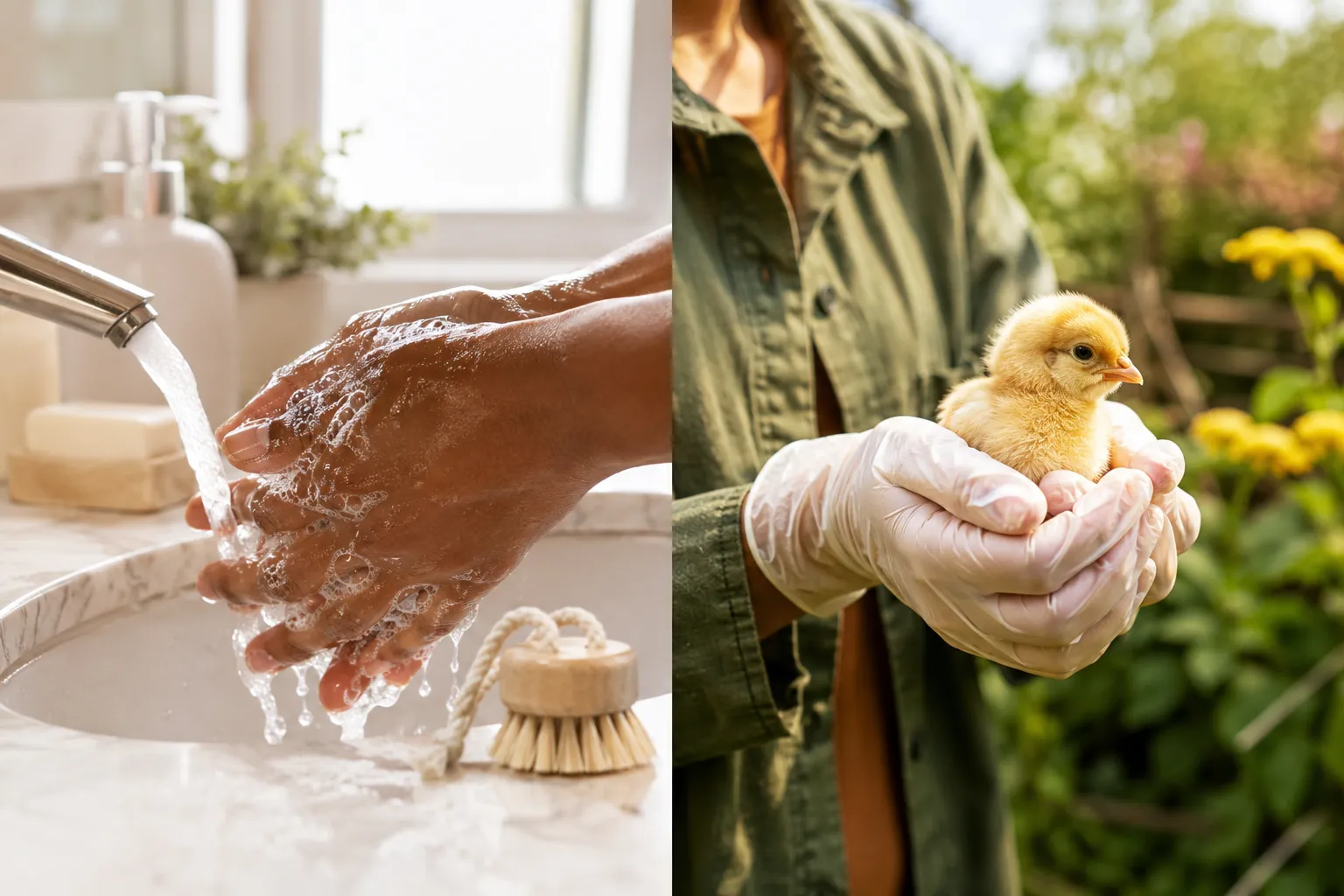
Contact-based transmission accounts for the majority of backyard-flock-related Salmonella cases. The Centers for Disease Control and Prevention tracks outbreaks linked to live poultry contact, and most involve people who never ate anything from their chickens.
High-risk contact points:
- Holding or petting chickens
- Collecting eggs (bacteria on shells)
- Cleaning coops or replacing bedding
- Filling feeders and waterers
- Handling baby chicks (they have higher carrier rates)
- Touching anything in the coop area, including your own clothing and shoes
The infection dose can be surprisingly small. Ingesting as few as 15-20 Salmonella cells can cause illness in some people, though typically it takes hundreds to thousands of cells. This means a single touch-face sequence after handling a chicken can be enough.
Choose this approach if: You have young children who frequently put their hands in their mouths, establish a strict no-touch policy or require immediate supervised handwashing after any chicken interaction.
How to Tell If My Backyard Chickens Have Salmonella
You cannot reliably tell if your chickens have Salmonella by observation alone because most infected birds show no symptoms whatsoever. Chickens are asymptomatic carriers, meaning they harbor and shed the bacteria while appearing completely healthy, active, and normal.
In rare cases where chickens do show signs of severe Salmonella infection (usually young chicks or immunocompromised birds), symptoms might include:
- Lethargy and huddling
- Loss of appetite
- Diarrhea (sometimes with blood)
- Ruffled feathers
- Sudden death in chicks
However, these symptoms are nonspecific and could indicate dozens of other poultry diseases. The only definitive way to confirm Salmonella is through laboratory testing of fecal samples or cloacal swabs, which most backyard keepers don’t routinely perform.
The practical reality: Assume all chickens in your flock can carry Salmonella at any time, regardless of how they look or act. This assumption drives proper chicken salmonella safety habits without requiring expensive testing.
Edge case: If you’re selling eggs or hatching eggs commercially, some states require Salmonella testing and certification. Check your local agricultural extension office for requirements.
Salmonella Symptoms in Chickens vs Humans
Chickens infected with Salmonella typically show zero symptoms and continue eating, laying, and behaving normally. Humans infected with the same bacteria experience acute gastrointestinal illness that can range from uncomfortable to life-threatening.
Chicken symptoms (rare, usually only in severe cases):
- No symptoms in 95%+ of cases
- Occasional lethargy or decreased appetite
- Diarrhea (uncommon)
- Reduced egg production (subtle)
- Death in very young or stressed birds
Human symptoms (appear 6 hours to 6 days after exposure):
- Severe diarrhea (often watery or bloody)
- Abdominal cramps and pain
- Fever (100-102°F or higher)
- Nausea and vomiting
- Headache and muscle aches
- Dehydration (especially dangerous in children and elderly)
Most healthy adults recover within 4-7 days without treatment, but approximately 5% of cases require hospitalization. The infection can spread from the intestines to the bloodstream (bacteremia) in severe cases, particularly in immunocompromised individuals.
Critical distinction: The stark difference in symptoms explains why chicken salmonella safety is entirely the keeper’s responsibility. Your birds won’t warn you they’re carriers, so prevention must be proactive and consistent.
Do All Chickens Carry Salmonella or Only Sick Ones
Not all chickens carry Salmonella at all times, but studies consistently show that 5-30% of healthy backyard flocks test positive for the bacteria at any given moment. The carrier status fluctuates, a chicken can be negative one month and positive the next, depending on environmental exposure and stress levels.
Factors that increase Salmonella prevalence in flocks:
- Stress (overcrowding, predator pressure, extreme weather)
- Introduction of new birds without quarantine
- Poor coop sanitation and wet bedding
- Contact with wild birds or rodents
- Young age (chicks have higher rates than adults)
- Warm, humid weather (bacteria multiply faster)
Importantly, even in flocks where testing shows no Salmonella, the bacteria can be introduced at any time through contaminated feed, wild bird droppings, or new chickens. This is why biosecurity measures matter even for “clean” flocks.
The takeaway: Treat every chicken as a potential carrier regardless of test results or health status. This approach eliminates the false security that comes from assuming your specific birds are “safe.”
Best Practices for Washing Hands After Handling Chickens
Proper handwashing after any chicken contact is the single most effective way to prevent Salmonella infection. Wash hands with soap and running water for at least 20 seconds, scrubbing all surfaces including between fingers, under nails, and wrists.
Step-by-step handwashing protocol:
- Wet hands with clean running water (warm or cold)
- Apply soap and lather thoroughly
- Scrub for 20 seconds (hum “Happy Birthday” twice as a timer)
- Clean under nails with a nail brush if available
- Rinse completely under running water
- Dry with a clean towel or air dryer
When to wash hands:
- Immediately after touching chickens or chicks
- After collecting eggs
- After any coop work (cleaning, feeding, watering)
- After touching anything in the chicken area
- Before eating, drinking, or preparing food
- Before touching your face
Hand sanitizer alternative: If soap and water aren’t immediately available, use alcohol-based hand sanitizer (at least 60% alcohol) as a temporary measure, but wash with soap and water as soon as possible. Sanitizer doesn’t remove organic matter and is less effective against Salmonella when hands are visibly dirty.
Common mistake: Rinsing hands briefly without soap or scrubbing for only 5-10 seconds. This removes visible dirt but leaves behind plenty of bacteria. The 20-second scrubbing time is critical for mechanical removal of pathogens.
Pro tip: Install a dedicated handwashing station near your coop with soap, a nail brush, and paper towels. This removes the temptation to skip washing because “the house is too far away.”
Is It Safe for Kids to Hold Baby Chicks: Salmonella Risk
Baby chicks pose a higher Salmonella risk than adult chickens, with studies showing 20-50% of mail-order chicks test positive for the bacteria. Children under 5 years old are particularly vulnerable to severe infection and should not handle chicks without strict supervision and immediate handwashing.
The combination of high bacterial loads in chicks and young children’s tendency to put hands in their mouths creates a perfect storm for infection. Multiple outbreaks have been traced to children cuddling chicks, kissing them, or keeping them in bedrooms.
Safer alternatives for young children:
- Observation only: Let kids watch chicks through a brooder screen without touching
- Supervised contact: One adult holds the chick while the child pets it briefly, followed by immediate handwashing
- Wait until older: Delay hands-on interaction until children are 5+ years old and can follow hygiene rules consistently
- Educational approach: Teach older children (6+) proper handling and handwashing as a learning opportunity
Absolute rules if children do handle chicks:
- Never allow chicks in the house, bedrooms, or on furniture
- No kissing, nuzzling, or touching faces to chicks
- Wash hands immediately after every contact
- Supervise all interactions
- Keep chicks away from food preparation areas
- Change clothes if they become soiled
For immunocompromised children: Complete avoidance is the safest approach. This includes children with cancer, HIV, organ transplants, or those on immunosuppressive medications.
How to Clean Chicken Coop to Prevent Salmonella Spread
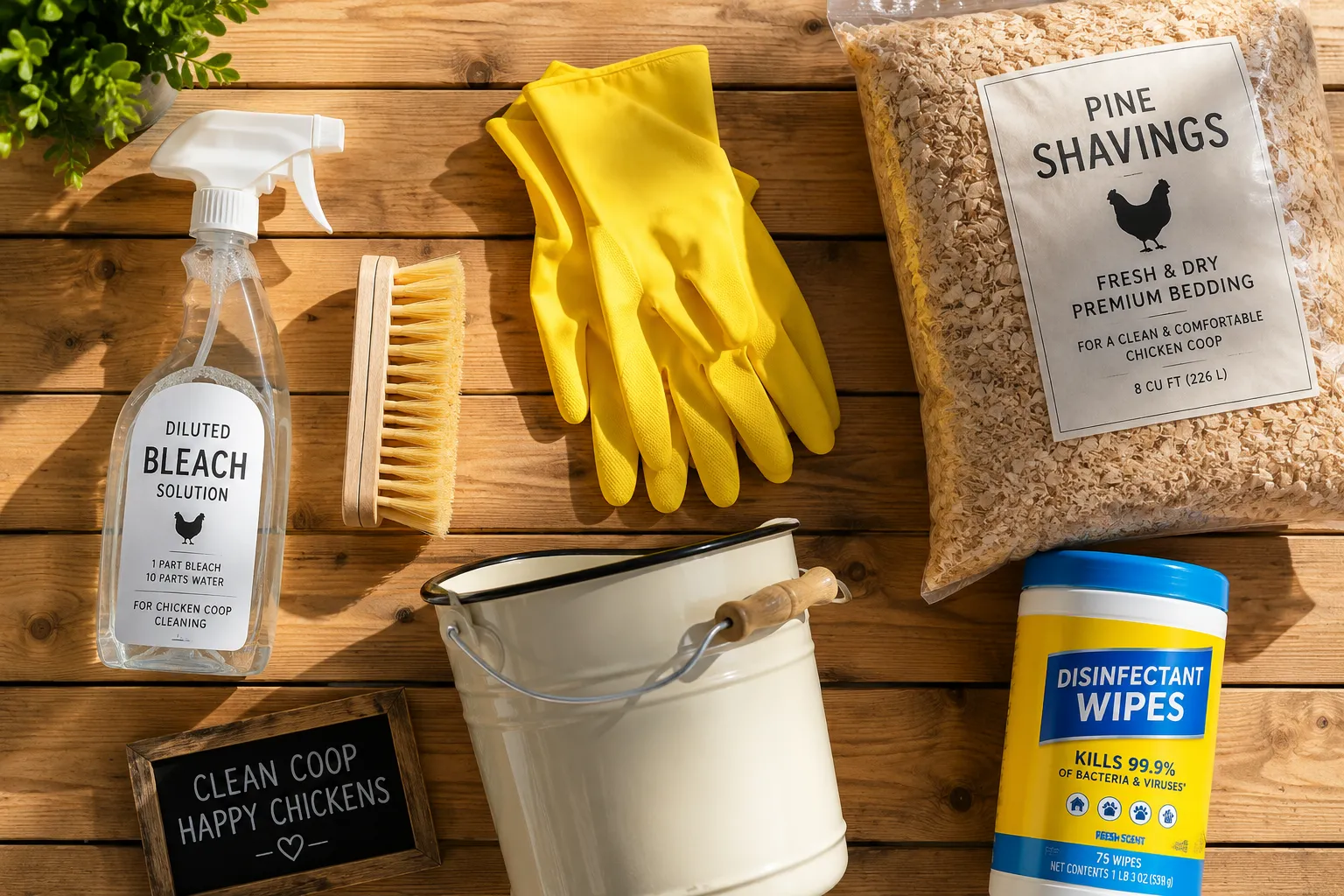
Regular coop cleaning with proper disinfection reduces Salmonella loads in the environment and limits human exposure. Deep clean coops every 2-4 weeks, with daily spot-cleaning of droppings and weekly bedding changes in high-traffic areas.
Weekly maintenance routine:
- Remove soiled bedding from roosts and nesting boxes
- Scrape droppings from roosts and floors
- Add fresh bedding to maintain dry conditions
- Clean and refill waterers with fresh water
- Remove wet or caked bedding immediately
Monthly deep cleaning protocol:
- Remove all chickens to a safe temporary area
- Clear everything: Remove all bedding, feeders, waterers, and removable roosts
- Dry scrape: Remove all visible manure and debris with a scraper or shovel
- Wet wash: Spray down all surfaces with a hose, scrubbing with a stiff brush
- Disinfect: Apply a poultry-safe disinfectant (diluted bleach solution: 1 part bleach to 10 parts water, or commercial poultry disinfectant)
- Contact time: Let disinfectant sit for 10-15 minutes
- Rinse thoroughly: Spray down all surfaces to remove disinfectant residue
- Dry completely: Allow the coop to air dry before adding fresh bedding
- Replace bedding: Add 3-4 inches of fresh pine shavings or straw
Protective gear for cleaning:
- Disposable gloves or dedicated coop gloves
- Dust mask or N95 respirator (prevents inhaling contaminated dust)
- Dedicated coop shoes or boot covers
- Long sleeves and pants
- Safety glasses if using spray disinfectants
Common mistake: Cleaning the coop while wearing regular shoes, then tracking bacteria into the house. Always use dedicated footwear that stays outside or in a mudroom.
Edge case: If you’ve had a confirmed Salmonella outbreak in your flock or family, increase cleaning frequency to weekly deep cleans for 4-6 weeks and consider replacing all wooden surfaces that can’t be fully disinfected.
Can You Get Salmonella From Chicken Feathers or Dust
Yes, Salmonella can contaminate chicken feathers, dander, and the dust that accumulates in coops, making inhalation or hand contact with these materials a potential transmission route. The bacteria doesn’t grow on dry surfaces but can survive there for extended periods until disturbed.
When chickens preen, walk through their droppings, or dust-bathe, they spread fecal bacteria onto their feathers and into the environment. This contaminated material becomes airborne during coop cleaning, bedding changes, or even when chickens flap their wings vigorously.
Exposure scenarios:
- Breathing dust during coop cleaning (bacteria enter through mouth/nose)
- Touching feathers that have contacted droppings
- Handling molted feathers found in the coop
- Disturbing dried droppings that become airborne
- Working in poorly ventilated coops where dust accumulates
Prevention strategies:
- Wear a dust mask or N95 respirator during coop cleaning
- Wet down dusty areas before sweeping to keep particles from becoming airborne
- Ensure good coop ventilation to reduce dust accumulation
- Wash hands after handling any feathers or coop materials
- Keep coop bedding dry (wet bedding creates less dust but more bacterial growth)
Risk level: Inhalation is a less common transmission route than hand-to-mouth contact, but it’s still a legitimate concern, especially for people with respiratory conditions or compromised immune systems.
Do Vaccinated Chickens Still Carry Salmonella
Chickens vaccinated against Salmonella have reduced bacterial loads and shed fewer organisms, but vaccination does not eliminate carriage completely. Vaccinated birds can still harbor and transmit Salmonella to humans, though at lower rates than unvaccinated flocks.
Commercial poultry operations commonly use Salmonella vaccines, but they’re less available and practical for small backyard flocks. The vaccines target specific Salmonella serotypes (usually Enteritidis and Typhimurium) but don’t protect against all strains.
What vaccination does:
- Reduces the percentage of birds that become carriers
- Lowers the amount of bacteria shed by infected birds
- Decreases contamination of eggs (internal and external)
- Provides some cross-protection against related strains
What vaccination doesn’t do:
- Eliminate Salmonella from the flock entirely
- Protect against all Salmonella serotypes
- Replace the need for biosecurity and hygiene practices
- Guarantee that eggs or meat are Salmonella-free
For backyard keepers: Vaccination is rarely cost-effective for small flocks (vaccines are typically sold in large doses for commercial operations). Focus instead on the proven prevention triad: hand hygiene, coop sanitation, and safe egg handling.
Choose vaccination if: You have a large backyard flock (50+ birds), sell eggs commercially, or have immunocompromised family members. Consult a veterinarian about availability and administration.
What Mistakes Do New Chicken Owners Make With Salmonella Prevention
New chicken keepers commonly underestimate transmission risks and develop habits that increase Salmonella exposure. The most frequent mistakes stem from treating chickens like indoor pets rather than livestock that require biosecurity protocols.
Top 10 mistakes:
- Allowing chickens in the house: Letting birds inside tracks bacteria onto floors, furniture, and surfaces where food is prepared
- Not washing hands immediately: Delaying handwashing or just rinsing without soap leaves bacteria on hands
- Wearing coop shoes indoors: Tracking manure and contaminated bedding into living spaces
- Kissing or nuzzling chickens: Direct face contact with birds or their feathers
- Letting kids handle chicks unsupervised: Young children touching chicks then putting hands in mouths
- Washing eggs before storage: Pre-washing removes the protective cuticle and allows bacteria to penetrate the shell; wash only immediately before use
- Storing eggs at room temperature too long: Eggs should be refrigerated within 2 hours of collection in warm weather
- Not having dedicated coop clothing: Wearing the same clothes for coop work and food preparation
- Skipping gloves for coop cleaning: Direct hand contact with heavily contaminated surfaces
- Assuming healthy-looking birds are safe: Letting guard down around birds that appear clean and active
The “just this once” trap: Many infections occur when keepers skip their usual precautions “just this once” because they’re in a hurry or their hands “don’t look dirty.” Consistency is everything with chicken salmonella safety.
Course correction: If you recognize yourself in these mistakes, don’t panic, just implement the correct practices going forward. Most people handle chickens for years without incident when they follow basic hygiene rules consistently.
Should Immunocompromised People Avoid Keeping Backyard Chickens
Immunocompromised individuals face significantly higher risks of severe Salmonella infection and should either avoid direct chicken contact entirely or implement extremely strict biosecurity measures. The decision depends on the degree of immune suppression and the person’s ability to maintain rigorous hygiene protocols.
High-risk groups:
- Cancer patients undergoing chemotherapy
- Organ transplant recipients on immunosuppressive drugs
- People with HIV/AIDS (especially with low CD4 counts)
- Individuals taking high-dose corticosteroids or biologics
- Those with inherited immune deficiencies
- Adults over 65 with multiple health conditions
- Pregnant women (higher risk of severe complications)
Safer alternatives for high-risk individuals:
- Delegate all chicken care to a healthy household member
- Observe only: Enjoy chickens from a distance without direct contact
- Wait for better health: Postpone chicken keeping until immune function improves
- Choose different pets: Consider animals with lower Salmonella risk
If keeping chickens with compromised immunity:
- Never handle chickens, chicks, or eggs directly
- Never enter the coop or chicken area
- Ensure the designated caretaker washes hands before interacting with you
- Keep chickens completely separate from living spaces
- Wash all eggs thoroughly before a healthy person cooks them fully
- Avoid undercooked eggs entirely (no sunny-side up, soft scrambled, or raw cookie dough)
Consult your doctor: Before starting or continuing chicken keeping, discuss your specific situation with your healthcare provider. They can assess your individual risk based on your condition and medications.
How Long Does Salmonella Live on Surfaces in Chicken Coops
Salmonella bacteria can survive on coop surfaces for weeks to months depending on environmental conditions, with longer survival in cool, moist, protected areas and shorter survival in hot, dry, UV-exposed locations. This persistence means contaminated surfaces remain infectious long after visible manure is removed.
Survival times by surface and condition:
| Surface Type | Dry Conditions | Moist Conditions |
|---|---|---|
| Wood (roosts, walls) | 2-4 weeks | 2-6 months |
| Metal (feeders, waterers) | 1-3 weeks | 1-4 months |
| Plastic surfaces | 1-2 weeks | 1-3 months |
| Concrete floors | 2-4 weeks | 2-5 months |
| Bedding (straw, shavings) | 1-2 weeks | 1-3 months |
| Eggshells | Days to weeks | Weeks to months |
Factors that extend survival:
- Cool temperatures (bacteria survive longer in cold)
- High moisture (wet bedding, poor drainage)
- Protection from sunlight (UV kills bacteria)
- Organic matter (manure provides nutrients and protection)
- Porous surfaces (bacteria penetrate wood grain)
Factors that reduce survival:
- Hot, dry conditions (especially above 95°F)
- Direct sunlight exposure (UV radiation)
- Proper disinfection with bleach or commercial products
- Complete drying between cleanings
- Smooth, non-porous surfaces
Practical implications: Even a “clean-looking” coop that hasn’t been disinfected recently can harbor infectious Salmonella. This is why regular deep cleaning with disinfectants matters more than just removing visible dirt.
Best practice: After removing bedding and manure, always disinfect surfaces rather than assuming drying alone has eliminated bacteria. The combination of cleaning (physical removal) plus disinfection (chemical kill) plus drying (hostile environment) provides the most reliable reduction.
Are Store-Bought Eggs Safer Than Backyard Chicken Eggs for Salmonella
Store-bought eggs undergo commercial washing, sanitizing, and grading processes that reduce external Salmonella contamination, but they’re not inherently safer than properly handled backyard eggs. The key difference is processing, not the eggs themselves.
Commercial egg processing:
- Machine washing with detergent and sanitizer
- Removal of visible contamination
- Candling (inspection for cracks and defects)
- Grading and sorting
- Refrigeration throughout distribution
- Regulatory oversight and testing
Backyard egg handling (when done correctly):
- Dry cleaning with a brush or sandpaper (removes debris without removing protective cuticle)
- Immediate refrigeration
- Discarding cracked or soiled eggs
- Washing only immediately before use
- Proper cooking to safe temperatures
The safety equation: Store-bought eggs have lower external contamination but have lost their natural protective cuticle (bloom) through washing, making them more vulnerable to bacterial penetration if temperature-abused. Backyard eggs retain their cuticle if not pre-washed, providing natural protection, but may have higher external contamination if collected from dirty nests.
Internal contamination risk: Both types have similar (very low) risk of internal Salmonella if the hen’s ovaries are infected. This occurs in less than 1 in 20,000 eggs regardless of source.
Make backyard eggs as safe as store-bought:
- Collect eggs at least twice daily
- Keep nesting boxes clean with fresh bedding
- Refrigerate within 2 hours of laying (sooner in hot weather)
- Don’t wash until immediately before use
- Discard any cracked, dirty, or abnormal eggs
- Cook eggs to 160°F internal temperature (firm yolks and whites)
Choose store-bought if: You’re immunocompromised, pregnant, or cooking for high-risk individuals and want the additional assurance of commercial processing and regulatory oversight.
Frequently Asked Questions
Can I get Salmonella from my chickens if I only collect eggs and never touch the birds?
Yes, eggshells frequently carry Salmonella from contact with droppings in nesting boxes or on hens’ feet. Always wash hands after collecting eggs, even if you don’t touch the chickens directly.
How should I wash eggs from my backyard chickens?
Don’t wash eggs until immediately before use. Store unwashed eggs in the refrigerator to preserve the natural protective cuticle. When ready to use, wash with warm water (warmer than the egg) and mild detergent, then cook immediately.
Is it safe to eat eggs from chickens that might have Salmonella?
Yes, when cooked properly. Cooking eggs to 160°F (firm yolks and whites) kills Salmonella completely. Avoid raw or undercooked eggs, especially for high-risk individuals.
Can my dog or cat get Salmonella from my chickens?
Yes, pets can contract Salmonella from eating chicken droppings, drinking contaminated water, or eating raw eggs. Keep pets away from the coop area and feed them only cooked eggs.
Do I need to wash my clothes after working in the chicken coop?
Yes, especially if clothes contacted birds, droppings, or dusty surfaces. Change out of coop clothes before entering living spaces and wash them separately from regular laundry.
Can Salmonella spread from my chickens to my vegetable garden?
Yes, if you use fresh chicken manure as fertilizer or if chickens free-range in the garden. Compost manure for at least 6 months before using it on vegetables, or keep chickens out of areas where you grow food that’s eaten raw.
How can I tell if I have Salmonella from my chickens?
Symptoms appear 6 hours to 6 days after exposure and include severe diarrhea, fever, and abdominal cramps. See a doctor if symptoms are severe, bloody diarrhea occurs, fever exceeds 102°F, or dehydration develops.
Should I use hand sanitizer or soap and water after handling chickens?
Soap and water is always better. Hand sanitizer can be a temporary measure if you’re far from a sink, but wash with soap and water as soon as possible. Sanitizer is less effective when hands are visibly dirty.
Can I get Salmonella from chicken dust when cleaning the coop?
Yes, contaminated dust can carry bacteria that enters through your mouth or nose. Wear a dust mask during coop cleaning and wet down dusty areas before sweeping to reduce airborne particles.
Are certain chicken breeds more likely to carry Salmonella?
No, Salmonella carriage is not breed-specific. All chicken breeds can carry and shed the bacteria regardless of size, egg color, or temperament. Focus on hygiene practices rather than breed selection for safety.
How often should I deep clean my chicken coop to prevent Salmonella?
Deep clean with disinfection every 2-4 weeks, with daily spot-cleaning of droppings and weekly bedding changes in high-use areas. Increase frequency during warm, humid weather when bacteria multiply faster.
Can I keep chickens if I have young children?
Yes, but with strict supervision and hygiene rules. Children under 5 should not handle chickens or chicks without immediate supervised handwashing. Teach older children proper handwashing and never allow chickens in living spaces.
Conclusion
Chicken salmonella safety doesn’t require fear or paranoia, just consistent, informed practices that become second nature. The three pillars of prevention are simple: wash your hands thoroughly after any chicken contact, maintain a clean coop with regular disinfection, and handle eggs properly from collection through cooking. Remember that all chickens can carry Salmonella without showing symptoms, so treat every bird and every egg with the same careful respect.
Your action plan starting today:
- Install a handwashing station near your coop with soap, a nail brush, and towels
- Establish dedicated coop gear: shoes, gloves, and clothing that never enter your house
- Set a cleaning schedule: weekly spot-cleaning and monthly deep disinfection
- Teach everyone in your household the handwashing rule, no exceptions
- Collect eggs twice daily and refrigerate immediately
- Keep chickens outside always, no exceptions for cute chicks or friendly hens
The good news is that thousands of backyard chicken keepers enjoy their flocks safely every day by following these straightforward guidelines. Chicken keeping and human health can coexist perfectly when you understand the risks and commit to the simple habits that eliminate them. Your chickens will continue providing fresh eggs, entertainment, and pest control while you protect your family’s health through knowledge and consistency.


