
Quick Answer: Chickens sneeze for many reasons, ranging from harmless dust irritation to serious respiratory infections. A single sneeze or occasional sneezing is usually caused by dust, ammonia fumes, or environmental irritants in the coop. However, frequent sneezing accompanied by nasal discharge, coughing, lethargy, or reduced appetite signals a respiratory infection that requires immediate attention and possibly veterinary care.
Key Takeaways
- Occasional sneezing is normal and usually caused by dust, bedding particles, or ammonia buildup in the coop
- Respiratory infections like Mycoplasma gallisepticum and Infectious Bronchitis cause persistent sneezing with other symptoms
- Environmental factors such as poor ventilation, dusty bedding, and overcrowding are the most common triggers
- Early intervention matters because respiratory diseases spread quickly through flocks
- Dust-free bedding like large-flake pine shavings reduces respiratory irritation better than straw or hay
- Isolation is critical when a chicken shows signs of illness to prevent flock-wide outbreaks
- Not all sneezing requires antibiotics, but bacterial infections may need veterinary-prescribed treatment
- Baby chicks sneeze more frequently than adults due to smaller airways and sensitivity to dust
- Prevention through proper coop management is more effective than treating established infections
- Some respiratory infections become chronic carriers even after symptoms resolve
What Causes Chickens to Sneeze?
Chickens sneeze when their nasal passages become irritated by particles, pathogens, or chemical irritants. The most common causes include dust from bedding materials, ammonia fumes from accumulated droppings, mold spores, pollen, and infectious agents like bacteria, viruses, or fungi.
Environmental triggers account for most sneezing episodes:
- Dust particles from dry bedding, especially straw, hay, or fine wood shavings
- Ammonia buildup from wet litter or insufficient coop cleaning
- Mold spores from damp bedding or poorly stored feed
- Strong odors from cleaning products, paint, or pesticides
- Temperature fluctuations that irritate sensitive respiratory tissues
- Poor air circulation that concentrates airborne irritants
Infectious causes include:
- Mycoplasma gallisepticum (MG), a bacterial infection causing chronic respiratory disease
- Infectious Bronchitis (IB), a highly contagious viral infection
- Infectious Coryza, bacterial infection with distinctive foul-smelling nasal discharge
- Aspergillosis, fungal infection from moldy bedding or feed
- Newcastle Disease, viral infection with respiratory and neurological symptoms
Choose environmental solutions first if the sneezing is occasional, affects multiple birds simultaneously, and occurs after coop cleaning or bedding changes. Suspect infection if sneezing persists for more than 3-4 days, worsens over time, or appears alongside other symptoms.
Is It Normal for Chickens to Sneeze Occasionally?
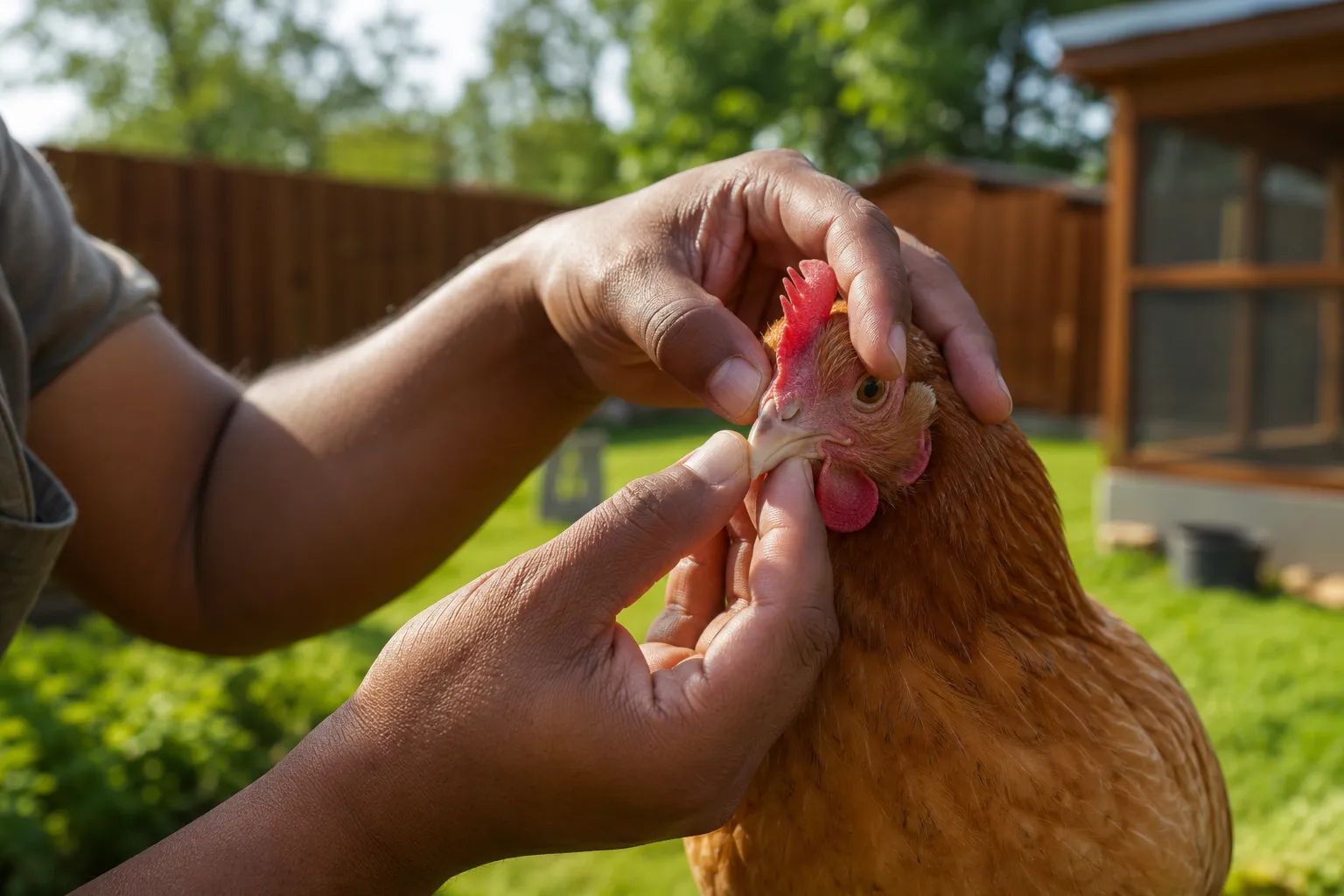
Yes, occasional sneezing is completely normal for chickens and usually indicates they’re clearing dust or small particles from their nasal passages. Healthy chickens may sneeze a few times per day, especially after dust bathing, scratching in dry areas, or when bedding is changed.
Normal sneezing characteristics:
- Happens 1-3 times then stops
- No nasal discharge or only clear, watery discharge
- Bird remains active and alert
- Appetite and egg production stay normal
- Multiple birds sneeze briefly at the same time (suggests environmental trigger)
- Occurs during or immediately after specific activities
When occasional sneezing becomes concerning:
- Frequency increases over several days
- Sneezing episodes last longer than a few seconds
- Bird shakes its head repeatedly or rubs its face
- Any colored discharge appears (yellow, green, or bloody)
- Other symptoms develop within 24-48 hours
Think of chicken sneezing like human sneezing in a dusty attic, a few sneezes are your body’s natural cleaning mechanism, but persistent sneezing signals something needs to change.
How to Tell If Chicken Sneezing Is Serious or Just Dust
Distinguishing between harmless dust-related sneezing and a respiratory infection requires observing the pattern, duration, and accompanying symptoms. Dust-related sneezing resolves quickly once the irritant is removed, while infection-related sneezing persists and worsens.
Signs it’s just dust or environmental irritation:
- Sneezing stops within 10-15 minutes of removing the bird from the coop
- Multiple birds sneeze simultaneously when bedding is disturbed
- No discharge, or only clear watery discharge that doesn’t persist
- Bird’s behavior, appetite, and activity level remain completely normal
- Sneezing decreases significantly after improving coop ventilation
- Eyes remain bright and clear with no swelling
Signs it’s a respiratory infection:
- Sneezing continues for more than 2-3 days
- Nasal discharge becomes thick, colored (yellow, green), or bubbly
- Bird develops additional symptoms: coughing, wheezing, gurgling sounds
- Swollen face, especially around eyes and sinuses
- Reduced appetite or water intake
- Lethargy, hunched posture, or reluctance to move
- Decreased egg production
- Other flock members develop symptoms within days
Quick test: Remove the sneezing chicken to a clean, well-ventilated area with fresh bedding for 2-3 hours. If sneezing stops or dramatically decreases, the cause is environmental. If sneezing continues at the same rate, suspect infection.
Can Dust in the Coop Make Chickens Sneeze?
Absolutely, dust is the single most common cause of chicken sneezing and respiratory irritation. Dry bedding materials, especially straw, hay, and fine wood shavings, release airborne particles that irritate chickens’ sensitive respiratory systems when disturbed by scratching and movement.
Why dust causes problems:
Chickens have highly efficient respiratory systems with air sacs that extend throughout their bodies, making them more vulnerable to airborne irritants than mammals. Dust particles can penetrate deep into these air sacs, causing irritation and inflammation that triggers sneezing, coughing, and in chronic cases, permanent respiratory damage.
Dustiest bedding materials (avoid or use carefully):
- Straw and hay (especially when dry and old)
- Fine pine or cedar shavings
- Sawdust
- Shredded paper (when very dry)
- Sand (in poorly ventilated coops)
Low-dust alternatives:
- Large-flake pine shavings, the best all-around choice
- Hemp bedding, virtually dust-free but more expensive
- Chopped straw (not whole straw), less dusty than traditional straw
- Pelleted bedding, expands when wet, minimal dust when dry
- Sand, dust-free when slightly damp and well-ventilated
Common mistake: Adding new bedding without removing old material creates dust clouds that can trigger sneezing fits in the entire flock. Always remove heavily soiled bedding before adding fresh material, and consider dampening extremely dusty bedding lightly with water before removal.

Difference Between Chicken Sneezing and Respiratory Infection
Sneezing is a symptom, while respiratory infection is the underlying disease causing that symptom. Not all sneezing indicates infection, but all respiratory infections cause sneezing along with other distinctive signs.
Isolated sneezing (no infection):
- Single symptom with no progression
- Triggered by identifiable environmental factors
- Resolves within hours to 1-2 days
- Affects multiple birds simultaneously and briefly
- No systemic illness signs (bird acts normal otherwise)
Respiratory infection (disease present):
- Multiple symptoms that develop over days
- Progressive worsening despite environmental improvements
- Spreads through flock over 3-10 days
- Systemic illness signs: lethargy, reduced appetite, decreased egg production
- Specific patterns based on the pathogen involved
Symptom progression timeline:
| Day | Dust/Irritation | Respiratory Infection |
|---|---|---|
| 1 | Sneezing begins, stops within hours | Occasional sneezing, bird seems slightly off |
| 2 | No sneezing if irritant removed | Sneezing increases, clear discharge appears |
| 3 | Bird completely normal | Discharge thickens, other symptoms emerge |
| 4-7 | N/A | Multiple birds affected, clear disease pattern |
Decision rule: If sneezing persists beyond 48 hours despite environmental improvements, or if any additional symptoms appear, treat it as a potential infection and isolate the bird immediately.
Mycoplasma vs Infectious Bronchitis in Chickens
Mycoplasma gallisepticum (MG) and Infectious Bronchitis (IB) are the two most common respiratory infections in backyard flocks, but they differ significantly in cause, transmission, and long-term effects.
Mycoplasma gallisepticum (MG):
- Cause: Bacterial infection
- Transmission: Direct contact, aerosol droplets, egg transmission from hen to chick
- Onset: Slow, develops over 1-2 weeks
- Key symptoms: Bubbly eye discharge, swollen sinuses, sneezing, coughing, nasal discharge
- Distinctive feature: Foamy or bubbly appearance in eyes and nostrils
- Duration: Becomes chronic; birds become lifelong carriers even after recovery
- Treatment: Antibiotics (tylosin, oxytetracycline) reduce symptoms but don’t eliminate infection
- Flock impact: Spreads slowly but persistently through flock
Infectious Bronchitis (IB):
- Cause: Viral infection (coronavirus)
- Transmission: Highly contagious through air, contaminated equipment, clothing
- Onset: Rapid, entire flock affected within 3-5 days
- Key symptoms: Gasping, coughing, sneezing, watery eyes, respiratory distress, sudden drop in egg production
- Distinctive feature: Affects entire flock almost simultaneously; eggs may have thin shells or wrinkled appearance
- Duration: Acute phase lasts 1-2 weeks; some birds recover fully, others have permanent damage
- Treatment: No specific treatment; supportive care only (antibiotics don’t work on viruses)
- Flock impact: Spreads explosively but may resolve faster than MG
Choose veterinary diagnosis if: You’re unsure which infection is present, multiple birds are severely affected, or you’re considering culling decisions. Lab tests can definitively identify the pathogen and guide treatment decisions.
How to Treat a Sneezing Chicken at Home
Home treatment for sneezing chickens focuses on supportive care and environmental improvements for mild cases, while more serious infections require veterinary intervention.
Immediate steps for any sneezing chicken:
- Isolate the bird in a clean, warm, well-ventilated space away from the flock
- Assess severity by checking for additional symptoms (discharge, lethargy, appetite changes)
- Improve air quality by ensuring good ventilation without drafts
- Provide supportive care with easy access to food and fresh water
- Monitor closely for 24-48 hours to track progression
For mild, dust-related sneezing:
- Remove the bird from the dusty environment
- Wipe nostrils gently with a warm, damp cloth
- Ensure the isolation area has clean, dust-free bedding
- Add a humidifier or place a shallow pan of water nearby to add moisture to the air
- Return to flock once sneezing stops (usually 12-24 hours)
For suspected infection (use while awaiting vet consultation):
- Warmth: Keep bird at 75-80°F using a heat lamp or heated pad
- Hydration: Add electrolytes to drinking water (commercial poultry electrolytes or homemade: 1 tablespoon sugar + 1/4 teaspoon salt per quart of water)
- Nutrition: Offer high-protein treats like scrambled eggs, mealworms, or tuna to maintain strength
- Nasal clearing: Steam treatment by placing bird in a bathroom during a hot shower for 10-15 minutes (not in direct water spray)
- VetRx or similar products: Apply according to package directions to help open airways (natural remedy, not a cure)
What NOT to do:
- Don’t use human cold medications or antibiotics without veterinary guidance
- Don’t return a sick bird to the flock until symptoms completely resolve
- Don’t ignore worsening symptoms hoping they’ll improve on their own
- Don’t use essential oils or strong-smelling products that can further irritate airways
Common mistake: Starting antibiotic treatment without proper diagnosis. Antibiotics don’t work on viral infections and inappropriate use contributes to antibiotic resistance. Always confirm bacterial infection before using antibiotics.
When to Call a Vet for Chicken Sneezing
Veterinary consultation becomes necessary when home treatment fails, symptoms worsen, or the situation suggests a serious or contagious disease that could affect the entire flock.
Call a vet immediately if:
- Bird shows severe respiratory distress (gasping, open-mouth breathing, inability to breathe while lying down)
- Sneezing is accompanied by bloody discharge
- Bird becomes completely lethargic or unresponsive
- Multiple birds develop severe symptoms within 24-48 hours
- Bird stops eating or drinking for more than 24 hours
- Swelling around eyes or face becomes severe
- You suspect Newcastle Disease or Avian Influenza (reportable diseases)
Schedule a vet appointment within 1-2 days if:
- Sneezing persists for more than 3-4 days despite environmental improvements
- Nasal discharge becomes thick, colored, or foul-smelling
- Additional symptoms develop (coughing, wheezing, decreased egg production)
- Home treatment shows no improvement after 48 hours
- You’re unsure whether the condition is contagious
- Other flock members begin showing similar symptoms
What to expect from a vet visit:
- Physical examination of respiratory system
- Possible nasal or throat swab for laboratory testing
- Flock history questions (recent additions, vaccination status, biosecurity practices)
- Treatment recommendations (antibiotics for bacterial infections, supportive care for viral)
- Guidance on flock management and preventing spread
Cost consideration: Veterinary care for chickens typically costs $50-150 for an exam and basic treatment. Weigh this against the value of your bird and the risk to your entire flock. For valuable breeding stock or beloved pets, veterinary care is worthwhile. For production flocks, focus on preventing spread and improving conditions for remaining birds.
What Antibiotics Work for Chicken Respiratory Problems
Antibiotics treat bacterial respiratory infections but are ineffective against viral diseases. The most commonly used antibiotics for chicken respiratory infections include tylosin, oxytetracycline, and enrofloxacin, each with specific applications and limitations.
Tylosin (Tylan):
- Effective against: Mycoplasma gallisepticum, some secondary bacterial infections
- Form: Injectable or water-soluble powder
- Typical dosage: 10 mg per pound body weight, or follow water-soluble product directions
- Duration: 5-7 days minimum
- Pros: Highly effective for MG, relatively affordable
- Cons: Doesn’t eliminate MG carriers, requires prescription in many areas
Oxytetracycline (Terramycin, Duramycin):
- Effective against: Broad-spectrum bacterial infections, Infectious Coryza, some Mycoplasma
- Form: Water-soluble powder
- Typical dosage: Follow product label (usually 10 mg per pound body weight)
- Duration: 7-14 days
- Pros: Widely available, treats multiple bacterial types
- Cons: Less effective than tylosin for MG, bacteria can develop resistance
Enrofloxacin (Baytril):
- Effective against: Broad-spectrum bacterial infections, E. coli, Mycoplasma
- Form: Injectable or oral liquid (prescription only)
- Typical dosage: Veterinarian-prescribed based on specific diagnosis
- Duration: 5-10 days
- Pros: Very effective, fast-acting
- Cons: Expensive, prescription required, not approved for laying hens in many regions
Important limitations:
- Egg withdrawal: Most antibiotics require discarding eggs during treatment and for days afterward (check specific product labels)
- Meat withdrawal: Required waiting period before slaughter (typically 1-4 weeks)
- Prescription requirements: Many effective antibiotics now require veterinary prescription
- Resistance concerns: Overuse or incomplete treatment courses contribute to antibiotic-resistant bacteria
Decision rule: Use antibiotics only when bacterial infection is confirmed or strongly suspected, complete the full treatment course even if symptoms improve, and never use antibiotics preventively without veterinary guidance.
Do Baby Chicks Sneeze More Than Adult Chickens
Yes, baby chicks sneeze more frequently than adult chickens because their smaller airways are more sensitive to dust, temperature changes, and airborne irritants. However, chicks are also more vulnerable to serious respiratory infections that can quickly become fatal.
Why chicks sneeze more:
- Smaller nasal passages get blocked more easily by dust particles
- Developing immune systems are less equipped to fight off pathogens
- Higher metabolic rate means faster breathing and more air intake relative to body size
- Brooder conditions often have higher dust levels from bedding and concentrated ammonia from droppings
- Temperature sensitivity makes them more reactive to environmental changes
Normal chick sneezing:
- Brief episodes after scratching in bedding
- Occasional sneezes (1-3 times) with no other symptoms
- Sneezing that stops when chick is removed from brooder temporarily
- Clear eyes, active behavior, good appetite
Concerning chick sneezing:
- Persistent sneezing throughout the day
- Any nasal discharge (even clear discharge is more concerning in chicks than adults)
- Lethargy or huddling under heat source more than usual
- Reduced eating or drinking
- Labored breathing or gasping
- Multiple chicks affected simultaneously
Brooder management to reduce sneezing:
- Use large-flake pine shavings instead of fine bedding
- Clean brooder more frequently (every 2-3 days minimum)
- Ensure proper ventilation without creating drafts
- Maintain consistent temperature (95°F week one, reducing 5°F per week)
- Avoid overcrowding (provide 2-3 square feet per chick by 4 weeks)
- Keep brooder dry, wet bedding creates ammonia and mold
Common mistake: Assuming chick sneezing is “just dust” and delaying intervention. Chicks can deteriorate rapidly from respiratory infections, so err on the side of caution and consult a vet if sneezing persists beyond 24 hours or any additional symptoms appear.
Can Chickens Spread Sneezing to the Whole Flock
Yes, if the sneezing is caused by an infectious disease, it can spread rapidly through the entire flock. Respiratory infections spread through airborne droplets, direct contact, shared feeders and waterers, and contaminated equipment.
How respiratory diseases spread:
- Aerosol transmission: Sneezing and coughing release droplets containing pathogens into the air
- Direct contact: Healthy birds touching infected birds during roosting or feeding
- Fomites: Contaminated feeders, waterers, perches, and nesting boxes
- Human transmission: Pathogens on clothing, shoes, and hands moving between birds
- Egg transmission: Some diseases (like MG) pass from infected hens to chicks through eggs
Spread timeline by disease type:
- Infectious Bronchitis: Entire flock infected within 3-5 days (extremely contagious)
- Mycoplasma: Gradual spread over 2-4 weeks (moderately contagious)
- Infectious Coryza: Rapid spread within 1-2 weeks (highly contagious in close quarters)
- Aspergillosis: Usually doesn’t spread bird-to-bird (environmental source)
Preventing flock-wide outbreaks:
- Immediate isolation of any bird showing respiratory symptoms
- Quarantine new birds for 30 days before introducing to existing flock
- Biosecurity practices: Change clothes and wash hands between handling different groups
- Separate equipment for sick birds (dedicated feeders, waterers, tools)
- Improve ventilation throughout coop to reduce pathogen concentration
- Reduce stress factors that weaken immune systems (overcrowding, poor nutrition, extreme temperatures)
What to do if multiple birds are already affected:
- Isolate the sickest birds for intensive treatment
- Improve conditions for the entire flock (ventilation, cleanliness, nutrition)
- Monitor all birds twice daily for symptom development
- Consider treating the entire flock if bacterial infection is confirmed
- Disinfect coop thoroughly once outbreak resolves
Reality check: Once a contagious respiratory disease enters a flock, most or all birds will be exposed. The goal shifts from preventing exposure to minimizing severity and supporting recovery.
Best Bedding to Reduce Chicken Respiratory Issues
Choosing the right bedding material significantly impacts respiratory health by controlling dust, moisture, and ammonia levels in the coop. Large-flake pine shavings are the gold standard for most backyard flocks, balancing cost, availability, absorbency, and low dust production.
Top bedding choices for respiratory health:
1. Large-flake pine shavings
- Dust level: Low
- Absorbency: Good
- Ammonia control: Good
- Cost: Moderate ($5-8 per compressed bale)
- Best for: Most backyard flocks, year-round use
- Tip: Buy compressed bales from farm stores, not pet store bags
2. Hemp bedding
- Dust level: Very low (best available)
- Absorbency: Excellent (3x more absorbent than pine)
- Ammonia control: Excellent
- Cost: High ($20-30 per bale)
- Best for: Birds with chronic respiratory issues, show birds
- Tip: Lasts longer than pine, offsetting some cost difference
3. Pelleted bedding (wood or paper)
- Dust level: Very low when dry
- Absorbency: Excellent (expands when wet)
- Ammonia control: Excellent
- Cost: Moderate to high
- Best for: Small coops, easy cleaning priority
- Tip: Expands significantly, so less product needed
4. Sand
- Dust level: Low (if kept slightly damp)
- Absorbency: Poor (drains rather than absorbs)
- Ammonia control: Good (with proper drainage)
- Cost: Low initial cost, high labor (heavy)
- Best for: Hot climates, coops with excellent drainage
- Tip: Use construction sand, not play sand; requires different management approach
Bedding to avoid for respiratory health:
- Straw and hay: Very dusty, harbors mold, poor absorbency
- Cedar shavings: Aromatic oils irritate respiratory systems
- Fine sawdust: Extremely dusty, respiratory hazard
- Shredded paper: Dusty when dry, poor absorbency, molds easily
Bedding management practices:
- Add 3-4 inches of bedding initially
- Spot-clean high-traffic areas daily
- Add fresh bedding weekly rather than complete changes
- Perform deep clean every 4-8 weeks depending on flock size
- Keep bedding dry, fix any leaks or ventilation issues immediately
- Consider deep litter method in winter (composting bedding provides warmth and reduces dust from frequent changes)
Common Mistakes When Treating Sick Chickens
Even experienced chicken keepers make errors when treating respiratory illness, often delaying recovery or worsening the situation. Recognizing these mistakes helps you avoid them.
Mistake 1: Waiting too long to isolate
Many keepers observe a sneezing bird for several days before isolating it, allowing disease to spread. Isolate immediately when symptoms appear, even if you’re not sure it’s serious. You can always return the bird to the flock if it’s just environmental irritation.
Mistake 2: Using antibiotics for viral infections
Antibiotics only work on bacterial infections. Using them for viral diseases like Infectious Bronchitis wastes money, delays appropriate supportive care, and contributes to antibiotic resistance. Get a proper diagnosis before starting antibiotics.
Mistake 3: Incomplete antibiotic courses
Stopping antibiotics when symptoms improve (usually 2-3 days) rather than completing the full 5-7 day course allows bacteria to rebound and develop resistance. Always complete the full prescribed duration.
Mistake 4: Returning birds to the flock too soon
Birds should remain isolated until symptoms completely resolve for at least 3-5 days. Returning them earlier risks reinfection or spreading disease to flock mates.
Mistake 5: Ignoring environmental factors
Treating the sick bird while leaving poor coop conditions unchanged means the problem will recur. Address ventilation, dust, ammonia, and overcrowding simultaneously with treating affected birds.
Mistake 6: Over-relying on “natural” remedies
While products like VetRx, oregano oil, or garlic may provide minor support, they don’t cure respiratory infections. Use them as supplements to proper treatment, not replacements for veterinary care when needed.
Mistake 7: Failing to disinfect
After a respiratory outbreak, thoroughly disinfecting the coop, equipment, and isolation area prevents reinfection. Use poultry-safe disinfectants and allow areas to dry completely before returning birds.
Mistake 8: Not culling chronic carriers
Birds that recover from Mycoplasma become lifelong carriers that can infect new birds. For breeding flocks or those adding new birds regularly, culling carriers may be necessary to protect flock health long-term.
Can Chickens Recover from Respiratory Infections on Their Own
Some chickens can recover from mild respiratory infections without treatment, but recovery depends on the specific pathogen, the bird’s immune system, and environmental conditions. Relying on natural recovery is risky because respiratory infections can quickly become severe or chronic.
Infections that may resolve without treatment:
- Mild viral infections in otherwise healthy birds with strong immune systems
- Environmental irritation misidentified as infection (resolves when conditions improve)
- Very early-stage bacterial infections in birds with excellent nutrition and low stress
Infections that rarely resolve without treatment:
- Mycoplasma gallisepticum, becomes chronic without treatment
- Infectious Coryza, progresses rapidly, high mortality without antibiotics
- Aspergillosis, fungal infections worsen over time
- Severe viral infections, may resolve but often cause permanent damage
Factors that improve natural recovery chances:
- Strong immune system: Well-nourished birds with access to quality feed, fresh water, and appropriate supplements
- Low stress environment: Uncrowded conditions, stable temperatures, minimal predator pressure
- Excellent coop conditions: Good ventilation, dry bedding, low ammonia levels
- Early stage: Infection caught within first 24-48 hours before severe symptoms develop
- Young, healthy birds: Prime-age birds (1-3 years) recover better than very young or elderly birds
Risks of waiting for natural recovery:
- Disease spreads to entire flock while waiting
- Permanent respiratory damage even if bird survives
- Higher mortality rate compared to early treatment
- Bird becomes chronic carrier, infecting future flock members
- Suffering, respiratory distress is uncomfortable and stressful
Decision framework: For a single bird with mild symptoms in an otherwise healthy flock, you might observe for 24-48 hours while improving environmental conditions. For multiple affected birds, severe symptoms, or valuable birds, immediate treatment is warranted. When in doubt, consult a veterinarian rather than hoping for natural recovery.
FAQ
How can I tell if my chicken has a cold or something more serious?
Chickens don’t get “colds” like humans, but they do get respiratory infections. If sneezing is accompanied by colored nasal discharge, lethargy, reduced appetite, or affects multiple birds over several days, it’s likely a bacterial or viral infection requiring treatment rather than a simple environmental irritation.
Can I use human cold medicine for my sneezing chicken?
No, never use human medications without veterinary guidance. Many human cold medicines contain ingredients toxic to chickens, and dosing is completely different. Use poultry-specific products or consult a veterinarian for appropriate treatment.
How long does it take for a chicken to recover from a respiratory infection?
Mild infections may improve within 5-7 days with proper treatment, while severe infections can take 2-3 weeks. Some infections like Mycoplasma never fully clear, and birds become chronic carriers even after symptoms resolve.
Will my chicken’s eggs be safe to eat if she’s sneezing?
If sneezing is due to dust or environmental factors, eggs are safe. If the bird has a bacterial infection and is on antibiotics, discard eggs during treatment and for the withdrawal period specified on the antibiotic label (typically 1-14 days depending on the product).
Can I prevent respiratory infections with vitamins or supplements?
Quality nutrition supports immune function but doesn’t prevent exposure to infectious diseases. Provide complete layer feed, fresh water, and occasional supplements like poultry vitamins during stress periods, but focus prevention efforts on biosecurity, ventilation, and proper coop management.
Should I vaccinate my backyard flock against respiratory diseases?
Vaccination for Infectious Bronchitis, Newcastle Disease, and other respiratory diseases is available and recommended if these diseases are common in your area. Consult a poultry veterinarian about which vaccines are appropriate for your flock and region.
Can respiratory infections spread from chickens to humans?
Most chicken respiratory infections don’t affect humans. However, practice good hygiene when handling sick birds, wash hands thoroughly, avoid touching your face, and wear a mask when cleaning coops if you have respiratory sensitivities. Rare diseases like Avian Influenza can affect humans, but these are uncommon in backyard flocks.
What’s the difference between sneezing and coughing in chickens?
Sneezing is a quick, sharp expulsion of air through the nostrils, often accompanied by head shaking. Coughing is a deeper, more prolonged sound from the throat and chest, sometimes described as a “gasping” or “gurgling” sound. Coughing generally indicates more serious respiratory involvement than sneezing alone.
Can chickens sneeze from allergies?
While chickens can react to environmental irritants, they don’t experience seasonal allergies like humans. What appears to be “allergic” sneezing is usually a response to dust, ammonia, mold spores, or other physical irritants in their environment.
How do I disinfect my coop after a respiratory outbreak?
Remove all bedding and organic matter, sweep thoroughly, then wash surfaces with a poultry-safe disinfectant (diluted bleach solution or commercial poultry disinfectant). Allow the coop to dry completely in sunlight if possible, as UV light helps kill pathogens. Replace all bedding before returning birds.
Is it worth treating a chicken with a respiratory infection or should I cull?
This depends on the severity of infection, the bird’s value to you, and whether the disease creates chronic carriers. For beloved pets or valuable breeding stock, treatment is usually worthwhile. For production birds with chronic carrier diseases like Mycoplasma, culling may be the best choice to protect the rest of the flock.
Can stress cause chickens to sneeze more?
Stress doesn’t directly cause sneezing but weakens the immune system, making birds more susceptible to respiratory infections. Stressors include overcrowding, temperature extremes, poor nutrition, predator pressure, and frequent flock changes. Reducing stress helps prevent respiratory illness.
Conclusion
Understanding why your chicken is sneezing empowers you to respond appropriately and protect your flock’s health. Most sneezing results from environmental factors like dust, ammonia, or poor ventilation, problems you can fix with better coop management and bedding choices. However, persistent sneezing with additional symptoms signals a respiratory infection that requires prompt isolation, proper diagnosis, and appropriate treatment.
Take these steps now to protect your flock:
- Assess your coop environment, check ventilation, bedding type, moisture levels, and ammonia smell
- Switch to low-dust bedding like large-flake pine shavings or hemp if you’re currently using straw or fine shavings
- Establish a monitoring routine, observe your birds daily for early signs of respiratory issues
- Create an isolation plan before you need it, including a separate space, dedicated equipment, and basic supplies
- Build a relationship with a poultry veterinarian now, before an emergency arises
- Implement biosecurity practices, quarantine new birds, limit visitor access, and maintain separate equipment for different bird groups
Remember that prevention through proper management is far more effective and less expensive than treating established respiratory disease. A clean, well-ventilated coop with appropriate bedding prevents most respiratory issues before they start. When problems do arise, early intervention and proper diagnosis give your birds the best chance of full recovery and prevent flock-wide outbreaks.
Your chickens depend on you to recognize when sneezing is harmless and when it signals a serious problem. Trust your observations, act quickly when symptoms persist or worsen, and don’t hesitate to seek veterinary guidance when you’re unsure. With proper care and attention, most respiratory issues can be resolved, and your flock can return to healthy, productive life.


