
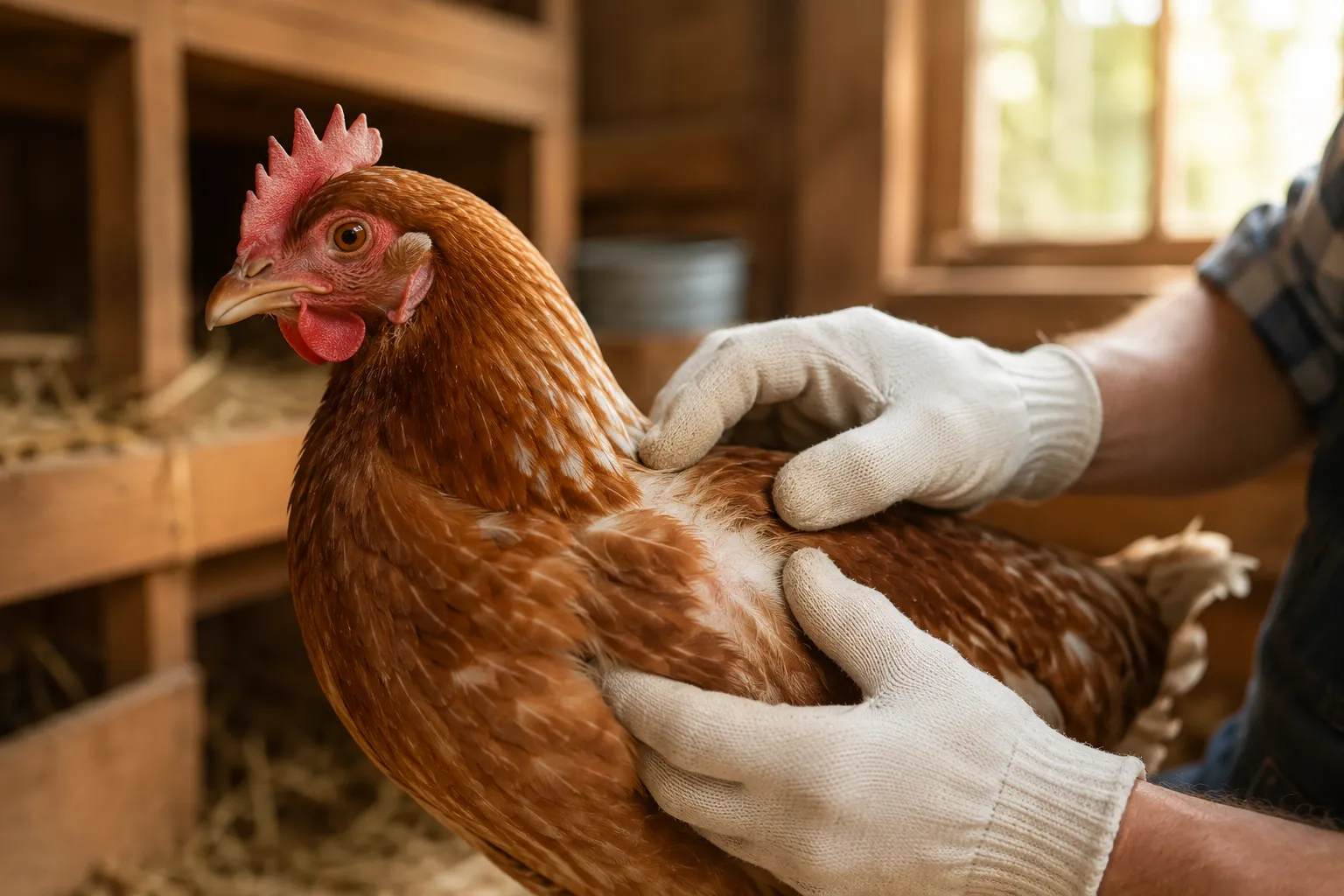
Quick Answer: Check your chickens for mites and lice by examining the vent area, under wings, and around the head after dark when mites are most active. Look for tiny moving dots (lice are tan and visible in daylight; mites are dark red and emerge at night), clusters of eggs on feather shafts, scabby skin, feather damage, and behavioral signs like excessive preening, dust bathing, or reduced egg production.
Key Takeaways
- Lice are visible in daylight as tan, straw-colored insects about 1-2mm long that stay on the chicken constantly
- Mites hide during the day and emerge at night to feed, appearing as tiny dark red or black dots
- Check at night with a flashlight to catch red mites, which live in coop cracks and only visit chickens to feed
- Look for eggs (nits) clustered at the base of feathers, especially around the vent and under wings
- Behavioral changes like reduced egg laying, pale combs, weight loss, and constant scratching indicate heavy infestation
- Both parasites can coexist on the same flock and require different treatment approaches
- Mites can bite humans temporarily but cannot complete their life cycle on people
- Treatment costs range from $10-50 for natural remedies to $30-80 for commercial products per flock
- Molting can mimic symptoms but lacks the presence of actual parasites or eggs on feathers
- Repeat treatments are essential because most products don’t kill eggs, which hatch in 7-10 days
What Do Chicken Mites Look Like Compared to Lice?
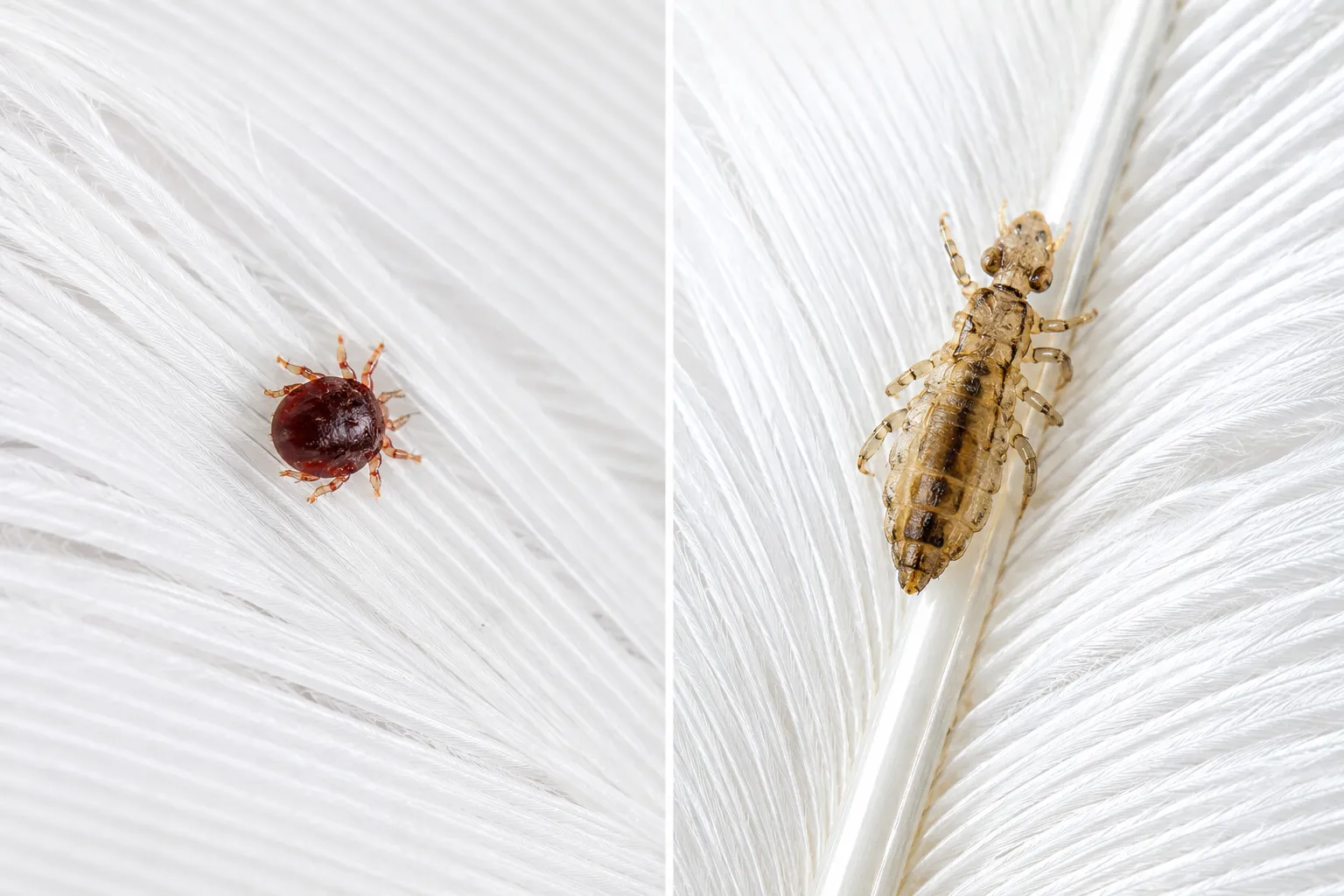
Chicken lice are tan to straw-colored, flat-bodied insects about 1-2mm long that you can see with the naked eye in good lighting. They have six legs, move quickly across feathers, and spend their entire life cycle on the bird. Lice appear as small, elongated bugs that cling to feather shafts.
Mites, particularly the common red mite (Dermanyssus gallinae), are much smaller, often less than 1mm, and appear as tiny dark red, brown, or black dots. After feeding on blood, red mites swell and become bright red. Northern fowl mites, which do live on the bird, look like tiny gray or reddish specks clustered around the vent.
Key visual differences:
- Color: Lice are light tan/straw; mites are dark red/black (gray before feeding)
- Size: Lice are 1-2mm (visible); mites are 0.5-1mm (barely visible)
- Shape: Lice are elongated and flat; mites are round or oval
- Movement: Lice scurry along feathers; mites crawl slowly or cluster in groups
- Location timing: Lice are always present; red mites only appear on birds at night
Common mistake: Confusing mite eggs or dirt specks with the parasites themselves. Actual lice and mites move when you part the feathers and look closely.
Where Do Mites Hide on Chickens vs Lice?
Lice live permanently on chickens and prefer warm, protected areas with dense feather coverage. The most common spots are around the vent (under the tail), under the wings near the body, around the base of the neck, and on the head near the ears and eyes. Lice lay their eggs (nits) in clusters at the base of feather shafts, where they appear as white or cream-colored clumps.
Red mites don’t actually live on chickens, they hide in coop cracks, crevices, roost joints, and nesting boxes during the day, then crawl onto sleeping birds at night to feed. Northern fowl mites do stay on the bird and concentrate around the vent area, creating dark, scabby patches.
Where to check for lice:
- Vent area and undertail coverts (most common)
- Under wings close to the body
- Back of the neck and head
- Around the eyes and beak
Where to check for mites:
- On the chicken: vent area at night with a flashlight
- In the coop: roost ends, cracks in wood, corners of nesting boxes
- Look for gray dust or tiny dark specks that turn red when crushed (mite droppings and dead mites)
Decision rule: If you only find parasites on the bird during the day, it’s lice. If you find them in coop crevices or only on birds at night, it’s red mites.
Can You See Chicken Lice With the Naked Eye?
Yes, you can see chicken lice with the naked eye, especially in bright natural light or with a flashlight. Adult lice are 1-2mm long, about the size of a sesame seed, and their tan color contrasts well against dark feathers. They move quickly when disturbed, making them easier to spot.
To see lice clearly, part the feathers around the vent or under the wings and look at the skin and base of feather shafts. You’ll see small, flat insects scurrying away from light. Lice eggs (nits) are also visible as white or cream clusters stuck to feathers near the skin.
Best conditions for spotting lice:
- Bright daylight or strong flashlight
- Dark-feathered birds (lice show up better)
- Calm, restrained bird so you can part feathers thoroughly
- Magnifying glass helps but isn’t required for adults
Mites are harder to see without magnification because they’re smaller and often match the color of skin or dried blood. Red mites are easiest to spot at night when they’re actively feeding and engorged with blood.
Symptoms of Mites on Chickens
Chickens with mites show pale combs and wattles due to blood loss, especially with heavy red mite infestations. You’ll notice reduced egg production, weight loss despite normal eating, and birds that appear lethargic or reluctant to roost at night (because that’s when red mites attack).
Physical signs include scabby, crusty skin around the vent and legs, dirty-looking vent feathers with dark specks (mite feces), and feather loss in patches. Northern fowl mites create dark, matted areas around the vent that look almost black from mite waste and dried blood.
Behavioral symptoms:
- Refusing to enter the coop at dusk
- Restlessness at night
- Excessive preening and scratching
- Standing rather than roosting
- Decreased activity and appetite
Physical symptoms:
- Pale comb, wattles, and face (anemia)
- Weight loss and poor body condition
- Scabby, irritated skin
- Dark debris around vent and on eggs
- Feather damage and bald patches
Severe cases can lead to death in young birds, setting hens, or already weakened chickens due to anemia. Chicks are especially vulnerable.
How to Check Chickens for Lice at Night
Checking at night is essential for detecting red mites, which hide in the coop during the day and only emerge after dark to feed on roosting birds. Wait until at least an hour after sunset when chickens are settled and mites are actively feeding.
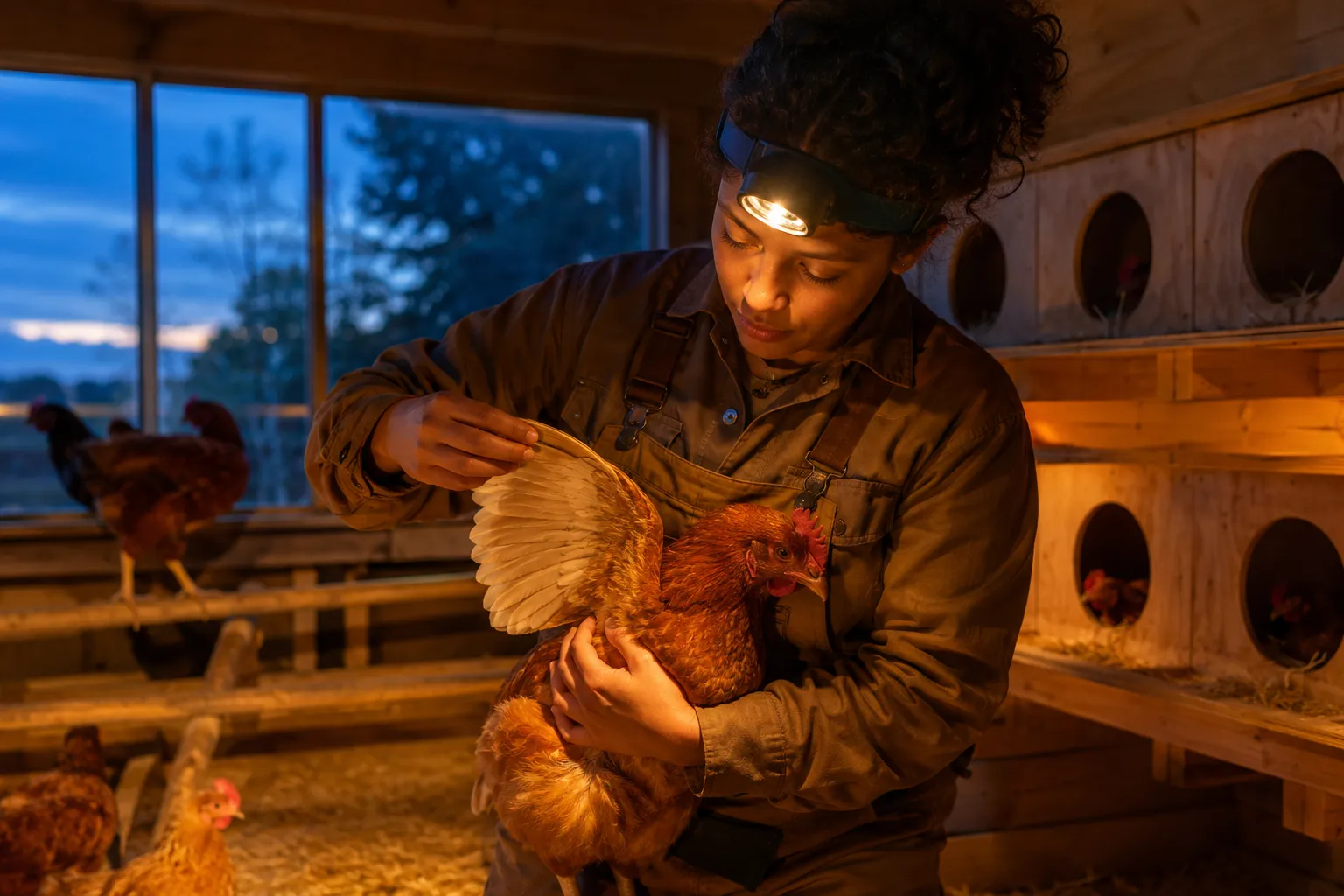
Use a bright flashlight or headlamp and gently catch a bird on the roost. Immediately examine the vent area, under the wings, and around the neck, you’ll see tiny dark or reddish dots moving on the skin if red mites are present. Also run your hand along the roost where the bird was sitting and check your palm for tiny crawling specks.
Night inspection steps:
- Wait 1-2 hours after dark when birds are deeply asleep and mites are feeding
- Bring a bright flashlight and a white cloth or paper towel
- Gently lift a bird from the roost without fully waking the flock
- Part feathers around the vent and look for moving dots on the skin
- Wipe the roost where the bird sat and check the cloth for mites
- Inspect roost ends and cracks for clusters of mites
What you’re looking for: Tiny dark red or black dots that move slowly across the skin or roost. After feeding, red mites become bright red and more visible. You might also see gray dust (mite waste) in roost crevices.
Edge case: If you find parasites during the day that stay on the bird, those are lice or northern fowl mites, not red mites.
Do Chicken Mites Bite Humans?
Yes, chicken mites, especially red mites, will bite humans and cause itchy, irritated welts similar to mosquito bites. The bites typically appear on arms, neck, and any exposed skin after handling infested birds or cleaning a mite-infested coop. The itching can be intense and last several days.
However, chicken mites cannot live on humans or complete their life cycle on human hosts. They bite opportunistically when they encounter people but will die within a few days without access to chickens. Northern fowl mites are more likely to bite humans than red mites because they stay on the bird and transfer more easily during handling.
Human symptoms:
- Small red welts, often in clusters
- Intense itching, especially at night
- Bites commonly on forearms, wrists, and neck
- Skin irritation that worsens with scratching
Prevention when treating infested birds:
- Wear long sleeves, gloves, and pants tucked into socks
- Shower immediately after coop cleaning
- Wash clothes in hot water separately
- Apply insect repellent before handling birds
If bitten: Wash the area with soap and water, apply anti-itch cream or calamine lotion, and avoid scratching to prevent infection. Bites typically resolve in 3-7 days once you’re no longer exposed.
Best Treatment for Chicken Mites vs Lice
Lice require on-bird treatment because they live permanently on the chicken, while red mites require coop treatment because they live in the environment. Northern fowl mites need both approaches since they stay on the bird but can survive briefly off the host.
For lice (on-bird treatment):
- Permethrin poultry dust: Apply directly to skin under wings, around vent, and on neck; repeat in 7-10 days
- Ivermectin pour-on: Small drop on skin (off-label use; observe egg withdrawal)
- Spinosad spray: Natural option, spray bird thoroughly, repeat weekly for 3 weeks
For red mites (coop treatment):
- Diatomaceous earth (DE): Dust all cracks, roosts, and nesting boxes; reapply after cleaning
- Permethrin coop spray: Spray all surfaces, especially crevices; let dry before allowing birds back
- Predatory mites: Biological control that eats mite eggs and juveniles
For northern fowl mites (both):
- Treat birds with permethrin dust or ivermectin
- Clean and treat coop to eliminate any environmental population
- Repeat treatment in 7-10 days
Treatment schedule: Most products don’t kill eggs, so you must repeat treatment when eggs hatch (7-10 days later). Plan for at least 2-3 treatments spaced a week apart.
Common mistake: Treating only the birds for red mites or only the coop for lice. Match your treatment location to where the parasite actually lives.
How Much Does Poultry Lice Treatment Cost?
Treatment costs for a small backyard flock (5-10 chickens) typically range from $15-50 for a complete treatment cycle. A 1-pound container of permethrin poultry dust costs $12-18 and treats 10-15 birds multiple times. Diatomaceous earth costs $15-25 for a 10-pound bag that lasts several months.
Natural treatments like neem oil spray ($10-15 per bottle) or sulfur powder ($8-12) are cheaper upfront but often require more frequent applications. Ivermectin pour-on costs $20-40 per bottle but treats many birds with just a few drops each.
Cost breakdown by treatment type:
- Permethrin dust (1 lb): $12-18, treats 10-15 birds for 2-3 applications
- Diatomaceous earth (10 lb): $15-25, multiple treatments and prevention
- Permethrin coop spray (32 oz): $18-30, treats average coop 2-3 times
- Neem oil spray (16 oz): $10-15, treats 5-8 birds per bottle
- Ivermectin pour-on (250 ml): $20-40, treats 50+ birds
- Predatory mites (package): $40-80, one-time biological control
For larger flocks (20+ birds): Budget $50-100 for a complete treatment program including both bird and coop products.
Hidden costs: Replacing heavily infested bedding, extra cleaning supplies, and potential egg withdrawal periods if using medications. Factor in 2-4 hours of labor for thorough treatment and coop cleaning.
Why Are My Chickens Still Itching After Lice Treatment?
Chickens may continue scratching for 1-2 weeks after successful lice treatment because skin irritation takes time to heal. The bites, scabs, and inflammation caused by lice don’t disappear immediately even when all parasites are dead. This is normal and should gradually improve.
However, persistent itching beyond two weeks usually means the treatment didn’t work completely. The most common reason is that eggs (nits) survived the first treatment and hatched into a new generation of lice. Most poultry dusts and sprays don’t kill eggs, only adult and juvenile lice.
Reasons for continued itching:
- Eggs survived: Nits hatch in 7-10 days; you need a second treatment
- Incomplete coverage: Missed areas under wings or around vent still harbor lice
- Mites, not lice: You treated for lice but the problem is actually mites
- Reinfection: New birds, wild birds, or contaminated equipment reintroduced parasites
- Other skin issues: Dry skin, fungal infection, or mite bites (not lice)
What to do:
- Re-examine birds carefully at night and during the day to confirm parasites are gone
- Apply second treatment 7-10 days after the first, even if you don’t see lice
- Check the coop for red mites that might be causing nighttime irritation
- Inspect all flock members including any you might have missed initially
Edge case: Some chickens develop habitual over-preening after an infestation clears. This usually resolves within a month as feathers regrow and skin fully heals.
Can Chickens Have Both Mites and Lice at the Same Time?
Yes, chickens frequently have both mites and lice simultaneously, especially in flocks with poor biosecurity or overcrowded conditions. Each parasite has a different life cycle and habitat preference, so one doesn’t prevent the other. In fact, the stress and weakened immune system from one infestation can make birds more susceptible to the second.
A chicken might have lice living permanently in its feathers while red mites attack from the coop at night. This dual infestation is particularly draining because the bird faces constant parasitic pressure 24 hours a day.
Signs of dual infestation:
- Severe anemia (pale comb) combined with visible lice
- Parasites found both on the bird during the day and in coop cracks
- Extreme feather damage and skin irritation
- Rapid weight loss and dramatic drop in egg production
Treatment approach for both:
- Treat birds directly with permethrin dust or spray for lice
- Treat coop thoroughly with permethrin spray or DE for mites
- Repeat both treatments in 7-10 days to catch hatching eggs
- Monitor closely for 3-4 weeks to ensure both are eliminated
Prevention: Quarantine new birds for 30 days, inspect regularly, maintain clean bedding, and provide dust bathing areas with DE or wood ash mixed in.
Do All Chicken Breeds Get Mites Equally?
All chicken breeds can get mites and lice, but heavily feathered breeds like Silkies, Cochins, and Brahmas are more susceptible to severe infestations. Their dense plumage provides more hiding places for parasites and makes inspection and treatment more difficult. Feathered legs and feet also create ideal habitat for scaly leg mites.
Breeds with sparse feathering or those that are more active and vigorous in dust bathing (like Leghorns and Mediterranean breeds) tend to have lighter infestations because they naturally control parasites better through grooming behavior.
Higher risk breeds:
- Silkies: Dense, fluffy feathers hide parasites well
- Cochins and Brahmas: Feathered legs attract scaly leg mites
- Polish: Head feathers make inspection difficult
- Any bantam breeds: Smaller body size means infestations cause more severe impact
Lower risk breeds:
- Leghorns: Active, excellent dust bathers
- Rhode Island Reds: Hardy, vigorous groomers
- Australorps: Good natural parasite resistance
Age matters too: Young chicks and elderly hens are more vulnerable regardless of breed. Broody hens sitting on nests for extended periods are especially prone to red mite attacks because they’re stationary at night.
Choose treatment based on feathering: Heavily feathered breeds need more thorough dust application and may benefit from spray treatments that penetrate dense plumage better.
Mistaking Molting for Mites in Chickens
Molting, the natural process of shedding and regrowing feathers, can look similar to parasite damage, especially to new chicken keepers. Both cause feather loss, increased preening, and irritable behavior. However, molting follows predictable patterns and lacks the presence of actual parasites.
During a molt, chickens lose feathers symmetrically, typically starting at the head and neck, then moving down the body. The skin underneath looks clean and healthy with new pin feathers emerging. Molting usually occurs in fall (August-November) and lasts 8-12 weeks.
Molting characteristics:
- Symmetrical feather loss on both sides of the body
- Clean, healthy skin without scabs or irritation
- Seasonal timing (late summer/fall for annual molt)
- New pin feathers visible as small spikes emerging from skin
- No parasites or eggs when you examine feathers and skin
Mite/lice damage characteristics:
- Patchy, irregular feather loss often concentrated around vent
- Scabby, irritated skin with dark debris
- Year-round occurrence not tied to season
- Broken, chewed feathers rather than clean loss
- Visible parasites or eggs on feathers and skin
Quick check: Part the feathers and examine the skin and feather shafts closely. If you see tiny moving insects, clusters of white eggs, or dark specks that turn red when crushed, it’s parasites, not molting.
Edge case: Chickens can molt and have parasites simultaneously. The stress of molting can make existing light infestations worse because the bird’s immune system is focused on feather regrowth.
How Long Can Chicken Mites Live Without a Host?
Red mites (Dermanyssus gallinae) can survive 4-5 months without feeding on a chicken, though they typically feed every 2-3 days when hosts are available. This long survival period makes red mites extremely difficult to eliminate and explains why infestations can reappear even after treating birds and cleaning the coop.
Northern fowl mites, which live on the bird, can only survive 2-3 weeks off the host. Lice die within 1-2 days without a chicken because they’re completely dependent on the bird for warmth, humidity, and food.
Survival times without a host:
- Red mites: 4-5 months (up to 8 months in ideal conditions)
- Northern fowl mites: 2-3 weeks
- Chicken lice: 1-2 days
- Scaly leg mites: 2-3 weeks off the host
Why this matters for treatment: You cannot eliminate red mites simply by removing chickens from the coop for a few days. The mites will wait in cracks and crevices for months until birds return. Successful red mite control requires thorough coop treatment with residual insecticides or repeated applications of contact killers like DE.
Practical application: When integrating new birds, quarantine them for 30 days. This period allows any northern fowl mites they’re carrying to die off naturally if they’re kept completely separate from your flock. However, it won’t help with red mites already established in your coop environment.
Temperature effect: Cold temperatures (below 45°F) slow mite metabolism and extend survival time. Heat above 95°F shortens survival but doesn’t kill mites quickly enough to be a practical treatment method.
Natural Remedies for Chicken Lice That Actually Work
Diatomaceous earth (DE) is the most effective natural remedy for lice when applied directly to the bird’s skin, particularly around the vent, under wings, and at the base of the neck. DE works by scratching the waxy coating on lice, causing them to dehydrate and die within 24-48 hours. Use food-grade DE and apply it thoroughly to the skin, not just the feathers.
Dust baths with wood ash, DE, or sulfur powder allow chickens to self-treat by coating their feathers and skin with abrasive particles that kill lice mechanically. Provide a large dust bathing area (at least 2×2 feet for small flocks) in a dry, sheltered location.
Effective natural treatments:
Diatomaceous earth (DE):
- Apply directly to skin with a puff duster or by hand
- Dust the entire bird, focusing on vent and under wings
- Repeat every 7 days for 3 weeks
- Add to dust bath areas for ongoing prevention
Wood ash:
- Mix with DE (50/50) in dust bath
- Fine texture works better than chunky ash
- Free if you have a wood stove or fireplace
Neem oil spray:
- Mix 2 tablespoons neem oil + 1 teaspoon dish soap + 1 quart water
- Spray bird thoroughly, especially under wings and around vent
- Repeat weekly for 3 weeks
- Observe egg withdrawal (7-10 days)
Sulfur powder:
- Dust on birds like DE
- Also effective in dust baths
- Strong smell but safe for chickens
What doesn’t work well:
- Essential oils alone: Too dilute to kill lice effectively
- Garlic or herbs in feed: No evidence of parasite control
- Vinegar spray: May soothe skin but doesn’t kill lice
- Petroleum jelly: Messy and only works on scaly leg mites
Best practice: Combine direct treatment (DE or neem oil on the bird) with environmental management (clean coop, quality dust bath) and repeat treatments to catch newly hatched lice.
Frequently Asked Questions
How often should I check my chickens for mites and lice?
Inspect your flock monthly during routine health checks, and weekly if you notice any symptoms like reduced egg production or excessive scratching. Do at least one nighttime check per season to catch red mites early.
Can I use dog or cat flea treatment on chickens?
No, most dog and cat flea products contain ingredients toxic to birds, particularly pyrethrins at concentrations too high for poultry. Use only products labeled for poultry or consult a veterinarian for off-label ivermectin use.
Do I need to treat all my chickens if only one has lice?
Yes, treat the entire flock simultaneously. Lice spread quickly through direct contact, and any untreated bird will reinfect the others within days. Assume all birds are affected once you find lice on one.
How do I clean my coop after a mite infestation?
Remove all bedding, scrape droppings and debris, spray all surfaces with permethrin or another coop treatment, let dry completely, then add fresh bedding mixed with DE. Pay special attention to roost ends, cracks, and nesting box corners where mites hide.
Can chickens die from mites or lice?
Yes, severe infestations can kill chickens, especially chicks, broody hens, or already weakened birds. Heavy red mite infestations cause fatal anemia, while lice can lead to death through stress, secondary infections, and extreme feather loss in cold weather.
What’s the white stuff at the base of my chicken’s feathers?
White or cream-colored clusters stuck to feather shafts near the skin are lice eggs (nits). They look like tiny grains of rice or dandruff but don’t brush off easily. This confirms an active lice infestation requiring treatment.
Is diatomaceous earth safe to breathe while applying it to chickens?
Food-grade DE is generally safe but can irritate lungs if inhaled in large amounts. Apply it outdoors or in a well-ventilated area, wear a dust mask, and avoid creating large dust clouds. Keep chickens calm to minimize airborne particles.
Why do my chickens have mites when I keep a clean coop?
Red mites are introduced by wild birds, rodents, or new chickens and can establish populations in even the cleanest coops because they hide in tiny cracks you can’t easily clean. Cleanliness helps but doesn’t prevent introduction from outside sources.
Can I eat eggs from chickens being treated for mites or lice?
Eggs are safe to eat during treatment with DE, neem oil, or permethrin dust (no withdrawal period required). If using ivermectin or other medications, observe the withdrawal period specified on the label or by your vet, typically 7-14 days.
How do I prevent mites and lice in my flock?
Quarantine new birds for 30 days, inspect them before introduction, provide dust bathing areas with DE or wood ash, maintain dry bedding, reduce wild bird access to feed and coop, and conduct monthly health checks including nighttime mite inspections.
Do chickens naturally control their own mites and lice?
Healthy chickens with access to quality dust baths can keep light infestations under control through natural grooming and bathing behavior, but they cannot eliminate established populations without help. Prevention through dust bathing is more effective than relying on birds to self-treat heavy infestations.
What time of year are mites and lice worst?
Red mites thrive in warm weather (spring through fall) and populations explode in summer heat. Lice are present year-round but may be more noticeable in winter when chickens are confined indoors more and have less access to dust baths.
Conclusion
Learning how to tell if a chicken has mites or lice is essential for maintaining a healthy, productive flock. The key differences, lice are visible tan insects that live on the bird constantly, while red mites are tiny dark parasites that hide in the coop and feed at night, determine both how you detect them and how you treat them. Regular inspections during the day and at night, combined with attention to behavioral changes like reduced egg production and excessive scratching, help you catch infestations early when they’re easiest to manage.
Take action now:
- Inspect your flock this week: Check at least two birds thoroughly during the day and do a nighttime roost check with a flashlight
- Set up a quality dust bath: Mix DE or wood ash into a sheltered area where chickens can self-treat
- Create an inspection schedule: Monthly health checks with quarterly nighttime mite inspections
- Stock basic supplies: Keep permethrin dust and DE on hand so you can treat immediately when you spot parasites
- Quarantine new birds: Always isolate new chickens for 30 days and inspect them thoroughly before introducing them to your flock
Remember that successful parasite control requires treating both the birds and their environment, repeating treatments to catch newly hatched eggs, and maintaining prevention practices year-round. With consistent monitoring and prompt treatment, you can keep your flock comfortable, healthy, and free from the stress and health impacts of mites and lice.


