
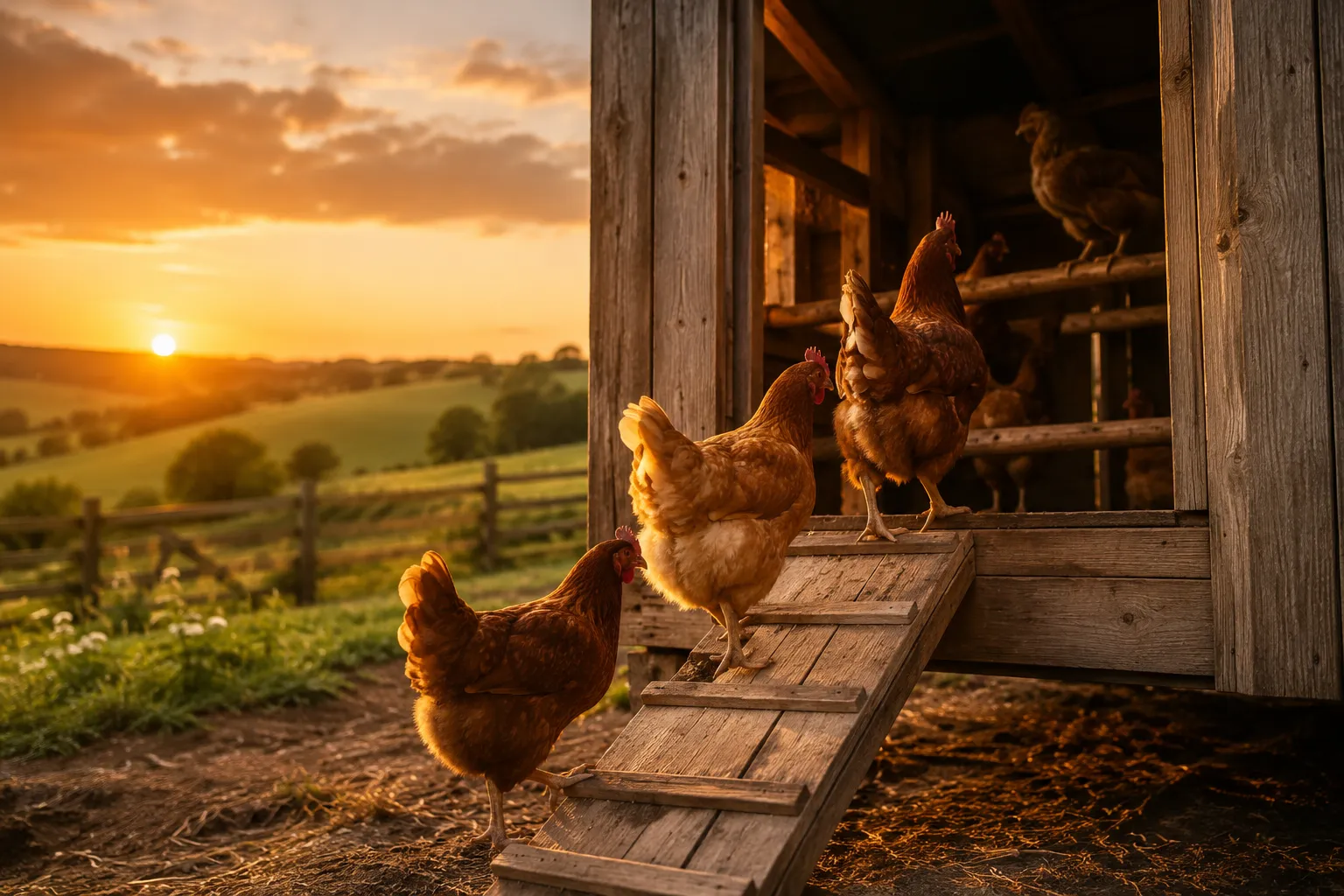
Chickens naturally go to roost approximately 15 to 30 minutes before sunset, though this timing varies by season, breed, and individual flock behavior. This instinctive behavior is triggered by decreasing light levels, prompting chickens to seek the safety of elevated perches for the night. Understanding what time chickens go to roost helps backyard flock owners establish routines, troubleshoot coop problems, and ensure their birds stay safe from nighttime predators.
Key Takeaways
- Chickens roost 15-30 minutes before sunset, with timing shifting throughout the year as daylight hours change
- Roosting is sleeping on elevated bars, while nesting is laying eggs in boxes during the day
- Light levels trigger roosting behavior, not a specific clock time, so expect seasonal variation
- Young chicks don’t roost until 4-8 weeks old, starting with low perches before joining adult birds
- Chickens refusing to roost often indicates coop design problems, predator stress, or health issues
- Morning wake-up occurs at first light, typically 30 minutes before sunrise
- Training new chickens to roost takes 3-7 days of consistent placement on bars after dark
- Proper roost bars should be 2-4 inches wide with rounded edges, positioned higher than nesting boxes
- Chickens caught outside after dark face increased predator risk and may experience stress
What Time Do Chickens Naturally Go to Sleep at Night?
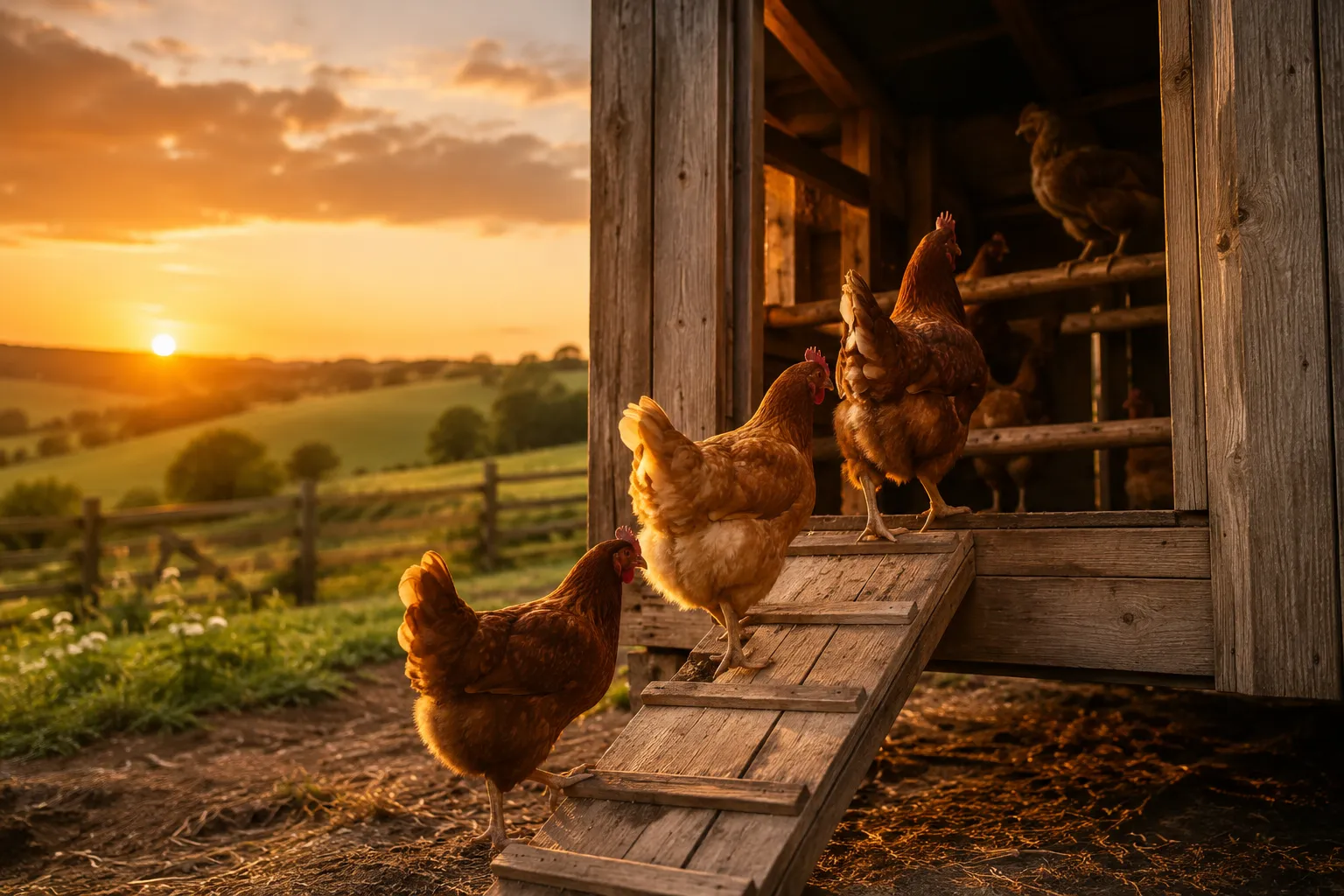
Chickens naturally go to sleep 15 to 30 minutes before the sun fully sets, responding to the dimming light rather than a specific time on the clock. This means roosting time shifts throughout the year, happening as early as 4:30 PM in winter and as late as 9:00 PM in summer, depending on your geographic location.
The roosting process begins when ambient light drops to certain levels that trigger the birds’ instinct to seek shelter. Most chickens will start moving toward their coop when they sense dusk approaching, giving themselves enough time to settle onto their preferred roosting spots before darkness falls completely.
Factors that influence exact roosting time:
- Season and day length, Winter brings earlier roosting, summer delays it
- Weather conditions, Overcast days may trigger earlier roosting
- Flock hierarchy, Dominant birds often claim prime roosting spots first
- Breed characteristics, Some heritage breeds roost slightly earlier than production breeds
- Age of birds, Older chickens tend to establish more consistent routines
Choose a coop-closing routine based on your local sunset time, adding a 30-minute buffer after sunset to ensure all birds are safely inside before you lock the door.
How Long Before Sunset Do Chickens Go to Roost?
Chickens typically begin their roosting routine 15 to 30 minutes before the sun drops below the horizon, though some flocks start heading toward the coop up to 45 minutes early. This pre-sunset window gives them time to jockey for position on the roosting bars, settle disputes about pecking order, and get comfortable before full darkness arrives.
The exact timing depends on several environmental cues:
Early roosters (30-45 minutes before sunset):
- Flocks with strong predator pressure in the area
- Chickens in heavily wooded or shaded locations where light fades faster
- Older, more established flocks with set routines
- Breeds with calmer temperaments
Late roosters (15-20 minutes before sunset):
- Free-range flocks with large foraging areas
- Young, active birds still exploring
- Flocks in open areas with extended twilight
- Chickens distracted by food or treats
A common mistake is closing the coop door too early. Wait until at least 20 minutes after sunset to ensure stragglers have made it inside, especially during the adjustment period when daylight saving time changes.
Do Chickens Roost at the Same Time Every Day?
Chickens do not roost at the same clock time every day because their behavior is governed by natural light levels, not internal timekeeping. Instead, they roost at approximately the same point relative to sunset each evening, creating a pattern that shifts gradually with the seasons.
During spring and summer, you’ll notice your flock heading to roost progressively later each week as days lengthen. In fall and winter, the opposite occurs, with roosting time moving earlier. This natural rhythm follows the photoperiod (day length) and is deeply ingrained in chicken biology.
What stays consistent:
- The time interval before sunset (usually 15-30 minutes)
- The order in which individual chickens enter the coop
- The preferred roosting spots each bird claims
- Morning wake-up relative to sunrise
What varies:
- The actual clock time of roosting (shifts with seasons)
- Slight day-to-day variations based on weather
- Disruptions from predator scares or flock changes
For backyard chicken keepers, this means adjusting your evening chore schedule throughout the year rather than sticking to a fixed time. Many owners find success checking on their flock “at dusk” rather than at a specific hour.
What’s the Difference Between Roosting and Nesting in Chickens?
Roosting is the act of sleeping on elevated perches at night, while nesting is the behavior of settling into a nesting box to lay eggs during daylight hours. These are two completely separate behaviors with different purposes, locations, and timing.
Roosting characteristics:
- Happens at night for sleeping
- Takes place on elevated bars or perches
- Chickens perch upright with feet gripping the bar
- Multiple birds line up side by side
- Occurs in the same location every night
- Provides safety from ground predators
Nesting characteristics:
- Happens during the day (usually morning)
- Takes place in enclosed nesting boxes
- Hens sit down in a squatting position
- Usually one bird per box (though they may queue)
- Used only for the 20-30 minutes needed to lay an egg
- Provides privacy and a soft surface for eggs
A common problem occurs when chickens sleep in nesting boxes instead of on roosts. This leads to soiled eggs, dirty boxes, and potential health issues. Nesting boxes should always be positioned lower than roosting bars to discourage sleeping in them, and should be designed as enclosed, darker spaces that feel secure for laying but less appealing for overnight stays.
Choose roosting bars over nesting boxes for nighttime sleeping by ensuring roosts are at least 2-4 feet high and positioned as the highest point in the coop.

Why Won’t My Chickens Go Into the Coop at Dusk?
Chickens refusing to enter the coop at dusk typically face one of several issues: predator stress, coop design problems, parasites, or incomplete training for new birds. Healthy chickens with a safe, comfortable coop will naturally roost inside without intervention.
Common causes and solutions:
Predator presence or fear
- Signs: Birds roosting in trees, on fences, or huddling outside
- Solution: Check for signs of predators (tracks, digging, droppings), secure the run, add motion-activated lights
Poor coop ventilation
- Signs: Ammonia smell, excessive moisture, birds reluctant to enter
- Solution: Add ventilation near the roof, ensure proper airflow without drafts
Mites or lice infestation
- Signs: Birds avoiding roost bars, feather damage, restless behavior at night
- Solution: Inspect birds and coop for parasites, treat with appropriate products, clean and dust roosts
Insufficient or uncomfortable roost bars
- Signs: Chickens crowding in corners or on the floor
- Solution: Provide 8-10 inches of roosting space per bird, use 2-4 inch wide bars with rounded edges
New chickens not trained
- Signs: Recently acquired birds sleeping outside or in wrong areas
- Solution: Manually place birds on roosts after dark for 3-7 consecutive nights
Bullying or pecking order disputes
- Signs: Lower-ranking birds avoiding the coop, injuries, stressed behavior
- Solution: Add multiple roost bars at the same height, increase coop space, separate aggressive birds temporarily
If chickens suddenly change their roosting behavior after months of normal patterns, investigate immediately. This often signals a new predator threat, health issue, or environmental change that needs addressing.
How to Train Chickens to Go Into the Coop at Night
Training chickens to roost in their coop at night takes 3 to 7 days of consistent manual placement, after which most birds will continue the behavior on their own. This process works best with new chickens, young pullets, or birds transitioning to a new coop.
Step-by-step training process:
- Wait until full darkness (30-45 minutes after sunset) when chickens are drowsy and less likely to resist
- Gently pick up each bird from wherever they’ve settled for the night
- Place them directly on the roosting bars inside the coop, positioning their feet to grip the bar
- Close the coop door to keep them inside overnight
- Repeat every night for at least 5-7 consecutive nights without skipping
- Monitor on night 8 to see if birds enter on their own
Tips for success:
- Use a dim red flashlight to avoid startling birds with bright light
- Handle birds calmly and quietly to minimize stress
- Place younger or lower-ranking birds first, then dominant birds
- Ensure the coop is more appealing than alternative roosting spots
- Remove any comfortable roosting alternatives outside the coop (low branches, equipment)
For stubborn cases:
- Keep birds confined to the coop and run for 3-4 days to establish it as “home base”
- Add treats inside the coop before dusk to create positive associations
- Ensure roost bars are higher than any other perching option
- Check that the coop entrance is well-lit enough at dusk for birds to see their way in
Choose a training period during mild weather when you can commit to the nightly routine. Skipping even one night can reset the process and require starting over.
What Happens If Chickens Don’t Roost Before Dark?
Chickens caught outside after dark face significantly increased predator risk, potential injury from stumbling in darkness, and elevated stress levels. Once full darkness falls, chickens have extremely poor night vision and become essentially helpless, unable to flee from threats or navigate to safety.
Immediate risks:
- Predation, Raccoons, foxes, opossums, and owls actively hunt at night
- Exposure, Birds on the ground lose body heat faster than those roosting together
- Injury, Chickens may panic and injure themselves trying to move in darkness
- Stress, Being caught outside triggers fear responses that can impact health
Long-term consequences:
- Disrupted laying patterns from stress
- Weakened immune system making birds more susceptible to illness
- Broken roosting routines that become harder to re-establish
- Increased vulnerability to respiratory issues from ground-level dampness
If you discover chickens outside after dark, use a flashlight to locate them and manually place them inside the coop. Move slowly and speak softly to avoid startling them into flight, which could cause injury. Most chickens will be in a semi-dormant state and can be easily picked up and relocated.
Prevention strategies:
- Establish a consistent evening check routine 20-30 minutes after sunset
- Use automatic coop doors with light sensors or timers
- Ensure the coop entrance is visible and accessible during twilight
- Remove obstacles or distractions that might delay roosting
- Address any underlying issues causing birds to avoid the coop
A common mistake is assuming chickens will always make it inside on time. Weather changes, predator scares, or flock dynamics can disrupt normal patterns, making evening checks essential for flock safety.
Do Baby Chicks Roost at the Same Time as Adult Chickens?
Baby chicks do not roost at the same time as adult chickens because they lack the physical development and learned behavior required for perching until they reach 4 to 8 weeks of age. Young chicks instead huddle together on the ground or bedding for warmth and safety during their first month of life.
Chick roosting development timeline:
- 0-3 weeks: Chicks sleep in piles on the ground, relying on each other or a heat source for warmth
- 4-6 weeks: Begin experimenting with low perches (1-2 inches high), often during the day first
- 6-8 weeks: Start roosting on low bars at night, though may still occasionally sleep on the ground
- 8-12 weeks: Consistently roost at night, ready to join adult flock on higher bars
- 12+ weeks: Fully integrated into adult roosting patterns and hierarchy
Setting up roosts for growing chicks:
- Provide low practice roosts (6-12 inches high) starting at 3-4 weeks
- Use narrower bars (1-1.5 inches) sized for smaller feet
- Keep initial roosts close to the ground to prevent injury from falls
- Gradually increase height as chicks grow and gain confidence
- Maintain ground-level sleeping areas for chicks who aren’t ready
When integrating young birds with an established flock, expect the juveniles to roost separately or on lower bars initially. The pecking order will determine when and where young chickens can claim roosting space among adults, typically once they reach 16-20 weeks and are fully feathered.
Choose integration timing carefully. Birds that are too young (under 12 weeks) may be bullied off roosts entirely and forced to sleep on the ground, increasing stress and health risks.
What Are the Best Roosting Bars for Chickens to Sleep On?
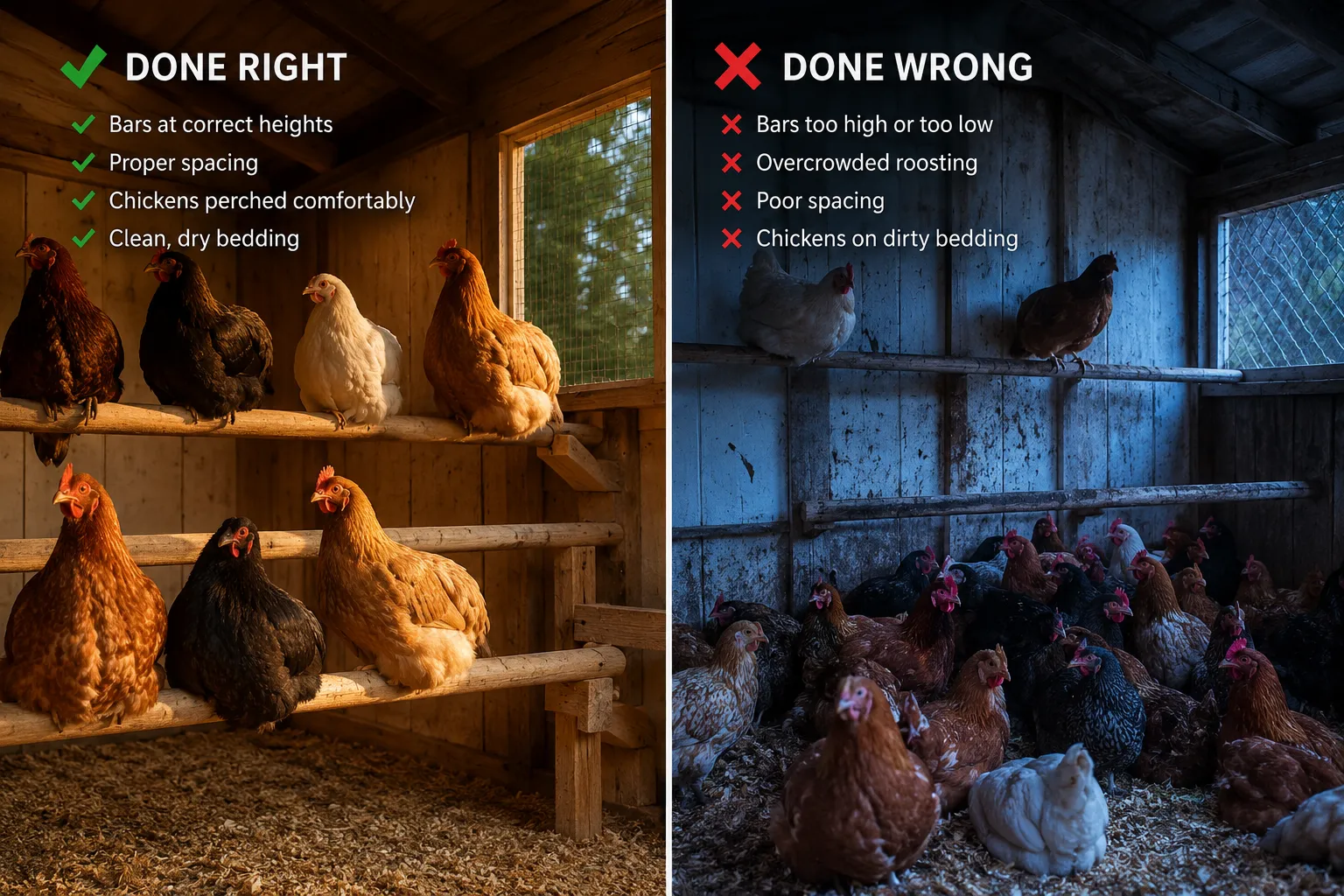
The best roosting bars for chickens are 2 to 4 inches wide with gently rounded or flat tops, positioned 2-4 feet off the ground with 8-10 inches of space per bird. Natural wood is ideal because it provides good grip, insulates better than metal, and allows chickens to comfortably wrap their toes around or rest flat-footed.
Optimal roost bar specifications:
| Feature | Recommendation | Why It Matters |
|---|---|---|
| Width | 2-4 inches | Allows chickens to rest flat-footed in cold weather while still being grippable |
| Material | Natural wood (untreated) | Provides grip, insulation, and comfort; avoid treated lumber with chemicals |
| Edge shape | Rounded or slightly flat | Prevents foot injuries and pressure sores |
| Height | 2-4 feet from ground | High enough for safety, low enough to prevent injury from jumping down |
| Spacing | 12-18 inches between parallel bars | Prevents droppings from landing on lower birds |
| Length | 8-10 inches per bird | Ensures adequate space without overcrowding |
Materials to avoid:
- Metal pipes or rods, Too cold in winter, too hot in summer, slippery surface
- PVC pipe, Slippery, doesn’t allow proper grip, can cause foot problems
- Thin branches or dowels, Too narrow, causes pressure points and discomfort
- Treated lumber, Contains chemicals harmful to chickens
Positioning best practices:
- Place roosts higher than nesting boxes to discourage sleeping in boxes
- Install all roosts at the same height to prevent hierarchy battles over “top” spots
- Position away from walls (12+ inches) so tail feathers don’t drag
- Ensure adequate headroom (18+ inches) above roosts
- Make roosts removable for easy cleaning
A common mistake is using roosts that are too narrow or round. While chickens can grip thin branches, they prefer to rest flat-footed during cold weather to cover their feet with their body feathers for warmth. The 2-4 inch width accommodates both gripping and flat-footed resting.
Why Are My Chickens Sleeping on the Ground Instead of the Roost?
Chickens sleeping on the ground instead of roosting typically indicates roost bar problems, health issues, parasites, or bullying within the flock. Healthy chickens instinctively prefer elevated sleeping positions for safety, so ground-sleeping is abnormal behavior that requires investigation.
Common causes and fixes:
Roost design problems
- Bars too high for chickens to reach comfortably (especially heavy breeds)
- Bars too narrow, causing foot discomfort
- Insufficient space causing overcrowding
- Fix: Redesign roosts following proper specifications (2-4 inches wide, adequate spacing)
Mites or lice infestation
- Parasites living in roost cracks make perching uncomfortable
- Birds avoid infested areas
- Fix: Inspect roosts and birds carefully, treat with appropriate products, clean thoroughly
Leg or foot injuries
- Bumblefoot, sprains, or arthritis make perching painful
- Older or overweight birds may struggle to jump up
- Fix: Examine each bird’s feet and legs, provide veterinary care, add ramps or lower roosts
Pecking order bullying
- Dominant birds preventing lower-ranking chickens from accessing roosts
- New birds not yet accepted into flock hierarchy
- Fix: Add more roosting space, create multiple roosting areas, separate aggressive birds
Young birds not yet trained
- Pullets under 8 weeks may not have learned to roost
- Recently moved chickens unfamiliar with new coop
- Fix: Manually place birds on roosts after dark for several consecutive nights
Broody behavior
- Hens going broody may choose nesting boxes or ground spots
- Normal temporary behavior during brooding cycle
- Fix: Break broodiness if unwanted, or provide separate broody area
Check the coop at night with a flashlight to observe exactly where and how birds are sleeping. This reveals whether the issue affects the entire flock or specific individuals, helping you diagnose the root cause. Birds sleeping in corners or huddled together on the ground often indicate temperature, ventilation, or predator stress issues rather than roost problems.
Do Chickens Need Light to Find Their Roost at Night?
Chickens do not need artificial light to find their roost at night if they enter the coop during the natural twilight period before full darkness. However, they do need sufficient ambient light during the roosting process because chickens have poor night vision and cannot navigate effectively in complete darkness.
The natural roosting sequence works like this: chickens begin moving toward the coop while there’s still enough twilight to see clearly (15-30 minutes before sunset), enter the coop during dim but adequate light, and settle onto their familiar roosting spots before darkness becomes complete. Once positioned on the roost, they remain there all night regardless of light levels.
When artificial light helps:
- Delayed evening chores, If you need to keep chickens active past natural roosting time
- Winter months, Very early sunsets may require brief lighting for safe coop access
- Coop design issues, Dark interiors or poor entrance visibility during twilight
- Training new birds, Dim light helps chickens learn coop layout
When artificial light causes problems:
- Constant overnight lighting, Disrupts natural sleep cycles and reduces egg production
- Bright lights at dusk, Can delay natural roosting behavior
- Sudden light changes, Startles roosting birds and causes stress
If you choose to add lighting, use a dim, warm-toned bulb (red or amber) on a timer that turns off 30-60 minutes after sunset. This gives stragglers time to enter while still allowing natural darkness for sleeping. Avoid bright white or blue-spectrum lights that interfere with melatonin production and sleep quality.
Choose automatic coop door closers with light sensors rather than timers. These adapt to changing sunset times throughout the year and ensure birds have adequate twilight for safe roosting without requiring manual schedule adjustments.
What Time Do Chickens Wake Up in the Morning?
Chickens wake up at first light, typically 30 minutes before sunrise, though some birds may stir slightly earlier depending on ambient light conditions. Unlike their evening roosting behavior which follows a predictable pre-sunset pattern, morning wake-up is triggered by the first hints of dawn light penetrating the coop.
Morning routine timeline:
- 30-45 minutes before sunrise: First birds begin stirring, soft vocalizations start
- 15-30 minutes before sunrise: Most of the flock is awake, preening begins
- At sunrise: Birds start leaving roosts, moving toward food and water
- 15-30 minutes after sunrise: Full activity, foraging, and normal daytime behavior
Factors affecting wake-up time:
- Coop window placement, East-facing windows catch earlier light
- Season, Summer brings 4:30-5:00 AM wake-ups, winter allows sleeping until 7:00-8:00 AM
- Artificial lighting, Any light entering the coop triggers waking
- Roosters, Crowing often begins 30-60 minutes before sunrise
- Flock dynamics, Active birds wake quieter ones
For backyard chicken keepers, this means morning chores should align with sunrise rather than a fixed clock time. Chickens will be ready for coop door opening, fresh water, and feed as soon as natural light appears.
Managing early wake-ups:
- Use blackout curtains or covers on coop windows to delay waking in summer
- Position coops away from streetlights or security lights
- Ensure automatic doors open after sunrise to prevent noise complaints from early-waking roosters
- Provide overnight food and water access so birds aren’t distressed if you sleep later
A common complaint from new chicken owners is early-morning noise, especially from roosters. This is natural behavior tied to dawn and cannot be trained away. Choose coop locations and flock composition (hens only) based on your tolerance for early-morning activity.
How Do Seasonal Changes Affect Chicken Roosting Time?
Seasonal changes cause chicken roosting time to shift by 4 to 5 hours throughout the year, with summer roosting occurring as late as 9:00 PM and winter roosting happening as early as 4:30 PM in northern climates. This variation follows the changing photoperiod (day length) as chickens respond to natural light levels rather than clock time.
Seasonal roosting patterns:
Spring (March-May)
- Roosting time gradually shifts later each week
- Birds adjust to increasing daylight, often 7:00-8:30 PM by late spring
- Increased evening activity and foraging time
- Egg production increases with longer days
Summer (June-August)
- Latest roosting times of the year, 8:00-9:00 PM in many areas
- Extended foraging and dust-bathing opportunities
- May require later evening chore schedules
- Peak egg production period
Fall (September-November)
- Roosting time moves progressively earlier
- Birds adapt quickly to shortening days, 5:30-7:00 PM by late fall
- Molting may affect individual roosting patterns
- Egg production begins declining
Winter (December-February)
- Earliest roosting times, often 4:30-5:30 PM
- Long nights mean 14-16 hours on the roost
- Reduced activity and egg production
- Birds may roost earlier on extremely cold days
Adjustment challenges:
The most difficult transitions occur during daylight saving time changes in spring and fall. While chickens adjust naturally to gradual seasonal shifts, the sudden one-hour change in human schedules can create temporary mismatches between your routine and the flock’s natural behavior.
Managing seasonal transitions:
- Adjust evening chore schedules monthly rather than maintaining fixed times
- Use automatic coop doors with light sensors that adapt automatically
- Expect temporary disruptions during daylight saving time changes
- Monitor flock behavior during extreme seasonal transitions (far northern/southern latitudes)
Choose flexible management practices that follow natural light cycles rather than fighting against them. Chickens thrive when their routines align with photoperiod, and forcing artificial schedules can reduce egg production and increase stress.
Frequently Asked Questions
What time should I close my chicken coop door?
Close the coop door 20-30 minutes after sunset to ensure all chickens have entered and settled on their roosts. Closing too early may lock out stragglers, while waiting too long increases predator risk.
Can chickens see in the dark?
No, chickens have very poor night vision and are essentially blind in complete darkness. They rely on entering the coop during twilight when there’s still enough ambient light to navigate safely.
Why do some chickens roost in trees instead of the coop?
Chickens roosting in trees usually indicate coop problems (overcrowding, parasites, poor ventilation, predator fear) or incomplete training. Wild ancestors roosted in trees, so this instinct resurfaces when coops feel unsafe.
How high should chicken roosts be?
Chicken roosts should be 2-4 feet off the ground for most breeds. Heavy breeds like Orpingtons need lower roosts (18-24 inches), while lighter breeds can manage higher perches (up to 5 feet).
Do chickens roost in the same spot every night?
Yes, chickens are creatures of habit and typically claim the same roosting spot each night based on pecking order. Dominant birds usually occupy the center or preferred positions, while lower-ranking birds take less desirable spots.
Should roosting bars be higher than nesting boxes?
Yes, roosting bars must be positioned higher than nesting boxes to prevent chickens from sleeping in the boxes. Chickens instinctively seek the highest safe spot for sleeping, so elevated roosts discourage nesting box sleeping.
What temperature is too cold for chickens to roost outside?
Chickens should never roost outside overnight regardless of temperature. Even cold-hardy breeds need shelter from wind, precipitation, and predators. Chickens can tolerate cold temperatures when properly roosted inside a draft-free coop.
How do I stop chickens from roosting on my porch or fence?
Block access to alternative roosting spots by removing perching surfaces, adding physical barriers, or making areas uncomfortable with angled boards. Simultaneously ensure the coop is more appealing and train birds to roost inside.
Can you train chickens to roost earlier or later?
No, you cannot train chickens to roost at times that conflict with natural light levels. Their roosting behavior is controlled by photoperiod and instinct, not learned schedules. You can only work within their natural twilight window.
Why won’t my new chickens roost with the old flock?
New chickens often roost separately due to pecking order establishment. Integration takes 2-4 weeks, during which new birds may choose lower bars or separate areas until the flock accepts them into the hierarchy.
Do chickens need a ramp to reach their roost?
Most chickens can jump or fly to roosts 2-4 feet high without ramps. However, heavy breeds, older birds, or those with mobility issues benefit from ramps or intermediate stepping perches for easier access.
How many roosting bars do I need for my flock?
Provide 8-10 inches of roosting space per bird. For a flock of 6 chickens, you need 48-60 inches total (4-5 feet of roosting bar length), which can be one long bar or multiple bars at the same height.
Conclusion
Understanding what time chickens go to roost, typically 15 to 30 minutes before sunset, is fundamental to successful backyard chicken keeping. This natural behavior, driven by decreasing light levels rather than clock time, shifts throughout the seasons and requires flexible management that aligns with your flock’s instincts rather than fighting against them.
The key to a healthy, safe flock is creating an environment that supports natural roosting behavior: well-designed roost bars positioned higher than nesting boxes, adequate space for all birds, protection from predators and parasites, and proper ventilation. When chickens refuse to roost or display abnormal sleeping patterns, investigate immediately, as these behaviors signal underlying problems that need addressing.
Take these action steps today:
- Observe your flock’s current roosting time for several evenings to establish their natural pattern
- Inspect your roost bars to ensure they meet proper specifications (2-4 inches wide, adequate spacing, comfortable material)
- Adjust your evening routine to align with sunset rather than a fixed clock time
- Address any issues preventing normal roosting behavior (parasites, bullying, design problems)
- Consider automatic coop doors with light sensors to adapt to seasonal changes without manual schedule adjustments
By working with your chickens’ natural rhythms and providing proper roosting facilities, you’ll maintain a healthier, more productive flock while reducing daily management stress. Remember that seasonal adjustments are normal and expected, embrace the changing patterns rather than trying to maintain year-round consistency.


