
Quick Answer: Bumblefoot is a bacterial infection of the foot in chickens, formally called plantar pododermatitis, caused primarily by Staphylococcus aureus bacteria entering through cuts or abrasions on the footpad. It appears as a swollen, hard lump on the bottom of the foot, often with a distinctive black scab or dark spot, and can progress from a minor issue to a life-threatening infection if left untreated.
Key Takeaways
- Bumblefoot is a staph infection that enters through small wounds on chicken feet, creating painful abscesses
- Early-stage bumblefoot appears as a small black spot or scab on the footpad, while advanced cases show severe swelling and lameness
- The condition develops from rough surfaces, high roosts, obesity, or poor coop hygiene that damages foot tissue
- Home treatment is possible for mild cases using soaking, gentle removal of the scab, and topical antibiotics
- Severe infections require surgical removal of the infected core and may need oral antibiotics from a veterinarian
- Prevention focuses on smooth roosts, low perch heights (12-18 inches), soft bedding, and regular foot inspections
- Untreated bumblefoot can spread to bones and joints, causing permanent lameness or death from systemic infection
- The infection is not contagious between chickens or to humans, though the bacteria exist in most environments
What Causes Bumblefoot in Chickens?
Bumblefoot develops when Staphylococcus aureus bacteria enter the chicken’s foot through breaks in the skin. The bacteria are present in most environments, but they only cause infection when they penetrate the protective outer layer of the footpad.
Common causes include:
- High or improper roosts: Jumping down from roosts higher than 18 inches creates impact trauma that can crack footpads
- Rough surfaces: Concrete floors, wire flooring, sharp edges on wooden roosts, or gravel runs abrade the skin
- Splinters and punctures: Wood splinters, thorns, or sharp objects pierce the footpad
- Obesity: Overweight chickens put excessive pressure on their feet, making tissue more vulnerable to injury
- Poor coop hygiene: Wet, dirty bedding harbors bacteria and softens foot tissue, making infection more likely
- Breed predisposition: Heavier breeds like Brahmas, Cochins, and Orpingtons face higher risk due to their weight
The infection begins when bacteria colonize a small wound. The chicken’s immune system walls off the infection, creating a hard abscess filled with pus and necrotic tissue. Without treatment, the infection burrows deeper into tendons, bones, and joints.
How Do I Know If My Chicken Has Bumblefoot?
Early detection significantly improves treatment success. Check your chickens’ feet regularly, especially if you notice limping or reluctance to roost.
Early-stage symptoms:
- Small black or brown scab on the footpad (looks like a kernel of corn)
- Slight swelling around the affected area
- Mild heat in the foot
- Chicken favors the affected foot slightly
Advanced-stage symptoms:
- Large, hard lump on the bottom or top of the foot
- Significant swelling extending up the leg
- Red, inflamed tissue around the infection site
- Visible lameness or inability to bear weight
- Chicken sitting more than usual or refusing to roost
- Hot, painful foot when touched
- Lethargy and reduced appetite (indicates systemic infection)
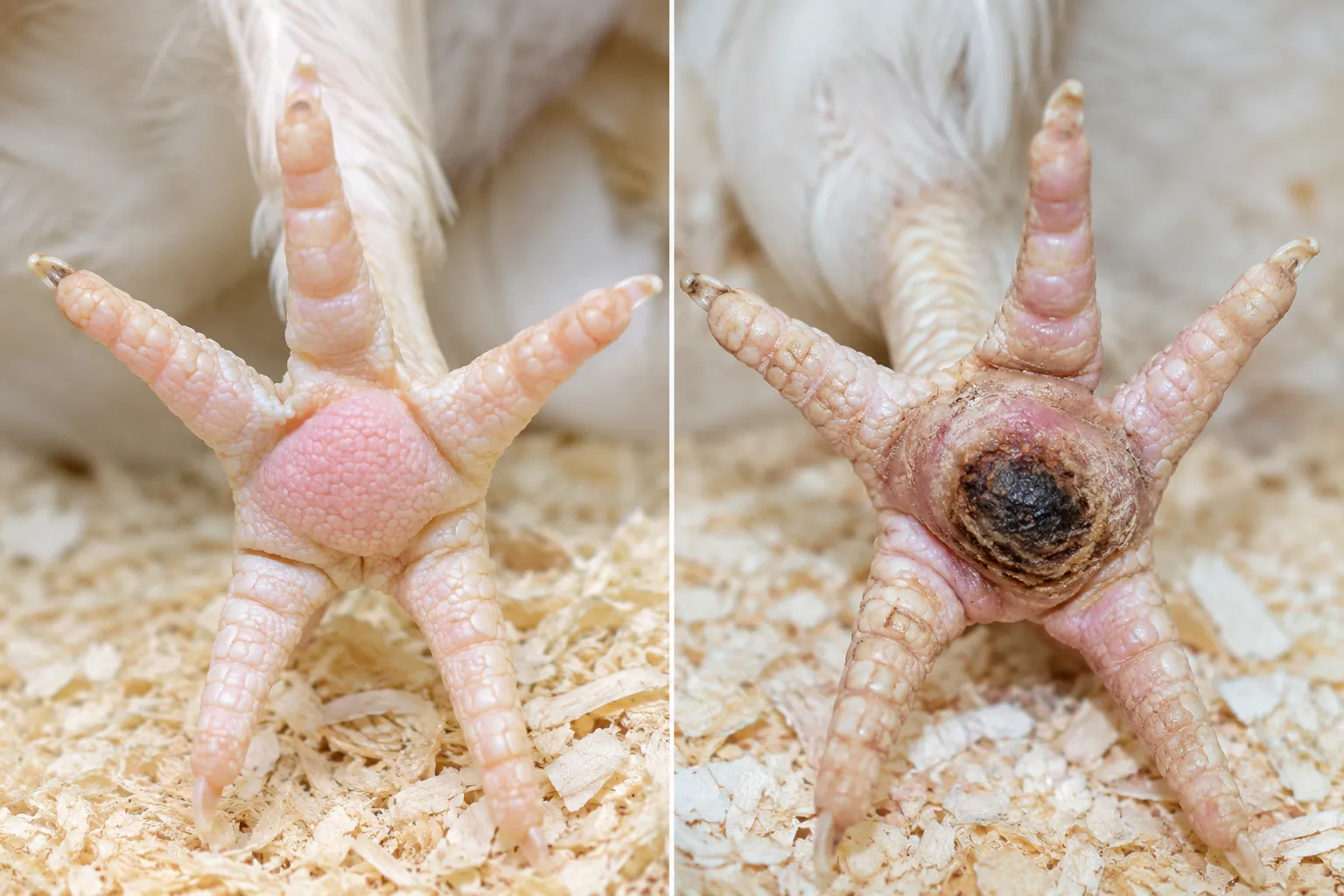
How to check: Hold the chicken securely and examine both feet. Compare them side by side. A healthy footpad should be smooth, slightly pink or yellow, and free of lumps. Press gently on the pad; bumblefoot lesions feel firm and may cause the chicken to pull away.
Choose immediate treatment if you spot a black scab or any swelling. Waiting allows the infection to establish deeper roots, making removal much more difficult.
Bumblefoot vs Normal Chicken Foot: How to Tell the Difference
A normal chicken foot has smooth, slightly rough footpads with no lumps, scabs, or discoloration. The skin may show minor calluses from walking, but these are flat and don’t protrude.
Normal foot characteristics:
- Even coloring (pink, yellow, or light gray depending on breed)
- Smooth or slightly textured surface
- No raised bumps or hard spots
- Symmetrical appearance when comparing both feet
- No heat or tenderness when pressed
Bumblefoot indicators:
- Distinct black, brown, or dark red scab (the hallmark sign)
- Raised, hard lump that feels different from surrounding tissue
- Asymmetry when comparing left and right feet
- Warmth in the affected area
- Chicken reacts when you press the spot
Common mistake: Many chicken keepers confuse normal calluses with early bumblefoot. Calluses are flat, evenly distributed, and don’t have a central dark core. Bumblefoot always has a focal point where the infection entered, typically marked by that characteristic dark scab.
If you’re unsure, monitor the foot for 2-3 days. Bumblefoot worsens quickly, while normal calluses remain stable.
Can Bumblefoot Kill a Chicken If Left Untreated?
Yes, untreated bumblefoot can be fatal. While mild cases may occasionally resolve on their own if the chicken’s immune system successfully walls off the infection, most cases progress without intervention.
Progression of untreated bumblefoot:
- Weeks 1-2: Localized infection in the footpad, manageable with home treatment
- Weeks 3-4: Infection spreads to deeper tissues, tendons become involved
- Weeks 5-8: Bone and joint infection (septic arthritis), permanent lameness likely
- Beyond 8 weeks: Systemic infection (septicemia), organ failure, death
The infection can spread through the bloodstream, causing septicemia that affects vital organs. Even if the infection doesn’t become systemic, severe bumblefoot causes chronic pain that prevents the chicken from eating, drinking, and functioning normally, leading to decline and death.
Mortality risk factors:
- Delayed treatment beyond 4 weeks
- Infection in both feet simultaneously
- Compromised immune system
- Secondary infections in the wound
- Bone involvement (osteomyelitis)
Most chickens with early-stage bumblefoot recover fully with proper treatment. Once bone infection develops, the prognosis becomes poor even with aggressive veterinary care.
How to Treat Bumblefoot at Home Without a Vet
Mild to moderate bumblefoot can be treated at home if you’re comfortable with minor wound care. Severe cases with deep infection, bone involvement, or systemic illness require veterinary attention.
Home treatment steps:
1. Gather supplies:
- Epsom salt
- Warm water and basin
- Sterile gloves
- Tweezers or small forceps
- Scalpel blade or sterile needle (optional, for advanced cases)
- Betadine or chlorhexidine solution
- Antibiotic ointment (without pain reliever)
- Gauze pads
- Vet wrap or self-adhesive bandage
- Towel for restraining chicken
2. Soak the foot (15-20 minutes):
Mix warm water with Epsom salt (1/4 cup per gallon). Soak the affected foot to soften the scab and draw out infection. This makes removal easier and less painful.
3. Remove the scab:
Wearing gloves, gently peel away the softened black scab with tweezers. For early-stage bumblefoot, the scab may lift off easily, revealing a small pocket of pus. For established infections, you may need to carefully open the wound to access the infected core (a hard, cheese-like plug of pus).
4. Extract the core:
If you can see a white or yellow plug of infected material, use tweezers to gently pull it out. The core must be completely removed for healing to occur. This step causes some bleeding, which is normal and helps flush bacteria.
5. Clean and disinfect:
Flush the wound with betadine solution. Make sure all infected material is removed. The cavity should look clean with healthy pink tissue.
6. Apply antibiotic ointment:
Pack the wound with a small amount of antibiotic ointment. Avoid products containing pain relievers (like benzocaine), which are toxic to birds.
7. Bandage the foot:
Place a gauze pad over the wound and wrap with vet wrap. Make the bandage snug but not tight. Change the bandage daily, reapplying ointment each time.
8. Isolate and monitor:
Keep the chicken in a clean, dry area with soft bedding (towels work well). Check the foot daily for signs of improvement or worsening. Most mild cases heal within 1-2 weeks.
When to stop home treatment and see a vet:
- You cannot remove the infected core completely
- The infection extends deep into the foot
- The chicken shows signs of systemic illness (lethargy, loss of appetite)
- No improvement after 5-7 days of treatment
- Multiple abscesses or both feet affected
Do I Need Antibiotics for Chicken Bumblefoot?
Topical antibiotics are usually sufficient for early-stage bumblefoot when the infection is localized to the footpad. Oral or injectable antibiotics become necessary when the infection spreads to deeper tissues or the chicken shows signs of systemic illness.
When topical treatment alone works:
- Small, superficial infection
- Scab and core removed completely
- No signs of bone or joint involvement
- Chicken remains active and eating normally
- Improvement visible within 3-5 days
When oral antibiotics are needed:
- Deep infection that cannot be fully cleaned out
- Swelling extending up the leg
- Multiple infection sites
- Bone or joint involvement suspected
- Fever, lethargy, or loss of appetite
- No improvement after one week of topical treatment
Common antibiotics prescribed by vets for bumblefoot include amoxicillin, cephalexin, or enrofloxacin. Treatment typically lasts 7-14 days. Never use antibiotics without veterinary guidance, as improper use contributes to antibiotic resistance and may harm your chicken.
Important consideration: If you plan to eat eggs from treated chickens, check withdrawal times for any antibiotics used. Most require discarding eggs for a specified period after treatment ends.
How Much Does It Cost to Treat Bumblefoot in Chickens?
Treatment costs vary widely depending on severity and whether you handle it at home or seek veterinary care.
Home treatment costs:
- Epsom salt: $3-5
- Betadine solution: $8-12
- Antibiotic ointment: $6-10
- Gauze and vet wrap: $10-15
- Total: $30-45 for supplies that can treat multiple cases
Veterinary treatment costs:
- Office visit/exam: $50-100
- Surgical removal of bumblefoot: $100-300
- Oral antibiotics: $20-50
- Follow-up visit: $40-80
- Total: $210-530 for professional treatment
Factors affecting cost:
- Geographic location (urban vets typically charge more)
- Severity of infection
- Whether anesthesia is needed for surgery
- Number of affected feet
- Additional diagnostics (X-rays if bone involvement suspected): $75-150
Most backyard chicken keepers successfully treat mild to moderate bumblefoot at home, reserving veterinary visits for severe or complicated cases. The key is catching it early when home treatment is most effective.
Can Bumblefoot Spread to Other Chickens in the Coop?
No, bumblefoot is not contagious between chickens. The Staphylococcus aureus bacteria that cause bumblefoot are already present in the environment and on chickens’ skin. The infection only develops when bacteria enter through a wound.
However, conditions that cause bumblefoot in one chicken often affect the entire flock:
- If one chicken develops bumblefoot from rough roosts, others face the same risk
- Poor coop hygiene that contributes to one case affects all birds
- High roosts that injure one bird’s feet will injure others
What to do when one chicken has bumblefoot:
- Treat the affected chicken immediately
- Inspect all other chickens’ feet for early signs
- Identify and fix the environmental cause (rough surfaces, high roosts, wet bedding)
- Improve coop conditions to prevent future cases
- Increase foot inspection frequency for the entire flock
Think of bumblefoot as an indicator of coop conditions rather than a contagious disease. When one chicken develops it, view it as a warning that your setup needs improvement to protect the rest of your flock.
Is Bumblefoot Contagious to Humans?
Bumblefoot in chickens poses minimal risk to humans. While Staphylococcus aureus can infect people, transmission from chickens is extremely rare when basic hygiene is practiced.
Risk factors for human infection:
- Open wounds on your hands while treating bumblefoot
- Not washing hands after handling infected chickens
- Compromised immune system
Safe handling practices:
- Wear disposable gloves when treating bumblefoot
- Wash hands thoroughly with soap and water after handling chickens
- Cover any cuts or abrasions on your hands before treatment
- Disinfect tools and surfaces used during treatment
- Keep treatment supplies separate from household items
The bacteria that cause bumblefoot in chickens are the same species that cause staph infections in humans, but the strain and infection route differ. You’re far more likely to contract a staph infection from other humans or contaminated surfaces than from your chickens.
For immunocompromised individuals: If you have a weakened immune system, diabetes, or other conditions that increase infection risk, have someone else treat bumblefoot or consult your doctor about precautions.
What Bedding Is Best to Prevent Bumblefoot?
Soft, dry bedding significantly reduces bumblefoot risk by cushioning feet and preventing the abrasions that allow bacteria to enter.
Best bedding options:
Pine shavings (top choice)
- Soft, absorbent, and cushioning
- Readily available and affordable
- Good odor control
- Easy to spot-clean
Straw (good option)
- Soft and comfortable
- Provides cushioning
- Less absorbent than shavings (requires more frequent changes)
- Can harbor mites if not kept dry
Hemp bedding (premium option)
- Highly absorbent
- Very soft and dust-free
- Excellent for preventing foot injuries
- More expensive than other options
Sand (acceptable with precautions)
- Provides natural dust bathing
- Drains well when properly maintained
- Can be abrasive if too coarse
- Choose fine, soft sand (not construction sand)
Bedding to avoid:
- Wire flooring: Major cause of bumblefoot; creates constant pressure points
- Concrete alone: Too hard; always cover with soft bedding
- Cedar shavings: Aromatic oils can irritate respiratory systems
- Newspaper: Becomes slippery when wet, doesn’t cushion
Bedding maintenance tips:
- Keep bedding depth at 3-4 inches minimum
- Spot-clean daily to remove wet or soiled areas
- Completely replace bedding every 2-4 weeks
- Ensure good ventilation to keep bedding dry
- Add extra bedding in high-traffic areas
Dry bedding is as important as soft bedding. Moisture softens foot tissue and creates an ideal environment for bacterial growth.
Common Mistakes When Treating Bumblefoot in Chickens
Even experienced chicken keepers make errors that delay healing or worsen the infection. Avoid these common pitfalls:
1. Stopping treatment too early
The wound looks healed on the surface, but infection remains deep inside. Continue bandaging and applying antibiotic ointment until the wound closes completely from the inside out (typically 10-14 days).
2. Not removing the entire infected core
Leaving even a small piece of the cheesy pus plug allows the infection to persist. The core must be completely extracted, even if it requires gentle probing with tweezers.
3. Using hydrogen peroxide
While it bubbles impressively, hydrogen peroxide damages healthy tissue and delays healing. Stick with betadine or chlorhexidine for cleaning.
4. Bandaging too tightly
Overly tight bandages cut off circulation and cause more swelling. The wrap should be snug enough to stay in place but loose enough to slip a finger underneath.
5. Returning the chicken to the coop too soon
The chicken needs to stay on soft, clean bedding until the wound heals. Returning to the regular coop exposes the open wound to bacteria and reinjury.
6. Ignoring the underlying cause
Treating the infection without fixing rough roosts, high perches, or poor bedding means the chicken (or others) will develop bumblefoot again.
7. Using pain-relief ointments
Products containing benzocaine, lidocaine, or other pain relievers are toxic to birds. Use plain antibiotic ointment only.
8. Waiting to see if it resolves on its own
Bumblefoot rarely heals without intervention. Early treatment is far easier and more successful than waiting until the infection is severe.
Can Baby Chicks Get Bumblefoot?
Yes, chicks can develop bumblefoot, though it’s less common than in adult chickens. Young birds are lighter and put less pressure on their feet, but they’re still vulnerable if conditions are poor.
Risk factors for chicks:
- Wire-bottom brooders (a major cause in young birds)
- Rough surfaces in the brooder
- Wet bedding from spilled water
- Overcrowding that forces chicks to stand in waste
- Jumping from heights inappropriate for their age
Prevention in chicks:
- Use soft bedding (pine shavings or paper towels for the first week)
- Provide solid flooring, never wire
- Keep brooder dry with frequent bedding changes
- Ensure adequate space (0.5 square feet per chick for first 6 weeks)
- Keep waterers on platforms to prevent spills
- Avoid perches until chicks are at least 4 weeks old
Treatment differences: Chick bumblefoot is treated the same way as adult cases, but extra care is needed due to their small size. The infection can overwhelm a chick’s immune system more quickly, so prompt treatment is critical.
If you notice a chick limping or favoring a foot, examine it immediately. Early intervention prevents the infection from becoming life-threatening in a small bird.
How Long Does It Take for Bumblefoot to Heal?
Healing time depends on infection severity and how quickly treatment begins.
Early-stage bumblefoot (small scab, minimal swelling):
- 1-2 weeks with proper home treatment
- Scab removal, daily bandage changes, and topical antibiotics typically sufficient
- Chicken can return to normal activity once the wound closes
Moderate bumblefoot (established infection, larger abscess):
- 2-4 weeks for complete healing
- May require multiple cleaning sessions to remove all infected tissue
- Oral antibiotics may speed recovery
- Chicken needs extended time on soft bedding
Severe bumblefoot (deep infection, bone involvement):
- 4-8 weeks or longer
- Often requires veterinary surgery
- Oral antibiotics necessary
- May result in permanent lameness if bone damage occurred
- Some cases never fully heal
Factors that speed healing:
- Early detection and treatment
- Complete removal of infected core
- Consistent daily wound care
- Clean, dry environment during recovery
- Good nutrition to support immune function
Factors that delay healing:
- Incomplete removal of infection
- Returning chicken to rough surfaces too soon
- Poor nutrition or stress
- Secondary infections
- Underlying health problems
Monitor the wound daily. You should see gradual improvement: reduced swelling, less redness, healthy pink tissue filling the wound from the bottom up. If the wound looks worse after 5-7 days of treatment, seek veterinary help.
Should I Cull a Chicken with Severe Bumblefoot?
Culling is a difficult decision that depends on the infection’s severity, the chicken’s quality of life, and your ability to provide ongoing care.
Consider culling when:
- The infection has caused permanent, severe lameness that prevents the chicken from eating, drinking, or moving comfortably
- Bone infection (osteomyelitis) has destroyed foot structure beyond repair
- The chicken shows signs of chronic pain despite treatment
- Multiple treatment attempts have failed and the infection continues spreading
- The chicken’s overall health is declining (weight loss, lethargy, isolation from flock)
- Veterinary care is not an option and home treatment has been unsuccessful
Continue treatment when:
- The chicken maintains good appetite and body condition
- The infection is responding to treatment, even if slowly
- The chicken can still move around, eat, and drink independently
- Pain appears manageable
- You can provide the necessary long-term care
Quality of life indicators:
- Does the chicken still forage, dust bathe, and interact with the flock?
- Is the chicken maintaining weight?
- Can the chicken reach food and water without struggle?
- Does the chicken show interest in its surroundings?
Many chickens with severe bumblefoot can live comfortably with ongoing management, including permanent soft bedding, lower roosts, and periodic wound care. However, if the chicken is suffering and treatment options are exhausted, humane euthanasia may be the kindest choice.
Before making this decision: Consult with a veterinarian experienced in poultry care. They can assess whether the infection is truly untreatable or if other options exist. Some cases that appear hopeless can improve with surgical intervention or different antibiotic protocols.
Frequently Asked Questions
Can bumblefoot heal on its own without treatment?
Rarely. While very mild cases occasionally resolve if the chicken’s immune system successfully walls off the infection, most cases worsen without intervention. The infection typically burrows deeper into the foot, making treatment progressively more difficult. Early treatment dramatically improves outcomes.
How often should I check my chickens’ feet for bumblefoot?
Inspect feet monthly for healthy flocks, or weekly if you have risk factors like high roosts, heavy breeds, or previous bumblefoot cases. Always check immediately if you notice limping or reluctance to roost. Regular inspections catch infections early when they’re easiest to treat.
Can I use Neosporin on chicken bumblefoot?
Yes, but only plain Neosporin (triple antibiotic ointment). Avoid Neosporin Plus Pain Relief or any product containing pain relievers like benzocaine or pramoxine, which are toxic to birds. Plain antibiotic ointment is safe and effective for topical treatment.
What’s the black scab made of in bumblefoot?
The black scab is dried blood, dead tissue, and bacteria that have oxidized and hardened over the infection site. It forms as the body attempts to seal off the wound. Underneath this scab is typically a core of infected pus that must be removed for healing to occur.
Will my chicken’s foot look normal after bumblefoot heals?
Mild cases usually heal with minimal scarring and normal foot appearance. Moderate to severe cases may leave permanent thickening, scar tissue, or slight deformity, but the chicken can function normally. Severe cases with bone involvement may result in permanent structural changes and some lameness.
Can I prevent bumblefoot completely?
While you can’t eliminate all risk, proper coop management dramatically reduces bumblefoot incidence. Smooth, low roosts (12-18 inches high), soft bedding, good hygiene, weight management, and regular foot inspections prevent most cases. Heavy breeds will always carry slightly higher risk due to their weight.
Is bumblefoot more common in certain seasons?
Bumblefoot can occur year-round, but some keepers notice increased cases in winter when chickens spend more time on roosts and less time foraging on soft ground. Wet conditions in any season increase risk by softening foot tissue and promoting bacterial growth.
Can I use essential oils to treat bumblefoot?
Essential oils are not recommended as primary treatment for bumblefoot. While some have antibacterial properties, they don’t replace proper wound cleaning, core removal, and antibiotic ointment. Some oils can irritate tissue or be toxic to birds. Stick with proven veterinary treatments.
How do I know if bumblefoot has reached the bone?
Signs of bone involvement include severe swelling extending up the leg, extreme pain when the foot is touched, inability to bear any weight, and lack of improvement despite proper treatment. X-rays are needed to confirm bone infection. This requires immediate veterinary care.
Should I separate a chicken with bumblefoot from the flock?
Separate the chicken during active treatment to provide clean, soft bedding and prevent pecking at bandages. Since bumblefoot isn’t contagious, separation is for the affected chicken’s comfort and healing, not to protect others. Return the chicken to the flock once the wound has closed.
Can roosters get bumblefoot more easily than hens?
Roosters, especially heavy breeds, face slightly higher risk due to their larger size and weight. They also jump from roosts more forcefully when responding to threats. However, coop conditions matter far more than sex in determining bumblefoot risk.
What’s the difference between bumblefoot and a bruise?
A bruise appears as a dark purple or red area under the skin without a raised lump or scab. It fades over several days. Bumblefoot presents as a hard, raised lump with a characteristic black scab that doesn’t fade and worsens over time. Bruises don’t require treatment; bumblefoot does.
Conclusion
Bumblefoot is a serious but manageable condition when caught early and treated properly. The characteristic black scab on your chicken’s footpad signals a staph infection that won’t resolve without intervention. Success depends on three key actions: removing the infected core completely, maintaining consistent wound care until healing is complete, and fixing the environmental factors that caused the injury in the first place.
Take these steps now to protect your flock:
- Inspect every chicken’s feet this week, Catch early cases before they become severe
- Evaluate your coop setup, Lower roosts to 12-18 inches, smooth any rough surfaces, and add soft bedding
- Assemble a bumblefoot treatment kit, Keep Epsom salt, betadine, antibiotic ointment, and bandaging supplies on hand
- Schedule monthly foot checks, Make inspection part of your regular flock management routine
Remember that bumblefoot is almost always preventable through proper coop design and maintenance. The time you invest in creating a foot-friendly environment pays dividends in healthier, more comfortable chickens and far fewer treatment sessions. When you do spot that telltale black scab, act immediately. Early treatment takes 30 minutes and heals in two weeks; delayed treatment requires surgery and months of recovery.
Your chickens depend on healthy feet for every aspect of their lives. Give them the smooth roosts, soft bedding, and attentive care they need to stay active and pain-free.


