

Quick Answer
Rats invade chicken coops for easy access to feed, water, and shelter. To rat-proof your chicken coop and feed, seal all openings larger than ¼ inch with hardware cloth, store feed in metal containers with tight lids, remove spilled food daily, and use snap traps instead of poison. These steps eliminate food sources and entry points, making your coop inhospitable to rodents.
Key Takeaways
- Rats can squeeze through holes as small as ¼ inch, inspect your coop thoroughly and seal every gap with hardware cloth, not chicken wire
- Hardware cloth (½-inch or smaller mesh) is essential, chicken wire won’t stop determined rats
- Store all feed in metal containers with secure lids and elevate them off the ground
- Remove spilled feed daily and clean up after every feeding to eliminate food attractants
- Automatic feeders help but aren’t foolproof, they reduce spillage but must be paired with other prevention methods
- Never use poison around chickens, it can harm your flock and create secondary poisoning risks for pets
- Rats rarely attack healthy adult chickens but will eat eggs, kill chicks, and spread disease
- Seal gaps under doors with metal flashing or heavy-duty rubber sweeps rated for rodent control
- Cats and dogs provide limited protection, they may deter some rats but aren’t a complete solution
- Watch for droppings, gnaw marks, and burrows as early warning signs of rat activity

What Attracts Rats to Chicken Coops in the First Place
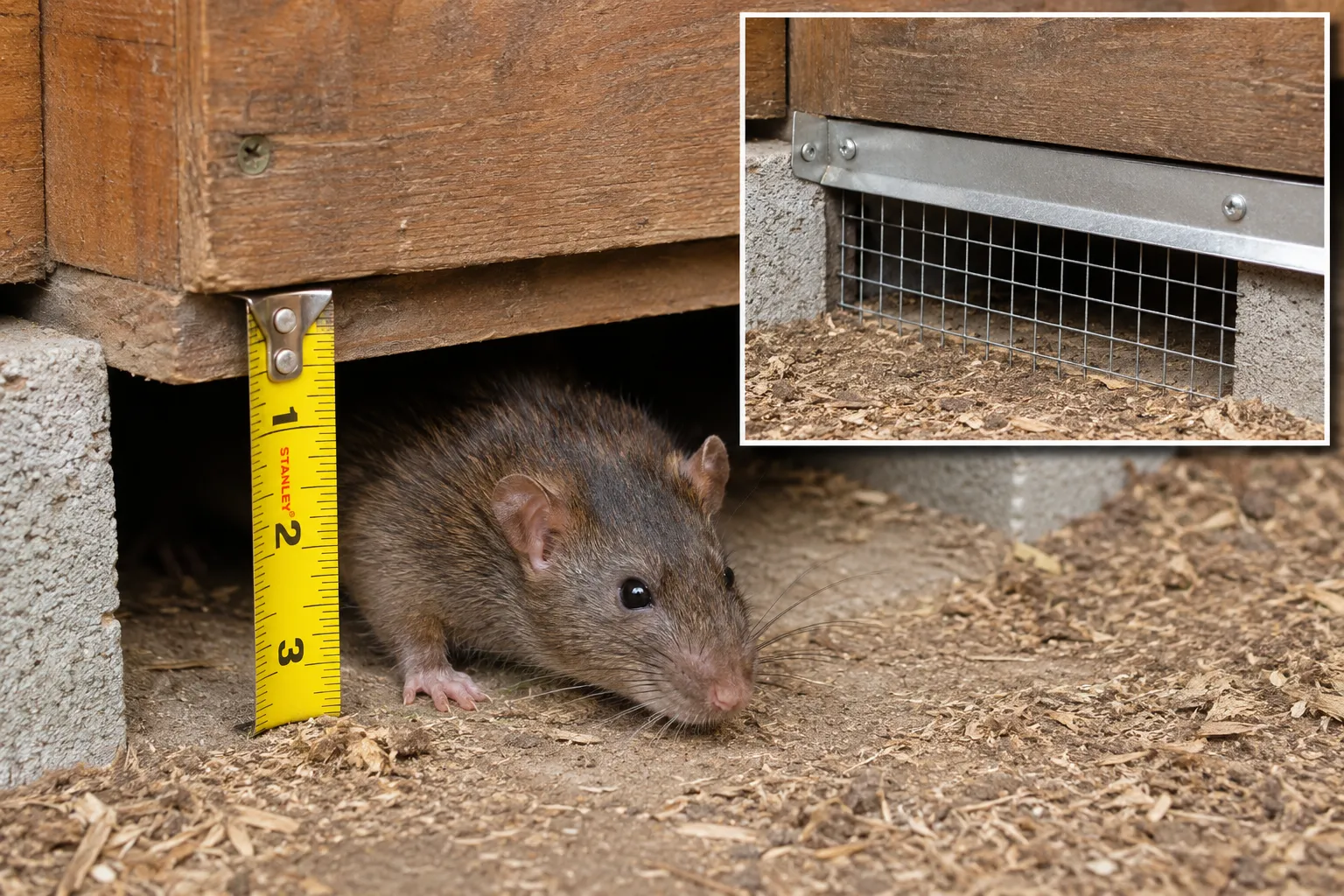
Chicken coops offer rats three essentials: abundant food, reliable water, and safe shelter. Spilled chicken feed is the primary attractant because it provides high-calorie nutrition that rats need to survive and reproduce. A single rat can consume up to 30 grams of food daily, and chicken feed meets all their dietary requirements.
Beyond feed, rats are drawn to:
- Eggs, a protein-rich food source rats will steal and consume
- Water sources, chicken waterers provide year-round hydration
- Warm shelter, coops offer protection from predators and weather
- Nesting material, bedding and straw make ideal rat nests
- Compost piles, food scraps near coops attract rodents
The combination of these resources in one location makes chicken coops irresistible to rats. Once a few rats discover your coop, they’ll communicate the location to others through scent trails, leading to rapid population growth. A pair of rats can produce up to 2,000 descendants in one year under ideal conditions.
Common mistake: Many chicken keepers focus only on trapping rats without addressing what attracted them. If you don’t eliminate food sources and entry points, new rats will simply replace the ones you remove.
How Small of a Hole Can a Rat Squeeze Through
Rats can squeeze through openings as small as ¼ inch (about the diameter of a quarter). Their skulls are the only rigid part of their body, if the head fits, the entire body can follow. Mice can fit through even smaller gaps of just ⅛ inch.
This remarkable ability means you must inspect every inch of your coop for potential entry points:
- Gaps around doors and windows
- Spaces where walls meet the foundation
- Holes where pipes or wires enter the structure
- Cracks in wooden siding or flooring
- Ventilation openings without proper screening
- Damaged or rotted wood sections
Inspection tip: Conduct your inspection at dusk when rats are most active. Shine a flashlight inside the coop while someone else looks from outside, light will reveal gaps you might otherwise miss.
Use a quarter as your measuring guide. Any opening that a quarter can fit through needs to be sealed immediately. Don’t assume small gaps are safe, rats will also gnaw on existing holes to make them larger.
Hardware Cloth vs Chicken Wire for Keeping Rats Out
Hardware cloth is the only effective barrier against rats, while chicken wire is nearly useless for rodent control. Hardware cloth is made from welded wire mesh with openings of ½ inch or smaller, constructed from thicker gauge wire that rats cannot chew through. Chicken wire has larger hexagonal openings (typically 1 inch or more) and uses thinner wire that rats can easily bite through or push aside.
Comparison of materials:
| Material | Opening Size | Wire Gauge | Rat Resistance | Best Use |
|---|---|---|---|---|
| Hardware cloth | ¼” to ½” | 19-23 gauge | Excellent | Floors, walls, windows, vents |
| Chicken wire | 1″ or larger | 20-22 gauge | Poor | Keeping chickens in only |
| Welded wire | ½” to 1″ | 14-16 gauge | Good | Perimeter fencing |
For rat-proofing, use ½-inch hardware cloth with 19-gauge wire as your standard material. Install it on:
- All ventilation openings
- Under doors and around door frames
- Windows and pop doors
- The bottom 2-3 feet of walls (or entire walls if budget allows)
- Under the coop floor or as a buried apron around the perimeter
Budget consideration: Hardware cloth costs significantly more than chicken wire (typically $1-3 per square foot vs. $0.20-0.50), but it’s a one-time investment that actually works. Trying to save money with chicken wire means you’ll spend more replacing it and dealing with ongoing rat problems.
Best Rat-Proof Chicken Feeders That Actually Work
The most effective rat-proof feeders are treadle-style feeders that only open when a chicken steps on a weighted platform. These feeders keep food completely enclosed when not in use, preventing rats from accessing it at night when chickens are roosting. Grandpa’s Feeders and similar treadle designs have proven most reliable in real-world conditions.
Features that make feeders rat-resistant:
- Treadle mechanism, requires 1-3 pounds of weight to open, too heavy for rats
- Metal construction, rats cannot chew through galvanized steel
- Tight-fitting lid, no gaps when closed
- Elevated design, harder for rats to access
- Enclosed feed storage, food is never exposed to open air
Important limitation: Even the best feeder won’t solve a rat problem on its own. Rats will still be attracted to spilled feed around the feeder, water sources, and eggs. Use rat-proof feeders as part of a comprehensive prevention strategy, not as a standalone solution.
Alternative approach: If treadle feeders are outside your budget, remove all feeders at night and store them in a sealed container. This requires daily effort but eliminates nighttime food access when rats are most active.
Choose a feeder if your chickens can learn to use it (most adapt within 3-7 days) and you want to free-feed. Remove feeders at night if you prefer a zero-cost solution and don’t mind the daily routine.
Do Automatic Chicken Feeders Prevent Rats
Automatic feeders reduce but don’t eliminate rat problems because they minimize spillage and can be programmed to dispense food only during daylight hours. However, most automatic feeders still leave food exposed in a tray or dish, which rats can easily access. They work best when combined with other rat-proofing measures.
Advantages of automatic feeders:
- Controlled portions reduce waste and spillage
- Timed dispensing keeps food unavailable at night
- Enclosed storage protects bulk feed from contamination
- Less frequent refilling means fewer opportunities for spills
Limitations:
- Food in the dispensing tray remains accessible to rats
- Mechanical failures can cause large spills
- Rats may learn the dispensing schedule and wait nearby
- Higher cost ($100-300) compared to traditional feeders
For maximum effectiveness, pair automatic feeders with daily cleanup of any spilled food and use them inside a coop with properly sealed entry points. Don’t rely on the feeder alone to solve an existing rat infestation.

How to Store Chicken Feed So Rats Can’t Get to It
Store all chicken feed in metal containers with tight-fitting, locking lids, and keep these containers elevated at least 6 inches off the ground. Rats can chew through plastic bins, paper bags, and even thin wooden boxes, but they cannot penetrate galvanized steel or heavy-duty metal trash cans.
Step-by-step feed storage protocol:
- Transfer feed immediately, never leave feed in the original paper or plastic bag
- Use metal containers, galvanized trash cans with locking lids work perfectly
- Elevate containers, place on pallets, cinder blocks, or wooden platforms
- Store in a separate building if possible, keep feed away from the coop entirely
- Seal the storage area, apply the same rat-proofing to your feed storage space
- Use smaller quantities, buy only what you’ll use in 2-3 weeks to maintain freshness
Container recommendations:
- Galvanized steel trash cans (20-30 gallon) with locking lids
- Metal feed bins specifically designed for livestock feed
- Heavy-duty steel drums with clamp-ring lids
- Avoid: plastic bins, wooden boxes, or any container with a loose-fitting lid
Common mistake: Storing feed in a plastic bin inside the coop. Rats will chew through the plastic overnight, and the coop location makes the food even more accessible. Always use metal and consider storing feed in a garage, shed, or other separate structure.
Keep a small metal scoop inside the container and never leave the lid off, even briefly. Rats can detect food odors from considerable distances and will investigate any opening.
Will Rats Hurt My Chickens or Just Eat Their Food
Rats rarely attack healthy adult chickens but pose serious threats to eggs, chicks, and sick or injured birds. Adult chickens are too large and aggressive for most rats to consider as prey, but rats will kill and eat baby chicks, steal eggs, and may attack chickens that are weak, sleeping, or trapped.
Direct threats from rats:
- Chick predation, rats will kill chicks under 4-6 weeks old
- Egg theft, rats puncture and consume eggs, reducing your yield
- Injury to hens, rats may bite feet or combs of sleeping chickens
- Stress, constant rat presence causes anxiety and reduced egg production
Indirect health risks:
- Disease transmission, rats carry salmonella, leptospirosis, and other pathogens
- Parasite vectors, rats spread mites, lice, and internal parasites
- Feed contamination, rat urine and droppings poison feed supplies
- Structural damage, gnawing weakens coop integrity and creates new entry points
Rats are most dangerous to vulnerable chickens. If you have a broody hen with chicks, rats may attempt to take chicks at night. Injured or sick chickens that cannot defend themselves are also at higher risk.
Protection strategy: Even if rats aren’t directly attacking your flock, their presence creates unacceptable health risks. Treat any rat sighting as an urgent problem requiring immediate action.
How to Seal Gaps Under Chicken Coop Doors
Seal gaps under chicken coop doors using metal flashing, heavy-duty rubber garage door seals, or hardware cloth attached to the door bottom and extending 2-3 inches onto the ground. The seal must be flexible enough to accommodate uneven ground while maintaining contact with the surface to prevent rats from squeezing underneath.
Effective door-sealing methods:
Method 1: Metal flashing with hardware cloth
- Cut aluminum or galvanized flashing to door width
- Attach to door bottom with screws and washers
- Extend hardware cloth from flashing to ground
- Bury hardware cloth 2-3 inches deep or weight with stones
Method 2: Rubber garage door seal
- Purchase rodent-proof rubber seal (not foam)
- Cut to door width
- Attach with provided track or screws
- Ensure seal makes full contact when door closes
Method 3: Brush strip seal
- Use heavy-duty brush strips (not light-duty versions)
- Install on door bottom and sides
- Bristles should extend ½ inch past door edge
- Replace annually as bristles wear down
For sliding or pop doors: Install metal tracks that create a tight seal when closed. Add a latch that pulls the door firmly against the frame, eliminating any gap.
Common mistake: Using foam weatherstripping or light-duty seals that rats can easily chew through. Only use materials specifically rated for rodent control or made from metal and heavy rubber.
Check door seals monthly and after storms or temperature changes that may cause wood to expand or contract, creating new gaps.
Should I Use Poison or Traps Around Chickens
Never use poison around chickens, always choose snap traps or electric traps instead. Rodenticide poses severe risks to your flock through direct consumption, secondary poisoning from eating poisoned rats, and contamination of eggs and meat. Snap traps kill instantly and allow you to remove dead rats before they create health hazards.
Why poison is dangerous near chickens:
- Chickens may eat poison bait directly, causing fatal internal bleeding
- Chickens may consume poisoned rats, leading to secondary poisoning
- Dying rats often hide in walls or under coops, creating terrible odors
- Poison doesn’t address the root cause (food sources and entry points)
- Pets and wildlife face secondary poisoning risks
Safe trapping alternatives:
Snap traps:
- Use large rat-sized snap traps (not mouse traps)
- Bait with peanut butter, bacon, or dried fruit
- Place along walls where rats travel
- Check daily and dispose of dead rats immediately
- Cost: $3-8 per trap
Electric traps:
- Kill instantly with high-voltage shock
- Contained design prevents chickens from accessing
- Easy disposal of dead rats
- More expensive ($30-60) but reusable
Live traps:
- Catch rats alive for relocation
- Must check frequently (every 4-6 hours)
- Relocation often illegal and ineffective
- Rats may return or die during transport
Trap placement strategy: Set traps outside the coop along walls and near entry points, not inside where chickens can access them. Use bait stations or protective covers if you must place traps in areas chickens frequent.
Do Ultrasonic Pest Repellers Work for Chicken Coops
Ultrasonic pest repellers are ineffective for rat control in chicken coops and should not be relied upon as a prevention method. Multiple studies have shown that rats quickly habituate to ultrasonic frequencies, and the devices cannot penetrate walls or bedding where rats nest. The sound may also stress chickens, who can hear frequencies that overlap with ultrasonic ranges.
Why ultrasonic devices fail:
- Rats adapt to the sound within days or weeks
- Ultrasonic waves don’t travel through solid objects
- Effectiveness requires line-of-sight to rats
- Interference from coop structures and bedding
- No scientific evidence supports long-term effectiveness
What actually works instead:
Focus your time and money on proven methods: sealing entry points with hardware cloth, removing food sources, and using mechanical traps. These physical barriers and removal methods address the root causes of rat problems rather than attempting to repel rats from an attractive environment.
Exception: Some farmers report temporary success with ultrasonic devices when first installed, likely due to the novelty factor. However, this effect disappears quickly, and rats return once they realize the sound poses no actual threat.
Save your money and invest in hardware cloth, metal feed containers, and quality traps instead.
Common Mistakes When Trying to Rat-Proof a Coop
The most common mistake is focusing on trapping rats without eliminating what attracted them in the first place. If you don’t remove food sources and seal entry points, you’ll trap rats indefinitely as new ones move in to replace those you’ve removed. Rat-proofing requires addressing the environment, not just the rats.
Top rat-proofing mistakes:
1. Using chicken wire instead of hardware cloth Chicken wire won’t stop rats. Always use ½-inch or smaller hardware cloth for any barrier meant to exclude rodents.
2. Leaving feed out overnight Rats are nocturnal. Removing or securing feed at night eliminates their primary food source during peak activity hours.
3. Ignoring small gaps Remember: rats fit through ¼-inch openings. Inspect thoroughly and seal everything, not just obvious holes.
4. Forgetting about the floor Rats burrow under coops and come up through dirt floors. Install hardware cloth under the floor or bury an apron around the perimeter.
5. Storing feed in plastic containers Rats chew through plastic easily. Only metal containers provide reliable protection.
6. Not cleaning up spilled feed daily Even small amounts of spilled feed attract rats. Clean thoroughly after every feeding.
7. Placing traps randomly Rats travel along walls and established paths. Place traps along these routes, not in open areas.
8. Giving up too soon Rat-proofing takes 2-4 weeks of consistent effort. Don’t abandon your strategy after a few days.
9. Ignoring water sources Rats need water as much as food. Fix leaky waterers and eliminate standing water.
10. Assuming one method is enough Effective rat control requires multiple strategies working together: exclusion, sanitation, and trapping.
Will Getting a Cat or Dog Keep Rats Away from Chickens
Cats and dogs provide limited rat deterrence but shouldn’t be your primary defense strategy. While some cats are excellent ratters and dogs may chase rats they encounter, many pets ignore rats entirely or can’t access areas where rats hide. Predator presence may deter some rats, but determined rodents will simply adjust their activity patterns to avoid pets.
Cats as rat control:
Pros:
- Some cats are natural hunters and will kill rats
- Cat scent may deter rats from high-traffic areas
- Provides 24/7 presence without additional effort
Cons:
- Many domestic cats won’t hunt rats (too large and aggressive)
- Cats may harm chicks or stress chickens
- Rats often outweigh cats and can injure them
- Rats will simply avoid areas where cats patrol
Dogs as rat control:
Pros:
- Terrier breeds were specifically developed for rat hunting
- Dogs can dig out rat burrows
- Large dog presence may deter rats from the property
Cons:
- Most dogs lack the prey drive to hunt rats consistently
- Dogs may harm chickens or destroy coops while hunting
- Rats are active at night when dogs are often inside
- Dogs can’t access tight spaces where rats hide
Best approach: Consider a barn cat or ratting terrier as a supplementary measure, not a replacement for proper exclusion and sanitation. Choose pets with proven hunting instincts (ask about the parents’ ratting history) and introduce them carefully to avoid chicken predation.
Never rely solely on pets for rat control. They work best as one component of a comprehensive strategy that includes sealed entry points, secured feed, and mechanical traps.
Signs That Rats Are Living in My Chicken Coop
The most obvious signs of rat infestation are droppings, gnaw marks, and burrow holes around the coop foundation. Rat droppings are dark, capsule-shaped pellets about ¾ inch long, usually found along walls, near feed storage, and in corners. Fresh droppings appear moist and dark, while old droppings are dry and gray.
Visual evidence of rats:
- Droppings, concentrated along travel routes and near food sources
- Gnaw marks, fresh gnawing shows light-colored wood; old marks are dark
- Burrow holes, 2-3 inch diameter holes near foundations or under structures
- Grease marks, dark smudges along walls where rats repeatedly travel
- Tracks, footprints in dust or mud (4-5 toes visible)
- Nesting material, shredded paper, fabric, or bedding in hidden areas
Behavioral signs:
- Chickens acting nervous, especially at dusk or dawn
- Reduced egg production, stress from rat presence
- Eggs with holes, rats puncture shells to consume contents
- Disappearing chicks, rats take young birds at night
- Unusual sounds, scratching, squeaking, or rustling at night
Smell indicators:
- Musky odor, rats produce a distinctive ammonia-like smell
- Dead rat smell, sweet, sickly odor if rats die in walls or under coop
Testing for active infestation:
Sprinkle flour or talcum powder in suspected areas before dark. Check in the morning for footprints or tail drag marks. This confirms active rat traffic and helps you identify travel routes for trap placement.
Action threshold: If you see even one rat or find fresh droppings, assume you have multiple rats. Rats are social animals that live in colonies, so a single sighting indicates a larger population. Begin rat-proofing measures immediately.
Rat-Proof Chicken Coop on a Budget
You can rat-proof a chicken coop on a budget by prioritizing the most critical vulnerabilities first and using affordable materials strategically. Focus on sealing entry points with hardware cloth remnants, storing feed in repurposed metal containers, and using homemade traps or inexpensive snap traps.
Budget-friendly rat-proofing priorities:
Phase 1: Immediate actions (under $50)
- Remove all feed at night (free)
- Clean up spilled feed daily (free)
- Buy 6-10 snap traps ($20-40)
- Seal largest gaps with hardware cloth scraps ($10-20)
Phase 2: Essential barriers ($50-150)
- Purchase hardware cloth for critical areas (doors, windows, vents)
- Find used metal trash cans or drums for feed storage
- Install metal flashing under doors
- Bury hardware cloth apron around coop perimeter
Phase 3: Complete protection ($100-300)
- Cover all ventilation with hardware cloth
- Install hardware cloth under floor or around entire foundation
- Upgrade to treadle feeder or automatic feeder
- Add electric trap for faster rat removal
Money-saving strategies:
- Buy hardware cloth in bulk, 25-foot or 100-foot rolls cost less per square foot
- Check farm supply stores, often cheaper than hardware stores
- Use repurposed materials, old metal trash cans, drums, or toolboxes for feed storage
- Share costs with neighbors, buy materials together and split the cost
- Prioritize high-traffic areas, seal where rats actually enter, not every possible gap
- Make your own bait stations, use PVC pipe or wooden boxes to protect traps
Free or low-cost materials:
- Scrap metal flashing from construction sites or roofing companies
- Used metal containers from restaurants or food service
- Leftover hardware cloth from other projects (ask on local farm groups)
- Concrete blocks or bricks to elevate feed containers
What not to skimp on:
Don’t buy cheap chicken wire thinking it will work, it won’t. Save up for proper hardware cloth rather than wasting money on ineffective materials. Similarly, don’t use poison as a “cheap” solution; the risks far outweigh any cost savings.
Start with free methods (removing feed at night, daily cleanup) while you save for hardware cloth. Even partial rat-proofing is better than none, and you can complete the project in phases as budget allows.
FAQ
How long does it take to rat-proof a chicken coop? A thorough rat-proofing project takes 1-3 days for a small coop (4-6 chickens) and up to a week for larger structures. This includes inspecting for gaps, installing hardware cloth, sealing entry points, and setting up proper feed storage. Ongoing maintenance requires 10-15 minutes daily for cleanup and weekly trap checks.
Can rats climb into raised chicken coops? Yes, rats are excellent climbers and can easily scale vertical walls, climb wire mesh, and jump up to 3 feet vertically. Raising your coop off the ground helps with ventilation and cleaning but won’t prevent rat access. You must still seal all entry points and secure feed regardless of coop height.
What time of year are rats worst around chicken coops? Rats seek shelter in coops most aggressively during fall and winter when outdoor food sources decline and they need warm nesting sites. However, rat problems can occur year-round, especially in mild climates. Spring brings increased breeding activity, potentially causing population explosions if rats are already established.
How many rats are there if I see one? If you see one rat, assume at least 5-10 rats are present in the colony. Rats are nocturnal and secretive, so visible rats represent only a fraction of the actual population. A single breeding pair can produce 2,000 descendants in one year under ideal conditions, making early intervention critical.
Do chickens eat rats or keep them away? Chickens will occasionally kill and eat very young rats or mice but cannot control an established rat population. Adult rats are too large and aggressive for chickens to hunt effectively. Don’t rely on chickens for rat control, they’re more likely to be victims than predators.
Is hardware cloth necessary under the entire coop floor? Hardware cloth under the floor is ideal but not always necessary. If your coop sits on a concrete slab or has a solid wood floor in good condition, focus on sealing walls and entry points. For dirt floors or coops on bare ground, install hardware cloth under the floor or bury a 12-inch apron around the perimeter extending outward.
Can I use essential oils or natural repellents for rats? Natural repellents like peppermint oil, mothballs, or ammonia are ineffective for rat control. Rats may avoid these scents temporarily but will return once they habituate or when hunger outweighs discomfort. Save your money and use proven physical barriers and traps instead.
How do I know if my rat problem is solved? You’ve solved your rat problem when you see no fresh droppings for 2-3 consecutive weeks, traps remain unsprung for 7-10 days, and you observe no new gnaw marks or burrow activity. Continue monitoring monthly and maintain your rat-proofing measures permanently to prevent re-infestation.
Will rats leave on their own if I remove the feed? Rats may reduce their activity if you remove feed, but they won’t leave entirely if your coop still offers water, shelter, and eggs. Removing food sources is essential but must be combined with exclusion (sealing entry points) and removal (trapping) for complete rat elimination.
Can baby chicks survive in a rat-proofed brooder? Yes, baby chicks are safer in a properly rat-proofed brooder than in a standard setup. Use hardware cloth on all sides, ensure the lid closes securely, and elevate the brooder off the ground. Keep the brooder inside a building rather than in an outdoor coop for maximum protection during the vulnerable first 6-8 weeks.
Do I need to rat-proof if I only see mice? Yes, mice indicate conditions that will also attract rats. Mice require even smaller entry points (⅛ inch) than rats, so if mice are present, rats can likely enter too. Use the same rat-proofing methods for mice, as hardware cloth and proper feed storage work for both rodents.
How much does professional rat-proofing cost? Professional pest control services charge $300-800 for initial rat-proofing and $50-150 for monthly monitoring and maintenance. DIY rat-proofing costs $100-400 in materials for most backyard coops. Professional help makes sense for large operations or severe infestations, but most backyard chicken keepers can successfully DIY the project.
Conclusion
Rat-proofing your chicken coop and feed requires a three-part strategy: eliminate food sources, seal entry points, and remove existing rats. Start by storing all feed in metal containers with tight lids and cleaning up spilled food daily. Inspect your coop thoroughly and seal every gap larger than ¼ inch using hardware cloth, not chicken wire. Set snap traps along walls and travel routes, checking them daily until rat activity stops.
The most important takeaway is that rat-proofing is an ongoing commitment, not a one-time project. Maintain your barriers, continue daily cleanup, and monitor for signs of new rat activity monthly. The effort you invest now will protect your flock’s health, preserve your egg production, and save you money on wasted feed.
Your next steps:
- Conduct a thorough coop inspection this week, using a quarter to identify gaps that need sealing
- Purchase hardware cloth (½-inch mesh, 19-gauge) and metal feed storage containers
- Remove all feed at night starting today while you complete permanent rat-proofing
- Set 6-10 snap traps along walls and near suspected entry points
- Schedule weekly checks to monitor progress and maintain your rat-proofing measures
Remember that prevention is far easier than elimination. If you’re building a new coop or haven’t seen rats yet, implement these measures now before rodents discover your flock. For existing infestations, expect 2-4 weeks of consistent effort before you see significant improvement. Stay persistent, and you’ll create a safe, rat-free environment for your chickens.


