
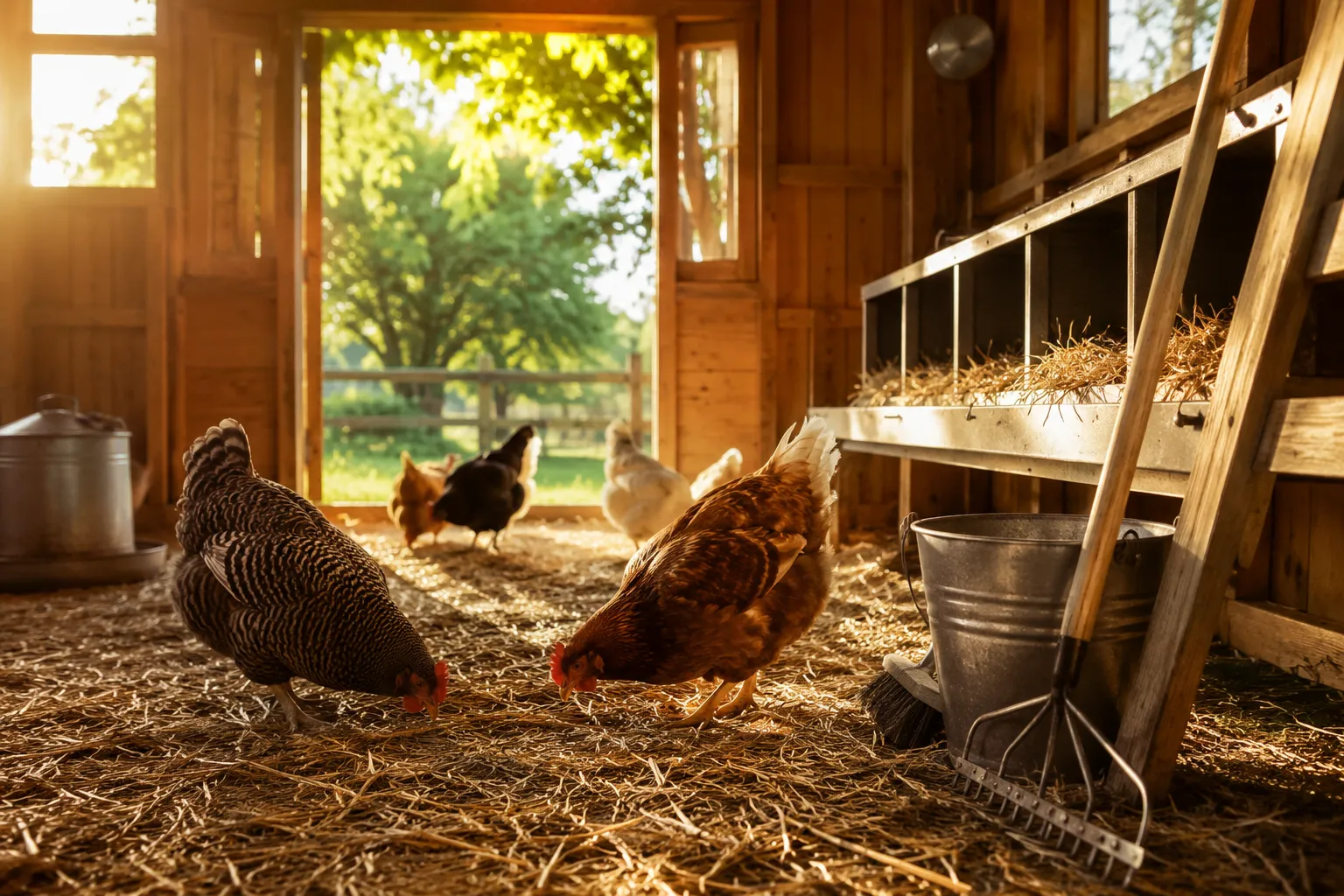
A healthy chicken coop requires daily spot-cleaning to remove droppings and soiled bedding, weekly maintenance to refresh high-traffic areas, and a complete deep clean every 1-3 months depending on flock size and coop design. The exact frequency depends on how many chickens you keep, your bedding type, coop ventilation, and local climate conditions.
Key Takeaways
- Daily tasks take 5-10 minutes and include removing droppings from roosts, collecting eggs, and refreshing water
- Weekly cleaning involves replacing bedding in nesting boxes and high-traffic areas, taking 20-30 minutes
- Deep cleaning every 1-3 months requires removing all bedding, scrubbing surfaces, and disinfecting the entire coop
- Small backyard coops (3-6 chickens) typically need more frequent cleaning than larger coops with better ventilation
- Ammonia smell, visible mold, or increased fly activity signals your coop needs immediate cleaning
- Winter cleaning can be less frequent due to lower bacterial growth, while summer requires more vigilance
- The deep litter method can extend time between full cleanings to 6-12 months when managed properly
- Sand and hemp bedding require less frequent changes than traditional straw or pine shavings
How Often Should You Clean a Chicken Coop Based on Flock Size?
The number of chickens you keep directly determines your cleaning schedule. A small backyard flock of 3-6 chickens in a standard 4×6 foot coop needs weekly bedding changes and monthly deep cleans. Medium flocks of 8-12 chickens require twice-weekly spot cleaning and deep cleaning every 3-4 weeks. Large flocks of 20+ chickens in properly sized coops can often maintain cleaner conditions longer due to better space-per-bird ratios and ventilation.
Cleaning frequency by flock size:
- 1-4 chickens: Spot clean daily, change bedding weekly, deep clean every 6-8 weeks
- 5-10 chickens: Spot clean daily, change bedding twice weekly, deep clean every 4-6 weeks
- 11-20 chickens: Spot clean daily, change bedding 2-3 times weekly, deep clean monthly
- 20+ chickens: Daily spot cleaning, bedding refresh 3+ times weekly, deep clean every 3-4 weeks
The key factor is space per bird. Chickens need 3-4 square feet of indoor coop space each. Overcrowding accelerates waste buildup and requires more frequent cleaning regardless of your total flock size.
What Happens If You Don’t Clean Your Chicken Coop Regularly?
Neglecting coop cleaning leads to dangerous ammonia buildup from decomposing droppings, which damages chickens’ respiratory systems and causes chronic breathing problems. Within 2-3 weeks of missed cleaning, you’ll notice strong ammonia odors, increased fly and mite populations, and higher disease risk including coccidiosis and respiratory infections.
Health and safety consequences:
- Respiratory disease: Ammonia fumes burn lung tissue and make chickens vulnerable to bronchitis and pneumonia
- Parasites: Mites, lice, and flies thrive in dirty bedding and attack your flock
- Bacterial infections: Bumblefoot, E. coli, and salmonella spread rapidly in unsanitary conditions
- Reduced egg production: Stressed, unhealthy chickens lay fewer eggs or stop laying entirely
- Shortened lifespan: Chronic exposure to pathogens significantly reduces chicken longevity
Beyond health issues, dirty coops attract rodents and predators, create unpleasant odors that upset neighbors, and make the space unpleasant for you to work in. Regular cleaning prevents these cascading problems before they start.
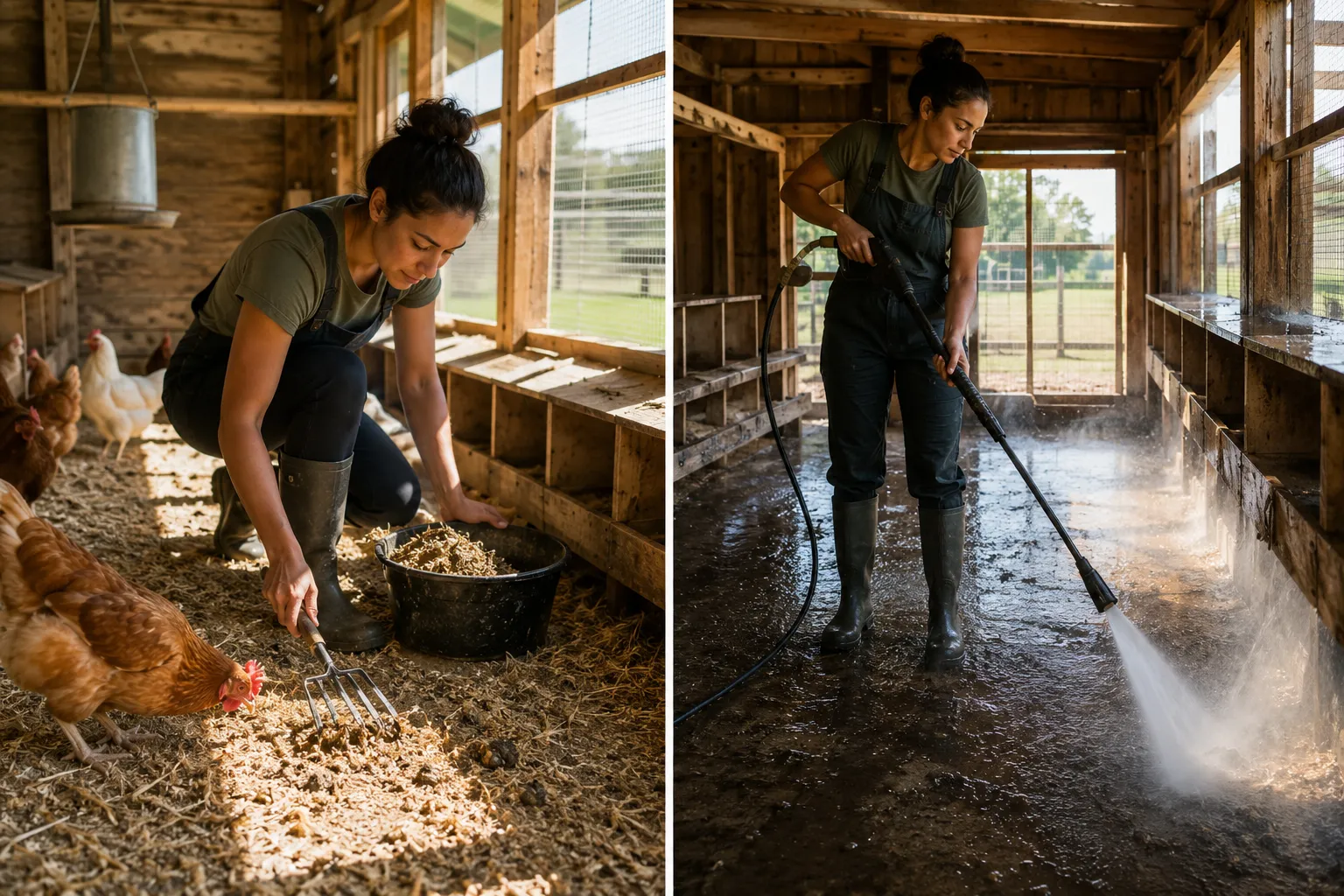
Daily vs Weekly vs Monthly Chicken Coop Cleaning Tasks
Daily tasks (5-10 minutes):
- Remove visible droppings from roosts, dropping boards, and high-traffic areas
- Collect eggs and check nesting boxes for soiled bedding
- Refresh water and remove spilled feed
- Quick visual inspection for sick birds or damage
- Rake or turn bedding in high-use spots
Weekly tasks (20-30 minutes):
- Replace all nesting box bedding
- Scrape and clean dropping boards thoroughly
- Add fresh bedding layer to coop floor
- Clean and refill feeders and waterers completely
- Check for and remove any damp or moldy bedding spots
Monthly deep cleaning tasks (2-4 hours):
- Remove all bedding down to bare floor
- Sweep and scrub all surfaces with poultry-safe disinfectant
- Clean roosts, nesting boxes, and walls
- Check for and repair any damage or gaps
- Apply fresh pest control (diatomaceous earth or herbs)
- Replace all bedding with 3-4 inches of fresh material
- Clean windows and ensure proper ventilation
This three-tier approach keeps your coop consistently clean without requiring hours of daily work. Skipping daily tasks forces you to do more intensive weekly cleaning, while neglecting weekly maintenance makes monthly deep cleans much harder.
How Long Does It Take to Clean a Chicken Coop?
Daily spot cleaning takes 5-10 minutes for most backyard coops housing 4-8 chickens. Weekly maintenance requires 20-30 minutes, while a complete deep clean takes 2-4 hours depending on coop size and how long since the last thorough cleaning.
Time estimates by task:
- Quick daily spot clean: 5-10 minutes
- Thorough daily clean: 15-20 minutes
- Weekly bedding refresh: 20-30 minutes
- Monthly deep clean (small coop): 1.5-2 hours
- Monthly deep clean (large coop): 3-4 hours
- Seasonal deep clean with repairs: 4-6 hours
Your first few deep cleans will take longer as you learn efficient techniques. Experienced chicken keepers develop systems that cut time significantly. Using a dropping board under roosts, for example, reduces daily cleaning time to under 5 minutes since most waste collects in one easily accessible spot.
Coops with good design features like removable dropping trays, easy-access doors, and smooth surfaces clean much faster than poorly designed structures with hard-to-reach corners and rough wood that traps debris.
Best Bedding for Chicken Coops That Need Less Cleaning
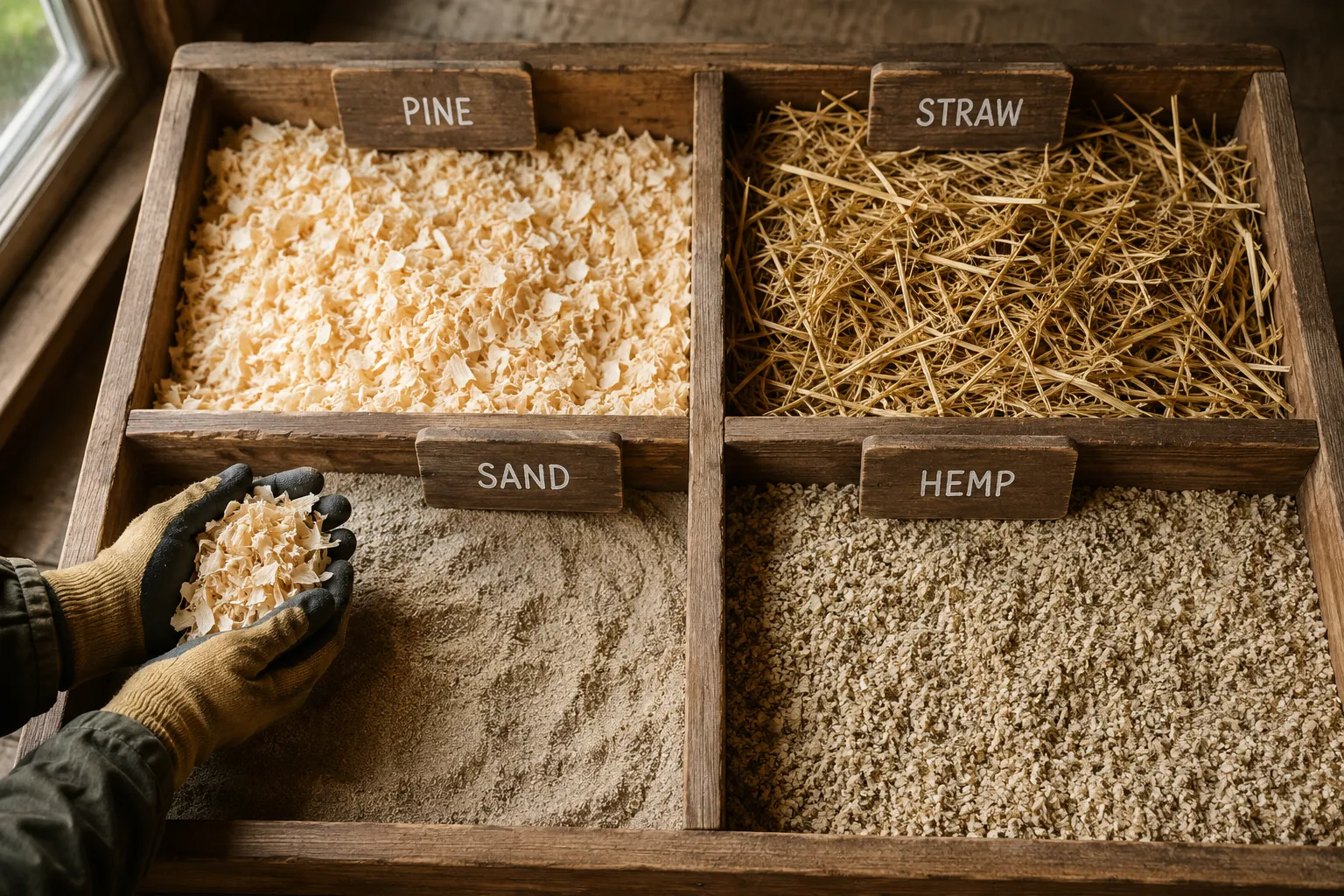
Sand bedding requires the least frequent full changes, lasting 6-12 months between complete replacements because you can scoop droppings daily like a cat litter box. Hemp bedding absorbs moisture exceptionally well and can go 4-6 weeks between changes. Pine shavings need replacement every 2-3 weeks, while straw requires weekly changes due to poor absorbency.
Bedding comparison:
| Bedding Type | Change Frequency | Absorbency | Cost | Composting |
|---|---|---|---|---|
| Sand | 6-12 months | Low | Medium | No |
| Hemp | 4-6 weeks | Excellent | High | Yes |
| Pine shavings | 2-3 weeks | Good | Low | Yes |
| Straw | 1-2 weeks | Poor | Low | Yes |
| Pellets | 3-4 weeks | Excellent | Medium | Yes |
Sand works best in dry climates and coops with excellent drainage. It stays cool in summer, provides dust-bathing opportunities, and makes daily waste removal quick. However, sand is heavy, doesn’t compost, and can be problematic in humid climates where it stays damp.
Hemp bedding costs more upfront but lasts longer and controls odors better than any other option. It’s ideal for chicken keepers who want to minimize cleaning frequency without sacrificing coop hygiene. Pine shavings offer the best balance of cost, availability, and performance for most backyard flocks.
Avoid cedar shavings, the aromatic oils can damage chicken respiratory systems.
Do Small Backyard Coops Need Cleaning More Often Than Large Ones?
Small backyard coops housing 3-6 chickens in limited space require more frequent cleaning than larger coops because waste concentration is higher per square foot. A 4×4 foot coop with 4 chickens needs bedding changes twice weekly, while a 10×10 foot coop with 10 chickens (same density) can often go a full week between changes due to better air circulation and waste distribution.
Why small coops get dirty faster:
- Higher waste density: Less floor space per dropping means faster saturation
- Poor ventilation: Smaller structures often have inadequate airflow, trapping moisture and ammonia
- Limited headroom: Low ceilings concentrate fumes at chicken breathing level
- Fewer windows: Less natural light and air exchange
- Overcrowding temptation: Backyard keepers often add “just one more” chicken to small coops
If you’re planning a coop, build bigger than you think you need. An extra 2-3 square feet per bird dramatically reduces cleaning frequency and improves flock health. A well-ventilated 6×8 foot coop with 4 chickens stays cleaner much longer than a cramped 4×4 foot space with the same birds.
Small coops can work well if you commit to more frequent maintenance. Daily spot cleaning becomes essential rather than optional when space is tight.
How to Tell When Your Chicken Coop Needs Cleaning
A strong ammonia smell that burns your nose when you open the coop door means you’ve waited too long, clean immediately. Other clear signs include visible mold on bedding, wet or matted bedding that doesn’t dry, increased fly activity, and chickens avoiding certain areas of the coop.
Visual and sensory indicators:
- Ammonia odor: Sharp, eye-watering smell indicates dangerous fume levels
- Wet bedding: Soggy or damp spots that stay wet overnight
- Mold growth: White, green, or black fuzzy patches on bedding or walls
- Pest activity: Flies, beetles, or mites visible during daytime
- Dirty eggs: Eggs consistently covered in droppings or mud
- Chicken behavior: Birds reluctant to enter coop or roosting outside
Bedding condition tests:
- Squeeze test: Grab a handful of bedding, if it clumps or feels damp, it needs changing
- Smell test: Fresh bedding smells earthy or woody; bad bedding smells sour or sharp
- Visual test: You shouldn’t see more droppings than bedding material in any area
Healthy coop bedding should be dry, fluffy, and smell neutral or slightly earthy. If you can see the floor through the bedding in high-traffic areas, add more material immediately. Chickens need at least 3-4 inches of bedding depth for proper absorption and insulation.
Cleaning Your Chicken Coop in Winter vs Summer
Winter cleaning can be less frequent because cold temperatures slow bacterial growth and reduce ammonia production, allowing you to extend deep cleaning intervals from monthly to every 6-8 weeks. Summer requires more vigilant cleaning with weekly bedding changes because heat accelerates decomposition, increases fly populations, and creates stronger odors.
Winter cleaning adjustments:
- Deep clean every 6-8 weeks instead of monthly
- Add extra bedding depth (6-8 inches) for insulation
- Focus on moisture control, wet bedding freezes and creates health hazards
- Clean on warmer days when chickens can stay outside longer
- Use deep litter method to generate heat from composting bedding
Summer cleaning priorities:
- Increase bedding changes to twice weekly in hot weather
- Clean early morning before temperatures peak
- Focus on fly control with more frequent dropping removal
- Ensure maximum ventilation to reduce heat and humidity
- Watch for rapid mold growth in humid climates
Climate-specific considerations:
- Humid regions: Need more frequent cleaning year-round due to moisture retention
- Dry climates: Can extend cleaning intervals but need to control dust
- Rainy seasons: Require daily checks for leaks and wet bedding spots
- Extreme heat: May need daily bedding refresh in areas over 95°F
The deep litter method works exceptionally well in winter, allowing bedding to compost slowly while generating heat. Simply add fresh layers on top weekly and do a complete cleanout in spring. This approach doesn’t work in summer heat, which causes rapid decomposition and overwhelming odors.
Can You Clean a Chicken Coop Too Often?
Yes, excessive cleaning disrupts the beneficial bacterial balance in bedding and stresses chickens by constantly changing their environment. Cleaning more than once daily or doing deep cleans weekly removes helpful microbes that naturally break down waste and control harmful pathogens.
Problems with over-cleaning:
- Disrupted microbiome: Beneficial bacteria need time to establish and control harmful organisms
- Increased stress: Constant disturbance makes chickens anxious and reduces egg production
- Wasted resources: Unnecessary bedding replacement costs money and creates excess waste
- Reduced immunity: Chickens need some pathogen exposure to build healthy immune systems
- Time inefficiency: Hours spent on unnecessary cleaning could go to other flock care
The deep litter method specifically relies on controlled composting that requires leaving bedding in place for months. Constantly removing all bedding prevents this beneficial process from working.
Signs you’re cleaning too much:
- Chickens seem stressed or agitated during and after cleaning
- Bedding never develops the earthy, composted smell of healthy deep litter
- Egg production drops after cleaning sessions
- You’re spending more than 30 minutes daily on coop maintenance
The right balance: Daily spot cleaning of droppings, weekly bedding refresh in high-traffic areas, and monthly or bi-monthly deep cleans provides optimal hygiene without overdoing it. Trust your nose and eyes, if the coop smells fine and looks clean, you don’t need to do more.
Deep Clean vs Spot Clean: Understanding the Difference
Spot cleaning means removing visible droppings and soiled bedding from specific areas while leaving the rest of the bedding in place, taking 5-15 minutes daily. Deep cleaning involves removing all bedding, scrubbing every surface with disinfectant, and replacing everything, requiring 2-4 hours every 1-3 months.
Spot cleaning includes:
- Scraping droppings from roosts and dropping boards
- Removing soiled bedding from nesting boxes
- Raking or turning floor bedding to expose fresh material
- Collecting eggs and checking for dirty spots
- Quick wipe-down of waterers and feeders
Deep cleaning includes:
- Complete bedding removal down to bare floor
- Sweeping and scrubbing all surfaces
- Disinfecting with poultry-safe cleaner (diluted bleach or commercial product)
- Cleaning or replacing roosts and nesting boxes
- Washing windows and ventilation screens
- Inspecting and repairing any damage
- Applying pest control treatments
- Adding 3-4 inches of completely fresh bedding
When to choose each:
- Daily spot cleaning: Maintains baseline hygiene between deep cleans
- Weekly spot cleaning: More thorough removal of problem areas
- Monthly deep cleaning: Standard maintenance for most coops
- Seasonal deep cleaning: Twice-yearly intensive cleaning with repairs and upgrades
Think of spot cleaning as daily dishes and deep cleaning as spring cleaning your house. Both are necessary, but they serve different purposes. Spot cleaning prevents problems from developing, while deep cleaning resets the entire environment.
How Often to Change Chicken Coop Bedding Material
Complete bedding changes depend on your bedding type and management method: traditional bedding requires full replacement every 2-4 weeks, while the deep litter method needs complete changes only 1-2 times per year. Most backyard chicken keepers using pine shavings should plan on full bedding replacement monthly.
Bedding change schedule by type:
- Pine shavings (traditional method): Every 2-4 weeks
- Straw (traditional method): Every 1-2 weeks
- Sand: Complete replacement every 6-12 months (daily scooping required)
- Hemp bedding: Every 4-6 weeks
- Pelletized bedding: Every 3-4 weeks
- Deep litter method (any material): Every 6-12 months with weekly additions
Deep litter method explained:
Instead of removing all bedding regularly, you add fresh layers on top weekly while the bottom layers slowly compost. This creates a beneficial microbiome that breaks down waste naturally. After 6-12 months, remove the entire composted mass and start fresh.
Benefits of deep litter:
- Reduces cleaning frequency dramatically
- Generates heat in winter through composting
- Creates excellent garden compost
- Maintains beneficial bacteria that control pathogens
- Saves money on bedding costs
Deep litter requirements:
- Minimum 6-8 inches of bedding depth
- Excellent ventilation to prevent moisture buildup
- Regular turning or stirring of top layers
- Carbon-rich bedding (pine shavings, hemp, or straw)
- Dry climate or well-ventilated coop
Deep litter doesn’t work in small, poorly ventilated coops or very humid climates where moisture can’t escape. In these situations, stick with traditional frequent bedding changes.
Is Once a Week Enough for Cleaning a Chicken Coop?
Once-weekly cleaning is sufficient only for small flocks of 2-4 chickens in properly sized, well-ventilated coops using high-quality absorbent bedding like hemp or pine shavings. Most backyard coops with 5+ chickens need daily spot cleaning plus weekly bedding refresh to maintain healthy conditions.
When weekly-only cleaning works:
- Very small flock (2-4 chickens maximum)
- Large coop with 6+ square feet per bird
- Excellent ventilation with multiple windows and vents
- High-quality absorbent bedding (hemp or pellets)
- Dry climate with low humidity
- Dropping boards that concentrate waste
When weekly cleaning isn’t enough:
- Flocks of 5+ chickens in standard backyard coops
- Limited ventilation or small coop size
- Humid climates or rainy seasons
- Poor-quality bedding (straw or old shavings)
- No dropping boards or waste management system
- Visible ammonia smell or wet bedding mid-week
The reality check: If you open your coop mid-week and smell ammonia, see wet bedding, or notice flies, weekly cleaning isn’t sufficient. Add daily 5-minute spot cleaning sessions to remove droppings from high-traffic areas.
Most successful backyard chicken keepers follow this pattern: 5-10 minutes daily for spot cleaning, 20-30 minutes weekly for bedding refresh, and 2-3 hours monthly for deep cleaning. This three-tier approach prevents problems without requiring excessive time investment.
Common Mistakes When Cleaning Your Chicken Coop
The biggest mistake is waiting until you smell ammonia to clean, which means your chickens have already been breathing harmful fumes for days or weeks. Other critical errors include using cedar bedding that damages respiratory systems, inadequate ventilation that traps moisture, and cleaning without removing chickens first, which stresses the flock.
Top cleaning mistakes:
- Reactive instead of preventive cleaning: Waiting for obvious problems rather than maintaining a schedule
- Insufficient bedding depth: Using less than 3 inches of bedding, which saturates quickly
- Poor ventilation: Cleaning regularly but not addressing airflow issues that cause moisture buildup
- Wrong bedding choice: Using straw in humid climates or sand in wet regions
- Skipping daily spot cleaning: Relying only on weekly deep cleans
- Not using a dropping board: Missing the easiest way to remove 70% of daily waste in 2 minutes
- Cleaning with chickens present: Stirring up dust and ammonia while birds are inside
- Using harsh chemicals: Applying cleaners that leave toxic residues
- Ignoring nesting boxes: Focusing on floors while boxes stay dirty
- Not composting properly: Throwing fresh chicken manure directly on gardens
The dropping board advantage:
Installing a board or tray under roosts catches 60-80% of droppings since chickens poop mostly at night while roosting. Scraping this board daily takes 2-3 minutes and dramatically reduces overall coop cleaning needs. This single upgrade is the most effective time-saver for chicken keepers.
Chemical safety:
Use only poultry-safe disinfectants or a 1:10 bleach-to-water solution, and always rinse thoroughly and let surfaces dry completely before returning chickens. Natural alternatives include white vinegar (undiluted) or commercial products specifically labeled for poultry housing.
Frequently Asked Questions
How often should you clean a chicken coop for 6 chickens?
For 6 chickens in a properly sized coop (24+ square feet), spot clean daily by removing visible droppings, refresh bedding weekly in high-traffic areas, and do a complete deep clean every 4-6 weeks. Increase frequency if you notice ammonia smell or wet bedding between cleanings.
What’s the fastest way to clean a chicken coop?
Install a dropping board under roosts to catch most waste in one spot, use sand or hemp bedding that’s easy to maintain, and keep a dedicated cleaning kit (scraper, rake, bucket) inside the coop. Daily 5-minute dropping board scraping prevents the need for intensive cleaning sessions.
Can I use a pressure washer to clean my chicken coop?
Yes, pressure washers work well for deep cleaning wooden coops during warm weather when the coop can dry completely before chickens return. Use low pressure to avoid damaging wood, and ensure all surfaces dry thoroughly within 24 hours to prevent mold growth.
How do I clean a chicken coop without getting sick?
Wear an N95 mask to avoid breathing dust and ammonia, use rubber gloves, and work in well-ventilated conditions. Remove chickens before cleaning, wet down bedding before removal to reduce dust, and wash hands thoroughly afterward. Never clean coops while eating or drinking.
Should I remove chickens when cleaning the coop?
Yes, remove chickens during deep cleaning to avoid exposing them to stirred-up dust, ammonia, and cleaning products. Daily spot cleaning can happen with chickens present if you work quickly and don’t create excessive dust. Always ensure chickens have outdoor access during cleaning.
What kills bacteria in a chicken coop?
A solution of 1 part bleach to 10 parts water effectively kills bacteria, viruses, and parasites when surfaces are scrubbed and allowed to air dry completely. White vinegar (undiluted) offers a natural alternative, though it’s less effective against some pathogens. Always rinse and dry surfaces before returning chickens.
How often should you replace chicken coop bedding in summer?
Summer heat requires bedding changes every 1-2 weeks for most backyard coops because high temperatures accelerate decomposition and bacterial growth. In extreme heat (over 95°F), you may need twice-weekly changes to control odors and flies. Sand bedding with daily scooping works best in hot climates.
Does the deep litter method really work?
Yes, the deep litter method works excellently in well-ventilated coops in moderate climates when managed properly. Add fresh bedding weekly, turn the top layer regularly, and maintain 6-8 inches of depth. The composting process controls pathogens and generates heat, but it fails in humid conditions or poorly ventilated coops.
What’s the best time of day to clean a chicken coop?
Morning is ideal because chickens naturally want to be outside foraging, making the coop empty and easy to access. Avoid cleaning during extreme heat or when chickens are trying to lay eggs. Weekend mornings work well for deep cleaning when you have 2-4 hours available.
How do you clean a chicken coop in winter?
Clean on warmer days above freezing when chickens can stay outside comfortably. Use the deep litter method to reduce cleaning frequency and generate heat. Focus on removing wet bedding immediately since it freezes and creates health hazards. Add extra bedding depth (6-8 inches) for insulation.
Can dirty chicken coops make humans sick?
Yes, dirty coops harbor salmonella, E. coli, and histoplasmosis (from fungal spores in dried droppings). Always wear protective equipment when cleaning, wash hands thoroughly afterward, and never track coop debris into your home. Children and immunocompromised individuals should avoid coop cleaning entirely.
How much does chicken coop bedding cost per month?
Pine shavings cost $15-30 monthly for a small flock of 4-6 chickens, depending on local prices and cleaning frequency. Hemp bedding costs $25-40 monthly but lasts longer. Sand requires a $50-100 initial investment but minimal ongoing costs. The deep litter method reduces bedding costs by 50-70% annually.
Conclusion
Maintaining a clean chicken coop doesn’t require hours of daily work, but it does demand consistent attention. Daily spot cleaning takes just 5-10 minutes and prevents the buildup that leads to health problems and overwhelming deep cleaning sessions. Weekly bedding refresh in high-traffic areas keeps your coop fresh, while monthly or bi-monthly deep cleans reset the entire environment.
The exact cleaning schedule depends on your specific situation, flock size, coop design, bedding type, and climate all play important roles. A small backyard coop with 4 chickens needs more frequent attention than a large, well-ventilated structure housing the same number of birds. Pay attention to your nose and eyes: ammonia smell, wet bedding, and increased pest activity all signal the need for more frequent cleaning.
Take action today:
- Install a dropping board under roosts if you don’t have one, this single upgrade saves hours monthly
- Establish a daily 5-minute routine for spot cleaning high-traffic areas
- Set a weekly reminder to refresh bedding in nesting boxes and problem spots
- Schedule monthly deep cleaning sessions on your calendar
- Evaluate your bedding choice and consider switching to hemp or sand if you’re cleaning too frequently
Remember that a clean coop isn’t just about aesthetics, it’s essential for flock health, egg production, and disease prevention. The time you invest in regular maintenance pays dividends in healthier, happier chickens and fewer emergency cleaning sessions. Start with daily spot cleaning this week, and you’ll quickly develop a routine that keeps your coop consistently clean without overwhelming your schedule.


