
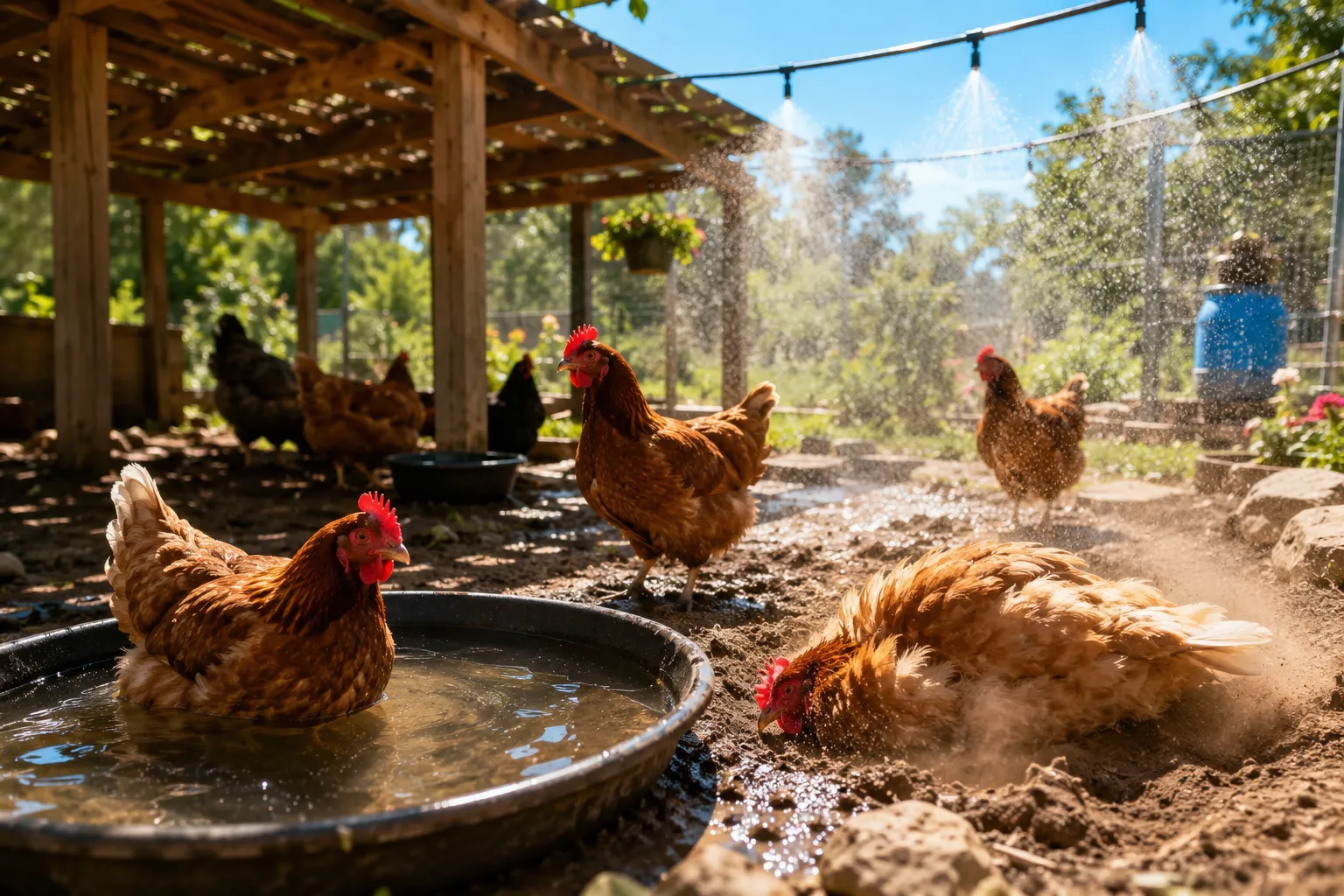
Chickens can die from heat stress when temperatures climb above 85°F, yet many backyard keepers don’t realize their flock is struggling until it’s too late. Learning how to keep chickens cool in summer isn’t just about comfort, it’s about preventing fatal heat stroke in birds that wear a permanent down jacket and can’t sweat. With the right strategies, you can protect your flock through even the most brutal heat waves.
Key Takeaways
- Chickens begin experiencing heat stress at temperatures above 85°F and face serious danger above 95°F
- Panting, wing-spreading, and lethargy are early warning signs that require immediate cooling intervention
- Fresh, cool water changed multiple times daily is the single most critical cooling strategy
- Shade, ventilation, and frozen treats work together to help chickens regulate body temperature
- Ice in waterers is safe and effective for keeping drinking water cool throughout hot days
- Different chicken breeds have varying heat tolerance, with Mediterranean breeds handling heat better than cold-hardy varieties
- Simple, low-cost solutions like shade cloth and shallow water pans can be as effective as expensive cooling systems
- Heat stroke can kill chickens within hours, making prevention far more important than treatment
What Temperature Is Too Hot for Chickens?
Chickens start experiencing heat stress when temperatures rise above 85°F, and the danger becomes severe when the thermometer climbs past 95°F. Unlike humans, chickens cannot sweat to cool down, they rely entirely on panting, seeking shade, and spreading their wings to dissipate heat.
The comfort zone for most chickens sits between 65°F and 75°F. Once ambient temperature exceeds 85°F, chickens must work actively to maintain their body temperature, which normally runs between 105°F and 107°F. When environmental heat approaches their internal temperature, cooling becomes nearly impossible.
Several factors make hot weather more dangerous:
- Humidity levels: High humidity prevents evaporative cooling through panting, making 85°F with 80% humidity more dangerous than 95°F with 30% humidity
- Direct sunlight: Full sun exposure can make surfaces feel 20-30°F hotter than air temperature
- Poor ventilation: Stagnant air traps heat and prevents natural cooling
- Overnight temperatures: Chickens need nighttime temperatures below 70°F to recover from daytime heat stress
Common mistake: Many keepers focus only on daytime highs and ignore overnight lows. If temperatures don’t drop below 75°F at night, chickens can’t recover, and heat stress compounds day after day.
Signs of Heat Stress in Chickens
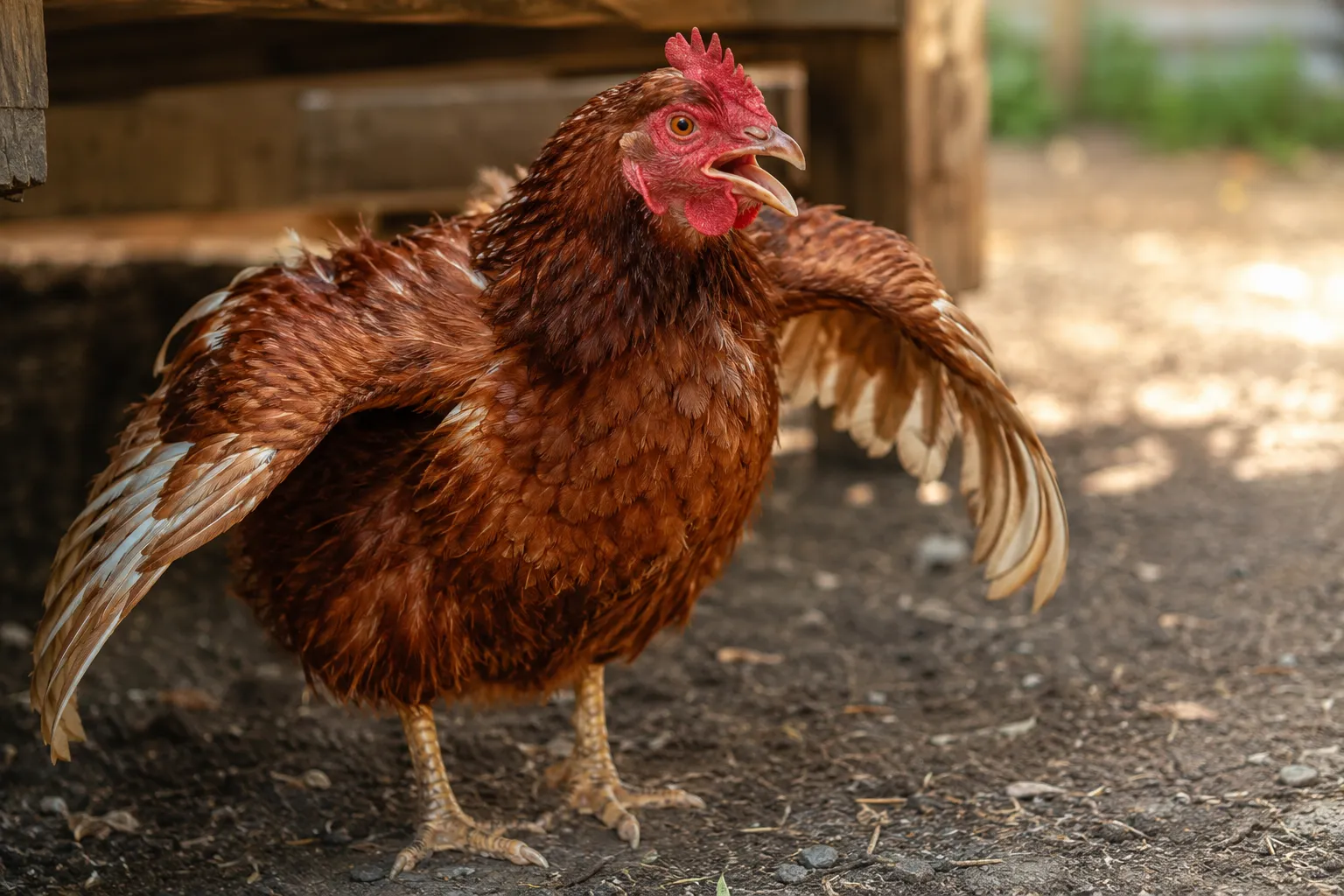
Recognizing heat stress early can save your chickens’ lives. Chickens display clear physical signs when they’re struggling with heat, progressing from mild discomfort to life-threatening emergency.
Early warning signs (mild heat stress):
- Panting with open beak
- Wings held away from body
- Reduced activity and appetite
- Seeking shade constantly
- Pale combs and wattles
Serious warning signs (moderate to severe heat stress):
- Heavy, labored panting
- Lethargy or inability to stand
- Diarrhea or watery droppings
- Stumbling or loss of balance
- Closed eyes while standing
Emergency signs (critical heat stroke):
- Seizures or convulsions
- Unconsciousness
- Complete collapse
- Gasping for air
The progression from mild to critical can happen within 1-2 hours in extreme heat. Chickens showing moderate signs need immediate intervention, move them to shade, offer cool (not ice-cold) water, and consider emergency cooling measures like gently wetting their feet and legs.
Choose immediate action if: Your chicken is panting heavily, has stopped moving, or shows any signs of collapse. These birds need cooling within minutes, not hours.
Can Chickens Die from Heat Stroke?
Yes, chickens can and do die from heat stroke, often within just a few hours of severe heat exposure. Heat stroke occurs when a chicken’s body temperature rises above 113°F, causing organ failure, brain damage, and death.
Heat stroke is particularly deadly because chickens have limited cooling mechanisms. Once their body temperature climbs too high, they enter a dangerous cycle: stress increases metabolic heat production, which raises body temperature further, which increases stress. Without intervention, this spiral ends in death.
Mortality risk factors:
- Heavy breeds: Orpingtons, Brahmas, and other large, fluffy breeds overheat faster
- Obesity: Overweight chickens struggle more with heat regulation
- Age: Very young chicks and older hens are most vulnerable
- Feather condition: Birds in full feather or molting face different challenges
- Underlying health issues: Respiratory problems or heart conditions increase risk
Chickens that survive severe heat stroke often suffer permanent damage, including reduced egg production, neurological problems, and weakened immune systems. Prevention is always easier and more effective than treatment.
Edge case: Chickens can experience heat stroke even in temperatures below 90°F if they’re confined in poorly ventilated coops, transported in hot vehicles, or chased during hot weather. The exertion combined with heat creates a deadly combination.
Best Ways to Cool Down Chickens in Extreme Heat
When temperatures soar into dangerous territory, you need a multi-layered approach to keep chickens cool. No single method works perfectly, the most effective strategy combines several cooling techniques.
Immediate cooling priorities:
- Provide abundant fresh water: This is non-negotiable and should be your first action
- Create deep shade: Block direct sunlight from all areas where chickens spend time
- Maximize airflow: Open windows, add fans, remove obstacles blocking breeze
- Offer cooling stations: Set up multiple options so chickens can choose what works best
Proven cooling methods:
- Shallow wading pools: 2-3 inches of water allows chickens to cool their feet and legs, which helps lower body temperature
- Frozen water bottles: Place large frozen bottles in the coop; chickens will sit near them
- Misting systems: Fine mist cools the air without soaking chickens or creating humidity problems
- Dust bathing areas: Cool, damp soil in shaded spots provides natural cooling
- Electrolyte water: Add poultry electrolytes to drinking water to help replace minerals lost through panting
Feeding adjustments: Feed chickens during the coolest parts of the day (early morning or evening). Digestion generates metabolic heat, so avoid feeding during peak afternoon temperatures. Offer high-water-content treats like watermelon or cucumber instead.
Common mistake: Overcrowding chickens in one shaded area. Provide multiple cooling stations spread across your yard so birds can space out. Body heat from crowded chickens can actually raise the temperature in a confined shaded area.
Should I Put Ice in Chicken Waterers?
Yes, adding ice to chicken waterers is safe and highly effective for keeping drinking water cool throughout hot summer days. Cold water helps lower chickens’ internal temperature and encourages them to drink more, which is critical for preventing dehydration and heat stress.
Chickens naturally prefer cool water over warm water, and they’ll drink significantly more when water temperature stays below 70°F. In summer heat, water in metal or dark-colored containers can reach 90°F or higher within an hour, making it unpalatable and less effective for cooling.
Best practices for ice in waterers:
- Add ice cubes or frozen water bottles 2-3 times daily during heat waves
- Use larger ice blocks (frozen in milk jugs) for slower melting and longer cooling
- Place waterers in shade to keep water cool longer
- Provide multiple watering stations so all chickens have access
Alternative cooling method: Freeze water in shallow pans, then place the ice blocks in a separate pan under or near waterers. As ice melts, it keeps the surrounding air cool without diluting the water.
Some keepers worry that ice-cold water might shock chickens’ systems, but this concern is unfounded. Chickens will naturally sip cold water at their own pace and won’t drink enough at once to cause problems. The benefits of cool water far outweigh any theoretical risks.
Choose ice blocks over ice cubes if: You can’t refill waterers multiple times daily. A gallon jug frozen solid will keep water cool for 4-6 hours, while ice cubes melt within 1-2 hours.
Frozen Treats for Chickens in Summer
Frozen treats serve double duty in summer: they provide cooling relief and keep chickens entertained during hot afternoons when they’re less active. These treats help lower body temperature while delivering hydration and nutrients.
Popular frozen treat recipes:
- Frozen fruit blocks: Freeze berries, melon chunks, or grapes in ice cube trays or muffin tins
- Veggie popsicles: Freeze corn, peas, and chopped vegetables in water
- Herb ice cubes: Freeze fresh herbs like mint, basil, or oregano in water
- Scratch grain ice blocks: Mix scratch grains with water and freeze in large containers
- Yogurt freezes: Freeze plain yogurt (small amounts only) for a probiotic treat
How to serve frozen treats:
- Hang frozen blocks from strings so chickens can peck at them
- Place frozen treats in shallow pans in shaded areas
- Scatter frozen fruits on cool ground for foraging activity
- Freeze treats in bundt pans or ring molds for longer-lasting entertainment
Frozen treats work best when offered during the hottest part of the day (typically 2-5 PM). The pecking activity keeps chickens occupied while the cold treats provide internal cooling.
Portion control matters: Treats should never exceed 10% of a chicken’s daily diet. While frozen treats are healthier than many alternatives, too many can displace the balanced nutrition chickens need from their regular feed.
Edge case: Chickens with crop issues or digestive problems should receive frozen treats cautiously. Large chunks of frozen food can temporarily slow crop emptying, which might cause problems in birds with existing crop disorders.
Do Chickens Need Shade or a Fan in Hot Weather?
Chickens need both shade and airflow to survive hot weather, these aren’t competing options but complementary necessities. Shade blocks radiant heat from the sun, while fans or natural breeze provide convective cooling that helps chickens dissipate body heat.
Why shade is essential:
Shade reduces the effective temperature chickens experience by 10-20°F compared to full sun exposure. Direct sunlight heats chicken feathers, the ground they stand on, and surfaces around them, creating an oven-like environment. Even with fans, chickens in full sun will struggle.
Types of effective shade:
- Natural tree canopy (provides dappled shade and natural cooling)
- Shade cloth (70-90% density works best)
- Tarps or shade sails (ensure proper airflow underneath)
- Covered runs or porches
- Planted shade gardens (sunflowers, corn, or tall grasses)
Why airflow matters:
Chickens cool themselves primarily through panting, which requires air movement to carry away heat and moisture. Stagnant air, even in shade, prevents effective cooling. Fans create artificial breeze that dramatically improves chickens’ ability to regulate temperature.
Fan placement tips:
- Position fans to create cross-ventilation, not blow directly on roosting chickens
- Use multiple smaller fans rather than one large fan for better air distribution
- Ensure fans are safely mounted and electrical connections are protected from moisture
- Run fans 24/7 during heat waves if overnight temperatures stay above 75°F
Common mistake: Creating shade that blocks airflow. A tightly enclosed shaded area with no ventilation can actually trap heat and become more dangerous than partial sun with good breeze.
Misting System vs Fan for Chicken Coop Cooling
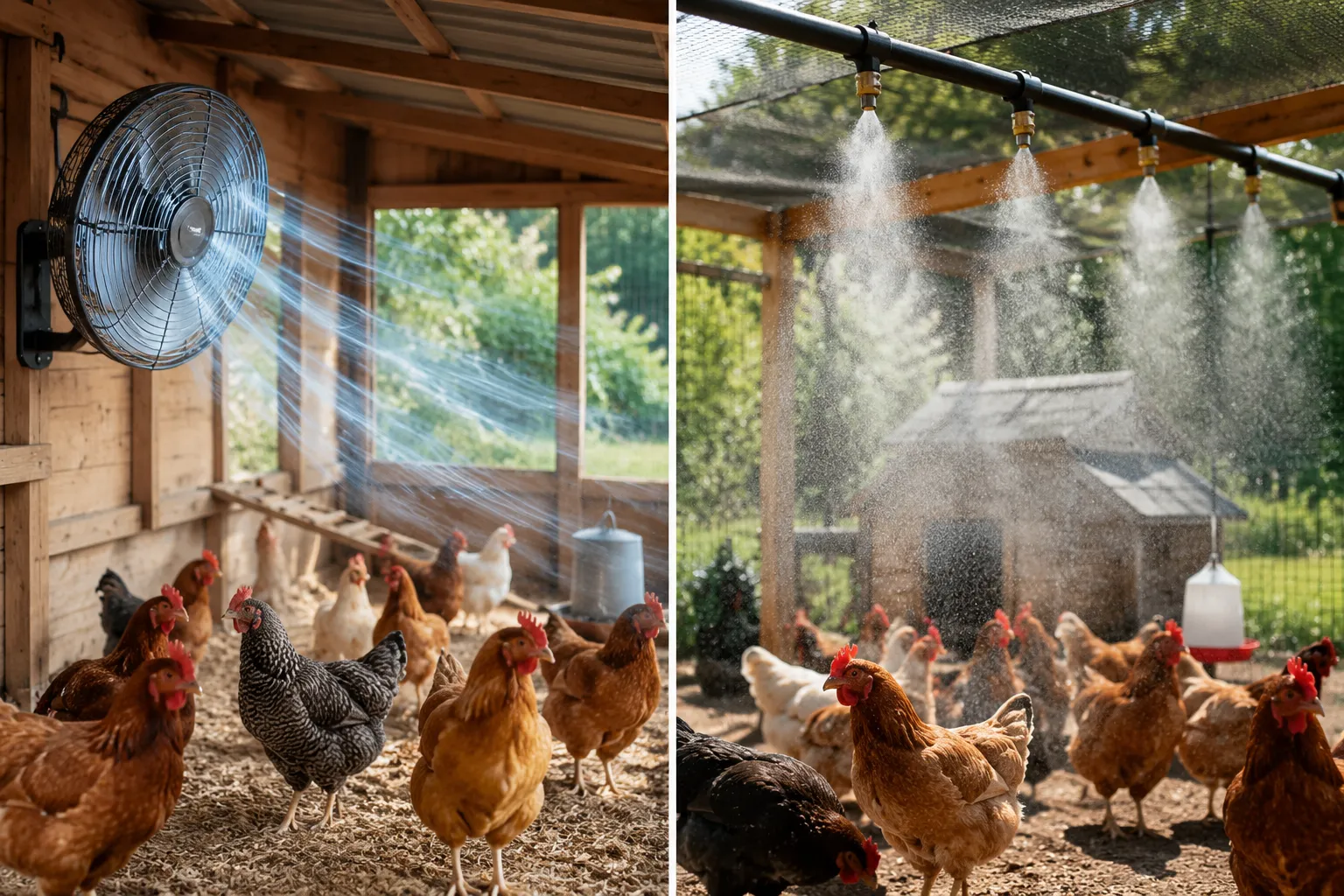
Both misting systems and fans effectively cool chickens, but they work through different mechanisms and suit different climates and budgets. The best choice depends on your local humidity, coop design, and available resources.
Misting systems cool through evaporation. Fine water droplets spray into the air, evaporate quickly, and lower ambient temperature by 10-20°F. They work best in dry climates where humidity stays below 50%.
Misting system pros:
- Dramatic temperature reduction in dry climates
- Cools both air and surfaces
- Relatively low electricity use
- Can cover large outdoor areas
Misting system cons:
- Ineffective or counterproductive in humid climates
- Requires water line installation and maintenance
- Can create muddy conditions if overused
- Nozzles may clog and need regular cleaning
- Initial cost: $50-$300 depending on system size
Fans cool through air movement, helping chickens dissipate body heat through convection. They work in any climate and provide consistent cooling without adding moisture.
Fan pros:
- Effective in all humidity levels
- Simple installation and maintenance
- Immediate cooling effect
- Multiple price points from $20-$200
- Can be repositioned as needed
Fan cons:
- Higher electricity consumption than misters
- Cooling effect limited to airflow area
- Requires safe electrical setup
- Can be noisy depending on model
Decision rule: Choose misting if you live in a dry climate (desert Southwest, inland California, etc.) and have access to water lines. Choose fans if you live in humid regions (Southeast, Gulf Coast, etc.) or want a simpler, more flexible solution. In moderate climates, combining both provides optimal cooling.
Best of both worlds: Use fans as your primary cooling method and add a small misting system for the hottest hours (2-5 PM) in the outdoor run area, not inside the coop where moisture can cause problems.
How Often to Change Chicken Water in Summer
Change chicken water at least twice daily during summer heat, and three to four times daily during heat waves or when temperatures exceed 90°F. Fresh, cool water is the single most important factor in preventing heat stress and keeping chickens healthy.
Water quality deteriorates rapidly in summer heat. Within 2-3 hours, water can become contaminated with droppings, feed particles, algae, and bacteria. Warm, dirty water discourages drinking, which leads directly to dehydration and heat stress.
Optimal water change schedule:
- Early morning (6-7 AM): Provide fresh, cool water before temperatures rise
- Midday (12-1 PM): Refresh water and add ice during peak heat
- Late afternoon (4-5 PM): Change water again and add ice for evening
- Before roosting (optional, during extreme heat): Top off waterers for overnight access
Signs you need to change water more frequently:
- Water feels warm to the touch
- Visible debris, algae, or slime in waterers
- Water level drops by more than half between changes
- Chickens seem reluctant to drink
Waterer management tips:
- Use light-colored or insulated waterers that don’t absorb heat
- Place all waterers in shaded locations
- Elevate waterers to reduce contamination from scratching
- Provide multiple watering stations (one per 6-8 chickens minimum)
- Scrub waterers with diluted vinegar weekly to prevent algae and biofilm
Budget-friendly solution: Keep extra waterers in your freezer. Rotate them out during water changes so chickens always have access to cool water while you clean the dirty ones.
Edge case: If you use automatic waterers or nipple systems, check them multiple times daily in summer. These systems can malfunction, and chickens can die from dehydration within 24 hours if water access is interrupted during hot weather.
What to Do If Your Chicken Is Panting and Lethargic
A panting, lethargic chicken is experiencing moderate to severe heat stress and needs immediate intervention. This is a medical emergency that can progress to heat stroke and death within 1-2 hours if not addressed.
Immediate emergency steps:
- Move the bird to shade immediately: Carry the chicken to the coolest, shadiest spot available
- Offer cool water: Place shallow water dishes within easy reach; dip the bird’s beak gently if it won’t drink on its own
- Cool the legs and feet: Set the chicken in a shallow pan of cool (not ice-cold) water, or gently wet its legs and feet with a damp cloth
- Provide airflow: Position a fan to create gentle breeze around the bird
- Monitor closely: Check the chicken every 10-15 minutes for improvement or deterioration
What NOT to do:
- Don’t submerge the entire chicken in water (can cause shock)
- Don’t use ice-cold water directly on the bird (cool, not cold)
- Don’t force-feed or force-drink (can cause aspiration)
- Don’t leave the bird alone until it shows clear improvement
Recovery signs (usually within 30-60 minutes):
- Panting slows and becomes less labored
- Bird becomes more alert and responsive
- Wings return to normal position against body
- Chicken begins moving around voluntarily
When to seek veterinary help:
- No improvement after 60 minutes of cooling efforts
- Bird becomes unconscious or has seizures
- Breathing becomes more labored despite cooling
- Bird cannot stand or hold its head up
After recovery: Keep the affected chicken in a cool, shaded area with easy access to water and electrolytes for 24-48 hours. Don’t return it to the flock until it’s eating, drinking, and behaving normally. Birds that experience severe heat stress are more vulnerable to repeat episodes.
Prevention note: If one chicken shows heat stress symptoms, check your entire flock immediately. Where one bird struggles, others are likely suffering too.
Mistakes People Make Keeping Chickens Cool in Summer
Even experienced chicken keepers make critical errors that put their flocks at risk during hot weather. Avoiding these common mistakes can mean the difference between a healthy flock and heat-related deaths.
Top cooling mistakes:
1. Closing up the coop for “protection”
Many keepers close windows and vents thinking they’re keeping hot air out, but this traps heat and creates an oven. Coops need maximum ventilation in summer, open all windows, vents, and doors to create cross-breeze.
2. Providing only one water source
Dominant chickens can guard water during stress, preventing lower-ranking birds from drinking. Always provide multiple watering stations spread across your yard, with at least one waterer per 6-8 chickens.
3. Using metal waterers and feeders
Metal containers absorb and radiate heat, making water hot and feed unpalatable. Switch to plastic, ceramic, or insulated waterers in summer.
4. Forgetting about nighttime cooling
Chickens need overnight temperatures below 70°F to recover from daytime heat stress. If nights stay hot, run fans 24/7 and consider moving chickens to cooler sleeping areas like basements or garages during heat waves.
5. Overcrowding in shade
Too many chickens in one shaded area generate collective body heat that raises temperature. Provide multiple shaded zones so birds can spread out.
6. Giving only dry feed during peak heat
Digestion generates metabolic heat. Offer high-water-content foods (watermelon, cucumber, lettuce) during the hottest hours and save regular feed for morning and evening.
7. Ignoring early warning signs
Waiting until chickens collapse before taking action is too late. Intervene at the first signs of panting and wing-spreading, not after birds become lethargic.
8. Chasing or handling chickens during heat
Exercise and stress generate additional heat. Avoid catching, moving, or stressing chickens during the hottest parts of the day unless it’s an emergency.
9. Relying solely on expensive equipment
You don’t need costly cooling systems to keep chickens safe. Simple solutions like shade cloth, frozen water bottles, and multiple water changes work extremely well.
10. Not planning for power outages
If your cooling strategy depends entirely on electricity (fans, misters, automatic waterers), have a backup plan for power failures during heat waves.
Do Different Chicken Breeds Handle Heat Better?
Yes, chicken breeds vary dramatically in their heat tolerance based on body size, feather type, comb style, and geographic origin. Choosing heat-tolerant breeds is one of the most effective long-term strategies for keeping chickens comfortable in hot climates.
Heat-tolerant breeds (Mediterranean and light breeds):
- Leghorns: Excellent heat tolerance, large combs for heat dissipation, active foragers
- Andalusians: Developed in hot Spanish climate, efficient cooling
- Minorcas: Large combs, light body weight, heat-adapted
- Egyptian Fayoumis: Ancient desert breed, exceptional heat tolerance
- Sicilian Buttercups: Mediterranean origin, handles heat well
- Easter Eggers: Variable but generally good heat tolerance
Moderate heat tolerance:
- Rhode Island Reds: Adaptable to various climates
- Australorps: Handle heat reasonably well despite dark feathers
- Plymouth Rocks: Medium-sized, moderate tolerance
- Wyandottes: Adaptable but prefer cooler weather
Poor heat tolerance (cold-hardy breeds):
- Brahmas: Heavy, fluffy feathers trap heat
- Cochins: Excessive feathering, including foot feathers
- Orpingtons: Large, fluffy, struggle in heat
- Silkies: Unique feather structure provides poor heat regulation
- Marans: Dark feathers absorb heat
Physical traits that improve heat tolerance:
- Large combs and wattles: Act as radiators to dissipate heat (single combs work best)
- Light body weight: Less mass to cool
- Tight feathering: Allows better air circulation than fluffy feathers
- Light-colored feathers: Reflect rather than absorb heat
- Active temperament: Heat-tolerant breeds often remain active in warm weather
Decision rule: If you live in a consistently hot climate (Southern states, Southwest), prioritize Mediterranean breeds. If you experience both hot summers and cold winters, choose dual-purpose breeds with moderate tolerance to both extremes.
Edge case: Even heat-tolerant breeds can suffer heat stroke in extreme conditions. Breed selection reduces risk but doesn’t eliminate the need for proper cooling strategies.
Is It Safe to Hose Down Chickens When It’s Hot?
Hosing down chickens can be safe and beneficial in extreme heat, but only when done correctly. The key is cooling chickens gradually through their legs and feet rather than soaking their entire body, which can cause shock or create dangerous humidity in enclosed spaces.
Safe hosing techniques:
- Spray the ground: Wet the soil or concrete in shaded areas where chickens stand; cooling their feet lowers body temperature
- Mist, don’t drench: Use a fine mist setting to cool the air around chickens without soaking feathers
- Focus on legs: Gently spray water on chickens’ legs and feet, avoiding the body and head
- Create shallow puddles: Spray ground to create 1-2 inch puddles chickens can wade through voluntarily
What to avoid:
- Never spray chickens directly with a strong stream
- Don’t soak feathers completely (reduces insulation and can trap heat)
- Avoid hosing chickens inside coops (creates humidity and mold problems)
- Don’t hose chickens that are already in severe distress (use gentler cooling methods)
Why it works: Chickens have blood vessels close to the surface in their legs and feet. Cooling these areas helps lower overall body temperature without the risks associated with full-body soaking.
Individual preferences: Some chickens enjoy standing in sprinkler spray or shallow puddles, while others avoid water entirely. Let chickens choose whether to engage with water cooling, never force them.
Best timing: Hose down areas in late morning (10-11 AM) before peak heat arrives, giving the ground time to cool. Repeat in mid-afternoon if needed.
Alternative for nervous birds: If your chickens are skittish about hoses, place shallow pans of water in shaded areas instead. Many chickens will voluntarily wade in pans but flee from hoses.
Cheap Ways to Keep Backyard Chickens Cool Without Electricity
You can keep chickens cool effectively without spending hundreds on equipment or running up electricity bills. Simple, low-tech solutions work remarkably well when applied strategically.
Free or nearly-free cooling methods:
Shade solutions ($0-$30):
- Repurpose old bed sheets or tarps as temporary shade cloth
- Plant fast-growing sunflowers or corn to create natural shade
- Move portable coops under existing trees
- Create shade structures from scrap wood and recycled materials
- Use old umbrellas or beach canopies
Water cooling ($0-$15):
- Freeze water in recycled milk jugs or soda bottles (place in coop or run)
- Provide multiple shallow pans for foot-wading (use old baking pans)
- Change water frequently using containers you already own
- Add ice cubes from your regular freezer
Natural cooling ($0):
- Create dust bathing areas in shaded spots with naturally cool soil
- Dig shallow depressions in shaded areas where cool earth is exposed
- Open all coop windows and doors for maximum cross-ventilation
- Let chickens free-range in wooded areas during hottest hours
Frozen treats ($5-$20):
- Freeze kitchen scraps (vegetable peels, fruit rinds) in water
- Make ice blocks with scratch grains mixed in
- Freeze weeds and grass clippings in water blocks
Feeding adjustments ($0):
- Feed only during cool morning and evening hours
- Offer high-water-content kitchen scraps (watermelon rinds, cucumber, lettuce)
- Reduce protein-rich feeds during peak heat (protein digestion generates more metabolic heat)
Coop modifications ($0-$20):
- Remove or thin bedding in summer (bare floors stay cooler)
- Paint coop roof white or light colors to reflect heat (use leftover paint)
- Create additional ventilation openings covered with hardware cloth
- Remove nest box curtains or doors to improve airflow
Strategic management ($0):
- Avoid handling or stressing chickens during peak heat hours
- Let chickens roost in the coolest available location, even if it’s not their usual coop
- Reduce flock density by temporarily separating chickens into multiple areas
Budget priority list: If you can spend a little money, prioritize in this order: (1) shade cloth ($15-$30), (2) additional waterers ($10-$20), (3) materials for frozen treats ($5-$10). These three investments provide maximum cooling benefit for minimal cost.
Frequently Asked Questions
How quickly can a chicken die from heat stroke?
A chicken can die from heat stroke within 2-4 hours of severe heat exposure, and sometimes faster if temperatures exceed 105°F or the bird is already stressed. Once body temperature rises above 113°F, organ failure begins rapidly. This is why immediate intervention at the first signs of heat stress is critical.
Can I put a frozen water bottle in my chicken coop?
Yes, placing frozen water bottles in the coop is safe and effective. Chickens will sit near the bottles to cool down. Use gallon-sized jugs for longer-lasting cooling, and place them in areas where chickens naturally rest. Replace bottles 2-3 times daily during extreme heat.
What is the fastest way to cool down an overheated chicken?
Move the chicken to shade immediately, place its feet in cool (not cold) water, offer drinking water, and provide gentle airflow from a fan. Focus cooling efforts on the legs and feet where blood vessels are close to the surface. Most chickens show improvement within 30-60 minutes if intervention is prompt.
Should I add electrolytes to my chickens’ water in summer?
Yes, poultry electrolytes help replace minerals lost through panting and support hydration. Add electrolytes to at least one waterer during heat waves, but always provide plain water as well so chickens can choose. Follow package directions for proper dilution ratios.
Do chickens stop laying eggs in extreme heat?
Yes, many chickens reduce or stop egg production when temperatures consistently exceed 85-90°F. This is a normal stress response that protects the hen’s health. Egg production typically resumes when temperatures moderate. Forcing production during extreme heat can be dangerous for the bird.
Can baby chicks handle summer heat better than adult chickens?
No, young chicks are actually more vulnerable to heat stress than adult chickens. Chicks under 6 weeks old have poorly developed temperature regulation systems. They need careful monitoring during hot weather, with special attention to ventilation in brooders and access to cool water.
Is it better to keep chickens in the coop or let them out during hot weather?
Let chickens out during hot weather so they can find the coolest spots, access multiple water sources, and spread out. Coops trap heat and limit cooling options. Free-ranging or access to a large, shaded run is much safer than confinement during heat waves.
How do I know if my chicken has recovered from heat stress?
A recovered chicken will stop panting heavily, return wings to normal position, become alert and responsive, and resume normal activity within 1-2 hours. The bird should eat and drink normally within 24 hours. Keep monitoring for 48 hours as some effects can be delayed.
Can I use a swamp cooler for my chicken coop?
Swamp coolers (evaporative coolers) work well for chicken coops in dry climates where humidity stays below 40%. They’re ineffective and can be counterproductive in humid regions. Ensure proper ventilation so moisture doesn’t build up inside the coop.
What temperature should I start implementing cooling measures?
Begin implementing cooling strategies when forecasts predict temperatures above 80°F. Don’t wait for chickens to show stress, prevention is far more effective than treatment. Have shade, extra water, and frozen treats ready before the heat arrives.
Do roosters handle heat differently than hens?
Roosters and hens have similar heat tolerance, but roosters may be slightly more vulnerable due to larger body size in some breeds. Both sexes need the same cooling strategies. Monitor all birds equally during hot weather regardless of sex.
How long does it take for a chicken to die from dehydration in summer?
Chickens can die from dehydration within 24-48 hours in hot weather, sometimes faster in extreme heat. Dehydration accelerates heat stress and creates a deadly cycle. This is why ensuring constant access to fresh, cool water is the single most important summer care priority.
Conclusion
Keeping chickens cool in summer requires vigilance, preparation, and a multi-layered approach that combines shade, water, ventilation, and smart management. The good news is that effective cooling doesn’t require expensive equipment, simple strategies like providing multiple water sources, creating adequate shade, and offering frozen treats can keep your flock safe through even the most intense heat waves.
Start implementing cooling measures before temperatures climb into the danger zone above 85°F. Monitor your chickens daily for early signs of heat stress like panting and wing-spreading, and intervene immediately if you notice these symptoms. Remember that prevention is always easier and more effective than treating heat stroke.
Take action now: Evaluate your current setup and identify weak points before the next heat wave arrives. Add shade cloth to exposed areas, purchase extra waterers, and stock your freezer with water bottles for emergency cooling. If you live in a consistently hot climate, consider transitioning to heat-tolerant breeds over time.
Your chickens depend on you to recognize and respond to heat stress. With the strategies outlined in this guide, you can protect your flock and ensure they stay healthy, comfortable, and productive all summer long.


