
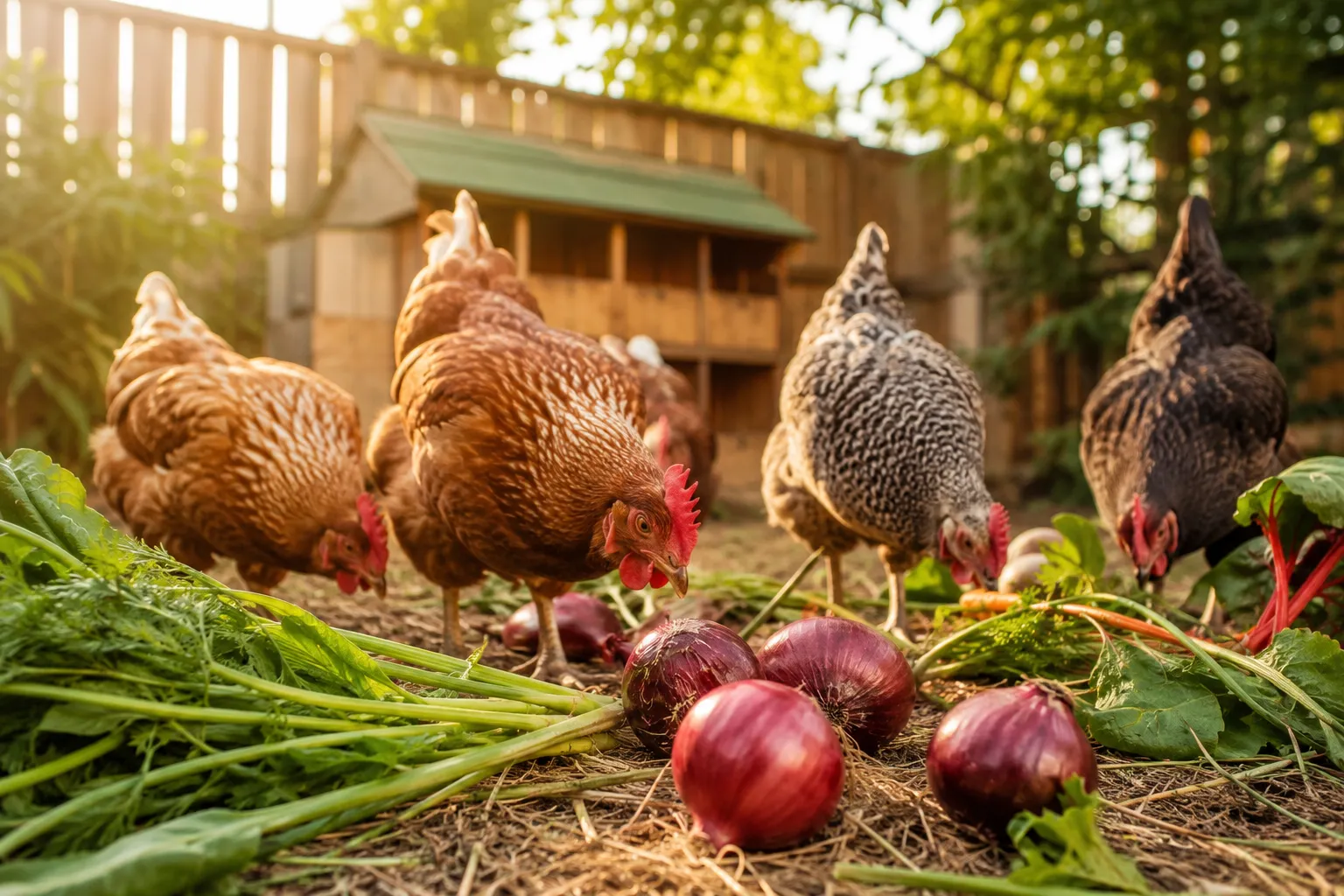
Quick Answer: No, chickens should not eat onions. Onions contain thiosulfate, a compound that damages red blood cells in chickens and can lead to hemolytic anemia, weakness, and potentially death. While a tiny accidental bite is unlikely to cause immediate harm, onions should never be fed intentionally to chickens in any form, raw, cooked, or as scraps.
Key Takeaways
- Onions are toxic to chickens due to thiosulfate compounds that destroy red blood cells
- All forms of onions are dangerous: raw, cooked, green onions, scallions, and onion powder
- Even small amounts can be harmful when consumed regularly or in concentrated doses
- Symptoms of onion poisoning include lethargy, pale combs, difficulty breathing, and weakness
- Garlic poses similar risks but is slightly less toxic than onions
- Baby chicks are especially vulnerable to onion toxicity due to their smaller size
- Safe alternatives exist: leafy greens, berries, melons, and most vegetables are chicken-friendly
- Kitchen scraps should be screened carefully before feeding to your flock
- Recovery is possible if onion exposure is caught early and veterinary care is provided
- Prevention is key: keep onions, onion scraps, and foods containing onion away from your coop
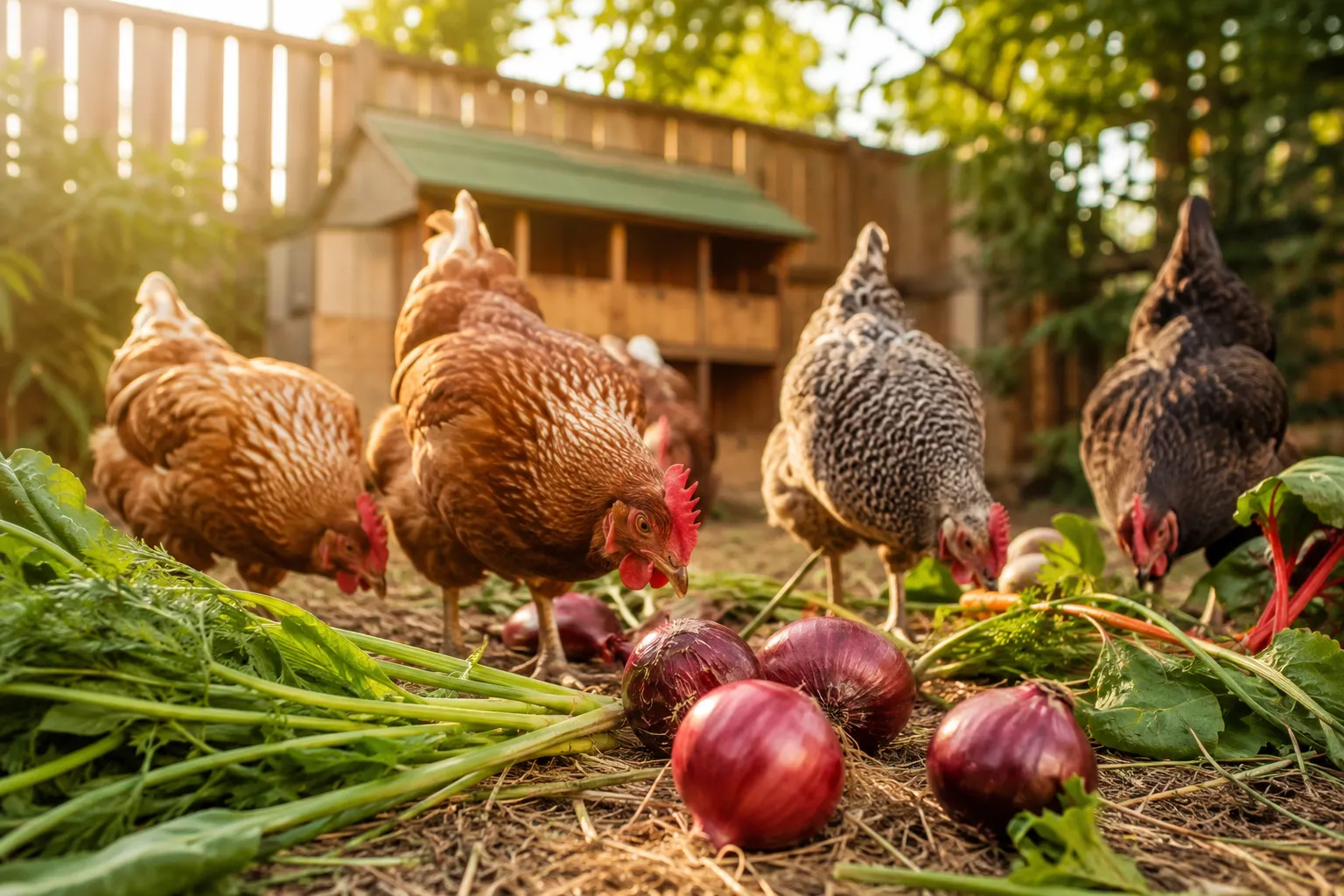
Are Onions Toxic to Chickens?
Yes, onions are toxic to chickens. Onions contain organosulfur compounds, particularly thiosulfate, which chickens cannot properly metabolize. When chickens consume onions, these compounds attack and rupture red blood cells, leading to a condition called hemolytic anemia. This process reduces the blood’s ability to carry oxygen throughout the chicken’s body, causing serious health complications.
The toxicity applies to all members of the Allium family, which includes:
- Yellow, white, and red onions
- Green onions and scallions
- Shallots
- Leeks
- Chives
Why chickens are especially vulnerable: Unlike humans who can break down thiosulfate compounds relatively safely, chickens lack the specific enzymes needed to neutralize these toxins. The compounds accumulate in their system and progressively damage red blood cells over time.
The danger isn’t limited to fresh onions. Cooked onions, dehydrated onions, and even onion powder retain these toxic compounds. Heat does not break down thiosulfate, so cooking offers no protection.
What Happens If a Chicken Eats Onion?
If a chicken eats onion, the thiosulfate compounds begin damaging red blood cells within hours, though visible symptoms may not appear immediately. The severity of the reaction depends on the amount consumed, the chicken’s size, and whether the exposure was a one-time incident or repeated over several days.
Immediate to short-term effects (within 24-48 hours):
- Decreased appetite and reduced water intake
- Lethargy and reluctance to move
- Pale or discolored comb and wattles
- Weakness or unsteady gait
Progressive symptoms (2-5 days after consumption):
- Labored breathing or panting
- Diarrhea, sometimes with blood
- Jaundice (yellowing of skin and eyes)
- Collapse or inability to stand
Severe cases may result in:
- Respiratory distress
- Organ failure
- Death
Common mistake: Many chicken keepers assume that because their birds free-range and occasionally peck at garden plants without issue, all vegetables are safe. However, chickens may not instinctively avoid onions, especially when they’re mixed with other appealing foods or when the birds are very hungry.
If you suspect your chicken has eaten onion, remove all potential sources immediately and monitor closely. Contact an avian veterinarian if symptoms develop, as supportive care (fluids, oxygen therapy, and nutritional support) can improve survival rates when started early.
How Much Onion Is Dangerous for Chickens?
There is no established “safe” amount of onion for chickens. Research on onion toxicity in poultry suggests that even small quantities can cause problems, especially with repeated exposure. As little as 0.5% of a chicken’s body weight in onions can trigger hemolytic anemia, though individual sensitivity varies.
Practical perspective:
- One small onion slice (about 5-10 grams) could be harmful to a standard 4-pound chicken if consumed entirely
- Repeated small exposures are more dangerous than a single tiny accidental bite
- Concentrated forms like onion powder or dehydrated onions are more potent per gram than fresh onions
Risk factors that increase danger:
- Smaller birds: Bantams and young chickens are at higher risk due to lower body weight
- Cumulative exposure: Daily scraps containing small amounts of onion build up toxicity over time
- Mixed with appealing foods: Onions in casseroles, soups, or mixed dishes may be consumed more readily
- Weakened immune systems: Sick, stressed, or elderly chickens may be more susceptible
Decision rule: If you’re wondering whether a specific amount is safe, the answer is to avoid it entirely. The risk-to-benefit ratio heavily favors complete avoidance, as onions provide no nutritional value that chickens can’t get from safer foods.
Even if your chicken has eaten onion in the past without obvious symptoms, subclinical damage may have occurred. Chronic low-level exposure can weaken birds over time, making them more vulnerable to disease and stress.
Can Chickens Eat Cooked Onions vs Raw Onions?
No, chickens cannot safely eat cooked onions any more than raw onions. Cooking does not neutralize or reduce the thiosulfate compounds that make onions toxic to chickens. Whether onions are sautéed, boiled, roasted, fried, or baked, they retain their harmful properties.
Why cooking doesn’t help:
Thiosulfate compounds are heat-stable, meaning they survive typical cooking temperatures. The chemical structure that damages red blood cells remains intact even after prolonged cooking. In some cases, cooking may even concentrate these compounds as water evaporates.
Common sources of cooked onions to avoid:
- Leftover soups and stews
- Pizza toppings
- Stir-fry vegetables
- Casseroles and pasta dishes
- Gravy and sauces
- Seasoned meats cooked with onions
- Onion rings or fried onions
Onion powder and dried onions are particularly dangerous because they’re concentrated. A small amount of onion powder contains the thiosulfate equivalent of a much larger amount of fresh onion. Many commercial seasonings, broths, and prepared foods contain onion powder, making it essential to read ingredient labels before sharing human food with chickens.
Edge case: If you’re feeding chickens leftovers from a dish that was cooked near onions but doesn’t contain onion pieces, the risk is lower but not zero. Onion flavors and compounds can transfer to other foods during cooking. When in doubt, choose a different treat.
What Vegetables Are Safe for Chickens to Eat?
Chickens can safely eat a wide variety of vegetables that provide valuable nutrients, hydration, and enrichment. Most garden vegetables and kitchen scraps are not only safe but beneficial for your flock’s health and egg production.
Excellent safe vegetables for chickens:
- Leafy greens: Lettuce, kale, spinach, cabbage, Swiss chard, collard greens
- Squashes: Zucchini, yellow squash, pumpkin, butternut squash
- Root vegetables: Carrots, beets, turnips, radishes, sweet potatoes (cooked)
- Cruciferous vegetables: Broccoli, cauliflower, Brussels sprouts
- Peppers: Bell peppers (all colors), mild peppers
- Cucumbers: Excellent for hydration in hot weather
- Tomatoes: Ripe tomatoes only (avoid green tomatoes and leaves)
Feeding tips for maximum benefit:
- Chop or shred harder vegetables to make them easier to eat
- Hang leafy greens to create an engaging “chicken piñata”
- Offer variety to ensure balanced nutrition
- Feed in moderation as treats, not as a replacement for complete feed
Vegetables to feed sparingly or with caution:
- Potatoes: Only cooked; raw potatoes and all potato plants contain solanine (toxic)
- Rhubarb: Leaves are toxic; stalks are safe but not particularly nutritious
- Asparagus: Safe but can affect egg flavor if fed in large quantities
Common mistake: Assuming that because chickens will eat something, it must be safe. Chickens are curious and will peck at many things, including toxic plants. Always research before introducing new foods to your flock.

Can Chickens Eat Garlic and Onions?
Chickens should not eat onions, and garlic should be approached with caution. Both belong to the Allium family and contain similar sulfur compounds, though garlic is generally considered less toxic than onions. The debate around garlic for chickens is more nuanced than the clear prohibition on onions.
Garlic vs. onions for chickens:
| Factor | Onions | Garlic |
|---|---|---|
| Toxicity level | High | Moderate to low |
| Thiosulfate content | Very high | Lower |
| Safe amount | None | Controversial |
| Common use | Never recommended | Sometimes used in tiny amounts |
The garlic controversy:
Some chicken keepers add small amounts of crushed garlic to water or feed, believing it offers immune support and parasite control. However, scientific evidence for these benefits in chickens is limited, and the same compounds that make onions toxic are present in garlic, just in lower concentrations.
If you choose to use garlic:
- Use only tiny amounts: A single crushed clove per gallon of water, offered occasionally
- Never feed daily: Limit to once or twice per week at most
- Watch for symptoms: Lethargy, pale combs, or reduced appetite signal problems
- Avoid with young chicks: Baby chickens are more vulnerable to toxicity
Better alternatives for immune support:
- Apple cider vinegar (1 tablespoon per gallon of water)
- Oregano (fresh or dried)
- Probiotics designed for poultry
- High-quality commercial feed with balanced nutrition
Decision rule: If you’re uncertain about garlic, skip it entirely. The potential risks outweigh the unproven benefits, and safer alternatives exist for supporting flock health.
Signs of Onion Poisoning in Chickens
Recognizing onion poisoning early can be lifesaving. Symptoms typically develop within 24 to 72 hours after consumption, though the timeline varies based on the amount consumed and the individual chicken’s sensitivity.
Early warning signs (first 24-48 hours):
- Reduced appetite or refusing favorite treats
- Decreased activity and spending more time sitting
- Pale, whitish, or bluish comb and wattles
- Weakness or reluctance to roost at night
Progressive symptoms (2-5 days):
- Labored breathing, open-mouth breathing, or panting
- Diarrhea (may be greenish or contain blood)
- Jaundice (yellowing visible in eyes, skin, or under feathers)
- Unsteady walking or inability to stand
- Reddish or dark-colored urine
Severe/late-stage symptoms:
- Extreme lethargy or unresponsiveness
- Collapse
- Seizures or tremors
- Respiratory failure
What to do if you suspect onion poisoning:
- Remove all onion sources immediately from the coop and run
- Isolate the affected bird in a warm, quiet space with easy access to food and water
- Contact an avian veterinarian as soon as possible
- Provide supportive care: Fresh water, easily digestible foods, and stress reduction
- Monitor closely: Check on the bird every few hours and note any changes
Treatment options (veterinary):
- Fluid therapy to support kidney function
- Oxygen therapy for respiratory distress
- Nutritional support
- Blood transfusion in severe cases
Prognosis: Chickens can recover from mild onion poisoning if treated promptly, but severe cases may result in permanent organ damage or death. Prevention is far more effective than treatment.
Are Green Onions or Scallions Safe for Chickens?
No, green onions and scallions are not safe for chickens. Despite their milder flavor compared to mature bulb onions, green onions (also called scallions or spring onions) contain the same toxic thiosulfate compounds that make all Allium species dangerous to chickens.
Why green onions are equally dangerous:
Green onions are simply immature onions harvested before the bulb fully develops. Both the white base and the green tops contain thiosulfate, though concentrations may vary slightly between parts of the plant. The entire plant, from root to tip, poses a risk.
Other Allium family members to avoid:
- Chives: Both the leaves and flowers contain toxic compounds
- Leeks: All parts of the plant are harmful
- Shallots: Similar toxicity profile to onions
- Wild onions and wild garlic: Often found in pastures and yards; equally dangerous
Garden safety tip: If you grow onions, scallions, or other Allium plants in your garden, fence them off from free-ranging chickens. Chickens may peck at young shoots out of curiosity, especially in early spring when fresh greens are appealing.
Common mistake: Assuming that because green onions are used as a garnish in small amounts for humans, they’re safe in tiny quantities for chickens. The toxicity mechanism is the same regardless of the amount, and chickens’ inability to metabolize thiosulfate makes even small exposures risky.
Why Are Onions Bad for Chickens?
Onions are bad for chickens because they contain organosulfur compounds, primarily thiosulfate and other sulfoxides, that chickens cannot safely metabolize. These compounds cause oxidative damage to red blood cells, leading to hemolytic anemia, a condition where red blood cells rupture and die faster than the body can replace them.
The biological mechanism:
- Ingestion: Chicken consumes onion material
- Absorption: Thiosulfate compounds enter the bloodstream through the digestive tract
- Oxidative damage: These compounds cause oxidative stress in red blood cells
- Hemolysis: Red blood cell membranes weaken and rupture
- Anemia: Reduced red blood cell count means less oxygen reaches tissues
- Organ stress: Heart, lungs, and other organs work harder to compensate
- Potential failure: In severe cases, organs cannot keep up, leading to death
Why chickens are more vulnerable than humans:
Chickens lack certain enzymes that help mammals break down and eliminate sulfur compounds safely. While humans can eat onions without issue (aside from digestive discomfort for some), chickens accumulate these toxins, and the damage compounds over time.
Additional concerns:
- No nutritional benefit: Onions offer nothing chickens need that can’t be obtained from safer foods
- Flavor transfer: Onions can affect egg flavor if hens consume them
- Cumulative effect: Even if one exposure doesn’t cause visible symptoms, repeated small amounts build up toxicity
The evolutionary perspective: Chickens evolved eating seeds, insects, grasses, and small amounts of fruits and vegetables. They did not evolve mechanisms to handle the defensive compounds that Allium plants produce to deter herbivores. This is why many animals, including dogs, cats, and horses, are also sensitive to onion toxicity.
What Foods Should Chickens Never Eat?
Beyond onions, several common foods are toxic or harmful to chickens and should never be fed to your flock. Understanding these dangers helps prevent accidental poisoning and keeps your chickens healthy.
Highly toxic foods (never feed):
- Chocolate: Contains theobromine, which is toxic to chickens
- Avocado: Skin, pit, and leaves contain persin (toxic); flesh is debated but best avoided
- Raw or dried beans: Contain phytohaemagglutinin (toxic); cooked beans are safe
- Green potatoes and potato plants: Contain solanine (toxic)
- Tomato and pepper plants: Leaves and stems contain solanine
- Rhubarb leaves: High in oxalic acid (toxic)
- Apple seeds: Contain cyanide compounds in small amounts
- Moldy or spoiled food: Can contain deadly mycotoxins
- Alcohol: Extremely toxic to chickens
- Caffeine: Found in coffee, tea, and energy drinks; toxic to birds
Foods to avoid for health reasons:
- Salty foods: Chips, pretzels, processed meats; can cause salt toxicity
- Sugary foods: Candy, cookies, cake; provide no nutrition and can cause digestive upset
- Processed foods: High in preservatives, artificial ingredients, and unhealthy fats
- Raw meat: Risk of bacterial contamination; cooked meat in moderation is fine
- Citrus fruits: Debated; may interfere with calcium absorption in large amounts
Kitchen scraps that are safe in moderation:
- Cooked rice and pasta (plain)
- Cooked eggs (ironically, a great protein source)
- Bread (small amounts; low nutritional value)
- Cooked oatmeal
- Plain yogurt
- Most fruits (berries, melons, apples without seeds)
Feeding guidelines for a healthy flock:
- 80-90% complete layer feed: This should form the foundation of their diet
- 10-20% treats and scraps: Including vegetables, fruits, and other safe foods
- Always provide grit: Helps chickens digest fibrous foods
- Fresh water daily: Essential for health and egg production
Edge case: Some foods are safe for adult chickens but not for chicks. Baby chicks should eat only starter feed for the first several weeks, as their digestive systems are still developing.
Can Baby Chicks Eat Onions?
No, baby chicks should never eat onions. Chicks are even more vulnerable to onion toxicity than adult chickens due to their smaller body size, developing organ systems, and immature immune function. Even a tiny amount of onion can cause serious harm or death in young chicks.
Why chicks are at higher risk:
- Lower body weight: Toxins reach dangerous concentrations more quickly
- Developing systems: Liver and kidneys are less efficient at processing toxins
- Faster metabolism: Toxins circulate and cause damage more rapidly
- Smaller blood volume: Less capacity to tolerate red blood cell damage
What baby chicks should eat:
For the first 8 weeks of life, chicks should eat only:
- Chick starter feed: Formulated with the precise nutrients growing chicks need
- Clean water: Changed daily to prevent bacterial growth
- Grit (after week 2): Only if offering treats; helps digest fibrous foods
Safe treats for chicks (after 2-3 weeks, in tiny amounts):
- Finely chopped hard-boiled egg
- Tiny pieces of leafy greens
- Small mealworms or other insects
- Finely chopped cucumber
Treats should never exceed 5% of a chick’s diet. Their primary nutrition must come from starter feed to ensure proper growth and development.
Common mistake: Thinking that because chicks are curious and will peck at anything, they can handle the same foods as adult chickens. Chicks lack the judgment and experience to avoid harmful foods, making it the keeper’s responsibility to provide only safe options.
If a chick accidentally consumes onion, contact an avian veterinarian immediately. The smaller the bird, the more urgent the situation.
Do Chickens Like the Taste of Onions?
Chickens’ response to onions varies. Some chickens will avoid onions instinctively, possibly due to the strong smell and pungent flavor, while others may peck at them out of curiosity, especially if they’re mixed with other foods or if the birds are very hungry.
Factors that influence whether chickens eat onions:
- Hunger level: Hungry chickens are less selective and may eat things they’d normally avoid
- Food presentation: Onions mixed into casseroles or soups are more likely to be consumed than raw onion pieces
- Individual preference: Like humans, chickens have individual taste preferences
- Flock behavior: If one chicken starts eating something, others often follow
Why you can’t rely on instinct:
While wild birds may have evolved to avoid certain toxic plants, domesticated chickens have been bred for thousands of years in protected environments. They haven’t maintained strong instincts for identifying all toxic foods, especially those that aren’t native to their evolutionary environment.
The danger of “they won’t eat it if it’s bad for them”:
This common assumption is false and dangerous. Chickens will eat many things that harm them, including:
- Styrofoam
- Plastic
- Toxic plants
- Moldy food
- Their own eggs (once they learn the behavior)
Practical takeaway: Never test whether your chickens will eat something toxic. The fact that they might avoid it doesn’t make it safe to offer, and the fact that they might eat it makes it actively dangerous to provide access.
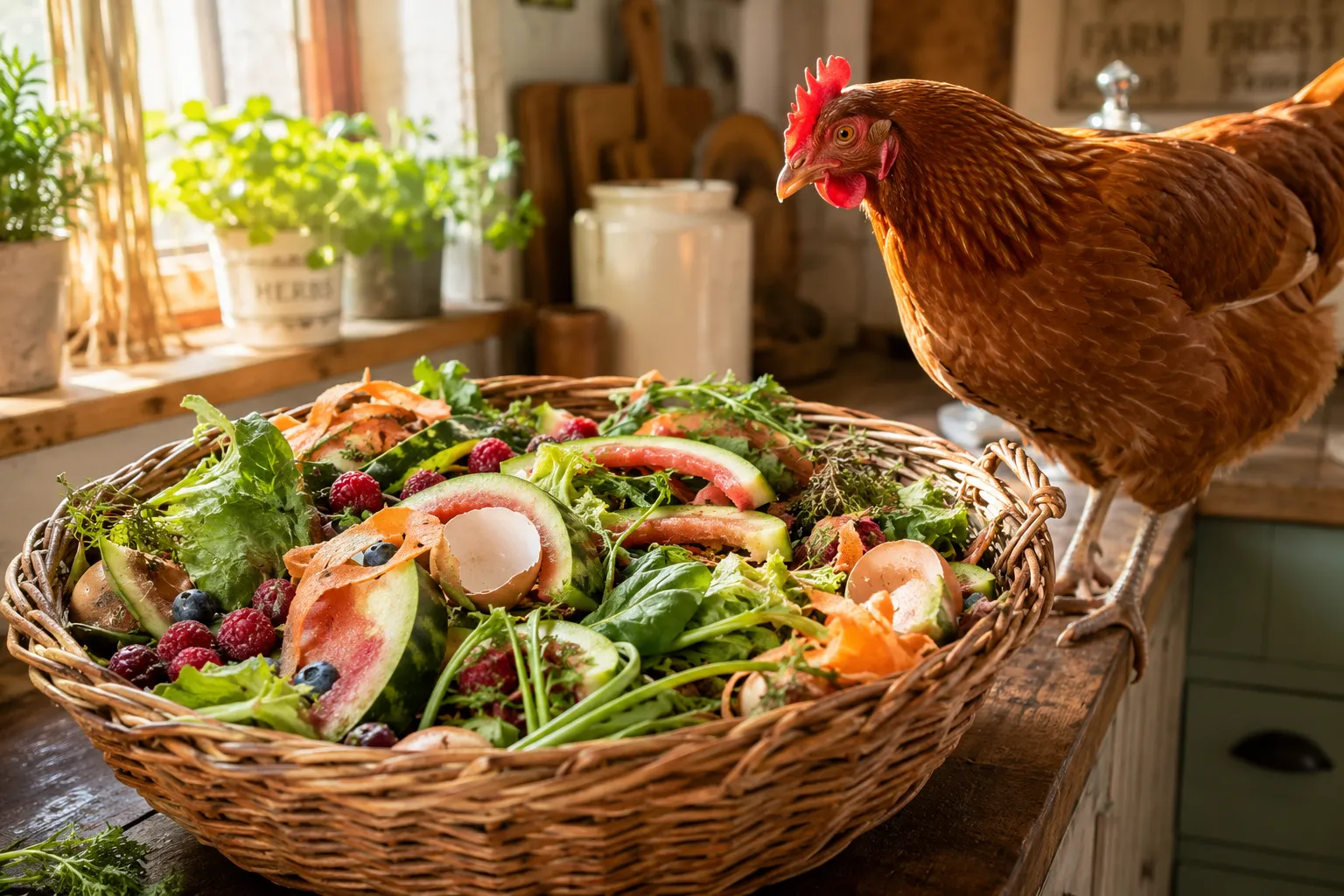
Safe Kitchen Scraps for Backyard Chickens
Feeding kitchen scraps to chickens is an excellent way to reduce food waste, provide enrichment, and supplement your flock’s diet with variety. However, not all scraps are created equal, and knowing what’s safe ensures your chickens stay healthy.
Best kitchen scraps for chickens:
Vegetables:
- Leafy greens (lettuce, kale, spinach, chard)
- Squash and pumpkin (including seeds)
- Cucumbers and zucchini
- Carrots and beets
- Broccoli and cauliflower
- Peppers (all colors)
Fruits:
- Berries (strawberries, blueberries, raspberries)
- Melons (watermelon, cantaloupe, honeydew)
- Apples (remove seeds)
- Bananas and banana peels
- Grapes (cut in half for smaller birds)
- Pears
Grains and proteins:
- Cooked rice and pasta
- Oatmeal (cooked or raw)
- Bread (in moderation; low nutritional value)
- Cooked eggs (excellent protein source)
- Cooked meat scraps (plain, no seasoning)
Dairy (small amounts):
- Plain yogurt
- Cottage cheese
How to feed kitchen scraps safely:
- Inspect for spoilage: Never feed moldy or rotten food
- Remove toxic items: Pick out onions, avocado, chocolate, etc.
- Chop large pieces: Makes eating easier and reduces waste
- Offer in moderation: Scraps should be treats, not meals
- Remove uneaten food: Prevents spoilage and pests
- Provide variety: Different nutrients come from different foods
Scraps to avoid:
- Anything with onions, garlic, or strong seasonings
- Greasy or heavily salted foods
- Sugary desserts and candy
- Raw potato peels
- Citrus (debated; use sparingly if at all)
Decision rule for new scraps: If you’re unsure whether a food is safe, research it before feeding. When in doubt, compost it instead or throw it away. The small benefit of one extra treat isn’t worth the risk of poisoning your flock.
Common mistake: Dumping all kitchen waste into the chicken run without sorting. This can lead to accidental consumption of toxic foods, especially when onions or other Allium family members are mixed with safe vegetables.
Frequently Asked Questions
What should I do if my chicken ate a small piece of onion?
Remove all onion sources immediately and monitor the chicken closely for 48-72 hours. Watch for lethargy, pale comb, difficulty breathing, or weakness. If symptoms appear, contact an avian veterinarian. A single small bite is less likely to cause severe problems than repeated exposure, but vigilance is essential.
Can chickens eat foods cooked with onion powder?
No, onion powder is actually more concentrated and dangerous than fresh onions. Avoid feeding chickens any food that contains onion powder, onion salt, or other onion-derived seasonings. Check ingredient labels on processed foods before sharing with your flock.
Are onion peels and skins toxic to chickens?
Yes, onion peels and skins contain the same thiosulfate compounds as the flesh and should not be fed to chickens. Keep all parts of onions away from your flock, including scraps from food preparation.
How long does it take for onion poisoning symptoms to appear?
Symptoms typically appear within 24 to 72 hours after consumption, though the timeline varies based on the amount eaten and the chicken’s size. Some effects may be delayed up to five days. Monitor any chicken that may have consumed onion for at least a week.
Can chickens recover from onion poisoning?
Yes, chickens can recover from mild to moderate onion poisoning with prompt veterinary care. Treatment includes supportive care, fluids, and sometimes oxygen therapy. Severe cases may result in permanent damage or death, making prevention far better than treatment.
Is it safe to compost onions if chickens have access to the compost pile?
No, keep chickens away from compost that contains onions or other Allium family members. Chickens often scratch through compost piles and may consume onion scraps. Either fence off your compost or avoid composting onions if chickens have access to the area.
What’s the difference between onion toxicity in chickens versus dogs?
Both chickens and dogs are vulnerable to onion toxicity due to thiosulfate compounds, but chickens are generally more sensitive. Dogs may tolerate slightly larger amounts relative to body weight before showing symptoms, but both species should avoid onions entirely.
Can I feed my chickens soup or stew that contains onions?
No, even if you remove visible onion pieces, the liquid has absorbed thiosulfate compounds during cooking. Any food prepared with onions should be kept away from chickens, regardless of whether the onion pieces are removed before feeding.
Are wild onions growing in my yard dangerous to free-range chickens?
Yes, wild onions and wild garlic contain the same toxic compounds as cultivated varieties. If your yard has wild Allium plants, monitor your chickens and consider removing these plants from areas where your flock forages.
What vegetables look like onions but are safe for chickens?
Turnips and radishes can look similar to onions but are safe for chickens. However, always identify plants correctly before feeding. When in doubt, research the specific plant or consult a poultry expert.
Can onions affect egg taste or quality?
If a hen consumes onions without developing severe poisoning, the sulfur compounds can transfer to eggs, creating an off-flavor. This is another reason to keep onions away from laying hens, beyond the toxicity concern.
How much garlic is safe for chickens compared to onions?
While garlic is less toxic than onions, there’s no established “safe” amount. If you choose to use garlic, limit it to a single crushed clove per gallon of water, offered no more than once or twice weekly. Many experts recommend avoiding garlic entirely to eliminate risk.
Conclusion
Onions are toxic to chickens and should never be fed to your flock in any form, raw, cooked, or as powder. The thiosulfate compounds in onions damage red blood cells, leading to hemolytic anemia and potentially fatal complications. This toxicity extends to all members of the Allium family, including green onions, scallions, leeks, chives, and shallots.
While a tiny accidental exposure may not cause immediate visible harm, there is no safe amount of onion for chickens. The risk increases with repeated exposure, smaller birds, and concentrated forms like onion powder. Baby chicks are especially vulnerable and should never have access to onions or foods containing onion.
Action steps for chicken keepers:
- Screen all kitchen scraps before feeding to remove onions and Allium family members
- Read ingredient labels on processed foods for onion powder and onion derivatives
- Educate family members about foods that are off-limits for chickens
- Fence off garden areas where onions, garlic, or related plants grow
- Monitor your flock for symptoms if accidental exposure occurs
- Keep an avian vet’s contact information readily available for emergencies
Focus instead on the many safe, nutritious treats chickens love: leafy greens, berries, melons, squash, and most vegetables. These provide enrichment and supplemental nutrition without the risks associated with onions. By understanding what foods to avoid and offering safe alternatives, you’ll keep your flock healthy, productive, and thriving in 2026 and beyond.


