
Quick Answer: Backyard chickens typically live 5 to 10 years with proper care, though some heritage breeds can reach 12 to 15 years or more. Commercial egg-laying hens usually live only 18 months to 2 years in production settings, while pet chickens often enjoy much longer lifespans due to better nutrition, healthcare, and living conditions.
Key Takeaways
- Average backyard chicken lifespan: 5-10 years with good care; some reach 12-15 years
- Breed matters: Heritage breeds typically outlive commercial hybrids by several years
- Egg production shortens life: High-production hens face more health stress and shorter lifespans
- Top lifespan factors: Predator protection, quality nutrition, disease prevention, and stress reduction
- Roosters vs. hens: Roosters often live slightly longer since they don’t face egg-laying strain
- Factory farm reality: Commercial hens are typically culled at 18-24 months, well before natural lifespan
- Record holders: The oldest recorded chicken lived to 16 years
- Early death causes: Predators, disease, poor nutrition, and extreme weather are the biggest threats
- Egg laying declines: Most hens slow production significantly after 3-4 years but continue laying sporadically
- Longevity is achievable: With excellent care, many backyard chickens easily reach 8-10 years
What Is the Average Lifespan of Backyard Chickens?
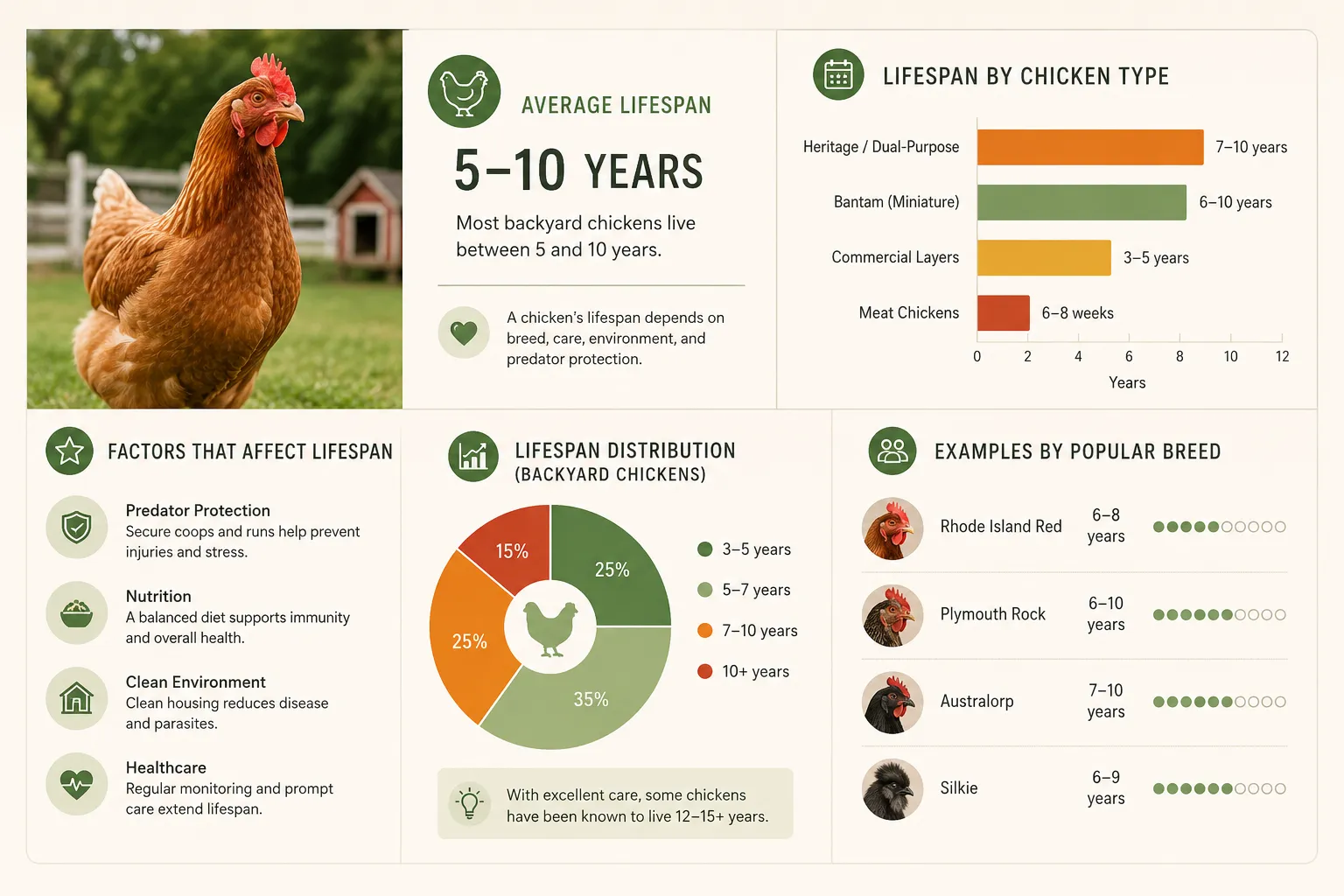
Backyard chickens typically live between 5 and 10 years when provided with proper care, housing, and nutrition. This range represents the most common lifespan for chickens kept as pets or for small-scale egg production in home settings.
Several factors influence where a chicken falls within this range:
- Quality of daily care: Consistent feeding, fresh water, and clean living conditions
- Breed type: Heritage breeds generally outlive production hybrids
- Predator protection: Secure coops and runs prevent the leading cause of premature death
- Healthcare access: Early disease detection and treatment significantly extend lifespan
- Climate management: Protection from extreme heat and cold reduces stress
Common mistake: Many new chicken keepers expect all chickens to live 8-10 years automatically. In reality, chickens that receive average care (adequate but not optimal) typically reach 5-7 years, while those with excellent care and favorable genetics reach the 8-12 year range.
The 5-10 year average applies specifically to backyard flocks. Chickens in other settings face very different lifespans, which we’ll explore in the following sections.
Do Egg-Laying Hens Live Shorter Lives?
Yes, hens bred for high egg production typically live shorter lives than chickens not selected for maximum laying capacity. Modern commercial laying breeds like White Leghorns and Red Sex-Links produce 250-300 eggs annually, which places enormous metabolic strain on their bodies.
Why egg production shortens lifespan:
- Calcium depletion: Each egg requires significant calcium, stressing bones and organs over time
- Reproductive system stress: Frequent ovulation increases risk of egg binding, prolapse, and tumors
- Energy demands: High production diverts resources from immune function and tissue repair
- Genetic trade-offs: Breeding for maximum eggs often sacrifices longevity and hardiness
Heritage breeds that lay 150-200 eggs per year typically live 2-4 years longer than their high-production counterparts. Breeds like Orpingtons, Wyandottes, and Australorps commonly reach 8-10 years, while production hybrids average 5-7 years in backyard settings.
Choose heritage breeds if: You prioritize longevity over maximum egg production and want chickens that remain healthy and active into their senior years. Choose production breeds if: You need maximum eggs in the first 2-3 years and plan to refresh your flock regularly.
How Long Do Chickens Live Compared to Other Farm Animals?
Chickens have a moderate lifespan compared to other common farm animals, falling in the middle range when all are allowed to live their natural lifespans.
| Animal | Natural Lifespan | Production Lifespan |
|---|---|---|
| Chickens | 5-10 years (up to 15) | 18-24 months |
| Ducks | 8-12 years | 2-3 years |
| Turkeys | 10 years | 4-5 months |
| Goats | 12-15 years | 5-8 years |
| Sheep | 10-12 years | 5-7 years |
| Pigs | 15-20 years | 6 months |
| Cattle | 18-22 years | 18 months-5 years |
| Horses | 25-30 years | 20-25 years |
This comparison reveals a stark difference between natural lifespan (when animals receive care as pets or in sanctuary settings) and production lifespan (when raised for meat or eggs).
Key insight: Among poultry, chickens have shorter natural lifespans than ducks and geese but longer than quail. Among all farm animals, chickens are relatively short-lived, making them a good choice for people who want livestock experience without a 20-30 year commitment.
What Affects Chicken Lifespan the Most?
Five primary factors determine how long chickens live, with predation and disease prevention being the most critical for backyard flocks.
1. Predator Protection (Biggest Impact)
Predators account for more premature chicken deaths than any other cause. Raccoons, foxes, hawks, dogs, and even rats kill chickens of all ages.
- Secure coops with hardware cloth (not chicken wire)
- Covered runs or supervised free-ranging only
- Automatic coop doors that close at dusk
- Regular perimeter checks for digging or weak spots
2. Disease Prevention and Healthcare
Respiratory infections, parasites, and reproductive disorders significantly shorten lifespan when left untreated.
- Annual health checks with an avian vet
- Regular deworming (every 6 months)
- Biosecurity practices to prevent disease introduction
- Prompt treatment of injuries or illness symptoms
3. Nutrition Quality
Poor nutrition causes organ damage, weak immune systems, and metabolic disorders that reduce lifespan by years.
- Age-appropriate commercial feed (starter, grower, layer)
- Calcium supplementation for laying hens
- Fresh vegetables and appropriate treats (not bread or junk food)
- Constant access to clean water
4. Living Conditions
Stress from overcrowding, poor ventilation, or extreme temperatures weakens chickens and shortens their lives.
- Minimum 4 square feet per bird in coop, 10 square feet in run
- Proper ventilation without drafts
- Shade in summer, insulation or heat sources in extreme cold
- Clean bedding changed regularly
5. Genetics and Breed Selection
Some chickens are simply born with better longevity genetics than others.
- Heritage breeds selected for hardiness over centuries
- Avoiding extreme production hybrids if longevity is priority
- Sourcing from reputable breeders who select for health
Edge case: Even with perfect care, some chickens die young due to genetic defects, congenital heart problems, or cancer. If a chicken dies unexpectedly despite excellent care, it’s often due to factors beyond the keeper’s control.

Do Different Chicken Breeds Have Different Lifespans?
Yes, chicken breeds vary significantly in lifespan, with heritage breeds typically outliving commercial hybrids by 3-5 years or more. Breed selection is one of the most controllable factors affecting how long your chickens will live.
Long-lived breeds (8-12+ years):
- Plymouth Rocks: Hardy dual-purpose breed, often reaches 10-12 years
- Orpingtons: Gentle giants known for longevity, commonly 8-10 years
- Wyandottes: Cold-hardy and robust, frequently 8-10 years
- Australorps: Excellent layers that maintain health, 8-10 years
- Silkies: Ornamental breed with surprisingly long lifespans, 8-9 years
- Brahmas: Large, slow-maturing birds that live 8-10 years
Moderate lifespan breeds (5-8 years):
- Rhode Island Reds: Popular dual-purpose, 6-8 years typical
- Sussex: Good layers with decent longevity, 6-8 years
- Leghorns: High production reduces lifespan, 5-7 years
- Marans: Moderate layers, 6-8 years average
Shorter-lived breeds (4-6 years):
- Red Sex-Links (Golden Comets, Red Stars): Bred for maximum early production, 4-6 years
- White Leghorns (commercial strains): Extreme layers, 4-6 years in backyard settings
- ISA Browns: Production hybrid, 4-6 years typical
- Cornish Cross (meat birds): Not meant for longevity, serious health issues if kept past 12 weeks
Why heritage breeds live longer: They were developed over centuries for overall hardiness, disease resistance, and sustainable production rather than maximum output in the first two years. Their bodies handle the aging process better because they weren’t genetically pushed to extremes.
How Long Do Roosters Live Compared to Hens?
Roosters typically live slightly longer than hens, often by 1-2 years, primarily because they don’t experience the physical stress of egg production. A rooster in good health can easily reach 8-10 years, with some living to 12-15 years.
Why roosters often outlive hens:
- No egg-laying strain: Roosters avoid calcium depletion, egg binding, and reproductive cancers
- Stronger skeletal systems: Without constant calcium drain, bones remain healthier longer
- Lower metabolic stress: No daily egg production means more energy for immune function
- Fewer reproductive complications: No risk of prolapse, peritonitis, or egg-related infections
However, roosters face unique risks:
- Aggression injuries: Fighting with other roosters or defensive behavior can cause fatal injuries
- Predator visibility: Crowing attracts predators and their protective behavior puts them at risk
- Human culling: Unwanted roosters are often culled young due to noise or aggression issues
Practical consideration: While roosters have biological advantages for longevity, many don’t reach old age simply because backyard keepers can’t keep multiple roosters due to fighting and noise. A single rooster in a stable flock with good care commonly lives 8-12 years.
Why Did My Chicken Die After Only 2 Years?
When a chicken dies unexpectedly young (under 3 years), the cause is usually sudden illness, predation, reproductive complications, or an underlying genetic issue rather than old age. Identifying the cause helps prevent future losses.
Most common causes of early death:
Reproductive issues (hens only):
- Egg binding (egg stuck in reproductive tract)
- Egg yolk peritonitis (infection from internal laying)
- Prolapse (tissue protrusion after laying)
- Reproductive tumors or cancer
Infectious disease:
- Marek’s disease (viral, causes tumors and paralysis)
- Coccidiosis (parasitic intestinal infection)
- Respiratory infections (mycoplasma, infectious bronchitis)
- Sudden death from acute infections
Predator attacks:
- Nighttime coop breaches by raccoons or weasels
- Daytime hawk or dog attacks
- Injuries from attempted predation that become infected
Environmental factors:
- Heat stroke in summer
- Hypothermia or frostbite in extreme cold
- Toxin ingestion (moldy feed, toxic plants, rodenticides)
- Crop impaction or sour crop
Genetic or congenital issues:
- Heart defects (especially in heavy breeds)
- Liver or kidney disease
- Ascites (fluid accumulation, common in fast-growing birds)
What to do: If a chicken dies unexpectedly, consider a necropsy (animal autopsy) through your state veterinary diagnostic lab. This costs $50-150 but provides definitive answers and helps protect your remaining flock. Look for patterns, if multiple birds show similar symptoms, disease is likely.
Can Chickens Live 10 Years or Longer?
Yes, chickens can definitely live 10 years or longer, though it requires good genetics, excellent care, and some luck. Many backyard chicken keepers report birds reaching 10-12 years, and the documented record is 16 years.
What it takes for a chicken to reach 10+ years:
- Heritage breed genetics: Orpingtons, Wyandottes, Plymouth Rocks, and similar breeds
- Excellent predator protection: A decade means surviving thousands of nights and days
- Consistent quality care: Daily attention to food, water, and health for 10+ years
- Disease prevention: Avoiding or successfully treating the many illnesses chickens face
- Reduced laying stress: Lower production breeds or hens past peak laying years
- Climate-appropriate housing: Protection from temperature extremes year after year
What to expect from senior chickens (7+ years):
- Egg production drops to occasional or stops entirely
- Slower movement and less active foraging
- Increased susceptibility to illness
- Possible arthritis or mobility issues
- Graying around face and comb
- More time resting and less social interaction
Is it common? No. While possible, only about 10-20% of backyard chickens reach 10 years. Most succumb to predators, disease, or age-related decline between 6-9 years. However, with dedicated care, reaching 10+ years is an achievable goal rather than a rare miracle.
The oldest recorded chicken: A hen named Matilda lived to 16 years old and held the Guinness World Record. She was a Red Pyle Old English Game bantam who lived in Alabama and remained relatively healthy until near the end of her life.
How to Help Chickens Live Longer and Healthier
Extending chicken lifespan requires a proactive approach focused on prevention rather than reaction. These strategies have the biggest impact on longevity.
Daily care essentials:
- Fresh water twice daily: Clean waterers prevent bacterial growth and disease transmission
- Quality layer feed: Age-appropriate commercial feed provides balanced nutrition
- Health checks during feeding: Quick visual inspection catches problems early
- Secure coop closure: Lock birds in predator-proof housing every night without exception
Weekly maintenance:
- Remove droppings from roosts and high-traffic areas
- Refill grit and oyster shell dispensers
- Check for external parasites (mites, lice)
- Inspect coop for damage or predator entry points
- Provide fresh bedding in nesting boxes
Monthly health practices:
- Deep clean waterers with vinegar solution
- Inspect each bird’s feet for bumblefoot
- Check vents for cleanliness and signs of prolapse
- Examine combs and wattles for frostbite or injury
- Rotate free-range areas if possible to break parasite cycles
Seasonal preparations:
- Spring: Deworm flock, deep clean coop, check ventilation
- Summer: Ensure shade and cooling options, increase water access
- Fall: Prepare insulation, check for drafts, boost nutrition before winter
- Winter: Monitor for frostbite, provide supplemental light if desired, prevent water freezing
Veterinary care:
- Establish relationship with avian vet before emergencies
- Annual wellness checks for breeding stock or beloved pets
- Prompt treatment of injuries or illness symptoms
- Fecal testing for parasites every 6-12 months
Stress reduction:
- Maintain stable flock composition (minimize adding/removing birds)
- Provide adequate space to prevent bullying
- Offer enrichment (perches, dust baths, foraging opportunities)
- Protect from dogs, children, or other stressors
Choose longevity over production: If you want chickens that live 8-10+ years, select heritage breeds and accept lower egg production. High-production hybrids give you more eggs in years 1-3 but typically decline faster and die younger.
Do Factory Farm Chickens Live as Long as Pet Chickens?
No, factory farm chickens live dramatically shorter lives than pet chickens, typically 18-24 months compared to 5-10+ years for backyard birds. This difference reflects the economic realities of commercial egg production rather than natural lifespan.
Commercial laying hen timeline:
- 0-18 weeks: Rearing period, fed grower rations until point of lay
- 18-72 weeks: Peak production period, laying 5-6 eggs per week
- 72+ weeks: Production declines, hens are “spent” and sent to slaughter
- Typical culling age: 18-24 months, when egg production drops below profitable levels
Why commercial hens are culled young:
- Feed costs exceed egg revenue once production drops
- Older hens produce lower-quality eggs (thinner shells, more defects)
- Housing space is more profitable with younger, high-producing birds
- Molt periods (when laying stops) aren’t economically viable at scale
Health status at culling: Most commercial hens at 18-24 months are physically worn out from intensive production but not naturally dying. They have years of potential life remaining if given proper care, which is why many rescue organizations rehome “spent” hens to backyard keepers.
Rescued commercial hens in backyard settings: Former battery hens often live 3-5 additional years after rescue, though they face higher rates of reproductive cancers and bone issues due to their intensive early life. With good care, many adapt well and enjoy several years of retirement.
Meat chickens (broilers): These birds face even shorter lives, typically 6-8 weeks from hatch to slaughter. Cornish Cross and similar meat breeds grow so rapidly they develop heart, leg, and organ problems if kept beyond 12-16 weeks, making long-term survival nearly impossible even with excellent care.
Is Keeping Chickens Worth It If They Only Live a Few Years?
Yes, keeping chickens is worthwhile for most people even with a 5-8 year average lifespan, but the answer depends on what you value and expect from the experience. Understanding the commitment helps set realistic expectations.
Why shorter lifespans don’t diminish the value:
- Daily rewards: Fresh eggs, entertainment, and companionship happen throughout their lives, not just at the end
- Manageable commitment: 5-8 years is long enough to be meaningful but short enough to fit life changes
- Flock rotation: Natural turnover allows you to try new breeds and maintain optimal flock age distribution
- Educational value: Shorter lifespans mean children can experience full animal lifecycles
- Lower long-term costs: Fewer years of feed and healthcare expenses per bird
Consider chickens NOT worth it if:
- You want a 15-20 year pet relationship (get a parrot or horse instead)
- You can’t handle losing animals every few years emotionally
- You expect constant high egg production for a decade (production peaks at 1-3 years)
- You’re unwilling to cull or rehome roosters from hatching projects
Consider chickens WORTH it if:
- You want fresh eggs and can accept declining production after year 3-4
- You enjoy daily animal interaction without extreme long-term commitment
- You’re prepared for the realities of livestock keeping (illness, predation, death)
- You value the educational and lifestyle benefits beyond just longevity
Financial perspective: At $3-5 per bird initially and $15-25 per bird annually in feed, a chicken that lives 6 years and produces 1,000 eggs costs roughly $0.20-0.30 per egg when you include all expenses. The value extends beyond economics to include pest control, fertilizer production, and quality of life improvements.
Common Reasons Chickens Die Young
Understanding the most frequent causes of premature death helps chicken keepers focus prevention efforts where they matter most. These issues account for the majority of chickens that don’t reach their expected 5-10 year lifespan.
Top 10 causes of early chicken death:
Predation (30-40% of backyard chicken deaths)
- Raccoons, foxes, hawks, dogs, weasels, rats
- Prevention: Hardware cloth, covered runs, automatic doors, guardian animals
Respiratory disease (15-20%)
- Mycoplasma, infectious bronchitis, Newcastle disease
- Prevention: Biosecurity, vaccination, proper ventilation, quarantine new birds
Reproductive complications in hens (10-15%)
- Egg binding, peritonitis, prolapse, tumors
- Prevention: Proper nutrition, calcium supplementation, choosing lower-production breeds
Parasites (5-10%)
- Coccidiosis, worms, mites, lice
- Prevention: Clean environment, regular deworming, medicated starter for chicks
Marek’s disease (5-10%)
- Viral disease causing tumors and paralysis
- Prevention: Vaccination at hatch, buying vaccinated chicks
Heat stress (5-8%)
- Especially dangerous for heavy breeds and in sudden heat waves
- Prevention: Shade, ventilation, cool water, frozen treats
Toxins (3-5%)
- Moldy feed, toxic plants, rodenticides, antifreeze
- Prevention: Fresh feed storage, plant identification, secure chemical storage
Crop issues (2-4%)
- Impacted crop, sour crop, pendulous crop
- Prevention: Proper grit access, avoiding long grass/string, monitoring crop emptying
Injury and accidents (2-4%)
- Broken legs, dog attacks, getting caught in fencing
- Prevention: Safe coop design, supervised free-ranging, regular maintenance
Cold stress and frostbite (1-3%)
- Primarily affects combs, wattles, and toes in extreme cold
- Prevention: Windbreak, dry bedding, petroleum jelly on combs, breed selection
Pattern recognition: If you lose multiple birds to the same cause, your prevention strategy needs adjustment. One predator death might be bad luck; three means your security has gaps. One respiratory infection might be random; recurring cases suggest ventilation or biosecurity problems.
What Age Do Chickens Stop Laying Eggs?
Chickens don’t completely stop laying eggs at a specific age, but production declines significantly after 3-4 years, with most hens laying only occasionally by age 5-6. Understanding this timeline helps set realistic expectations for your flock’s productivity.
Typical egg production timeline:
- Months 5-6: First eggs begin (point of lay)
- Months 6-18: Production ramps up to peak levels
- Year 1-2: Peak production (250-300 eggs/year for hybrids, 180-220 for heritage breeds)
- Year 3: Production drops 15-25% from peak
- Year 4: Production drops another 20-30%
- Year 5+: Sporadic laying, often 50-100 eggs/year or less
- Year 7+: Most hens lay rarely or not at all
Factors affecting laying longevity:
- Breed: Heritage breeds maintain production longer than hybrids
- Individual variation: Some hens lay well into year 6-7, others stop at 4
- Molting: Annual feather replacement stops laying for 2-3 months
- Health: Illness, parasites, or stress reduce production at any age
- Nutrition: Poor diet accelerates production decline
- Light exposure: Decreasing daylight triggers reduced laying
What happens to non-laying hens: Many backyard keepers maintain retired hens as pets, valuing their companionship and pest control even without eggs. Others cull non-productive birds and replace them with young pullets to maintain consistent egg supply. This decision is personal and depends on your goals, space, and attachment to individual birds.
Managing a mixed-age flock: Adding 2-3 pullets annually while keeping older hens creates a stable egg supply while allowing beloved birds to retire naturally. This approach balances productivity with the emotional reward of caring for senior chickens.
Oldest Recorded Chicken Lifespan
The oldest chicken on record was Matilda, a Red Pyle Old English Game bantam who lived to 16 years old and held the Guinness World Record. Matilda lived in Alabama with her owners Jill and Keith Barber and remained relatively healthy and active until near the end of her exceptionally long life.
Other notable long-lived chickens:
- Muffy: A Red Quill Muffed American Game hen who lived to 15 years
- Blackie: A bantam hen from the UK who reached 14 years
- Various heritage breed hens: Multiple documented cases of chickens reaching 12-14 years
What these record holders have in common:
- Bantam or small standard breeds: Smaller body size reduces strain on heart and joints
- Game breed heritage: Old English Game and similar breeds were selected for vigor and hardiness
- Exceptional care: All record holders received attentive daily care and protection
- Indoor/protected living: Many extremely old chickens spent significant time indoors or in highly secure environments
- Low production genetics: None were bred for maximum egg laying
Realistic expectations: While 16 years is possible, it’s extremely rare. A more realistic “exceptional” lifespan for a well-cared-for heritage breed chicken is 10-12 years. Aiming for this range rather than record-breaking age sets achievable goals while still prioritizing longevity.
Why most chickens don’t reach record ages: Even with perfect care, chickens face cumulative risks over time. Each year brings new exposure to predators, disease, and age-related decline. A chicken that survives to 10 years has successfully avoided or overcome hundreds of potential threats, an impressive achievement in itself.
Frequently Asked Questions
How long do chickens live as pets?
Pet chickens typically live 8-10 years with excellent care, longer than chickens kept primarily for egg production. The reduced stress, better nutrition, and often superior healthcare that pet chickens receive extends their lifespan significantly compared to the 5-7 year average for backyard egg layers.
Do chickens die of old age?
Yes, chickens can die of old age, typically from organ failure, heart disease, or cancer between 8-12 years old. However, most backyard chickens die from predators, disease, or accidents before reaching true old age. Only about 20-30% of chickens die from age-related natural causes.
How can you tell if a chicken is dying of old age?
Signs of age-related decline include decreased activity, spending more time sitting, reduced appetite, weight loss despite eating, labored breathing, pale comb and wattles, and withdrawal from flock social activities. Older chickens often pass peacefully in their sleep or while resting quietly.
What is the lifespan of a chicken in the wild?
Wild jungle fowl (the ancestors of domestic chickens) typically live 3-5 years in their natural habitat due to predation, disease, and environmental challenges. Domestic chickens released into the wild rarely survive more than a few months due to lack of predator awareness and adaptation to human care.
Do chickens live longer in pairs or flocks?
Chickens live longer in appropriately sized flocks (3-6+ birds) than alone or in pairs, as they are social animals that experience stress when isolated. However, overcrowded flocks increase disease transmission and stress, so optimal flock size balances social needs with adequate space.
How long do Silkie chickens live?
Silkie chickens typically live 8-9 years, slightly longer than many other breeds due to their calm temperament and lower egg production. Their docile nature reduces stress and injury risk, while their ornamental breeding prioritized hardiness over maximum production.
Can you extend a chicken’s lifespan with supplements?
Quality supplements like probiotics, vitamins, and omega-3 sources can support overall health but typically add months rather than years to lifespan. The biggest impact comes from fundamentals: predator protection, disease prevention, quality feed, and stress reduction.
Do free-range chickens live longer than coop-kept chickens?
Free-range chickens don’t necessarily live longer than coop-kept birds; the determining factor is predator protection and overall care quality. Free-range birds face higher predation risk but benefit from natural foraging and exercise. Secure free-ranging (supervised or in covered runs) combines the benefits of both approaches.
What kills most backyard chickens?
Predators kill more backyard chickens than any other single cause, accounting for 30-40% of deaths. Respiratory disease is the second leading cause at 15-20%, followed by reproductive complications in hens at 10-15%. Improving coop security has the single biggest impact on flock longevity.
How long do chickens live after they stop laying eggs?
Chickens typically live 3-5 years after they stop laying regularly, meaning a hen who stops consistent production at age 5 might live to 8-10 years old. Non-laying hens can remain healthy and active for years, serving as companions and flock members even without producing eggs.
Is 7 years old for a chicken?
Seven years is considered senior age for a chicken, equivalent to a human in their 60s or 70s. A 7-year-old chicken has exceeded the average lifespan and may show signs of aging like reduced activity, graying feathers around the face, and decreased egg production or complete cessation of laying.
Do roosters protect hens from predators effectively?
Roosters provide some predator protection through alarm calls and defensive behavior against smaller threats like hawks, but they cannot defend against determined predators like foxes, raccoons, or dogs. Secure housing remains essential regardless of rooster presence. Roosters are most effective at alerting hens to aerial predators during daytime free-ranging.
Conclusion
Chickens typically live 5-10 years in backyard settings, with heritage breeds and exceptional care pushing that range to 12-15 years or more. While commercial laying hens are culled at just 18-24 months, pet and backyard chickens enjoy much longer lives when protected from predators, provided quality nutrition, and given proper healthcare.
The most important factors in chicken longevity are predator protection, disease prevention, and choosing breeds selected for hardiness rather than maximum production. Heritage breeds like Orpingtons, Wyandottes, and Plymouth Rocks consistently outlive commercial hybrids, while roosters typically live 1-2 years longer than hens due to the absence of egg-laying stress.
Take these steps to help your chickens live longer:
- Secure your coop and run with hardware cloth and automatic doors, predator protection is the single biggest factor
- Choose heritage breeds if longevity matters more than maximum egg production
- Establish a relationship with an avian vet before emergencies arise
- Implement a deworming schedule every 6 months to prevent parasitic disease
- Provide age-appropriate nutrition with quality commercial feed and calcium supplementation
- Monitor daily for early signs of illness or injury when intervention is most effective
- Reduce stress through adequate space, stable flock composition, and environmental enrichment
Remember that even with perfect care, chickens face natural lifespan limits and cumulative risks over time. A chicken that reaches 8-10 years represents a success story of good genetics, excellent care, and favorable circumstances. Whether your chickens live 5 years or 15, the daily rewards of fresh eggs, pest control, and companionship make keeping them a worthwhile experience for most backyard flock owners.
Start implementing these longevity practices today, and your flock will reward you with years of healthy, productive life.


