
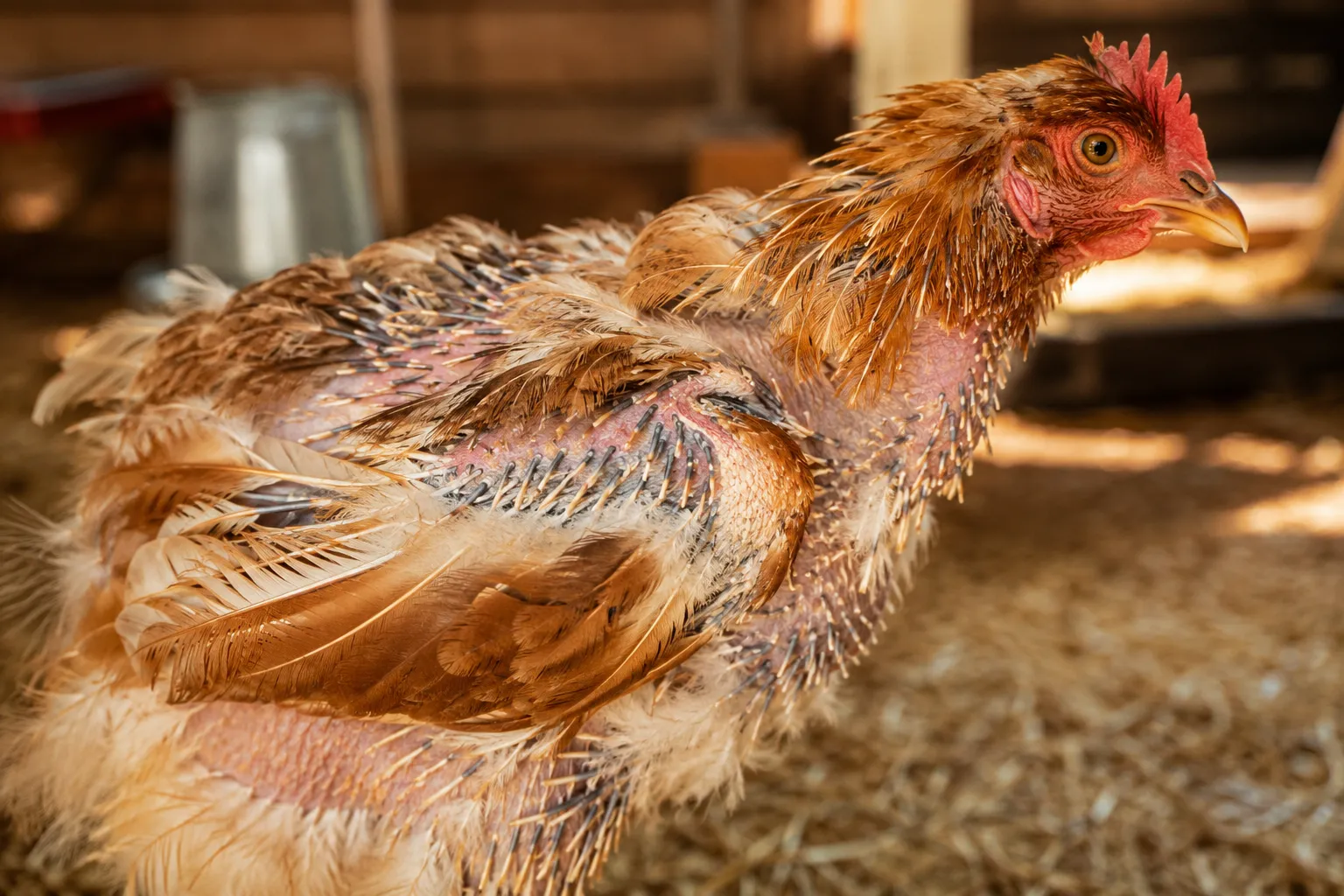
Quick Answer: Molting in chickens typically lasts 8 to 16 weeks, with most backyard hens completing the process in about 2 to 3 months. The duration depends on factors like breed, age, health, and nutrition, with some birds finishing in as little as 6 weeks while others may take up to 4 months to fully regrow their feathers.
Key Takeaways
- Standard molting duration: Most chickens molt for 8-16 weeks (2-4 months), with 10-12 weeks being average
- Hard vs. soft molts: Fast molters (hard molt) finish in 6-8 weeks but look ragged; slow molters (soft molt) take 12-16 weeks but maintain better appearance
- Annual cycle: Adult chickens typically molt once per year, usually triggered by decreasing daylight in late summer or fall
- Egg production stops: Hens stop or drastically reduce laying during molt and for 2-4 weeks after feather regrowth completes
- Protein is essential: Feathers are 80-85% protein, so high-protein feed (18-20% vs. standard 16%) speeds recovery
- Age matters: First adult molt (around 18 months old) is often the longest; subsequent molts may be faster
- Warning signs: Molting lasting beyond 4-5 months, or stopping mid-process, may indicate health problems requiring veterinary attention
What Is Molting in Chickens?
Molting is the natural process where chickens shed old, worn feathers and grow fresh new plumage. This biological cycle allows birds to replace damaged feathers, maintain insulation, and prepare for seasonal changes. During molt, chickens redirect energy from egg production to feather growth, which is why laying hens stop producing eggs.
The process follows a predictable pattern:
- Head and neck feathers drop first
- Breast and body feathers follow
- Wings and tail feathers shed last
- Pin feathers (new growth encased in keratin sheaths) emerge within days
Molting is triggered primarily by decreasing daylight hours in late summer and fall, though stress, illness, or nutritional deficiencies can cause out-of-season molts. Healthy molting is a sign your chicken’s body is functioning normally.
Key distinction: Normal molting is symmetrical and follows the head-to-tail pattern. Random feather loss, bald patches, or broken feathers may indicate parasites, pecking, or disease rather than natural molt.
How Long Does Chicken Molting Last?
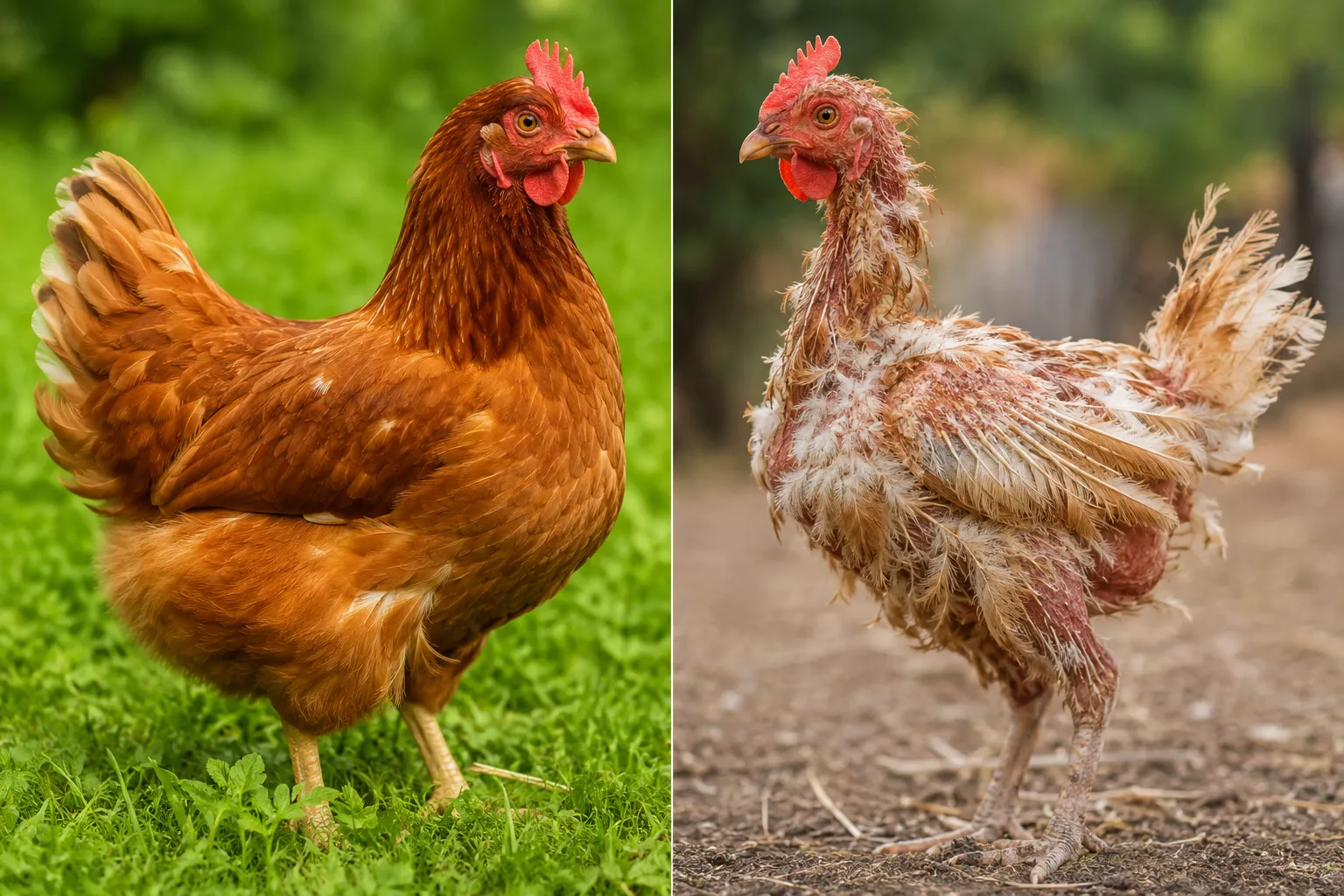
Chicken molting lasts between 8 and 16 weeks for most backyard hens, with the average duration falling around 10 to 12 weeks. The timeline varies significantly based on whether your bird is a “hard molter” or “soft molter.”
Hard molters (fast molters):
- Drop feathers rapidly, often looking nearly bald
- Complete the process in 6-8 weeks
- Appear ragged and vulnerable during molt
- Resume laying sooner
Soft molters (slow molters):
- Lose feathers gradually over 12-16 weeks
- Maintain a relatively normal appearance throughout
- Take longer to return to egg production
- Experience less visible stress
Breed also plays a role. Production breeds like Leghorns and Rhode Island Reds tend to molt faster (8-10 weeks), while heritage breeds and ornamental chickens may take 12-16 weeks. First-time molters (around 18 months old) often experience longer molts than mature hens who’ve been through the cycle before.
Choose this timeline if: Your chicken is healthy, receiving adequate nutrition, and molting during the natural fall season. If molting extends beyond 16-18 weeks, investigate potential health issues.
Molting Duration in Different Bird Species
While chickens typically molt over 8-16 weeks, other common backyard birds follow different schedules. Parakeets and budgies experience continuous molting throughout the year, dropping and replacing a few feathers at a time rather than undergoing a dramatic seasonal shed. This process is barely noticeable and doesn’t interrupt their activity or breeding.
Ducks and geese undergo more dramatic molts lasting 4-8 weeks, during which waterfowl may temporarily lose flight capability. Turkeys molt similarly to chickens (8-12 weeks), while quail complete the process faster, typically in 6-8 weeks due to their smaller size.
Comparison table:
| Bird Type | Molt Duration | Pattern | Egg Production Impact |
|---|---|---|---|
| Chickens | 8-16 weeks | Seasonal (fall) | Stops completely |
| Parakeets | Continuous | Year-round | Minimal impact |
| Ducks | 4-8 weeks | Seasonal (summer) | Stops completely |
| Turkeys | 8-12 weeks | Seasonal (fall) | Stops completely |
| Quail | 6-8 weeks | Seasonal | Reduced significantly |
The key difference is that chickens and other poultry experience a complete, energy-intensive molt, while smaller cage birds molt gradually without the dramatic appearance change.
Do All Chickens Molt at the Same Time of Year?
Most chickens molt in late summer through fall (August through November in the Northern Hemisphere), triggered by decreasing daylight hours after the summer solstice. However, not all birds in your flock will molt simultaneously or even in the same month.
Factors affecting molt timing:
- Age: Younger birds (18-24 months) may molt earlier than older hens
- Breed: Some breeds are genetically programmed for earlier or later molts
- Individual variation: Even sisters from the same hatch may molt weeks apart
- Artificial lighting: Coops with supplemental lighting may delay or disrupt natural molt timing
- Stress events: Illness, predator attacks, or sudden diet changes can trigger out-of-season molts
Common mistake: Assuming your entire flock will molt together. In reality, you’ll likely have a staggered molt over 2-3 months, with some hens finishing as others are just beginning. This actually benefits backyard keepers because you won’t experience a complete egg production shutdown.
Baby chicks undergo juvenile molts at different ages (around 6-8 weeks and again at 12-16 weeks) as they develop adult plumage, but these are distinct from the annual adult molt cycle.
How to Help Chickens Through Molting Faster
You cannot force chickens to molt faster, but you can optimize conditions to help them complete the process efficiently and return to laying sooner. The single most important factor is increasing dietary protein, since feathers are 80-85% protein by composition.
Nutrition strategies:
- Switch to higher protein feed: Use 18-20% protein game bird or grower feed instead of standard 16% layer feed
- Add protein-rich treats: Scrambled eggs, mealworms, black oil sunflower seeds, fish, or meat scraps
- Reduce scratch grains: Corn and wheat are low in protein and fill them up without supporting feather growth
- Ensure constant access to fresh water: Dehydration slows all metabolic processes
Environmental support:
- Minimize stress by avoiding flock changes or coop moves during molt
- Provide extra roosting space so birds aren’t crowded
- Reduce handling, as new pin feathers are sensitive and painful when touched
- Maintain clean bedding to prevent infection of exposed skin
Supplement considerations: Some keepers add methionine (an amino acid) or kelp meal to support feather growth, though research on effectiveness is limited. Focus first on high-quality protein sources.
Realistic expectation: Even with optimal care, you can only shorten molt by 1-2 weeks. A chicken genetically programmed for a 12-week molt won’t finish in 6 weeks regardless of nutrition.
My Chicken Has Been Molting for 3 Months, Is That Normal?
A 12-week (3-month) molt is at the upper end of normal, especially for soft molters, heritage breeds, or first-time molters. If your chicken appears healthy, is actively regrowing feathers, and the molt is progressing from head to tail, this duration is not concerning.
When 3+ months is normal:
- Heritage or ornamental breeds (Silkies, Polish, Cochins)
- First adult molt (around 18 months old)
- Soft molters who lose feathers gradually
- Older hens (4+ years) with slower metabolism
- Birds recovering from illness or stress
When to worry (red flags):
- Molt extends beyond 16-18 weeks with no progress
- Feather regrowth stops midway through
- New feathers appear malformed, discolored, or brittle
- Weight loss, lethargy, or other illness signs
- Feather loss is patchy or asymmetrical rather than following the normal pattern
Action steps for prolonged molting:
- Check for external parasites (mites, lice) that damage new feather growth
- Verify protein intake is 18-20% and birds are actually eating the feed
- Test for internal parasites with a fecal exam
- Examine new pin feathers, healthy ones should be plump and uniform
- Consult an avian veterinarian if molt exceeds 4-5 months
Common mistake: Confusing slow molting with feather picking or disease. True molting follows a predictable head-to-tail pattern, while behavioral or health issues cause random bald patches.
Difference Between Molting and Feather Loss From Disease
Normal molting follows a predictable pattern and timeline, while disease-related feather loss appears random, patchy, or accompanied by other symptoms. Learning to distinguish between the two prevents unnecessary worry and ensures you catch real health problems early.
Normal molting characteristics:
- Symmetrical feather loss on both sides of the body
- Follows head → neck → breast → body → wings → tail sequence
- Pin feathers visible within 7-10 days of feather loss
- Bird remains alert and active (though may be less social)
- Occurs primarily in late summer/fall
- No skin lesions, redness, or scabs
Disease or problem indicators:
- Random bald patches that don’t follow a pattern
- Broken feather shafts rather than clean drops
- Red, inflamed, or scabby skin
- Feather loss concentrated on back, vent, or head (often from pecking)
- Lethargy, loss of appetite, or abnormal droppings
- Feather loss outside the typical molting season
- No new feather regrowth after 2-3 weeks
Common causes of non-molting feather loss:
- External parasites: Mites and lice damage feathers and irritate skin
- Feather pecking: Bullying or boredom causes birds to pull each other’s feathers
- Vent prolapse or infection: Attracts pecking to the rear area
- Nutritional deficiencies: Lack of protein, vitamins, or minerals
- Fungal infections: Cause patchy feather loss with skin changes
Decision rule: If feather loss is symmetrical, follows the normal sequence, and pin feathers appear within 10 days, it’s molting. If it’s patchy, asymmetrical, or accompanied by skin changes or behavior changes, investigate further.
What to Feed Chickens During Molting
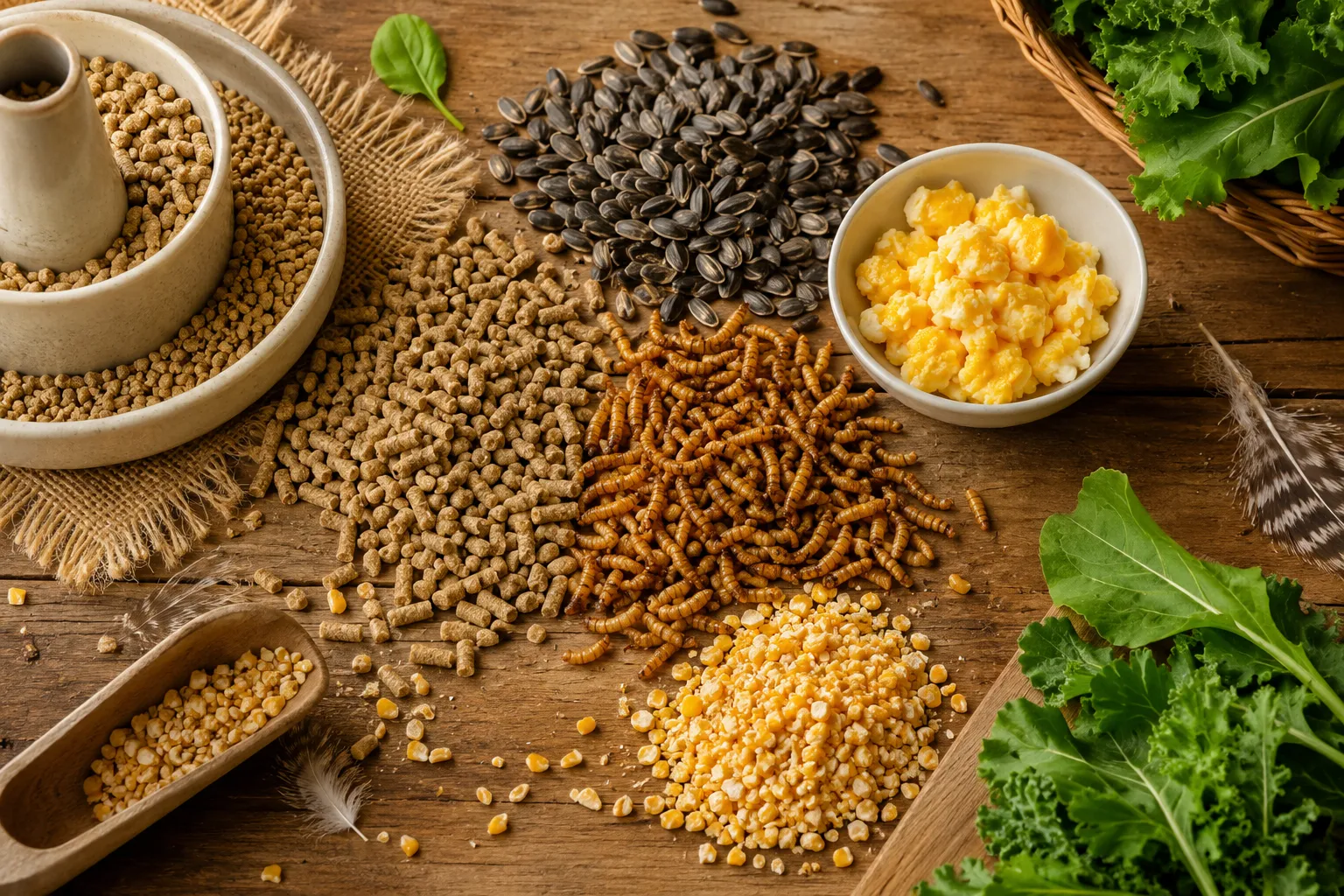
During molt, switch to a high-protein feed (18-20% protein) and supplement with protein-rich treats to support the intensive feather regrowth process. Standard layer feed at 16% protein is insufficient for optimal feather development.
Best feed options:
- Game bird feed (20-24% protein), ideal but can be expensive
- Grower feed (18-20% protein), affordable and widely available
- All-flock feed (18% protein) mixed with high-protein supplements
- Meat bird/broiler starter (22-24% protein), use short-term only
Top protein-rich supplements:
- Mealworms (dried or live), 50% protein, chickens love them
- Black oil sunflower seeds,high in protein and healthy fats
- Scrambled or hard-boiled eggs,complete amino acid profile
- Canned fish (tuna, mackerel, sardines), use sparingly, high in protein
- Cooked meat scraps,chicken, beef, or pork leftovers
- Pumpkin or sunflower seeds,good protein and zinc
- Legumes,cooked lentils, peas, or beans (never raw)
Feeding schedule during molt:
- Morning: High-protein feed (free choice)
- Midday: Protein-rich treat (1-2 tablespoons per bird)
- Evening: High-protein feed topped off
- Always: Fresh, clean water
What to reduce or avoid:
- Scratch grains (corn, wheat), low protein, fills them up
- Excessive treats like bread, pasta, or crackers, empty calories
- Calcium supplements beyond what’s in feed, excess calcium can interfere with nutrient absorption during non-laying periods
Common mistake: Continuing to feed layer feed (16% protein) throughout molt. While it won’t harm your birds, they’ll take longer to regrow feathers and return to laying.
Can You Speed Up the Molting Process?
You cannot significantly speed up molting because the process is controlled by genetics, hormones, and photoperiod (day length). However, optimal nutrition and stress reduction can help chickens complete molt at the faster end of their natural range, potentially shortening the process by 1-2 weeks.
What actually helps (modest impact):
- High-protein diet (18-20%) ensures feathers regrow quickly once the cycle begins
- Stress-free environment allows birds to focus energy on feather production
- Adequate sleep in a dark coop supports hormone regulation
- Parasite control prevents energy drain from fighting infestations
What doesn’t work (myths):
- Forced molting through starvation,cruel, illegal in many areas, and unnecessary for backyard flocks
- Artificial lighting changes,may disrupt natural cycles but won’t speed completion
- Supplements or tonics,no evidence that vitamins, kelp, or herbal remedies accelerate molt
- Pulling feathers,painful, stressful, and doesn’t trigger faster regrowth
The reality: A chicken genetically programmed for a 12-week molt will take approximately 12 weeks regardless of intervention. The best approach is supporting their natural process rather than trying to rush it.
Choose patience if: Your birds are healthy and progressing normally. The temporary loss of eggs is a natural part of chicken keeping, and attempting to force faster molting often backfires by increasing stress and prolonging recovery.
Is Molting Painful for Chickens?
Molting itself is not painful, but the regrowth phase causes discomfort because new pin feathers have a blood supply and nerve endings that make them sensitive to touch. This is why molting chickens often become less social, avoid handling, and may react defensively if touched.
What chickens experience during molt:
- Feather loss phase: No pain, though skin may feel itchy or irritated
- Pin feather emergence: Sensitive to touch, similar to a bruise
- Feather unfurling: Discomfort decreases as the keratin sheath breaks down
- Full feather development: No pain once feathers mature
Behavioral signs of discomfort:
- Reluctance to be handled or petted
- Squawking or pecking when touched on areas with pin feathers
- Reduced activity and more time spent resting
- Avoiding roost mates who might bump into them
- Fluffing feathers and appearing irritable
How to minimize discomfort:
- Avoid handling molting birds unless necessary
- Provide extra roosting space to prevent crowding
- Keep coop clean to prevent skin infections
- Ensure adequate protein to speed feather development
- Never pull or touch pin feathers
Common mistake: Assuming molting chickens are sick because they’re less active and social. This behavior is normal self-protection during a vulnerable period when their skin is exposed and new feathers are tender.
How Often Do Chickens Molt in Their Lifetime?
Adult chickens molt once per year, typically in late summer or fall, for their entire productive life. A hen living 8-10 years will experience 7-9 annual molts after her first adult molt around 18 months of age.
Molting timeline by age:
- 0-6 weeks: First juvenile molt (chick fluff to first feathers)
- 8-12 weeks: Second juvenile molt (juvenile to intermediate plumage)
- 16-20 weeks: Third juvenile molt (intermediate to adult plumage)
- 18-24 months: First adult molt (annual cycle begins)
- Every 12 months thereafter: Annual molt continues for life
Factors affecting frequency:
- Artificial lighting: Constant light can delay or skip molts, but this is unhealthy long-term
- Stress: May trigger out-of-season “stress molts” in addition to annual molt
- Breed: Some production breeds molt more reliably than heritage breeds
- Health: Chronic illness may disrupt normal molting cycles
Egg production impact over lifetime:
Each annual molt represents 2-4 months of reduced or zero egg production. A hen laying for 5 years will spend approximately 10-20 months (nearly 2 years total) in molt or recovery, which is why commercial operations typically replace hens after 1-2 laying cycles.
Backyard keeper advantage: Unlike commercial operations, backyard keepers can keep hens through multiple molts, enjoying their companionship and modest egg production for many years.
My Bird Stopped Molting Halfway Through, What’s Wrong?
A molt that stops mid-process, with some areas fully feathered and others still bare after 3-4 weeks of no progress, indicates a health problem that requires investigation. Normal molting is continuous once it begins, even if slow.
Common causes of stalled molting:
- Nutritional deficiency: Insufficient protein, vitamins, or minerals halts feather production
- Parasites: Heavy mite or lice infestation drains energy needed for feather growth
- Internal parasites: Worms compete for nutrients and cause malabsorption
- Chronic illness: Respiratory disease, reproductive issues, or organ problems
- Severe stress: Predator attacks, flock disruption, or environmental changes
- Hormonal imbalance: Rare but possible, especially in older hens
Diagnostic steps:
- Examine skin and feathers for external parasites (look near vent and under wings)
- Check body condition,can you feel a prominent keel bone? (indicates weight loss)
- Observe droppings for abnormal color, consistency, or blood
- Verify diet is 18-20% protein and bird is actually eating
- Fecal test for internal parasites through a veterinarian
- Blood work if other causes are ruled out
Immediate actions:
- Isolate the bird if she appears ill or is being pecked
- Boost protein to 20-22% with game bird feed
- Treat for external parasites preventatively
- Provide electrolytes in water
- Schedule veterinary exam if no improvement in 7-10 days
When to worry most: If the bird shows additional symptoms like lethargy, loss of appetite, labored breathing, or abnormal droppings, seek veterinary care immediately rather than waiting.
Molting in Baby Chicks vs. Adult Chickens
Baby chicks undergo three juvenile molts in their first 20 weeks as they develop adult plumage, while adult chickens experience a single annual molt. These processes differ significantly in duration, appearance, and purpose.
Juvenile molts (chicks):
- First molt (1-6 weeks): Downy chick fluff replaced by first feathers; takes 2-3 weeks
- Second molt (8-12 weeks): Juvenile feathers replaced by intermediate plumage; takes 3-4 weeks
- Third molt (16-20 weeks): Final transition to adult feathers; takes 4-6 weeks
- Appearance: Gradual, often unnoticeable; chicks remain active and growing
- Purpose: Normal development, not seasonal
Adult molts (18+ months):
- Frequency: Once per year, typically fall
- Duration: 8-16 weeks for complete feather replacement
- Appearance: Dramatic, with obvious bald patches and pin feathers
- Purpose: Replace worn feathers, triggered by decreasing daylight
- Impact: Egg production stops; bird becomes less active
Key differences:
| Aspect | Juvenile Molts | Adult Molts |
|---|---|---|
| Trigger | Growth/development | Photoperiod (day length) |
| Energy source | Growth diet | Stored body reserves |
| Egg production | Not yet laying | Stops completely |
| Appearance | Subtle, gradual | Dramatic, obvious |
| Frequency | Three times (first 20 weeks) | Once yearly for life |
Common mistake: Worrying about juvenile molts in young birds. These are completely normal and don’t require special intervention beyond standard chick nutrition (18-20% protein starter/grower feed).
When to Worry About Prolonged Molting
Molting that extends beyond 16-18 weeks, or approximately 4 months, warrants investigation for underlying health issues. While some slow molters naturally take this long, prolonged molting often indicates nutritional deficiency, parasites, or chronic illness.
Red flags requiring veterinary attention:
- Molt lasting longer than 20 weeks (5 months)
- No new feather regrowth after 3-4 weeks of feather loss
- New feathers appear malformed, discolored, or break easily
- Significant weight loss or poor body condition
- Lethargy, loss of appetite, or abnormal droppings
- Skin lesions, redness, or signs of infection
- Multiple birds in the flock experiencing prolonged molts
Diagnostic checklist before vet visit:
- Calculate actual duration: Mark start date when you first noticed feather loss
- Document progression: Take weekly photos to show whether new feathers are growing
- Review diet: Confirm protein level is 18-20% and birds are consuming adequate amounts
- Check for parasites: Examine skin, feathers, and droppings
- Note any other symptoms: Even subtle changes in behavior or appearance
- List recent stressors: Predator attacks, flock changes, coop moves, weather extremes
Most common causes of prolonged molting:
- Protein deficiency: Most frequent cause; easily corrected with diet adjustment
- Chronic parasitism: Mites, lice, or worms drain resources
- Underlying disease: Respiratory, reproductive, or metabolic disorders
- Age-related decline: Hens over 5-6 years may molt more slowly
Action timeline:
- Week 12-16: Monitor closely but don’t panic if bird is otherwise healthy
- Week 16-18: Increase protein, treat for parasites, reduce stress
- Week 18-20: Schedule veterinary exam if no improvement
- Week 20+: Veterinary care essential to rule out serious illness
Choose to wait if: Your bird is active, eating well, showing steady (even if slow) feather regrowth, and has no other symptoms. Some individuals are simply slow molters.
Frequently Asked Questions
How long does molting last in chickens?
Molting typically lasts 8-16 weeks in chickens, with most hens completing the process in 10-12 weeks. Fast molters finish in 6-8 weeks, while slow molters may take up to 4 months.
Will my chicken lay eggs during molting?
No, hens stop laying eggs during molt because their bodies redirect protein and energy from egg production to feather regrowth. Egg production resumes 2-4 weeks after feathers fully regrow.
Can I prevent my chickens from molting?
No, molting is a natural biological process triggered by decreasing daylight and cannot be prevented. Artificial lighting may delay molt but is not recommended as it disrupts natural cycles and can harm long-term health.
Is it normal for molting to take 4 months?
Yes, 16 weeks (4 months) is at the upper end of normal, especially for heritage breeds, first-time molters, or soft molters. Beyond 18-20 weeks, investigate potential health issues.
What’s the best protein level for molting chickens?
Feed 18-20% protein during molt, higher than the standard 16% layer feed. Game bird feed (20-24% protein) or grower feed (18-20% protein) are ideal choices.
Do roosters molt like hens?
Yes, roosters molt on the same annual cycle as hens, typically in fall. Their molt follows the same head-to-tail pattern and lasts 8-16 weeks.
Can stress cause molting?
Yes, severe stress from illness, predator attacks, or major environmental changes can trigger an out-of-season “stress molt.” These are typically faster but harder on the bird than natural seasonal molts.
Why is my chicken bald for so long?
If bald patches persist beyond 3-4 weeks with no pin feather growth, check for parasites, nutritional deficiencies, or feather pecking from flock mates. True molting shows new growth within 7-10 days.
Should I handle my chicken during molting?
Minimize handling during molt because new pin feathers are sensitive and painful to touch. Handle only when necessary for health checks or coop maintenance.
Do all chickens in a flock molt at once?
No, chickens typically molt individually over a 2-3 month period, with some birds starting and finishing weeks before others. This staggered timing means you won’t lose all egg production simultaneously.
Can I give supplements to speed up molting?
High-protein feed and protein-rich treats support efficient molting, but supplements like vitamins or herbal tonics have no proven effect on molt duration. Focus on quality nutrition rather than additives.
When will my chicken start laying again after molting?
Most hens resume laying 2-4 weeks after completing feather regrowth, though some may take 6-8 weeks. Younger birds typically return to production faster than older hens.
Conclusion
Understanding how long molting lasts helps chicken keepers set realistic expectations and provide appropriate care during this natural but demanding process. Most chickens complete their annual molt in 8-16 weeks, with individual variation based on genetics, age, nutrition, and health status. The key to supporting your flock through molt is recognizing that this temporary pause in egg production is essential for long-term health and feather quality.
Action steps for successful molting:
- Switch to high-protein feed (18-20%) as soon as you notice the first feathers dropping
- Add protein-rich treats like mealworms, sunflower seeds, and scrambled eggs daily
- Minimize handling and stress to allow birds to focus energy on feather regrowth
- Monitor progress weekly by checking for new pin feather growth
- Watch for red flags like prolonged duration beyond 18 weeks or lack of new feather growth
- Maintain patience knowing that egg production will resume once feathers fully regrow
Remember that molting is not a health crisis but a natural cycle that every chicken experiences annually. By providing optimal nutrition, reducing stress, and monitoring for potential problems, you’ll help your flock complete molt efficiently and return to their normal active, productive selves. The temporary inconvenience of fewer eggs is a small price for the long-term health and vitality that comes from fresh, protective plumage.


