
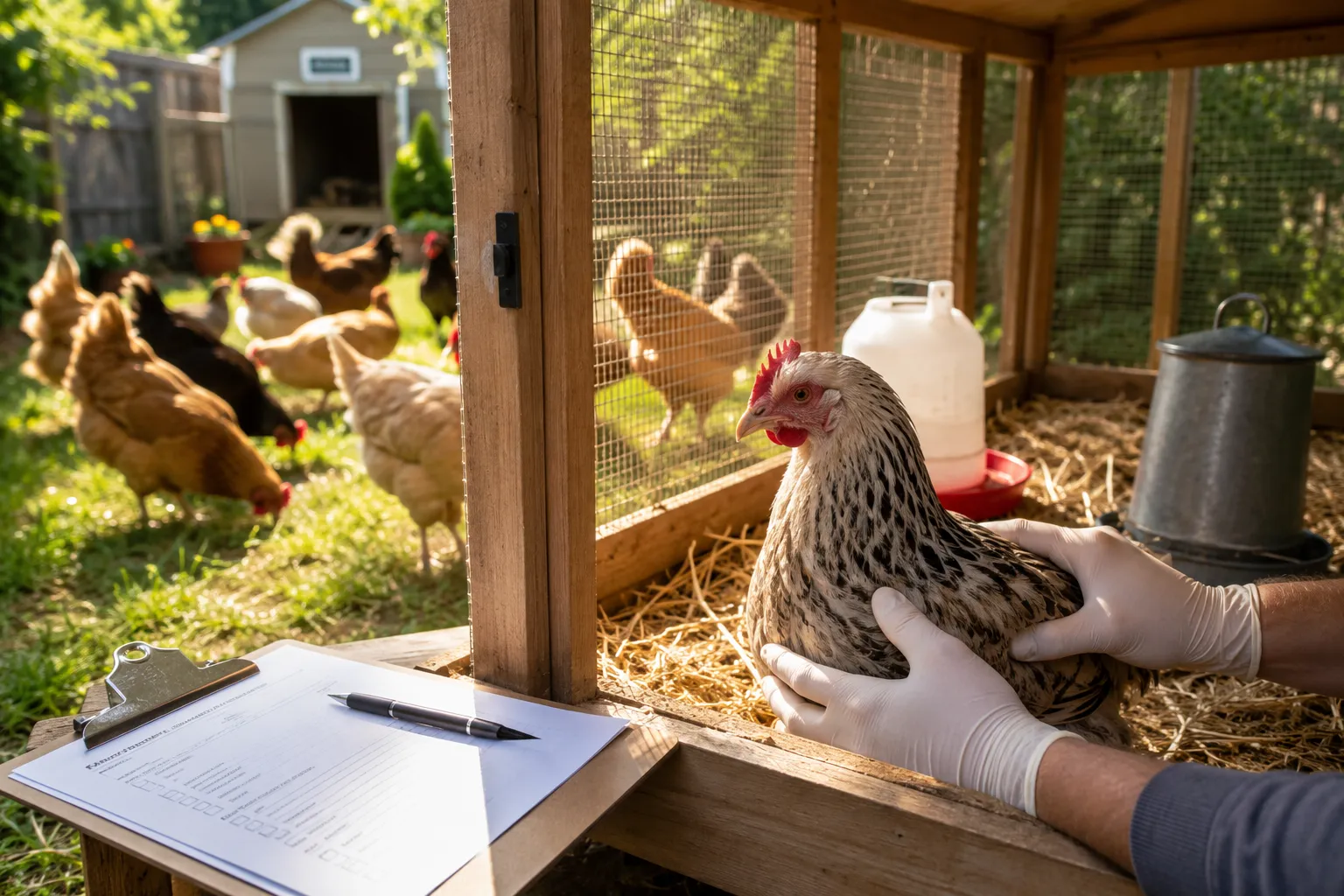
Quick Answer: Quarantine new chickens by isolating them in a separate coop at least 30-40 feet from your existing flock for a minimum of 30 days. During this period, monitor them daily for signs of illness, use dedicated tools and equipment, and practice strict biosecurity measures to prevent disease transmission to your established birds.
Key Takeaways
- Quarantine all new chickens for 30 days minimum, regardless of source (hatchery, farm, or feed store)
- Keep quarantine coop 30-40 feet away from existing flock with no shared airspace or equipment
- Watch for respiratory symptoms, lethargy, diarrhea, and unusual behavior during the isolation period
- Use completely separate tools, feeders, and waterers for quarantined birds, never share equipment
- Two weeks is too short,many diseases have incubation periods of 3-4 weeks
- Skipping quarantine risks devastating disease outbreaks that can wipe out entire flocks
- Even single chickens need quarantine,one bird can carry multiple pathogens
- Baby chicks from hatcheries still require isolation despite appearing healthy
- Budget quarantine setups work well using dog crates, spare sheds, or temporary pens
- Proper introduction after quarantine takes 1-2 weeks of gradual integration
Why Learning How to Quarantine New Chickens Protects Your Flock
Quarantining new chickens creates a safety buffer that prevents disease transmission to your established flock. New birds can carry pathogens without showing symptoms, and introducing them directly exposes your entire flock to potentially fatal illnesses like Marek’s disease, infectious bronchitis, coccidiosis, and fowl pox.
The quarantine period serves three critical functions:
- Disease detection: Allows time for incubating illnesses to show symptoms before contact with healthy birds
- Stress recovery: Gives new chickens time to recover from transport stress, which can suppress immune systems and trigger latent infections
- Behavioral observation: Lets you assess temperament, eating habits, and overall health before integration
Common diseases that quarantine prevents:
- Mycoplasma gallisepticum (chronic respiratory disease)
- Infectious coryza (bacterial respiratory infection)
- Coccidiosis (intestinal parasites)
- External parasites (mites, lice)
- Marek’s disease (viral cancer)
- Newcastle disease (highly contagious viral infection)
- Avian influenza strains
Even chickens from reputable sources can be asymptomatic carriers. A bird that appears perfectly healthy may harbor pathogens that only manifest under stress or in new environments.
How Long Should You Quarantine New Chickens Before Introducing Them to Your Flock
Quarantine new chickens for a minimum of 30 days, preferably 45 days if you have the space and resources. This duration allows most common poultry diseases to complete their incubation periods and show visible symptoms if present.
Why 30 days is the standard:
- Most respiratory diseases show symptoms within 2-3 weeks
- Coccidiosis typically manifests within 4-7 days but can take longer
- Marek’s disease can take 3-4 weeks to show neurological signs
- External parasites become visible within 2-3 weeks as populations grow
- Stress-related illness triggers appear after 10-14 days
Extended quarantine situations (45-60 days):
- Birds from unknown or questionable sources
- Chickens showing mild symptoms that resolve (watch for relapse)
- High-value or rare breed flocks where risk tolerance is lower
- Areas with recent disease outbreaks in the region
Choose 30 days if: You’re buying from a reputable hatchery or established breeder with good biosecurity practices, and the birds appear healthy upon arrival.
Choose 45+ days if: The birds came from a swap meet, auction, or unknown source, or if you’ve had disease problems in your flock previously.
Is 2 Weeks Long Enough to Quarantine New Chickens or Do I Need 30 Days
Two weeks is not sufficient for proper chicken quarantine, you need the full 30 days minimum. While some diseases show symptoms quickly, many common poultry illnesses have incubation periods of 3-4 weeks, and a 14-day quarantine will miss these infections entirely.
Diseases that appear after 2 weeks:
- Marek’s disease: 14-28 days for symptoms to develop
- Mycoplasma infections: Can remain dormant for 21+ days
- Fowl pox: 20-30 day incubation period
- Chronic carriers: Birds may not show symptoms until stress triggers illness after week 3
A common mistake is ending quarantine too early because birds “look fine.” Many chickens are asymptomatic carriers that only shed pathogens intermittently or develop symptoms after the 14-day mark.
The 14-day myth: This shorter period originated from general livestock quarantine guidelines and doesn’t account for poultry-specific disease timelines. Chicken-keeping forums and experienced breeders consistently recommend 30 days based on real-world disease incubation data.
If you absolutely must shorten quarantine due to space constraints, 21 days is the bare minimum, but understand you’re accepting higher risk.
What Distance Should Quarantine Coop Be From Existing Chickens
Position your quarantine coop at least 30-40 feet away from your existing flock, with no shared airspace, drainage, or equipment. This distance prevents airborne disease transmission and reduces the risk of contamination through wild birds, rodents, or insects moving between areas.
Spatial requirements:
- Minimum distance: 30 feet (reduces airborne pathogen transmission)
- Ideal distance: 40-50 feet or more
- Separate building: Best option, different shed, garage section, or structure
- Upwind placement: Position quarantine area downwind from main flock if possible
What counts as “separate”:
✅ Different building or shed with closed walls
✅ Opposite side of property with physical barriers
✅ Indoor space (garage, basement) vs. outdoor coop
✅ Separate drainage and runoff paths
❌ Same building with divider wall (shared air circulation)
❌ Adjacent pens with shared fencing (birds can touch through wire)
❌ Close proximity where dust and feathers drift between areas
Common mistake: Placing quarantine pens just 10-15 feet away because “they can’t touch.” Respiratory diseases spread through aerosols and dust particles that travel much farther than direct contact range.
Edge case: If you only have one coop building, use a completely separate indoor space (garage, shed, spare bathroom) rather than dividing the existing coop. Shared ventilation systems defeat the purpose of quarantine.
What Are Signs of Illness to Watch for During Chicken Quarantine
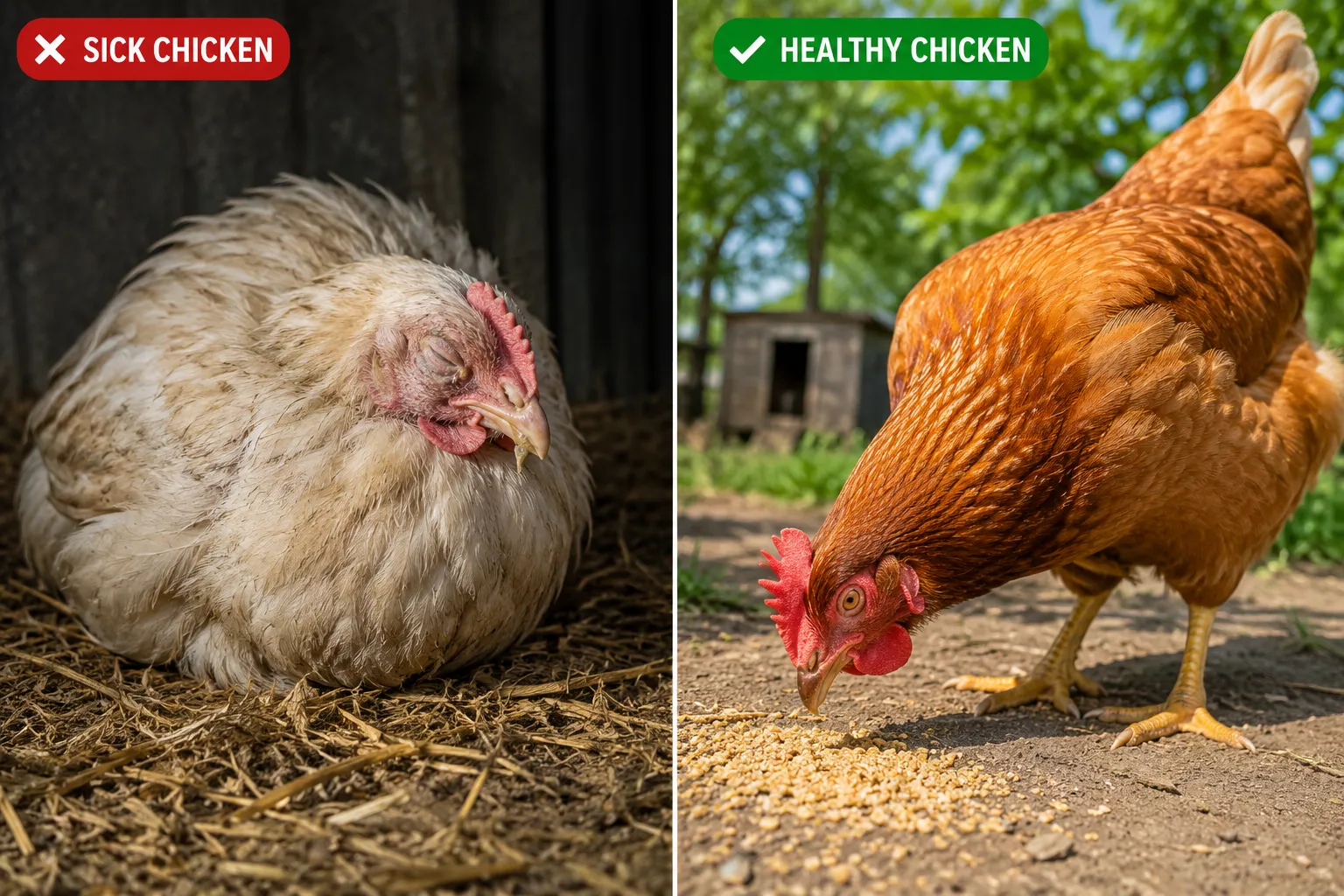
Monitor quarantined chickens daily for respiratory symptoms, changes in behavior, abnormal droppings, and physical abnormalities. Most diseases show multiple symptoms simultaneously, so watch for clusters of warning signs rather than isolated issues.
Respiratory symptoms (most common):
- Sneezing, coughing, or wheezing sounds
- Nasal discharge (clear or cloudy)
- Swollen eyes or facial swelling
- Open-mouth breathing or gasping
- Rattling or gurgling sounds when breathing
Behavioral changes:
- Lethargy or reluctance to move
- Separation from other quarantined birds
- Decreased appetite or refusing food
- Reduced water intake
- Hunched posture with ruffled feathers
- Head shaking or tilting
Digestive and droppings issues:
- Diarrhea (watery, green, yellow, or bloody)
- Lack of droppings (intestinal blockage)
- Undigested food in droppings
- Strong, foul odor beyond normal chicken smell
Physical abnormalities:
- Limping or paralysis (Marek’s disease indicator)
- Scabs or lesions on comb, wattles, or legs (fowl pox, favus)
- Pale comb or wattles (anemia, internal parasites)
- Feather loss beyond normal molting
- Visible lice or mites on skin or feathers
Daily monitoring checklist:
- Observe behavior for 5-10 minutes without disturbing birds
- Check feed and water consumption levels
- Examine droppings for consistency and color
- Listen for respiratory sounds
- Physically handle each bird 2-3 times per week to check weight and feel for abnormalities
When to extend quarantine: If any symptoms appear, treat the issue and restart the 30-day clock from the date symptoms resolve. Never introduce birds that showed illness, even if they seem recovered, they may be carriers.
Do I Need to Quarantine Chickens From a Hatchery or Only From Other Farms
Quarantine all new chickens regardless of source, including those from commercial hatcheries, feed stores, and reputable breeders. While hatchery chicks are generally healthier than birds from unknown sources, they can still carry diseases and benefit from the observation period.
Why hatchery birds need quarantine:
- Shipped chicks experience transport stress that can trigger latent infections
- Hatcheries process thousands of birds, cross-contamination is possible
- Some diseases (like Mycoplasma) can be transmitted through eggs
- Feed store chicks may have been exposed to other birds or customers
- Even NPIP-certified flocks can carry diseases not covered by testing
Risk levels by source:
Highest risk (always quarantine 45+ days):
- Swap meets and poultry auctions
- Craigslist or unknown sellers
- “Rescue” chickens from unknown backgrounds
- Birds from flocks with visible health issues
Moderate risk (30-day quarantine):
- Small-scale breeders (even reputable ones)
- Feed store chicks (mixed with other shipments)
- Birds from friends’ backyard flocks
Lower risk (still quarantine 30 days):
- Commercial hatchery direct shipments
- NPIP-certified breeders
- Show-quality birds from established breeders
The only exception: If you’re starting a brand-new flock with no existing birds, quarantine isn’t necessary, but still observe new arrivals for health issues during their first 30 days.
Common mistake: Assuming NPIP (National Poultry Improvement Plan) certification means birds are disease-free. NPIP only tests for specific diseases (primarily Salmonella and Mycoplasma) and doesn’t cover all poultry pathogens.
Can I Use the Same Tools and Feeders Between Quarantined and Existing Chickens
Never share tools, feeders, waterers, or equipment between quarantined and existing chickens, this is one of the fastest ways to transmit disease. Maintain completely separate supplies for your quarantine area and always tend to your established flock first, quarantined birds last.
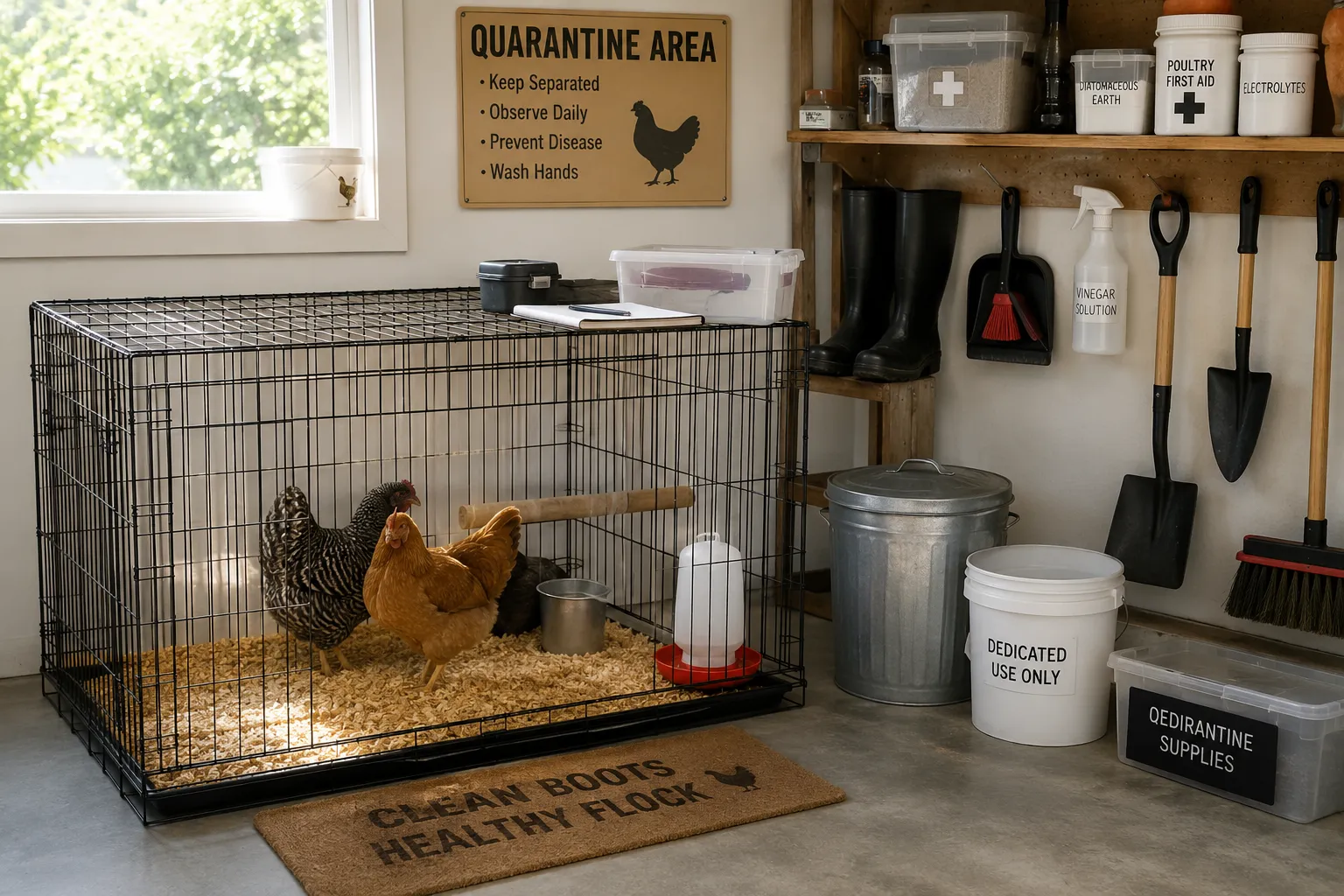
Dedicated quarantine supplies:
- Separate feeders and waterers
- Different feed scoop or container
- Dedicated boots or shoe covers
- Separate cleaning tools (rake, shovel, broom)
- Different gloves for handling
- Isolated first aid and medication supplies
Proper biosecurity routine:
- Morning: Care for established flock first (feed, water, collect eggs)
- Midday: Complete all main flock tasks and chores
- Evening: Visit quarantine area last, after all other chicken work is done
- Between areas: Change boots, wash hands thoroughly, change outer layer if possible
If you must share equipment (not recommended):
- Disinfect thoroughly with poultry-safe disinfectant (Virkon S, bleach solution)
- Allow 24-hour drying time between uses
- Soak in disinfectant for minimum 10 minutes
- Rinse completely before use with main flock
Clothing and footwear protocol:
- Keep dedicated boots/shoes at quarantine area
- Wear coveralls or old jacket that stays in quarantine zone
- Wash hands with antibacterial soap after handling quarantined birds
- Consider disposable gloves for handling sick or suspect birds
Common mistake: Using the same hose or water source for both areas. Water can carry pathogens, use separate hoses or fill quarantine water from a different spigot.
Budget tip: Thrift stores and dollar stores sell cheap plastic containers, bowls, and small tools perfect for quarantine setups. Spending $15-20 on duplicate supplies is far cheaper than treating a flock-wide disease outbreak.
What Happens If I Skip Quarantine and Add New Chickens Directly to My Flock
Skipping quarantine risks introducing contagious diseases that can sicken or kill your entire flock, resulting in expensive veterinary bills, lost birds, and months of treatment and recovery. Many backyard chicken keepers who skip this step report devastating outbreaks that could have been prevented.
Potential consequences:
Disease outbreaks:
- Respiratory infections spreading to entire flock within days
- Chronic carriers that repeatedly sicken other birds
- Diseases requiring culling of infected birds
- Quarantine of entire property by agricultural authorities
Financial costs:
- Veterinary diagnostics: $100-300 per bird
- Medications and treatments: $50-200+ for flock treatment
- Lost egg production during illness
- Replacement birds if deaths occur
- Potential property quarantine affecting resale or showing birds
Time and effort:
- Daily medication administration for weeks or months
- Intensive monitoring and care for sick birds
- Cleaning and disinfecting entire coop and run
- Isolation of sick birds after the fact (harder than preventive quarantine)
Real-world example: A common scenario involves introducing a single bird from a swap meet that carries Mycoplasma gallisepticum. Within two weeks, the entire flock develops respiratory symptoms. The disease becomes chronic, requiring ongoing management, and the flock can never be sold or shown because they’re permanent carriers.
The “I got lucky” fallacy: Some chicken keepers skip quarantine multiple times without problems and conclude it’s unnecessary. This is survivorship bias, they simply haven’t encountered a carrier bird yet. When they eventually do, the consequences are severe.
Choose to skip quarantine if: You’re willing to accept the risk of losing your entire flock and starting over. For most backyard chicken keepers, this isn’t an acceptable risk.
How to Set Up a Temporary Quarantine Space for New Chickens on a Budget
Create an effective quarantine space using a large dog crate, spare shed, garage corner, or temporary pen for $50-150. The setup doesn’t need to be elaborate, just secure, separate, and equipped with basic necessities.
Budget quarantine options:
Option 1: Large dog crate ($40-80)
- Wire dog crate (36-48 inches for 2-3 chickens)
- Place in garage, shed, or covered porch
- Add roosting bar made from scrap wood
- Line bottom with cardboard and pine shavings
Option 2: Spare bathroom or laundry room ($20-30)
- Use existing indoor space with tile or linoleum flooring
- Cover floor with tarp and shavings
- Provide cardboard box for nesting/hiding
- Ensure adequate ventilation (crack window or door)
Option 3: Temporary outdoor pen ($60-100)
- Build simple frame from 2x4s or PVC pipe
- Wrap with chicken wire or hardware cloth
- Add tarp roof for weather protection
- Position away from main coop
Option 4: Repurposed shed or playhouse ($30-50 for modifications)
- Use existing structure
- Add ventilation if needed
- Install simple roost and nesting area
- Ensure predator-proof latches
Essential supplies (total: $30-50):
- Feeder: $8-15 (plastic or metal hanging feeder)
- Waterer: $8-15 (gravity waterer or bowl)
- Bedding: $6-10 (pine shavings or straw bale)
- Roosting bar: Free (scrap wood, ladder, or branch)
- Feed: $15-20 (small bag appropriate for age/type)
Space requirements:
- Minimum 2-3 square feet per bird indoors
- 4-6 square feet per bird for outdoor quarantine pen
- Adequate height for roosting (18-24 inches off ground)
Ventilation is critical: Even budget setups need airflow to prevent respiratory issues. Ensure cross-ventilation with openings on opposite sides, covered with hardware cloth to prevent drafts while allowing air circulation.
Common mistake: Using a space that’s too small or poorly ventilated. Cramped, stuffy conditions stress birds and make them more susceptible to illness, defeating the purpose of quarantine.
Should I Quarantine a Single New Chicken or Is That Only for Multiple Birds
Quarantine every new chicken regardless of number, even a single bird can carry multiple diseases and parasites that threaten your entire flock. The number of incoming birds doesn’t change the disease risk; one chicken has the same potential to be an asymptomatic carrier as a group of ten.
Why single birds need quarantine:
- One bird can carry respiratory diseases, parasites, and viral infections simultaneously
- Asymptomatic carriers show no symptoms but shed pathogens
- Stress of integration can trigger latent infections in the new bird
- Single birds from unknown sources may have higher risk (often rehomed due to problems)
Special considerations for single birds:
Loneliness factor: Chickens are social and a single quarantined bird may experience stress from isolation. Consider:
- Placing quarantine area where bird can see/hear (but not contact) other chickens
- Providing mirror or stuffed animal for “company”
- Spending extra time with the bird daily
- Keeping quarantine to 30 days rather than extending unnecessarily
Integration challenges: Single birds face harder integration than groups because they lack allies. Plan for extended introduction period after quarantine (2-3 weeks of gradual integration).
The “just one chicken” temptation: It’s easy to rationalize skipping quarantine for a single bird, especially if it’s a gift or rescue. Resist this temptation, many flock disasters start with “just one chicken” that seemed healthy.
Edge case: If you’re adding a single chick to a brooder with other chicks of similar age (all new, no established flock), standard quarantine isn’t necessary. But if you’re adding any bird to an existing flock of any age, quarantine applies.
What Diseases Can New Chickens Bring to an Established Flock
New chickens can introduce respiratory diseases, viral infections, parasites, and bacterial illnesses that range from manageable to fatal. Understanding these diseases helps you recognize symptoms during quarantine and appreciate why isolation is critical.
Major respiratory diseases:
Mycoplasma gallisepticum (MG):
- Chronic respiratory disease causing sneezing, nasal discharge, swollen eyes
- Spreads through direct contact and aerosols
- Birds become lifelong carriers even after recovery
- No cure, only symptom management
Infectious bronchitis:
- Highly contagious viral respiratory infection
- Causes coughing, sneezing, reduced egg production
- Can permanently damage reproductive tract
- Vaccine available but not always effective against all strains
Infectious coryza:
- Bacterial infection causing facial swelling, foul-smelling nasal discharge
- Spreads rapidly through flocks
- Treatable with antibiotics but birds remain carriers
- Can cause permanent sinus damage
Viral diseases:
Marek’s disease:
- Viral cancer affecting nerves and organs
- Causes paralysis, tumors, and death
- Spreads through feather dander and dust
- Vaccination helps but doesn’t prevent all cases
- Infected birds shed virus for life
Newcastle disease:
- Highly contagious viral infection (reportable disease in many areas)
- Causes respiratory distress, neurological symptoms, sudden death
- Can wipe out entire flocks in days
- Vaccination available but not commonly used in backyard flocks
Fowl pox:
- Viral disease causing scabs on comb, wattles, and skin
- Spreads through mosquitoes and direct contact
- Two forms: dry (skin lesions) and wet (respiratory)
- Usually self-limiting but can be fatal in severe cases
Parasitic infections:
External parasites:
- Mites (red mites, northern fowl mites, scaly leg mites)
- Lice (several species)
- Cause feather loss, anemia, stress, reduced egg production
- Easily spread through direct contact
Internal parasites:
- Coccidiosis (intestinal protozoa causing bloody diarrhea)
- Roundworms, tapeworms, cecal worms
- Cause weight loss, poor growth, death in severe cases
- Spread through contaminated droppings
Bacterial infections:
- Salmonella (can transmit to humans)
- E. coli (causes various infections)
- Fowl cholera (acute, often fatal)
The carrier problem: Many diseases create permanent carriers, birds that appear healthy but continuously shed pathogens. This is why quarantine observation is essential even for healthy-looking chickens.
Do Baby Chicks Need to Be Quarantined Separately From Adult Chickens
Baby chicks require quarantine from adult chickens for disease prevention, but they also need age-appropriate housing with heat, smaller feeders, and protection from adult birds. If you’re adding chicks to a property with adult chickens, maintain the same 30-day quarantine protocol in a brooder setup.
Quarantine considerations for chicks:
Disease risk: Chicks can carry diseases from hatcheries or feed stores, including:
- Salmonella (especially dangerous to young chicks)
- Coccidiosis (common in young birds)
- Marek’s disease (can be transmitted through hatchery environment)
- Mycoplasma (egg-transmitted from parent stock)
Brooder requirements during quarantine:
- Heat source (95°F first week, decrease 5°F weekly)
- Chick-specific feeder and waterer (small enough for tiny beaks)
- Non-slip bedding (paper towels first few days, then pine shavings)
- Draft-free environment with ventilation
- Separate location from adult flock (30+ feet away)
Age-specific quarantine timeline:
- 0-6 weeks: Keep in brooder during quarantine period
- 6-8 weeks: Can move to outdoor quarantine pen if weather permits
- After 30-day quarantine: Begin gradual introduction to adult flock
Special case, all-new chicks: If you’re starting a new flock with only chicks and no existing adult birds, quarantine isn’t necessary. Simply follow standard brooder practices and monitor for health issues.
Common mistake: Assuming chicks are “too young” to carry diseases. Young birds can be asymptomatic carriers of serious illnesses that will manifest later or spread to adult birds.
Integration after quarantine: Even after the 30-day quarantine, don’t immediately mix chicks with adult chickens. Wait until chicks are at least 8-12 weeks old and use gradual introduction methods to prevent injury from adult birds.
How to Introduce Chickens After Quarantine Period Is Over
Introduce quarantined chickens gradually over 1-2 weeks using a see-but-not-touch approach, followed by supervised interactions, and finally full integration. Rushing this process leads to fighting, injuries, and stressed birds that may develop health issues.
Week 1: Visual introduction
- Place new birds in temporary pen adjacent to main flock (separated by fence)
- Allow birds to see and hear each other without physical contact
- Maintain separate feeding and watering areas
- Duration: 3-5 days minimum
Week 2: Supervised interaction
- Create neutral territory (free-range area both groups haven’t used recently)
- Release both groups simultaneously in this space
- Supervise closely for 30-60 minutes
- Separate if serious fighting occurs (pecking order establishment is normal; blood or injury is not)
- Repeat daily, gradually increasing time together
Final integration:
- Add new birds to main coop at night when everyone is calm
- Place newcomers on roosts next to established birds
- Monitor closely the next morning for conflicts
- Provide multiple feeding and watering stations to reduce competition
- Ensure adequate space (4 square feet per bird in coop, 10 square feet in run)
Signs of successful integration:
- New birds roosting with established flock
- Eating and drinking without being chased away
- Normal pecking order established (some chasing is normal)
- No injuries or excessive stress behaviors
Signs of integration problems:
- Blood from pecking or fighting
- New birds refusing to eat or drink
- Constant chasing or cornering
- New birds isolated and not roosting at night
Troubleshooting difficult integrations:
- Add more hiding spots and visual barriers in run
- Increase space if possible
- Remove aggressive individuals temporarily
- Try “buddy system” (integrate two new birds together for mutual support)
- Consider adding all birds to completely new coop (resets pecking order)
Age and size considerations: Don’t integrate significantly smaller or younger birds with large adults. Wait until new birds are at least 75% the size of the smallest established flock member.
Rooster dynamics: If introducing a new rooster, expect more serious conflicts. Consider whether multiple roosters are necessary (generally 1 rooster per 8-10 hens is sufficient).
Common Mistakes People Make When Quarantining New Chickens
The most frequent quarantine mistakes include ending isolation too early, inadequate separation distance, sharing equipment between groups, and failing to monitor birds daily. These errors undermine the entire purpose of quarantine and leave flocks vulnerable to disease.
Top quarantine mistakes:
1. Ending quarantine at 14 days
- Why it fails: Many diseases have 3-4 week incubation periods
- Fix: Always complete full 30 days minimum
2. Placing quarantine pen too close to main flock
- Why it fails: Airborne diseases spread through dust and aerosols
- Fix: Maintain 30-40 feet minimum distance with no shared airspace
3. Using same tools and equipment
- Why it fails: Direct disease transmission through contaminated surfaces
- Fix: Maintain completely separate supplies; care for main flock first, quarantine last
4. Skipping quarantine for “healthy-looking” birds
- Why it fails: Asymptomatic carriers show no symptoms but spread disease
- Fix: Quarantine all new birds regardless of appearance or source
5. Inadequate daily monitoring
- Why it fails: Early disease symptoms go unnoticed until widespread
- Fix: Spend 10-15 minutes daily observing behavior, droppings, and physical condition
6. Poor quarantine space conditions
- Why it fails: Stress and poor ventilation trigger latent infections
- Fix: Provide adequate space, ventilation, clean bedding, and proper nutrition
7. Ending quarantine when symptoms resolve
- Why it fails: Birds may be carriers even after recovery
- Fix: Restart 30-day clock from symptom resolution date
8. Quarantining in shared building
- Why it fails: Shared ventilation and airspace defeats isolation purpose
- Fix: Use completely separate structure or indoor space
9. Not washing hands between groups
- Why it fails: Human hands transfer pathogens between flocks
- Fix: Wash hands thoroughly with antibacterial soap after handling quarantined birds
10. Skipping quarantine for “just one chicken”
- Why it fails: Single birds carry same disease risk as groups
- Fix: Quarantine every new bird, regardless of number
The “it won’t happen to me” mindset: Many chicken keepers skip or shorten quarantine because they’ve been lucky in the past. Disease introduction is a matter of when, not if, without proper biosecurity.
Edge case, emergency situations: If you must take in a sick or injured bird immediately, isolate it even more strictly than standard quarantine (separate building, extreme biosecurity) and consider it a permanent isolation case that may never integrate with your flock.
Frequently Asked Questions
Can I quarantine new chickens in my garage?
Yes, a garage makes an excellent quarantine location as long as it’s at least 30 feet from your main coop and has adequate ventilation. Use a large dog crate or temporary pen, provide proper lighting, and ensure temperatures stay within safe range (50-80°F for adults, warmer for chicks).
What if my new chicken gets sick during quarantine?
Treat the illness appropriately and restart the 30-day quarantine period from the date symptoms completely resolve. Never introduce a bird that showed illness, even after recovery, without consulting an avian veterinarian, the bird may be a permanent carrier.
Do I need to quarantine chickens from my friend’s backyard flock?
Yes, always quarantine birds from other flocks regardless of how well you know the owner. Your friend may not be aware of asymptomatic carriers in their flock, and different environments harbor different pathogens.
Can I shorten quarantine if I get a health certificate from a vet?
A pre-purchase veterinary exam is valuable but doesn’t replace quarantine. Many diseases have incubation periods longer than the exam date, and stress of moving can trigger latent infections. Complete the full 30-day quarantine even with a health certificate.
How do I quarantine if I only have one coop?
Use a completely separate indoor space (garage, shed, spare room, basement) rather than dividing your existing coop. Shared ventilation systems in divided coops defeat the purpose of isolation. Budget options like large dog crates work well for temporary quarantine.
What should I feed chickens during quarantine?
Feed age-appropriate commercial chicken feed (starter for chicks, layer feed for adults) and avoid treats or supplements that might mask symptoms. Consistent, quality nutrition helps birds show their true health status during observation.
Can I quarantine multiple new chickens together?
Yes, you can quarantine multiple birds from the same source together in one space. However, if they came from different sources (different farms, hatcheries, or sellers), quarantine each group separately to prevent cross-contamination.
Do I need to quarantine if I’m starting a completely new flock?
No, quarantine isn’t necessary when starting a new flock with no existing birds. However, still monitor new arrivals closely for health issues during their first 30 days, as you’ll want to catch any problems before they become established in your flock.
What temperature should the quarantine area be?
Adult chickens tolerate 32-90°F but thrive in 50-80°F. Chicks need 90-95°F in week one, decreasing by 5°F each week. Ensure your quarantine space maintains appropriate temperatures for the age and type of birds you’re isolating.
Should I quarantine chickens I’m bringing back from a poultry show?
Absolutely. Shows expose birds to hundreds of other chickens from various sources. Quarantine show birds for 14-21 days after returning home, watching carefully for respiratory symptoms that indicate exposure to sick birds at the event.
Can wild birds transmit diseases to my quarantined chickens?
Yes, wild birds can carry diseases like avian influenza and spread parasites. Cover outdoor quarantine pens with netting or solid roofing, and prevent wild bird access to feed and water. This applies to both quarantine and main flock areas.
How do I dispose of bedding from quarantine area?
Bag quarantine bedding separately and dispose of it in trash, or compost it in a dedicated pile away from your main coop and garden areas. Don’t spread quarantine bedding in areas where your main flock free-ranges or where runoff could reach their space.
Conclusion
Learning how to quarantine new chickens properly is the single most important biosecurity measure for protecting your flock from devastating disease outbreaks. The 30-day isolation period, maintained at least 30-40 feet from existing birds with completely separate equipment and strict daily monitoring, creates a safety buffer that allows diseases to manifest before they spread to your established flock.
While quarantine requires extra space, time, and supplies, the investment is minimal compared to the cost of treating flock-wide illness or losing birds to preventable diseases. Even healthy-looking chickens from reputable sources can be asymptomatic carriers, making quarantine essential regardless of source or number of new birds.
Your next steps:
- Set up your quarantine space now, before you need it, having infrastructure ready makes it easier to maintain discipline when acquiring new birds
- Gather dedicated quarantine supplies (separate feeders, waterers, tools, boots) and store them in your quarantine area
- Commit to the full 30-day period for every new bird, no exceptions, no matter how healthy they appear
- Monitor daily during quarantine, watching for respiratory symptoms, behavioral changes, and abnormal droppings
- Plan gradual integration over 1-2 weeks after quarantine ends to ensure smooth flock dynamics
Remember that skipping or shortening quarantine isn’t worth the risk. The temporary inconvenience of proper isolation is far easier than managing a flock-wide disease outbreak that could have been prevented. Your established birds depend on your biosecurity practices to stay healthy, make quarantine a non-negotiable part of your chicken-keeping routine.


