
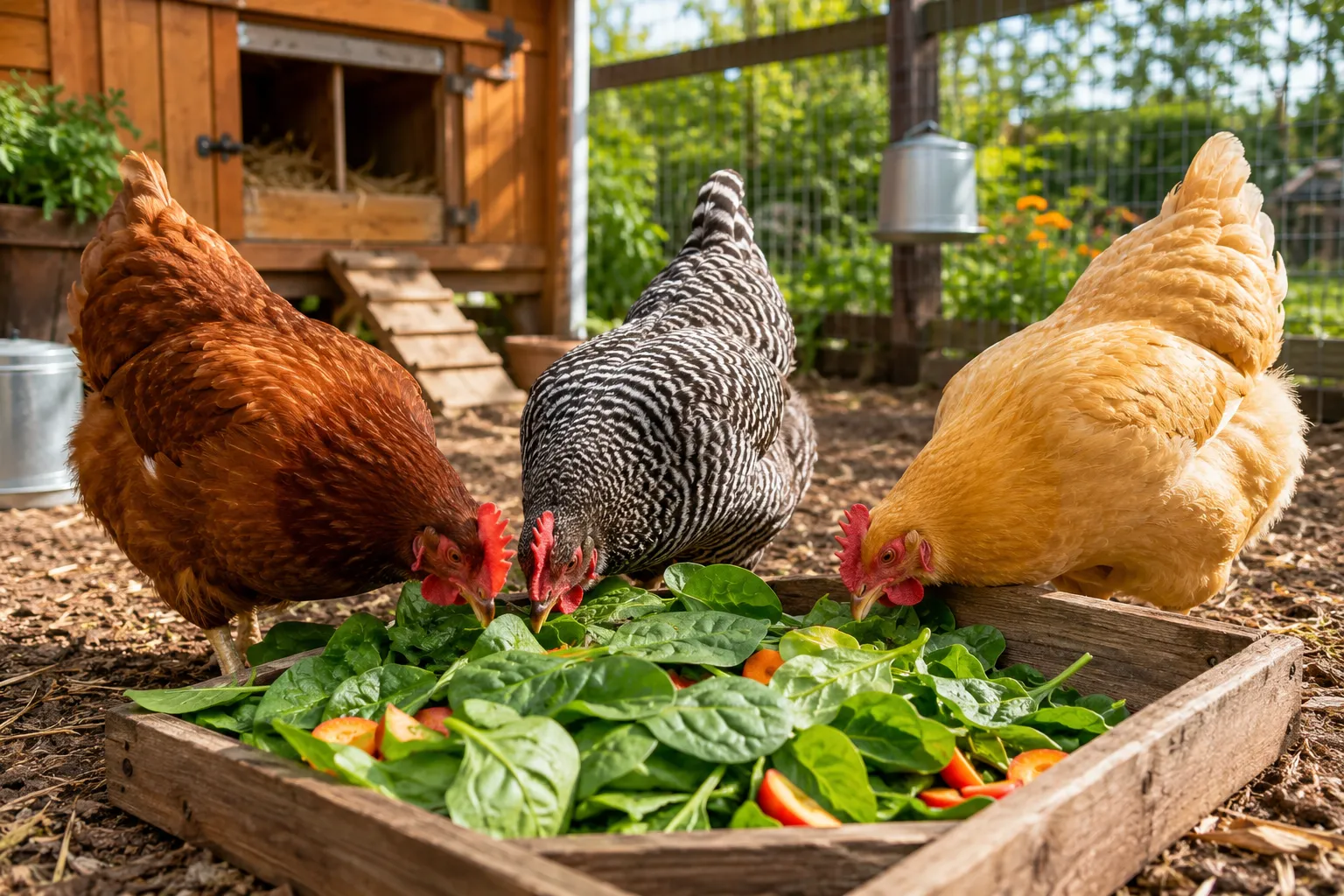
Quick Answer: Yes, chickens can eat spinach safely in moderation. Spinach contains oxalic acid, which can bind calcium when fed in large quantities, but offering spinach as an occasional treat (no more than 10% of their diet) poses no health risk and provides beneficial vitamins and minerals. Both raw and cooked spinach are safe, though chickens often prefer raw leaves.
Key Takeaways
- Chickens can safely eat spinach as an occasional treat, not as a dietary staple
- Limit spinach to no more than 10% of total diet to avoid calcium-binding issues
- Oxalic acid in spinach can interfere with calcium absorption when fed excessively
- Both raw and cooked spinach are safe; most chickens prefer raw leaves
- Baby chicks can eat small amounts of finely chopped spinach after 3-4 weeks of age
- Spinach does not negatively affect egg production when fed in moderation
- Better leafy green alternatives include kale, lettuce, cabbage, and Swiss chard
- Mix spinach with other vegetables and greens for balanced nutrition
- Most chickens enjoy spinach, though individual preferences vary
- Never feed chickens avocado, chocolate, dried beans, or moldy foods
Is Spinach Safe for Chickens to Eat?
Spinach is safe for chickens when offered as part of a varied diet. The primary concern with spinach centers on oxalic acid, a naturally occurring compound that can bind with calcium and prevent its absorption. However, chickens would need to consume spinach as a major portion of their diet for this to become problematic.
Why spinach gets a cautious reputation:
- Contains oxalic acid (also found in beet greens, rhubarb, and parsley)
- Can theoretically interfere with calcium metabolism in large amounts
- Calcium is essential for strong eggshells and bone health
Why moderate spinach feeding is perfectly fine:
- Chickens eating layer feed receive adequate calcium supplementation
- The oxalic acid content becomes problematic only at very high consumption levels
- Spinach provides vitamins A, C, K, iron, and folate
- Offers antioxidants that support immune function
Choose spinach as one of many treat options if you’re already providing quality layer feed and oyster shell. Avoid making spinach the only green vegetable in your flock’s diet.
How Much Spinach Can I Give My Chickens?
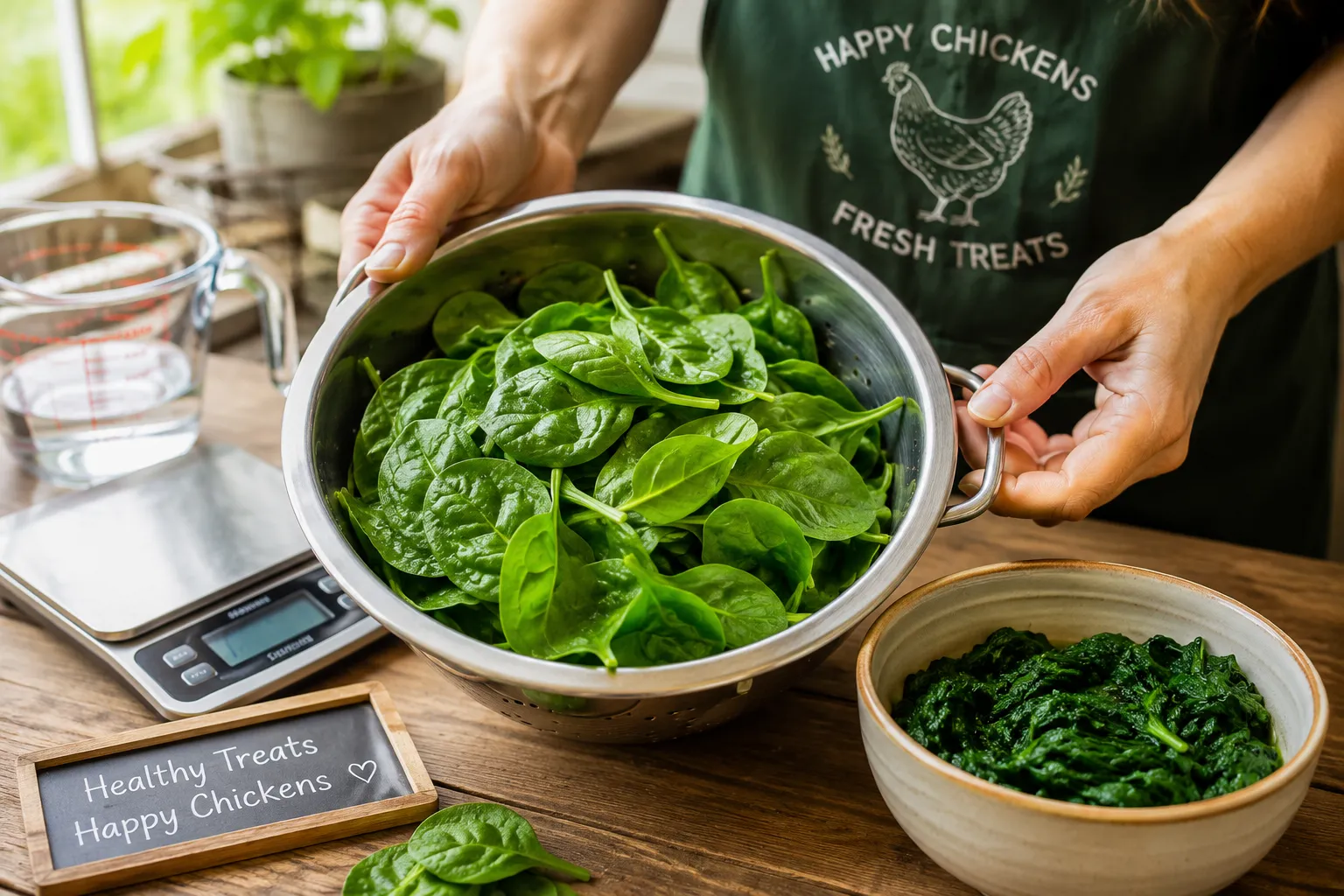
Limit spinach to no more than 10% of your chickens’ total daily food intake. For a standard-sized hen eating approximately 1/4 to 1/3 pound of feed per day, this translates to roughly 1-2 tablespoons of chopped spinach per bird, offered 2-3 times per week maximum.
Practical portion guidelines:
- Small flock (3-5 chickens): One large handful of spinach leaves, 2-3 times weekly
- Medium flock (6-12 chickens): Two large handfuls, 2-3 times weekly
- Large flock (13+ chickens): Three handfuls or one small bunch, 2-3 times weekly
The 90/10 rule for chicken nutrition:
90% of diet should come from complete layer feed formulated for chickens, which contains balanced protein, vitamins, minerals, and calcium. The remaining 10% can include treats like vegetables, fruits, mealworms, and table scraps.
Common mistake: Overfeeding treats because chickens seem to love them. Chickens will often choose tasty treats over their nutritionally complete feed, similar to how children might choose candy over vegetables. Your job as a keeper is to maintain nutritional balance even when your flock begs for more spinach.
Raw Spinach vs Cooked Spinach for Chickens
Both raw and cooked spinach are safe for chickens, though raw spinach retains more nutrients and most chickens prefer the texture of fresh leaves. Cooking spinach slightly reduces oxalic acid content but also diminishes some vitamins, particularly vitamin C and folate.
Raw spinach advantages:
- Higher vitamin C content
- Retains more folate and B vitamins
- Chickens typically find it more palatable
- Easier to prepare (just rinse and toss)
- Provides enrichment as chickens peck and tear leaves
Cooked spinach advantages:
- Slightly lower oxalic acid levels (reduced by 5-15% through cooking)
- Softer texture for older chickens or those with beak issues
- Can be mixed into warm mashes during cold weather
Best practice: Offer raw spinach as the default option. Reserve cooked spinach for winter warm treats or for chickens with special needs. Never add salt, butter, oil, or seasonings to spinach intended for chickens.
If you’re using frozen spinach, thaw it completely and drain excess water before offering it to your flock. Frozen spinach works well but lacks the entertainment value of fresh leaves that chickens can chase and peck.
Can Spinach Cause Health Problems in Chickens?
Spinach can cause health problems only when fed excessively as a dietary staple rather than an occasional treat. The primary risk is calcium deficiency from oxalic acid binding, which can lead to weak eggshells, soft-shelled eggs, or bone problems over time.
Health issues from excessive spinach consumption:
- Thin or soft eggshells: Calcium bound by oxalic acid becomes unavailable for shell formation
- Egg binding: Severe calcium deficiency can cause eggs to become stuck
- Weak bones: Long-term calcium depletion affects skeletal health
- Reduced egg production: Nutritional imbalances can decrease laying frequency
Signs your chickens are eating too much spinach:
- Noticeable decrease in eggshell quality
- Chickens ignoring their layer feed in favor of treats
- Soft or rubbery eggs appearing regularly
- Lethargy or reduced activity levels
How to prevent spinach-related problems:
- Always provide free-choice oyster shell or crushed eggshells for calcium supplementation
- Ensure layer feed remains the primary food source
- Rotate treat vegetables rather than offering spinach daily
- Monitor eggshell quality as an indicator of calcium status
Choose to skip spinach entirely if your flock already shows signs of calcium deficiency or eggshell problems. Focus on calcium-rich greens like kale or provide additional oyster shell until shell quality improves.
Does Spinach Affect Egg Production in Chickens?
Spinach does not negatively affect egg production when fed in appropriate amounts as part of a balanced diet. In fact, the vitamins and minerals in spinach can support overall hen health, which indirectly benefits consistent laying. Problems arise only when spinach displaces nutritionally complete layer feed or when excessive amounts interfere with calcium absorption.
How spinach supports healthy layers:
- Vitamin A promotes reproductive health
- Iron supports blood health and oxygen transport
- Folate aids in cell division and egg formation
- Antioxidants support immune function during laying stress
When spinach might reduce egg production:
- Chickens fill up on spinach instead of eating protein-rich layer feed
- Excessive spinach consumption leads to calcium deficiency over weeks or months
- Nutritional imbalances from treat-heavy diets affect laying cycles
Real-world observation: Most backyard chicken keepers who offer spinach 2-3 times weekly report no changes in egg production. Issues typically appear only in situations where treats comprise 25% or more of the diet, or when chickens receive spinach daily for extended periods.
If you notice decreased egg production after introducing spinach, reduce the frequency and amount. Ensure your flock has constant access to layer feed and calcium supplements.
What Leafy Greens Are Better Than Spinach for Chickens?
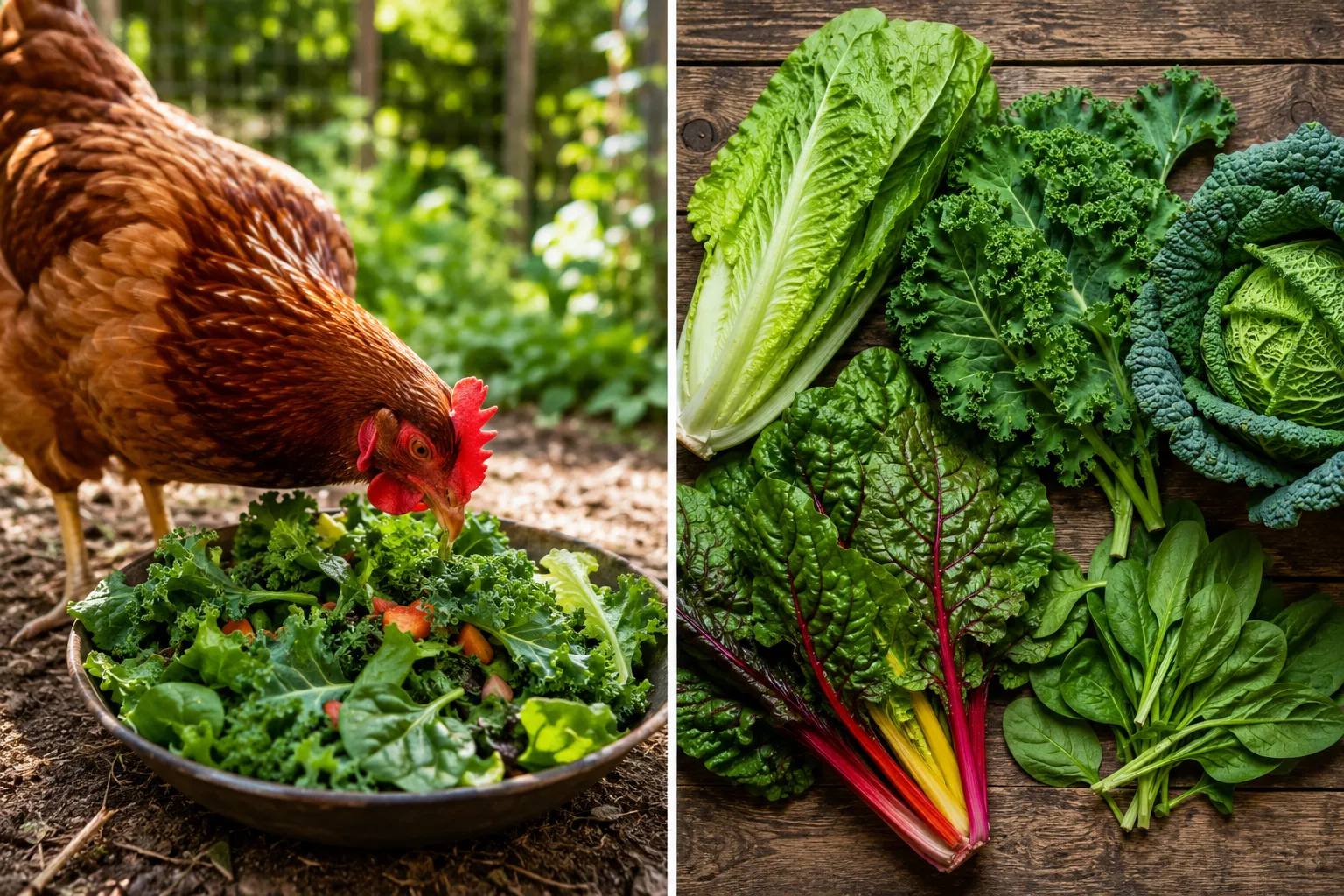
Several leafy greens offer excellent nutrition for chickens without the oxalic acid concerns associated with spinach. Kale, romaine lettuce, cabbage, and Swiss chard are all superior choices for regular feeding, while spinach works best as an occasional variety option.
Top leafy green alternatives:
Kale, High in calcium, vitamins A, C, and K; low in oxalates; chickens love it
- Can be fed more frequently than spinach
- Hang whole leaves for entertainment and exercise
Romaine lettuce, Hydrating, mild flavor, very low oxalates
- Excellent for hot weather
- Safe to feed daily in moderate amounts
Cabbage, Durable, entertaining, nutrient-dense
- Hang whole heads for a “chicken piñata”
- Provides mental stimulation and reduces boredom
Swiss chard, Similar nutrition to spinach but lower oxalic acid
- Colorful stems add variety
- Better choice for frequent feeding
Collard greens, High calcium, low oxalates, southern favorite
- Tougher texture provides longer entertainment
- Excellent calcium-to-phosphorus ratio
Dandelion greens, Free forage option, highly nutritious
- Chickens instinctively seek these out
- Supports liver health and digestion
Comparison of oxalic acid content (approximate):
| Leafy Green | Oxalic Acid Level | Feeding Frequency |
|---|---|---|
| Spinach | High (750-900 mg/100g) | 2-3 times weekly |
| Swiss chard | Moderate (650 mg/100g) | 3-4 times weekly |
| Kale | Low (20 mg/100g) | Daily acceptable |
| Romaine lettuce | Very low (5 mg/100g) | Daily acceptable |
| Cabbage | Very low (10 mg/100g) | Daily acceptable |
Choose kale or romaine as your go-to greens for daily variety, and reserve spinach as one option in a rotating treat schedule.
Can Baby Chicks Eat Spinach?
Baby chicks can eat small amounts of finely chopped spinach starting around 3-4 weeks of age, but it should not be introduced during their first few weeks of life. Young chicks require precisely balanced starter feed for proper development, and introducing treats too early can disrupt their nutrition and digestion.
Timeline for introducing spinach to chicks:
- 0-2 weeks: Starter feed only, no treats
- 3-4 weeks: Tiny amounts of finely minced spinach (1/4 teaspoon per chick)
- 5-8 weeks: Gradually increase to small treat portions
- 8+ weeks: Treat as young chickens with 10% treat guideline
Special considerations for chicks:
- Always provide chick grit when offering any food besides starter feed
- Chop spinach very finely to prevent choking
- Introduce one new food at a time to monitor for digestive issues
- Ensure treats don’t exceed 5% of diet for chicks under 8 weeks
Why delay treats for young chicks:
Chick starter feed contains precise ratios of protein (18-20%), vitamins, and minerals calibrated for rapid growth. Even small amounts of treats can dilute this nutrition during critical development periods. Additionally, young digestive systems are more sensitive to dietary changes.
Choose to wait until chicks are fully feathered (around 6-8 weeks) before offering spinach regularly. Focus early treat experiences on safer options like finely chopped lettuce or tiny amounts of scrambled egg.
How Often Should I Feed Spinach to My Chickens?
Feed spinach to your chickens 2-3 times per week maximum, rotating it with other vegetables and treats to provide dietary variety. This frequency allows your flock to enjoy the nutritional benefits while preventing oxalic acid accumulation and ensuring layer feed remains their primary nutrition source.
Sample weekly treat rotation:
- Monday: Spinach and cucumber
- Wednesday: Mealworms and berries
- Friday: Kale and shredded cabbage
- Sunday: Watermelon or seasonal fruit
Seasonal adjustments:
- Summer: Offer spinach in morning when temperatures are cooler; wilts quickly in heat
- Winter: Mix chopped spinach into warm oatmeal or mash for cold-weather treats
- Spring/Fall: Standard 2-3 times weekly schedule works well
Signs you’re feeding spinach too often:
- Chickens leave layer feed uneaten
- Eggshell quality declines
- Chickens become picky and refuse regular feed
- Droppings become consistently loose (though occasional variation is normal)
Common mistake: Feeding spinach daily because chickens enthusiastically eat it. Enthusiasm doesn’t equal nutritional appropriateness. Chickens lack the instinct to balance their own diets and will overeat treats if given unlimited access.
Create a treat schedule and stick to it, even when your flock begs for more. Consistency helps maintain nutritional balance and prevents treat-related health issues.
Can Too Much Spinach Bind Calcium in Chickens?
Yes, excessive spinach consumption can bind calcium in chickens through oxalic acid, which forms insoluble calcium oxalate compounds that pass through the digestive system without being absorbed. This process becomes problematic only when spinach comprises a significant portion of the diet over extended periods.
How calcium binding works:
Oxalic acid in spinach chemically binds with calcium in the digestive tract, creating calcium oxalate crystals that cannot be absorbed through the intestinal wall. The bound calcium is excreted in droppings rather than being used for eggshells, bones, and muscle function.
Factors that increase calcium-binding risk:
- Feeding spinach daily or multiple times per day
- Offering large portions (more than 10% of diet)
- Insufficient calcium supplementation (no oyster shell available)
- Diet already low in calcium from poor-quality feed
- Feeding multiple high-oxalate foods together (spinach + beet greens + rhubarb)
How to counteract calcium binding:
- Provide free-choice oyster shell or crushed eggshells at all times
- Use high-quality layer feed with adequate calcium (3.5-4.5%)
- Limit spinach to recommended portions and frequency
- Offer calcium-rich greens like kale more frequently than spinach
- Monitor eggshell quality as an early warning system
Calcium requirements for laying hens:
A laying hen needs approximately 4-5 grams of calcium daily, with about 2 grams going directly into each eggshell. Quality layer feed provides most of this, but free-choice calcium supplements ensure hens can self-regulate intake based on individual needs.
Choose to prioritize calcium supplementation if you regularly offer spinach or other high-oxalate treats. Prevention is far easier than treating calcium deficiency after problems develop.
What Vegetables Should Chickens Never Eat?
Chickens should never eat raw or dried beans, avocado, green potatoes, green tomatoes, onions in large quantities, or any moldy or spoiled vegetables. These foods contain compounds toxic to chickens that can cause serious illness or death even in small amounts.
Dangerous vegetables and why:
Raw or dried beans, Contain phytohaemagglutinin (kidney bean lectin), which is toxic to chickens
- Cooked beans are safe after thorough cooking destroys the toxin
- Even a few raw beans can cause severe digestive distress
Avocado, Contains persin, toxic to most birds including chickens
- All parts are dangerous: flesh, pit, skin, and leaves
- Can cause heart damage and respiratory distress
Green potatoes and tomatoes, Contain solanine, a toxic alkaloid
- Ripe red tomatoes are safe; green parts are not
- Potato peels and sprouts also contain solanine
- Cooked potatoes (flesh only) are safe
Onions and garlic in large amounts, Contain thiosulphate, which damages red blood cells
- Small amounts occasionally are generally safe
- Large quantities can cause anemia
Rhubarb leaves, Extremely high in oxalic acid
- Rhubarb stalks in small amounts are acceptable
- Leaves can cause kidney damage
Additional foods to avoid:
- Chocolate (theobromine is toxic)
- Salty or sugary processed foods
- Moldy or spoiled anything
- Alcohol or fermented foods
- Raw meat (risk of bacterial contamination)
- Citrus in large amounts (may reduce egg production)
What to do if chickens eat toxic foods:
Remove the food source immediately, provide fresh water, and monitor for symptoms like lethargy, difficulty breathing, or unusual droppings. Contact a veterinarian if symptoms appear, as treatment may include activated charcoal or supportive care.
Do Chickens Actually Like Eating Spinach?
Most chickens enjoy eating spinach, though individual preferences vary significantly between birds and even between flocks. Chickens typically show more enthusiasm for spinach when it’s offered fresh, whole, and as part of a varied treat selection rather than as a standalone food.
Factors affecting spinach preference:
Presentation matters:
- Whole leaves hung at pecking height generate more interest than chopped spinach on the ground
- Fresh spinach is more appealing than wilted or frozen
- Mixed with other treats increases acceptance
Individual variation:
- Some chickens devour spinach immediately
- Others ignore it in favor of other greens
- Flock dynamics influence food choices (dominant birds set trends)
Breed tendencies:
- Active foraging breeds (Leghorns, Australorps) typically try new foods readily
- Heritage breeds often show more adventurous eating habits
- Production breeds raised on commercial feed may be more cautious with new foods
How to encourage spinach consumption:
- Introduce spinach when chickens are young to build familiarity
- Offer during peak foraging times (morning and late afternoon)
- Mix with known favorites like mealworms or berries
- Hang leaves to trigger natural pecking and foraging behaviors
- Be patient; some chickens need multiple exposures to accept new foods
Common observation: Chickens often prefer kale, lettuce, and cabbage over spinach when given choices. The slightly bitter taste of spinach may be less appealing than milder greens, though this varies by individual bird.
Don’t force spinach if your flock consistently refuses it. Plenty of other nutritious greens provide similar benefits without the oxalic acid concerns.
Mixing Spinach with Chicken Feed: Good or Bad?
Mixing spinach with chicken feed is generally not recommended because it can reduce the nutritional balance of the feed and may cause chickens to selectively eat around the spinach, wasting feed. Spinach works best as a separate treat offered at different times from regular feeding.
Why separate feeding is better:
Maintains feed quality:
- Moisture from spinach can cause feed to mold
- Wet feed spoils quickly, especially in warm weather
- Chickens may scratch out spinach, wasting feed in the process
Preserves nutritional balance:
- Layer feed is formulated with precise nutrient ratios
- Adding spinach dilutes protein, vitamins, and minerals
- Chickens can’t distinguish between complete feed and treats
Encourages natural foraging:
- Offering treats separately provides enrichment
- Chickens enjoy the variety of different feeding experiences
- Separate treats prevent feed waste from selective eating
Better alternatives to mixing:
- Scatter spinach in the run or coop for foraging activity
- Hang whole leaves from wire or string at pecking height
- Offer spinach in a separate treat dish away from feeders
- Create a “salad bar” with multiple greens in different locations
Exception: Mixing small amounts of finely chopped spinach into warm mash during winter can work well as an occasional special treat, provided the mash is consumed immediately and doesn’t sit in feeders.
Choose to keep treats and feed separate as a general rule. This approach maintains feed quality, prevents waste, and provides better enrichment for your flock.
Can Spinach Cause Diarrhea in Chickens?
Spinach can cause loose droppings in chickens when introduced suddenly in large amounts or when fed excessively, but true diarrhea is uncommon from spinach alone. The high water content and fiber in spinach can temporarily soften droppings, which is normal and usually not a health concern.
Normal vs. problematic droppings:
Normal variation after spinach:
- Slightly softer or greener droppings for 12-24 hours
- Droppings still formed but less solid than usual
- Chickens remain active and eating normally
- Returns to normal consistency within a day
Signs of actual digestive problems:
- Watery droppings with no solid component
- Persistent loose droppings for multiple days
- Droppings with blood, mucus, or foul odor
- Lethargy, reduced appetite, or fluffed feathers
Why spinach affects droppings:
- High water content (91% water) increases moisture in digestive tract
- Fiber stimulates intestinal movement
- Sudden dietary changes disrupt gut bacteria balance
- Large amounts overwhelm digestive capacity
How to prevent loose droppings from spinach:
- Introduce spinach gradually in small amounts
- Limit portion sizes to recommended guidelines
- Avoid feeding spinach to chickens already experiencing digestive issues
- Ensure constant access to fresh water (counterintuitively, dehydration can worsen loose droppings)
- Provide grit to aid digestion of fibrous greens
When to worry:
Contact a veterinarian if loose droppings persist beyond 48 hours, if multiple chickens are affected simultaneously, or if other symptoms appear. Persistent diarrhea can indicate parasites, bacterial infections, or other health issues unrelated to spinach.
Most chickens tolerate spinach well with no digestive issues when it’s offered appropriately. Temporary dropping changes are normal and not cause for concern.
FAQ
Can chickens eat spinach stems?
Yes, chickens can eat spinach stems safely. The stems contain the same nutrients and oxalic acid as the leaves, just in slightly different concentrations. Most chickens prefer the tender leaves but will eat stems, especially if they’re fresh and crisp.
Is frozen spinach safe for chickens?
Frozen spinach is safe for chickens after thawing completely and draining excess water. It offers similar nutrition to fresh spinach but lacks the texture and entertainment value of whole fresh leaves. Avoid spinach frozen with added salt or seasonings.
Can chickens eat spinach every day?
Chickens should not eat spinach every day due to oxalic acid content. Limit spinach to 2-3 times per week maximum, rotating with other vegetables to provide variety and prevent calcium-binding issues from developing over time.
Do I need to wash spinach before giving it to chickens?
Yes, wash spinach before feeding it to chickens to remove pesticides, dirt, and potential bacteria. Rinse thoroughly under cool water, especially if using conventionally grown spinach. Organic spinach still benefits from washing to remove soil and debris.
Can roosters eat spinach?
Roosters can eat spinach following the same guidelines as hens. Since roosters don’t lay eggs, calcium binding is less of a concern, but balanced nutrition remains important. Offer spinach as an occasional treat, not a dietary staple.
Will spinach make eggs taste different?
Spinach does not typically affect egg taste when fed in moderate amounts. Strong-flavored foods like onions or garlic can influence egg taste, but spinach is mild enough that it rarely causes noticeable changes in egg flavor.
Can chickens eat baby spinach?
Chickens can eat baby spinach, which is simply young spinach harvested early. Baby spinach has a milder flavor and more tender texture that many chickens prefer. It contains the same nutrients and oxalic acid as mature spinach, so the same feeding guidelines apply.
Is spinach good for molting chickens?
Spinach can support molting chickens by providing vitamins A and K, which support feather regrowth and skin health. However, protein is more critical during molting, so prioritize high-protein treats like mealworms, scrambled eggs, or sunflower seeds over spinach.
Can chickens eat cooked spinach with butter?
Chickens should not eat spinach cooked with butter, oil, salt, or seasonings. These additions can cause digestive upset and provide unnecessary fat. If offering cooked spinach, prepare it plain by steaming or boiling without any additives.
How do I store spinach for my chickens?
Store spinach for chickens the same way you’d store it for yourself: refrigerated in a produce bag or container for up to one week. Wash just before feeding rather than storing wet spinach, which spoils quickly. Freeze excess spinach in portions for later use.
Can chickens eat wild spinach?
Chickens can eat wild spinach (lamb’s quarters) safely, and many chickens enjoy foraging for it. Wild spinach is nutritious and lower in oxalates than cultivated spinach. Ensure proper identification before offering any wild plants, as some look-alikes may be toxic.
Will spinach help chickens lay more eggs?
Spinach does not directly increase egg production. Consistent laying depends primarily on breed, age, daylight hours, and complete layer feed. Spinach supports overall health through vitamins and minerals, but it won’t boost egg numbers beyond a hen’s natural capacity.
Conclusion
Chickens can safely eat spinach as an occasional treat when offered in moderation as part of a balanced diet. The key to successful spinach feeding lies in portion control, limiting servings to 2-3 times per week at no more than 10% of total diet, and ensuring your flock always has access to quality layer feed and calcium supplements.
While spinach contains beneficial vitamins and minerals, its oxalic acid content means it should never replace calcium-rich greens like kale or romaine lettuce as dietary staples. Most chickens enjoy spinach, especially when it’s offered fresh and whole, providing both nutrition and entertainment through natural foraging behavior.
Action steps for feeding spinach to your flock:
- Start with small amounts (1-2 tablespoons per bird) to gauge interest and monitor droppings
- Establish a treat rotation schedule that includes spinach 2-3 times weekly maximum
- Always provide free-choice oyster shell or crushed eggshells for calcium supplementation
- Monitor eggshell quality as an indicator of calcium status
- Prioritize variety by rotating spinach with kale, lettuce, cabbage, and other safe vegetables
- Keep layer feed as 90% of your chickens’ diet regardless of treat enthusiasm
Remember that every flock is different. Some chickens will eagerly devour spinach while others ignore it completely, and both responses are perfectly normal. Focus on providing diverse, nutritious options and let your chickens’ preferences guide your treat selections. When in doubt, offer less rather than more, and always prioritize complete layer feed as the foundation of your flock’s nutrition.


