
Egg eating is one of the most frustrating behaviors chicken keepers face, and once it starts, it can spread quickly through your flock. Learning how to stop chickens from eating their own eggs requires understanding why the behavior begins, identifying the culprit, and implementing proven prevention strategies before the habit becomes ingrained. Most cases can be resolved with simple management changes to nesting boxes, collection schedules, and nutrition.
Key Takeaways
- Egg eating usually starts accidentally when eggs break in the nest, then becomes a learned behavior that spreads to other hens
- Collecting eggs 2-3 times daily is the single most effective prevention method, removing the opportunity before chickens discover the taste
- Nutritional deficiencies, especially calcium and protein, can trigger egg eating as chickens seek nutrients from their own eggs
- Fake eggs (ceramic or wooden) help break the habit by teaching chickens that pecking eggs yields no reward
- Proper nesting box design with adequate depth, darkness, and soft bedding prevents accidental breakage that leads to egg eating
- Early intervention is critical because egg eating becomes harder to stop once multiple birds learn the behavior
- Culling is a last resort reserved only for persistent offenders after all other methods have failed for several weeks
Why Do Chickens Eat Their Own Eggs?
Chickens eat their own eggs primarily because they accidentally discover that eggs are edible, usually after an egg breaks in the nesting box. Once a chicken tastes the nutritious contents of an egg, the behavior can quickly become habitual because eggs are high in protein and fat, making them a rewarding food source.
Several factors trigger the initial egg-breaking incident that leads to egg eating:
- Nutritional deficiencies: Hens lacking adequate calcium or protein may instinctively peck at eggs to obtain missing nutrients
- Overcrowded nesting boxes: Too many hens competing for limited nesting space increases the chance of eggs being stepped on or cracked
- Thin or weak eggshells: Poor shell quality caused by calcium deficiency, age, or genetics makes eggs more likely to break accidentally
- Boredom and stress: Confined chickens with insufficient enrichment may peck at eggs out of curiosity or frustration
- Learned behavior: Chickens are social learners, so once one bird starts eating eggs, others quickly imitate the behavior
The behavior escalates because chickens have excellent memories for food sources. After just one or two successful egg-eating experiences, a hen will actively seek out eggs to break and consume. This is why early intervention is essential before the habit becomes firmly established.
What Causes Egg Eating Behavior in Chickens?
Egg eating behavior stems from a combination of management issues, environmental stressors, and nutritional gaps that create opportunities for chickens to break and taste eggs. The root cause is almost always accidental discovery rather than instinctive behavior, since chickens don’t naturally recognize their own eggs as food.
Common triggers include:
- Inadequate nesting boxes: Boxes that are too shallow, too bright, or lack sufficient bedding fail to protect eggs from damage
- Delayed egg collection: Eggs left in nests for extended periods have more chances to be accidentally broken or deliberately pecked
- Calcium-deficient diet: Hens producing thin-shelled eggs that crack easily, especially older layers or those without oyster shell supplements
- Protein shortage: Chickens on low-protein diets may seek alternative protein sources, including their own eggs
- Water scarcity: Dehydrated chickens may peck eggs for moisture content
- Insufficient space: Overcrowding leads to competition, aggression, and increased egg damage in nesting areas
Age and breed factors:
Young pullets just starting to lay are less likely to eat eggs because they haven’t yet learned the behavior. Older hens, particularly those past peak production, are more prone to egg eating because they may have nutritional deficits and have had more opportunities to accidentally discover eggs are edible. High-production breeds like Leghorns can be more susceptible simply because they spend more time in nesting boxes and produce more eggs that could potentially break.
How to Tell Which Chicken Is Eating Eggs
Identifying the egg-eating culprit requires careful observation because chickens often eat eggs quickly and discreetly, leaving little evidence. Look for hens with dried egg yolk on their beaks, faces, or chest feathers, which is the most obvious physical sign of recent egg consumption.
Observation strategies:
- Monitor nesting boxes: Spend time watching your coop during peak laying hours (typically morning through early afternoon) to catch a chicken in the act
- Check for yolk residue: Inspect each hen’s beak and face feathers daily, especially birds that spend extra time in nesting boxes
- Use a camera: Set up an inexpensive wildlife camera or phone camera in the coop to record nesting box activity when you can’t be present
- Track egg production: Note which nesting boxes consistently have broken eggs or missing eggs, then observe which hens prefer those boxes
Behavioral clues:
- Hens that linger in nesting boxes long after laying
- Birds that visit nesting boxes when they’re not due to lay
- Chickens that show unusual interest when you collect eggs
- Aggressive behavior toward other hens near nesting areas
If you can’t identify a specific culprit after several days of observation, the behavior may have already spread to multiple birds. In that case, focus on flock-wide prevention strategies rather than trying to isolate one offender.
Egg Eating vs Accidental Egg Breaking in Chickens
Accidental egg breaking happens when eggs crack due to environmental factors or clumsiness, while deliberate egg eating is a learned behavior where chickens intentionally peck eggs open to consume the contents. Distinguishing between the two determines whether you need to address management issues or break an established habit.
Signs of accidental breaking:
- Eggs cracked or broken in nesting boxes with some content remaining (not completely consumed)
- Damage consistent with being stepped on or knocked against hard surfaces
- Occurs sporadically rather than daily
- No chickens observed actively pecking at intact eggs
- Broken shells show impact damage rather than deliberate pecking holes
Signs of deliberate egg eating:
- Eggs with neat holes pecked through the shell, often at one end
- Nesting boxes licked clean with little to no egg residue remaining
- Daily or frequent egg losses despite adequate nesting box conditions
- Chickens observed pecking at intact eggs
- Multiple eggs affected in a single day
Why the distinction matters:
If you’re dealing with accidental breaking, solutions focus on improving nesting box design, adding more bedding, providing additional boxes, or addressing thin shells through nutrition. If egg eating has become deliberate, you need intervention strategies like fake eggs, mustard-filled eggs, or more frequent collection to break the learned behavior before it spreads further through your flock.
How to Collect Eggs More Often to Prevent Eating
Collecting eggs at least twice daily, and ideally three times, removes the opportunity for chickens to break and eat eggs before the behavior can start or continue. Frequent collection is the single most effective prevention strategy because eggs that aren’t in the nesting box can’t be eaten.
Optimal collection schedule:
- Morning collection (8-10 AM): Catches the majority of eggs from overnight and early morning layers
- Midday collection (12-2 PM): Retrieves eggs from late-morning layers before afternoon activity increases breakage risk
- Evening collection (4-6 PM): Gathers any final eggs before roosting time
For working chicken keepers:
If you can’t collect three times daily, prioritize morning and evening collections as the minimum. Consider installing roll-away nesting boxes that automatically move eggs out of the nesting area into a protected collection tray, eliminating the need for midday visits.
Additional collection tips:
- Collect eggs into a basket with soft padding to prevent cracking during transport
- Remove any broken eggs immediately and clean the nesting box to eliminate the smell and taste that attracts repeat behavior
- During hot weather, collect more frequently to prevent eggs from overheating and cracking
- If you notice consistent breakage in one box, inspect it for sharp edges or inadequate bedding
Consistent collection also improves egg quality and freshness while reducing the risk of eggs becoming soiled or damaged, making it a win for both preventing egg eating and maintaining a high-quality egg supply.
Does Adding Calcium Stop Chickens From Eating Eggs?
Providing adequate calcium can stop egg eating if the behavior was triggered by nutritional deficiency, but it won’t break an established habit that’s become learned behavior. Calcium supplementation primarily prevents egg eating by producing stronger eggshells that don’t crack easily, removing the initial opportunity for chickens to discover eggs are edible.
How calcium helps:
Laying hens require approximately 4-5 grams of calcium daily to produce strong eggshells. When dietary calcium is insufficient, hens produce thin-shelled or soft-shelled eggs that break easily in the nesting box. Once broken, the nutritious contents tempt chickens to eat them. By ensuring adequate calcium intake, you prevent the weak shells that lead to accidental breakage.
Proper calcium supplementation:
- Offer free-choice oyster shell or crushed eggshells in a separate container, allowing hens to self-regulate intake based on their needs
- Ensure layer feed contains 3.5-4.5% calcium (check the feed label)
- Avoid mixing calcium directly into feed, as this can lead to over-supplementation in non-laying birds
- Provide calcium supplements year-round, not just during peak laying season
When calcium alone isn’t enough:
If egg eating has already become a learned behavior, calcium supplementation must be combined with other interventions like fake eggs, frequent collection, and nesting box improvements. A chicken that has learned eggs are delicious won’t stop eating them just because the shells are stronger, she’ll simply peck harder or wait for a thin-shelled egg from another hen.
Protein considerations:
Along with calcium, ensure your flock receives adequate protein (16-18% for layers). Protein deficiency can also trigger egg eating as chickens seek this essential nutrient. If you suspect nutritional causes, address both calcium and protein simultaneously for best results.
Nesting Box Changes to Prevent Egg Eating
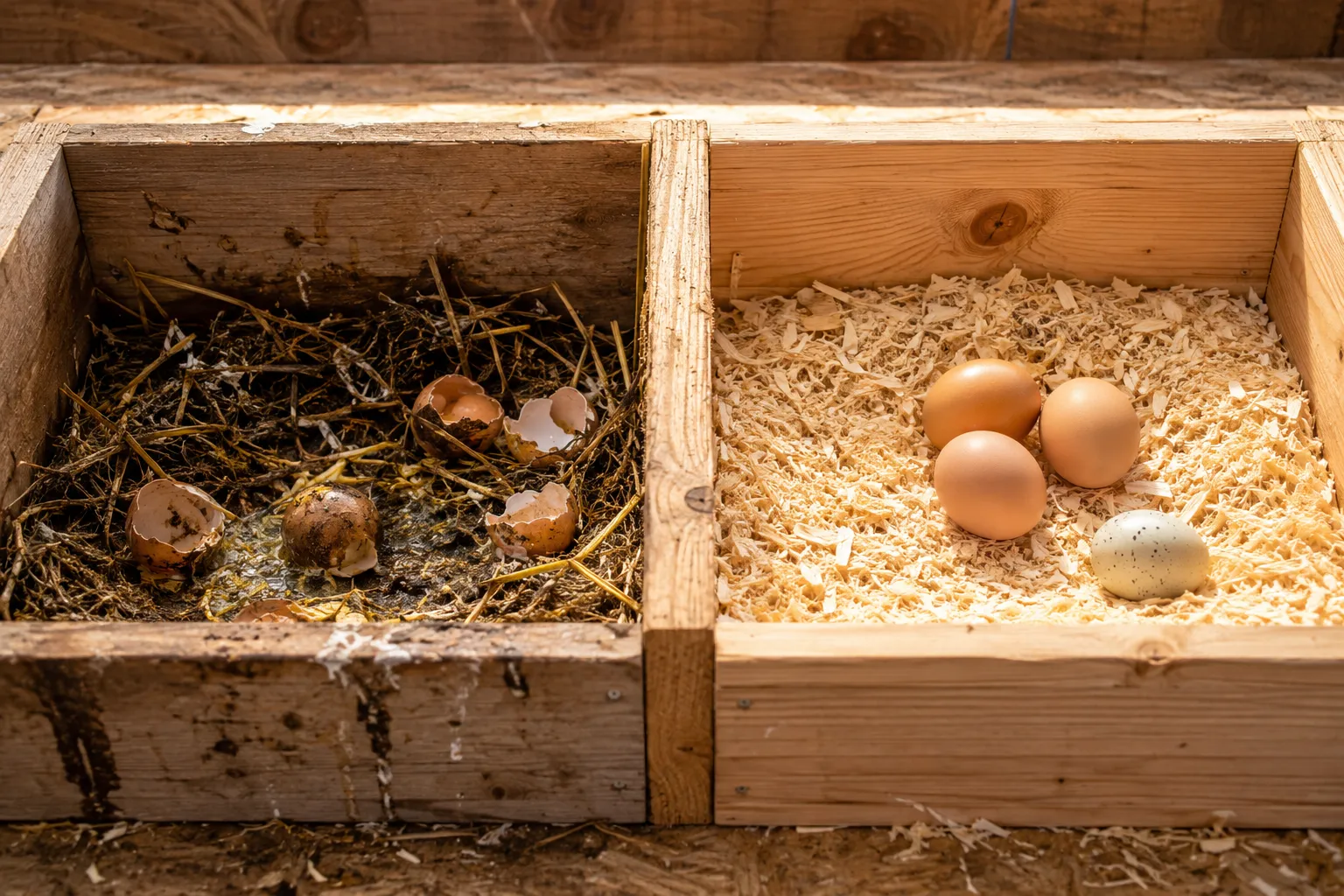
Proper nesting box design and maintenance create an environment where eggs are protected from damage and chickens are less likely to develop egg-eating habits. The ideal nesting box is dark, private, deeply bedded, and positioned to minimize traffic and disturbance.
Essential nesting box specifications:
- Size: Minimum 12×12 inches for standard breeds, 14×14 inches for larger breeds like Orpingtons or Brahmas
- Depth: At least 4-6 inches of soft, clean bedding (pine shavings, straw, or nesting pads) to cushion eggs
- Darkness: Position boxes in the darkest area of the coop or add curtains to reduce light, which discourages pecking
- Quantity: One nesting box per 3-4 hens to prevent overcrowding and competition
- Height: Mount boxes 2-3 feet off the ground, lower than roosting bars to discourage sleeping in nests
Modifications to stop egg eating:
- Add roll-away floors: Install slanted floors (10-15 degree angle) that allow eggs to roll into a protected collection area immediately after laying
- Increase bedding depth: Double your bedding to 6-8 inches to better cushion eggs and prevent breakage
- Install curtains or flaps: Hang burlap strips or fabric across nesting box openings to create darker, more private spaces
- Remove perches: Take away any perches directly in front of nesting boxes that allow chickens to sit and observe eggs
- Add fake eggs: Place ceramic or wooden eggs in each box to teach chickens that pecking yields no reward
Maintenance schedule:
- Replace soiled bedding immediately when you find broken eggs
- Refresh all nesting box bedding weekly or when it becomes compressed
- Check for sharp edges, protruding nails, or rough surfaces that could crack eggs
- Ensure boxes remain dry, as wet bedding increases breakage and shell damage
If you have limited space, prioritize darkness and deep bedding over adding more boxes. Two well-designed boxes are better than four poorly maintained ones.
Fake Eggs to Stop Chickens Eating Real Eggs
Fake eggs made from ceramic, wood, or hard plastic teach chickens that pecking eggs is unrewarding, helping break the egg-eating habit through negative reinforcement. When a chicken repeatedly pecks a fake egg and gets no food reward, she eventually loses interest in pecking eggs altogether.
How fake eggs work:
Chickens learn through trial and error. When an egg-eating hen pecks a fake egg expecting the rich yolk and protein she’s come to enjoy, she instead encounters a hard, inedible object. After multiple failed attempts across several days, the behavior becomes associated with frustration rather than reward, and the chicken stops trying.
Types of fake eggs:
- Ceramic eggs: Most durable and realistic in weight and appearance; available at farm supply stores for $2-5 each
- Wooden eggs: Affordable and effective, though lighter than real eggs; can be painted to match your flock’s egg color
- Golf balls: Budget option that works reasonably well, though the white color and texture are less realistic
- Hard plastic eggs: Inexpensive but may crack under persistent pecking from determined hens
How to use fake eggs effectively:
- Place 2-3 fake eggs in each nesting box where egg eating has occurred
- Leave fake eggs in place for at least 2-3 weeks to ensure the lesson is learned
- Collect real eggs frequently (2-3 times daily) so chickens only encounter fake eggs when they attempt to eat
- Replace any fake eggs that become cracked or damaged, as broken fakes won’t provide the negative reinforcement needed
- Continue using fake eggs even after the behavior stops for an additional week to reinforce the lesson
Success rate and timeline:
Fake eggs work best when combined with frequent egg collection and nesting box improvements. Most chickens will stop attempting to eat eggs within 1-2 weeks of consistent fake egg use, though stubborn individuals may take 3-4 weeks. If you see no improvement after a month, the chicken may need additional intervention like mustard-filled eggs or isolation.
Mustard-Filled Eggs to Stop Egg Eating
Mustard-filled eggs create an unpleasant taste experience that deters chickens from eating eggs through negative association. This method works by blowing out a real egg, filling it with yellow mustard, and placing it in the nesting box for the egg-eating chicken to peck open and taste.
Why mustard works:
Chickens dislike the sharp, pungent taste of mustard. When an egg-eating hen pecks open what appears to be a normal egg and gets a mouthful of mustard instead of the expected rich yolk, she associates eggs with an unpleasant experience. After one or two mustard encounters, most chickens avoid pecking eggs altogether.
How to prepare mustard-filled eggs:
- Take a fresh egg and use a pin or needle to make a small hole in each end
- Blow through one hole to force the contents out the other end into a bowl (save for cooking)
- Rinse the empty shell with water and let it dry
- Use a syringe or squeeze bottle to fill the shell with yellow mustard through one of the holes
- Seal both holes with a small piece of tape or wax
- Place the filled egg in the nesting box where egg eating occurs
Best practices:
- Use yellow mustard rather than brown or spicy varieties, as the yellow color matches egg yolk
- Prepare 2-3 mustard eggs at a time and rotate them through nesting boxes
- Replace mustard eggs every 3-4 days, as the shells can become fragile
- Combine with frequent egg collection so the egg-eating hen encounters mustard eggs rather than fresh real eggs
- Continue for 1-2 weeks even after the behavior appears to stop
Limitations:
This method works best when you’ve identified a specific egg-eating culprit. If multiple chickens are eating eggs, you’ll need several mustard eggs and may need to repeat the process multiple times. Some particularly determined chickens may tolerate the mustard taste if they’re highly motivated by hunger or nutritional deficiency, so address diet issues simultaneously.
Can You Break a Chicken of Egg Eating Habit?
Yes, you can break most chickens of the egg-eating habit through consistent intervention, but success depends on how long the behavior has been established and whether it has spread to other flock members. Early intervention within the first few days or weeks of egg eating has the highest success rate, while habits ingrained over months become progressively harder to eliminate.
Success factors:
- Duration of behavior: Habits less than 2-3 weeks old are easiest to break; behaviors lasting several months may be permanent
- Number of birds involved: Single offenders can be isolated and retrained; flock-wide egg eating requires comprehensive management changes
- Consistency of intervention: Daily implementation of prevention strategies for 3-4 weeks minimum
- Addressing root causes: Fixing nutritional deficiencies, nesting box problems, and collection schedules alongside behavior modification
Proven intervention sequence:
- Week 1: Implement frequent egg collection (3x daily), add fake eggs to all nesting boxes, improve nesting box conditions
- Week 2: Continue all Week 1 measures, add mustard-filled eggs if you’ve identified the culprit, ensure proper nutrition
- Week 3: Maintain interventions, monitor for any egg eating incidents, isolate persistent offenders if identified
- Week 4: Gradually reduce to 2x daily collection if no incidents occur, keep fake eggs in place for another week
When to consider culling:
If a specific chicken continues eating eggs after 4-6 weeks of consistent intervention, and you’ve ruled out all nutritional and environmental causes, culling may be the most practical solution. This is especially true if the bird is teaching the behavior to others or if egg losses are economically significant. However, culling should always be a last resort after exhausting all other options.
Prevention is easier than cure:
Once you’ve successfully broken the habit, maintain preventive measures indefinitely. Continue collecting eggs twice daily, keep nesting boxes well-maintained, and provide proper nutrition to prevent relapse.
Will Chickens Stop Eating Eggs on Their Own?
No, chickens will not stop eating eggs on their own once the behavior is established. Egg eating is a self-reinforcing habit because eggs provide a highly nutritious, easily accessible food reward that chickens will continue seeking without intervention.
Why the behavior persists:
Each time a chicken successfully eats an egg, she receives immediate positive reinforcement in the form of protein, fat, and other nutrients. This reward strengthens the behavior, making it more likely to occur again. Unlike some chicken behaviors that fade when the triggering stimulus is removed, egg eating continues because the stimulus (eggs) is constantly renewed as hens lay daily.
Escalation pattern:
Without intervention, egg eating typically worsens over time:
- Days 1-7: Single chicken eats eggs opportunistically when they break accidentally
- Weeks 2-3: Chicken begins actively seeking and breaking eggs deliberately
- Weeks 4-6: Other flock members observe and imitate the behavior
- Months 2+: Multiple chickens eating eggs regularly, significant egg loss, behavior firmly established
Rare exceptions:
In very limited cases, a chicken might stop eating eggs if the triggering nutritional deficiency is corrected and no eggs break for an extended period (several weeks). However, relying on this possibility is impractical because you can’t prevent all egg laying, and the behavior is more likely to continue or spread than to spontaneously resolve.
The intervention imperative:
As soon as you notice egg eating, take immediate action. Every day you delay allows the behavior to become more ingrained and increases the likelihood it will spread to other birds. Early intervention within the first week has success rates above 80%, while waiting a month or more drops success rates below 50%.
Is Egg Eating Common in Young Hens or Old Hens?
Egg eating is more common in older hens than young pullets, though it can occur at any age once a chicken discovers eggs are edible. Older hens have had more opportunities to accidentally encounter broken eggs and are more likely to have nutritional deficits that trigger the behavior.
Age-related factors:
Young pullets (first year of laying):
- Less likely to eat eggs because they’re still learning laying behavior
- May accidentally break eggs due to inexperience with nesting boxes
- Usually respond quickly to intervention if egg eating starts
- Rarely teach the behavior to others since they’re lower in pecking order
Mature hens (2-4 years old):
- More prone to egg eating due to accumulated exposure to broken eggs over time
- May develop the habit if egg quality declines with age (thinner shells)
- Often the first to start egg eating in a mixed-age flock
- More likely to teach behavior to younger birds through observation
Older hens (5+ years):
- Highest risk group due to declining egg production and shell quality
- May eat eggs to reclaim calcium and protein as their bodies become less efficient
- Harder to retrain due to years of established patterns
- Often the identified culprits in persistent egg-eating situations
Flock dynamics:
In mixed-age flocks, egg eating typically starts with one older hen and spreads to younger birds through social learning. Dominant hens of any age are more likely to eat eggs simply because they have priority access to nesting boxes and resources. If you’re adding new pullets to an existing flock with an egg-eating problem, isolate the new birds until you’ve resolved the behavior to prevent them from learning it.
Do I Need to Cull a Chicken That Eats Eggs?
Culling an egg-eating chicken is necessary only after all other intervention methods have failed for 4-6 weeks and the behavior is causing significant egg loss or spreading to other flock members. Most egg-eating chickens can be successfully retrained through management changes, making culling a last resort rather than a first response.
When to consider culling:
- The chicken continues eating eggs after 6+ weeks of consistent intervention (frequent collection, fake eggs, mustard eggs, improved nutrition)
- You’ve confirmed through observation or camera footage that this specific bird is the sole or primary offender
- The behavior is actively spreading to other hens despite your prevention efforts
- Egg losses are economically or practically unsustainable for your situation
- You’ve ruled out all environmental and nutritional causes
Alternatives to culling:
Before making the decision to cull, try these final interventions:
- Isolation: Separate the offending hen from the flock for 2-3 weeks with no access to eggs, then reintroduce and monitor closely
- Rehoming: Some chicken keepers will accept egg-eating hens as pets or for meat production rather than egg laying
- Permanent separation: Keep the hen isolated permanently if you have space and she still provides value (pest control, companionship)
- Beak trimming: A controversial option that some keepers use as a last resort, though it’s not legal or accepted in all regions
Ethical considerations:
If you decide culling is necessary, do so humanely and in accordance with local regulations. Many chicken keepers who cull egg-eating hens process them for meat rather than waste the bird. This decision is personal and depends on your goals for keeping chickens, your attachment to individual birds, and the severity of the problem.
Prevention focus:
Rather than reaching the point where culling is considered, invest heavily in prevention from day one: proper nutrition, well-designed nesting boxes, frequent egg collection, and immediate intervention at the first sign of egg eating. These measures eliminate most egg-eating problems before they require difficult decisions.
What to Do If Whole Flock Starts Eating Eggs
When egg eating spreads to multiple birds or the entire flock, you need immediate, comprehensive intervention across all management areas simultaneously. Flock-wide egg eating indicates that conditions in your coop have made the behavior highly rewarding and easy to learn, requiring systemic changes rather than targeting individual birds.
Immediate emergency actions:
- Increase collection to 3-4 times daily: Remove every egg as soon as possible after laying to eliminate opportunities
- Add fake eggs to every nesting box: Place 2-3 ceramic or wooden eggs in each box immediately
- Darken all nesting areas: Install curtains, reduce lighting, or relocate boxes to darker areas of the coop
- Inspect and upgrade all nesting boxes: Add deep bedding, check for sharp edges, ensure adequate size and quantity
Nutritional intervention:
- Provide free-choice oyster shell or crushed eggshells immediately
- Verify layer feed contains 16-18% protein and 3.5-4.5% calcium
- Offer protein-rich treats like mealworms, scrambled eggs (ironically), or black soldier fly larvae
- Ensure constant access to fresh, clean water
Environmental enrichment:
Boredom contributes to flock-wide behavioral problems. Add:
- Hanging cabbage or other vegetables for pecking entertainment
- Dust bathing areas with sand or fine dirt
- Perches at varying heights for activity
- Free-range time if possible, or expanded run space
Monitoring and adjustment:
- Document egg production and losses daily to track improvement
- Use cameras to identify which birds are still eating eggs after 1-2 weeks
- Consider temporarily isolating the most persistent offenders if you can identify them
- Maintain all interventions for at least 4-6 weeks, even if the behavior appears to stop earlier
Long-term prevention:
Once you’ve resolved flock-wide egg eating, maintain preventive measures permanently:
- Never drop below 2x daily egg collection
- Keep fake eggs in nesting boxes indefinitely as deterrents
- Monitor nutrition and nesting box conditions monthly
- Address any broken eggs immediately before chickens can eat them
Flock-wide egg eating is challenging but not impossible to resolve. Success requires patience, consistency, and willingness to maintain higher management standards long-term.
FAQ
How quickly can egg eating spread through a flock?
Egg eating can spread to other chickens within 3-7 days once one bird starts the behavior. Chickens learn by observation, and the sight of one hen eating an egg teaches others that eggs are food. This is why immediate intervention is critical as soon as you notice the first incident.
Can I feed my chickens their own cooked eggs without causing egg eating?
Yes, feeding chickens cooked scrambled eggs or hard-boiled eggs will not cause egg eating because the eggs look, smell, and taste completely different from raw eggs in the shell. Cooked eggs are an excellent protein source and won’t teach chickens to recognize raw eggs in nesting boxes as food.
Do certain chicken breeds eat eggs more than others?
No specific breed is inherently more prone to egg eating, but high-production breeds like Leghorns may have slightly higher rates simply because they lay more eggs and spend more time in nesting boxes. Egg eating is primarily a management and environmental issue rather than a genetic trait.
Will adding more roosters stop egg eating?
No, roosters have no effect on egg eating behavior. Egg eating is related to nutrition, nesting box conditions, and learned behavior, none of which are influenced by the presence or absence of roosters in the flock.
How long should I keep fake eggs in nesting boxes?
Keep fake eggs in nesting boxes for at least 3-4 weeks after the last egg-eating incident, then leave them in place permanently as a preventive measure. Fake eggs provide ongoing deterrence with no downside, and removing them too early risks relapse.
Can egg eating be caused by too much protein in the diet?
No, excess protein does not cause egg eating. In fact, protein deficiency is more likely to trigger the behavior as chickens seek protein from eggs. Layer feeds formulated with 16-18% protein are appropriate and won’t cause egg eating.
Should I isolate an egg-eating chicken from the flock?
Isolation can be effective if you’ve identified a single offender and other methods have failed. Separate the chicken for 2-3 weeks with no access to eggs, then reintroduce her while monitoring closely. However, fix the environmental and nutritional issues that triggered the behavior before reintroduction, or it will likely resume.
Do chickens eat eggs because they’re hungry?
Hunger can contribute to egg eating if chickens aren’t receiving adequate feed, but it’s rarely the sole cause. Most egg eating starts from accidental discovery when an egg breaks, then continues because eggs are highly nutritious and rewarding, even in well-fed flocks.
Will chickens eat eggs in winter more than summer?
Egg eating can increase slightly in winter if chickens are confined indoors more often, leading to boredom and more time around nesting boxes. Cold weather can also increase nutritional demands, potentially triggering egg eating if diet isn’t adjusted. Maintain frequent egg collection and proper nutrition year-round.
Can I use plastic Easter eggs as fake eggs?
Thin plastic Easter eggs are not effective because they crack easily when pecked, which rewards the chicken’s pecking behavior rather than discouraging it. Use only hard ceramic, wooden, or solid plastic eggs designed for this purpose.
How many fake eggs should I put in each nesting box?
Place 2-3 fake eggs in each nesting box where egg eating has occurred. This number is enough to ensure the egg-eating chicken encounters fake eggs rather than real ones, while still leaving room for hens to lay comfortably.
Will egg eating stop if I let my chickens free range?
Free-ranging can reduce egg eating by decreasing boredom and providing more space and enrichment, but it won’t stop established egg-eating behavior on its own. Free-range chickens can still eat eggs if they have access to nesting boxes, so combine free-ranging with other intervention methods for best results.
Conclusion
Learning how to stop chickens from eating their own eggs requires a multi-faceted approach that addresses the root causes while breaking the established habit. The most effective strategy combines frequent egg collection (at least twice daily), proper nesting box design with adequate darkness and deep bedding, fake eggs to discourage pecking, and ensuring your flock receives complete nutrition with adequate calcium and protein.
Early intervention is your greatest advantage. As soon as you notice the first broken egg or catch a chicken eating eggs, implement all prevention strategies immediately. The longer egg eating continues, the harder it becomes to eliminate, and the more likely it is to spread throughout your flock.
Take these steps today:
- Increase your egg collection frequency to at least twice daily, three times if possible
- Add fake ceramic or wooden eggs to all nesting boxes
- Inspect and improve your nesting box conditions, add bedding, increase darkness, check for overcrowding
- Provide free-choice oyster shell and verify your layer feed meets nutritional requirements
- Monitor your flock closely to identify any specific offenders
Remember that patience and consistency are essential. Most egg-eating problems can be resolved within 3-4 weeks of dedicated intervention, but you must maintain preventive measures long-term to avoid relapse. With proper management, you can protect your egg production and enjoy the full rewards of keeping a healthy, productive flock in 2026 and beyond.


