
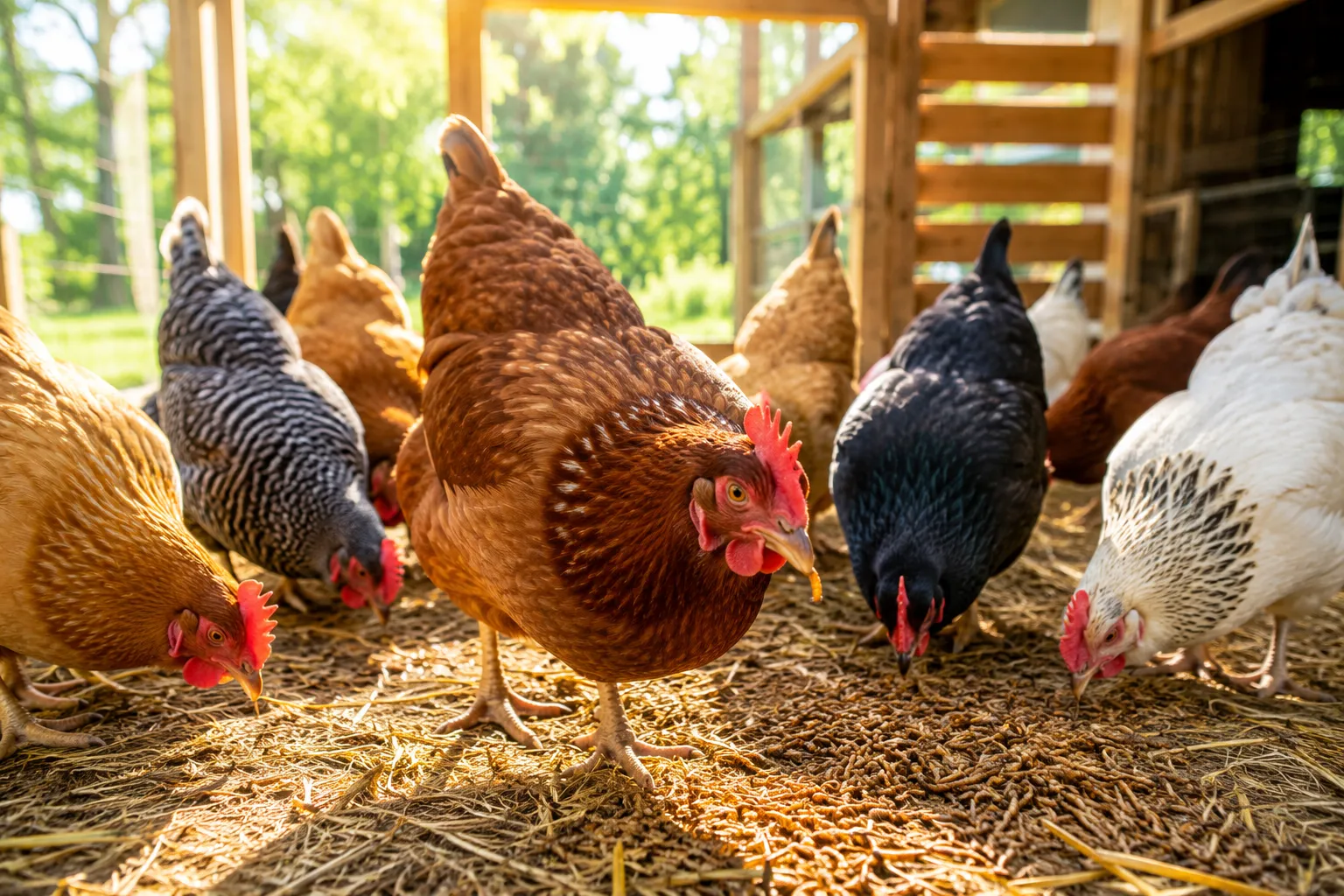
Quick Answer: Chickens can eat mealworms every day, but only in small, controlled amounts, typically no more than 10-15 dried mealworms per bird as a treat, which should represent less than 10% of their total daily diet. Feeding too many mealworms daily can cause protein overload, nutritional imbalances, and potential kidney problems because mealworms contain 50-60% protein, far exceeding the 16-20% protein chickens need in their regular diet.
Key Takeaways
- Mealworms are safe daily treats in moderation: Limit to 10-15 dried mealworms per chicken per day (about one tablespoon)
- Protein content is extremely high: Mealworms contain 50-60% protein, which can overwhelm chickens if overfed
- The 10% treat rule applies: All treats combined, including mealworms, should never exceed 10% of daily food intake
- Laying hens benefit differently: Hens in active laying cycles can handle slightly more protein than non-laying birds
- Baby chicks need caution: Chicks under 3 weeks should avoid mealworms entirely; older chicks need even smaller portions
- Dried vs. live matters: Dried mealworms are more concentrated in protein and easier to portion control than live ones
- Balance with complete feed: Mealworms should supplement, not replace, nutritionally balanced layer or grower feed
- Winter feeding has benefits: Cold-weather chickens can use the extra protein and calories from mealworms for warmth
- Watch for health signs: Excessive mealworms can cause loose droppings, reduced egg quality, and kidney stress over time
Are Mealworms Safe for Chickens to Eat Daily?
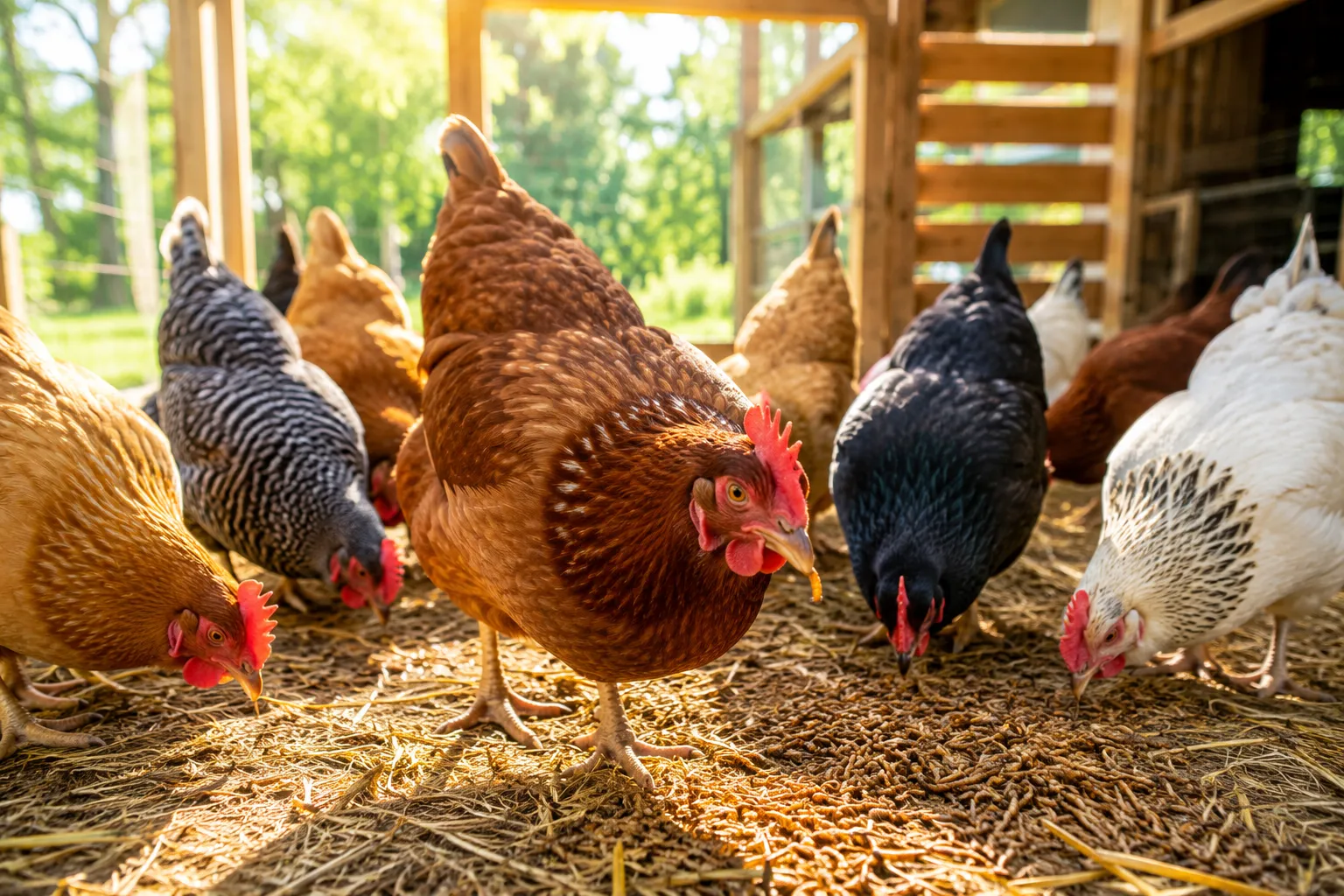
Yes, mealworms are safe for chickens to eat daily when fed in appropriate amounts. Mealworms provide high-quality protein, healthy fats, and essential nutrients that chickens naturally seek in their diet. However, the key word is “appropriate”, daily feeding requires careful portion control to avoid nutritional imbalances.
Chickens are omnivores that naturally forage for insects, grubs, and worms in the wild. Mealworms mimic this natural food source and offer:
- High protein content (50-60% by weight in dried form)
- Essential amino acids for feather growth and muscle development
- Healthy fats for energy and egg production
- Calcium and phosphorus in smaller amounts
The safety concern isn’t the mealworms themselves but the quantity. Think of mealworms like candy for chickens, nutritious in small amounts but problematic when they become a dietary staple. Daily feeding is fine as long as mealworms remain a supplement to a complete, balanced feed rather than a primary food source.
Choose daily mealworms if: Your chickens eat their regular layer feed first, you can measure portions accurately, and you’re using them as training treats or enrichment.
Avoid daily feeding if: Your chickens refuse their regular feed in favor of mealworms, you notice digestive issues, or you’re unable to control portions.
How Many Mealworms Should I Give My Chickens Per Day?
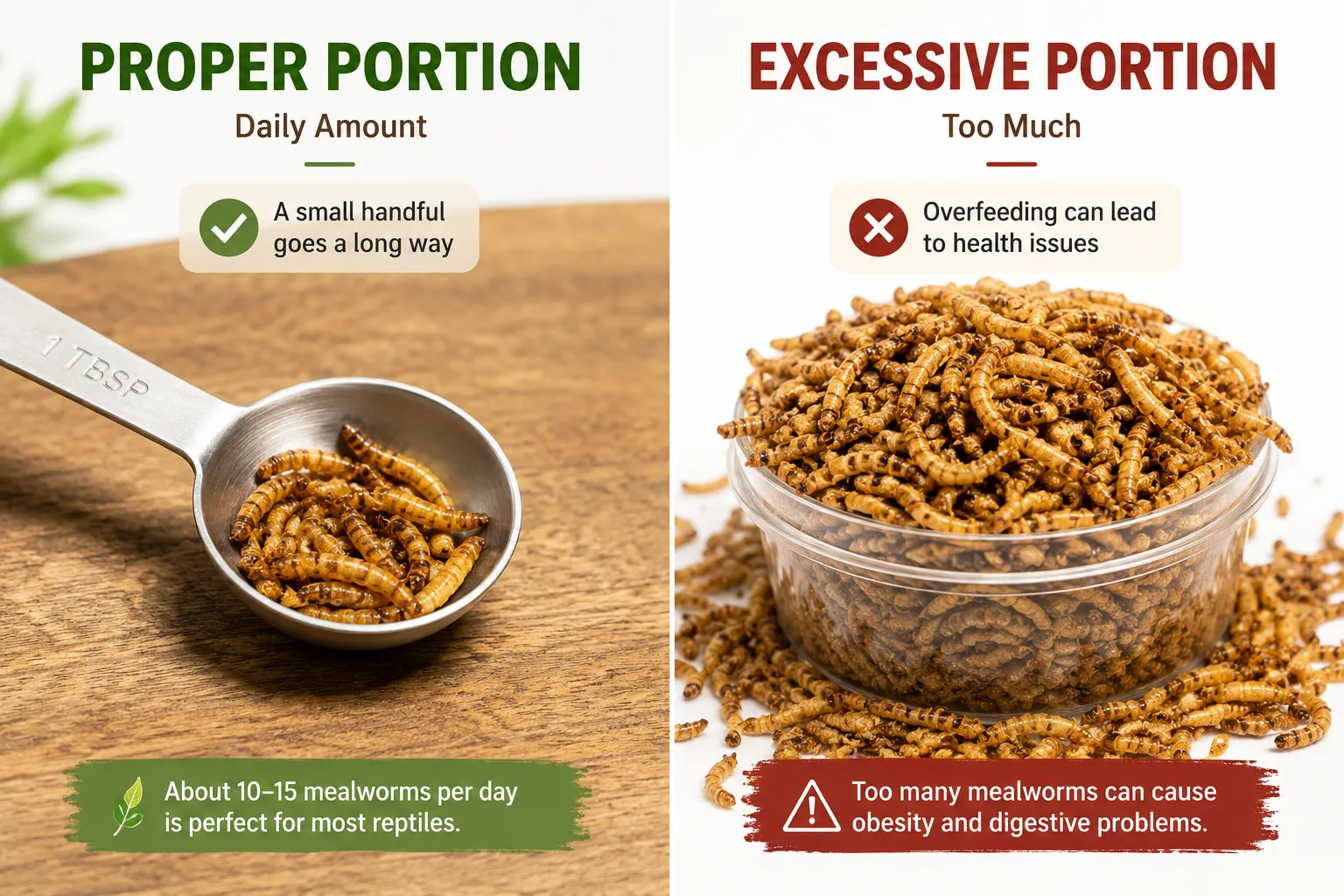
Feed each chicken 10-15 dried mealworms per day, which equals approximately one tablespoon per bird. This portion keeps mealworms within the recommended 10% treat threshold while providing enrichment and supplemental protein without disrupting their nutritional balance.
Here’s a practical feeding guide based on flock size:
Daily Mealworm Portions by Flock Size:
- 1-3 chickens: 1-3 tablespoons total (10-15 worms each)
- 4-6 chickens: 4-6 tablespoons total
- 7-10 chickens: 7-10 tablespoons total
- Large flocks (10+): 1 tablespoon per bird, measured in batches
Live vs. Dried Mealworm Conversion:
Live mealworms contain about 60-70% moisture, so they’re less protein-dense by weight. If feeding live mealworms, you can offer slightly more by volume, roughly 15-20 live worms equals 10-12 dried worms in protein content.
Common mistake: Scattering a large container of mealworms and letting chickens eat freely. This often results in dominant birds eating far more than their share while others get none, and total consumption exceeds safe limits.
Better approach: Divide the daily portion into 2-3 feeding sessions. Offer mealworms by hand or in a treat feeder to control intake and ensure even distribution across the flock.
What Happens If Chickens Eat Too Many Mealworms?
Chickens that eat too many mealworms can develop protein overload, leading to kidney strain, watery droppings, reduced egg quality, and nutritional imbalances from skipping their balanced feed. Excessive protein forces kidneys to work harder filtering nitrogen waste, which can cause long-term organ damage.
Immediate symptoms of mealworm overconsumption:
- Watery or loose droppings with white urate buildup (excess protein waste)
- Reduced appetite for regular layer feed
- Increased thirst as the body tries to flush excess nitrogen
- Behavioral changes like food aggression or treat obsession
Long-term health consequences:
- Kidney problems: Chronic high protein intake stresses kidneys, potentially leading to gout (uric acid crystal buildup in joints)
- Nutritional deficiencies: Chickens that fill up on mealworms miss essential vitamins and minerals from complete feed
- Poor egg quality: Imbalanced nutrition can cause thin shells, irregular laying, or reduced egg size
- Obesity: High-fat content in mealworms combined with reduced activity can lead to overweight birds
How much is too much? If mealworms and other treats exceed 10% of daily food intake, or if a chicken eats more than 2-3 tablespoons of dried mealworms in a day, you’re in the danger zone.
Recovery steps: If you’ve been overfeeding mealworms, gradually reduce portions over 5-7 days while ensuring fresh water and quality layer feed are always available. Most chickens recover quickly once protein intake normalizes.
Can Baby Chicks Eat Mealworms Every Day?
Baby chicks under 3 weeks old should not eat mealworms at all, and chicks aged 3-8 weeks can have only 1-2 small mealworms per day as an occasional treat. Young chicks have delicate digestive systems and specific nutritional needs that mealworms can easily disrupt, plus they require grit to digest anything beyond starter feed.
Age-based mealworm guidelines for chicks:
0-3 weeks: No mealworms. Chicks need starter feed (18-20% protein) formulated for rapid growth with precise vitamin and mineral ratios.
3-8 weeks: Maximum 1-2 tiny mealworms per chick, 2-3 times per week only. Always provide chick grit if offering any treats.
8-16 weeks: Gradually increase to 3-5 small mealworms per growing bird, a few times per week.
16+ weeks (point of lay): Transition to adult portions (10-15 dried mealworms daily maximum).
Why the restriction? Chick starter feed is precisely balanced for explosive growth rates, chicks can double their weight in the first week. Adding high-protein treats disrupts this balance and can cause:
- Developmental problems from vitamin/mineral deficiencies
- Digestive impaction without proper grit
- Angel wing (wing deformity) from excessive protein in waterfowl breeds
- Crop issues from foods too large for tiny digestive systems
Better treats for young chicks: Finely chopped hard-boiled egg, tiny pieces of leafy greens, or commercial chick treats formulated for their age group.
Do Mealworms Cause Protein Overload in Chickens?
Yes, mealworms can cause protein overload when fed in excessive amounts because they contain 50-60% protein while adult chickens only need 16-20% protein in their complete diet. This dramatic protein excess forces kidneys to work overtime processing nitrogen waste, potentially leading to kidney damage and gout over time.
Understanding chicken protein needs:
- Laying hens: 16-18% protein in daily feed
- Molting chickens: 18-20% protein temporarily
- Meat birds: 20-22% protein for rapid growth
- Mealworms: 50-60% protein (3x what layers need)
How protein overload develops:
When chickens eat too many mealworms, their bodies must break down the excess protein into amino acids, then convert what they can’t use into uric acid for excretion. Unlike mammals that produce liquid urea, chickens excrete concentrated uric acid as a white paste. Excessive protein means excessive uric acid production, which can:
- Overwhelm kidney function, causing organ stress
- Form uric acid crystals in joints (gout) when kidneys can’t keep up
- Create watery droppings as the body tries to dilute and flush waste
- Reduce calcium absorption, affecting eggshell quality
The math: If a chicken eats 1/4 pound (113g) of layer feed daily at 16% protein, she gets about 18g of protein. Adding just 2 tablespoons (30g) of dried mealworms at 55% protein adds another 16.5g, nearly doubling her protein intake and pushing her well above safe levels.
Prevention: Stick to the 10% treat rule. If mealworms and all other treats combined stay under 10% of total food intake, protein levels remain safe.
Are Dried Mealworms or Live Mealworms Better for Chickens?
Both dried and live mealworms are nutritious for chickens, but dried mealworms offer easier portion control, longer storage, and more consistent protein content, while live mealworms provide enrichment through hunting behavior and slightly better hydration. For daily feeding, dried mealworms are the safer choice because they’re easier to measure accurately.
Dried Mealworms:
Pros:
- Easy to measure and portion control
- Long shelf life (6-12 months when stored properly)
- No maintenance or care required
- Consistent protein content (50-60%)
- Less mess and no escapees
Cons:
- Less engaging for chickens (no movement)
- Require chickens to drink more water
- Can become stale if stored improperly
- More expensive per ounce than raising your own
Live Mealworms:
Pros:
- Excellent enrichment and mental stimulation
- Mimics natural foraging behavior
- Contains moisture (60-70% water content)
- Chickens find them more exciting
- Can be raised at home for cost savings
Cons:
- Harder to portion accurately
- Require ongoing care and feeding
- Can escape and infest your home
- Shorter shelf life (2-3 weeks refrigerated)
- Variable protein content based on what they’re fed
For daily feeding: Choose dried mealworms. The ability to measure exactly one tablespoon per chicken prevents accidental overfeeding and makes it easier to stay within the 10% treat guideline.
For occasional enrichment: Live mealworms are fantastic. Scatter them in the run or coop for a “bug hunt” that keeps chickens active and entertained, but save this for 2-3 times per week rather than daily.
Can Laying Hens Eat Mealworms Daily Without Problems?
Yes, laying hens can eat mealworms daily without problems when portions are controlled to 10-15 dried worms per bird, because active layers have slightly higher protein needs (16-18%) and can utilize the extra protein for egg production. However, mealworms should never replace layer feed, which provides the calcium and balanced nutrition essential for strong eggshells.
Why laying hens tolerate mealworms well:
Egg production is protein-intensive, each egg contains about 6g of protein. Hens in active laying cycles can channel supplemental protein directly into egg production rather than storing it as fat or excreting it as waste. This makes them more efficient at using the high protein content in mealworms.
Important considerations for laying hens:
Calcium balance matters most: Mealworms are low in calcium (0.05-0.1%) while eggshells require massive calcium amounts. If hens fill up on mealworms and eat less layer feed (which contains 3-4% calcium), you’ll see thin or soft-shelled eggs.
Solution: Always provide:
- Free-choice oyster shell or crushed eggshells
- High-quality layer feed as the primary diet (90%+ of intake)
- Fresh water (egg production requires significant hydration)
Timing matters: Feed mealworms in the afternoon or evening, after hens have eaten their morning layer feed. This ensures they get essential nutrients first and treats second.
Monitor egg quality: If you notice thin shells, reduced laying frequency, or shell-less eggs after introducing daily mealworms, cut back to 3-4 times per week instead.
Molting exception: During molt (when hens stop laying and regrow feathers), they need 18-20% protein temporarily. Mealworms can be beneficial during this 8-12 week period, but still keep portions moderate.
What Are Healthier Treat Alternatives to Mealworms for Chickens?
Healthier daily treat alternatives to mealworms include leafy greens (kale, lettuce, spinach), vegetables (cucumbers, squash, pumpkin), fruits in moderation (berries, melon, apples), and scratch grains, all of which provide variety without the extreme protein concentration that makes mealworms risky when overfed. These alternatives let you offer daily treats while maintaining better nutritional balance.
Best daily treat options:
Vegetables (unlimited, low-risk):
- Leafy greens: kale, lettuce, cabbage, Swiss chard
- Cucumbers and zucchini (high water content, great for summer)
- Pumpkin and squash (seeds included, natural dewormer)
- Broccoli and cauliflower (in moderation)
Fruits (moderate amounts, 2-3 times per week):
- Berries: strawberries, blueberries, raspberries
- Melon: watermelon, cantaloupe (including rinds)
- Apples and pears (remove seeds, contain trace cyanide)
- Bananas (high sugar, limit to small amounts)
Grains and seeds (good for cold weather):
- Scratch grains (cracked corn and wheat mix)
- Sunflower seeds (high fat, limit to small amounts)
- Oats (cooked or raw)
- Quinoa (cooked, high protein but balanced)
Protein alternatives (rotate with mealworms):
- Cooked eggs (scrambled or hard-boiled)
- Plain yogurt (probiotics for gut health)
- Cooked fish or shrimp (small amounts)
- Black soldier fly larvae (better calcium-to-phosphorus ratio than mealworms)
Treat rotation schedule example:
- Monday: Leafy greens + scratch grains
- Tuesday: Mealworms (10-15 per bird)
- Wednesday: Vegetable scraps
- Thursday: Berries + yogurt
- Friday: Mealworms (10-15 per bird)
- Weekend: Pumpkin, melon, or seasonal produce
This rotation provides variety, prevents treat obsession, and ensures chickens don’t get bored or nutritionally imbalanced from any single treat type.
Mealworms vs Scratch Grains: Which Is Better for Chickens?
Mealworms and scratch grains serve different purposes, mealworms provide concentrated protein (50-60%) ideal for molting, cold weather, or supplementing laying hens, while scratch grains offer quick energy from carbohydrates (70-80%) best for winter warmth or evening treats. Neither should exceed 10% of daily diet, but scratch grains are safer for daily feeding because they’re less likely to cause nutritional imbalances.
Nutritional comparison:
| Nutrient | Dried Mealworms | Scratch Grains |
|---|---|---|
| Protein | 50-60% | 8-12% |
| Fat | 25-30% | 3-5% |
| Carbohydrates | 5-10% | 70-80% |
| Calcium | 0.05-0.1% | 0.05-0.1% |
| Best for | Protein boost, molting, laying | Energy, warmth, evening treat |
When to choose mealworms:
- During molt: Extra protein supports feather regrowth
- Peak laying season: Helps maintain egg production
- Protein deficiency signs: Feather pecking, poor feather quality, reduced laying
- Training and bonding: High-value treat for taming chickens
- Cold snaps: Protein provides sustained energy
When to choose scratch grains:
- Winter evenings: Carbs generate body heat through digestion overnight
- Daily treats: Lower risk of nutritional imbalance
- Foraging enrichment: Scatter in bedding for natural scratching behavior
- Budget-friendly: Much cheaper per pound than mealworms
- Flock harmony: Easier to distribute evenly among many birds
Can you feed both? Yes, but reduce portions of each. For example, give 5-7 mealworms plus a small handful of scratch grains per bird, keeping combined treats under 10% of total intake.
Common mistake: Feeding scratch grains in the morning. This fills chickens up on low-protein carbs when they should be eating nutrient-dense layer feed. Always feed scratch and mealworms in the afternoon or evening.
Should I Mix Mealworms With Regular Chicken Feed?
No, you should not mix mealworms directly into regular chicken feed because chickens will selectively eat all the mealworms first and ignore the balanced feed, defeating the purpose of complete nutrition. Instead, feed mealworms separately as a distinct treat after chickens have eaten their layer feed, ensuring they get essential nutrients before high-protein treats.
Why mixing causes problems:
Chickens are smart and have strong food preferences. When mealworms are mixed into feed, they’ll:
- Pick out every mealworm while scattering feed everywhere
- Waste expensive layer feed by scratching it onto the ground searching for treats
- Create nutritional imbalance by eating treats first and skipping balanced nutrition
- Develop treat addiction, refusing to eat plain feed later
Better feeding strategies:
Time-separation method: Feed layer feed in the morning, mealworms in the afternoon or evening. This ensures chickens eat their complete nutrition when hungry, then enjoy treats later.
Hand-feeding: Offer mealworms by hand for bonding and training. This gives you complete portion control and strengthens your relationship with the flock.
Treat dispensers: Use puzzle feeders or hanging treat balls that dispense mealworms slowly, providing enrichment without disrupting regular feeding.
Scatter feeding: Toss mealworms in the run or coop for a “bug hunt” that encourages natural foraging behavior and physical activity.
Training rewards: Use individual mealworms to teach chickens to come when called, enter the coop at dusk, or accept handling.
Exception: Some commercial feeds include small amounts of dried insects as part of their formulation. These are pre-measured and balanced into the overall nutrition profile, which is different from adding your own mealworms to standard feed.
Can Mealworms Cause Kidney Problems in Chickens?
Yes, excessive mealworm consumption can cause kidney problems in chickens because the extremely high protein content (50-60%) forces kidneys to work overtime filtering nitrogen waste, potentially leading to kidney damage, gout, and uric acid crystal buildup in joints. However, this only occurs with chronic overfeeding, moderate daily portions (10-15 dried worms per bird) pose minimal kidney risk.
How kidney damage develops:
Chicken kidneys filter blood and remove nitrogen waste from protein metabolism. When protein intake is appropriate (16-20%), kidneys handle this easily. But when chickens eat excessive mealworms:
- Protein overload creates excess nitrogen waste (uric acid)
- Kidneys strain to filter and concentrate the waste
- Chronic overwork damages kidney tissue over time
- Uric acid accumulates when kidneys can’t keep up
- Gout develops as crystals deposit in joints and organs
Warning signs of kidney stress:
- White, chalky droppings (excess uric acid)
- Increased water consumption (body trying to flush waste)
- Lethargy and reduced activity
- Swollen joints (gout, uric acid crystals)
- Reduced appetite for regular feed
- Weight loss despite eating treats
Gout in chickens: This painful condition occurs when uric acid crystals form in joints, internal organs, or under the skin. It’s most common in birds fed high-protein diets without adequate water or those with pre-existing kidney disease.
Prevention strategies:
- Stick to portion limits: 10-15 dried mealworms per bird daily maximum
- Provide unlimited fresh water: Essential for kidney function
- Maintain feed balance: 90% complete feed, 10% treats
- Monitor droppings: Watch for changes in color or consistency
- Offer variety: Rotate treats to prevent any single food from dominating
Risk factors: Older chickens, birds with previous health issues, and breeds prone to kidney problems (some bantams) are more susceptible to protein-related kidney stress.

Are Mealworms Good for Chickens in Winter?
Yes, mealworms are excellent for chickens in winter because the high protein (50-60%) and fat content (25-30%) provide concentrated calories that help birds generate body heat and maintain energy during cold weather when natural insects are unavailable. Winter is one of the best times to feed daily mealworms, though portions should still respect the 10% treat guideline.
Winter benefits of mealworms:
Calorie density: Cold weather increases chickens’ caloric needs by 20-50% depending on temperature. Mealworms pack more calories per gram than most treats, helping birds maintain body weight and warmth.
Protein for feather maintenance: Winter-damaged feathers need protein for repair. Good feather condition is essential for insulation.
Fat for sustained energy: The 25-30% fat content in mealworms provides slow-burning energy that helps chickens stay warm overnight.
Boredom relief: Confined chickens (due to snow or cold) benefit from the enrichment of hunting for scattered mealworms.
Immune support: Adequate protein helps maintain immune function during stressful cold periods.
Winter feeding strategies:
Evening feeding: Offer mealworms 1-2 hours before roosting. The protein and fat digest slowly, generating warmth through the night when temperatures drop lowest.
Warm mash addition: Mix a few mealworms into warm oatmeal or cooked grains for a warming evening treat.
Increased portions: You can safely increase to 15-20 dried mealworms per bird during extreme cold (below 20°F/-6°C) when caloric needs spike.
Combine with scratch grains: Offer both mealworms (protein/fat) and scratch grains (carbs) for balanced cold-weather nutrition.
Hydration reminder: Cold weather reduces water consumption, but protein metabolism requires adequate hydration. Use heated waterers to ensure chickens drink enough.
Don’t rely solely on mealworms: Even in winter, layer feed should remain 90% of the diet. Mealworms supplement but don’t replace complete nutrition.
Common Mistakes When Feeding Chickens Mealworms
The most common mistakes when feeding chickens mealworms include overfeeding (exceeding the 10% treat rule), feeding mealworms before layer feed, failing to provide adequate water, giving mealworms to young chicks, and using mealworms as a primary protein source instead of a supplement. These errors can lead to nutritional imbalances, kidney stress, and behavioral problems.
Top feeding mistakes and solutions:
Mistake 1: Free-feeding mealworms
Leaving a container of mealworms available all day leads to overconsumption, treat addiction, and nutritional imbalance.
Solution: Measure daily portions (10-15 dried worms per bird) and feed at specific times, preferably afternoon or evening.
Mistake 2: Morning mealworm feeding
Feeding treats when chickens are hungriest causes them to fill up on mealworms and skip nutrient-rich layer feed.
Solution: Always feed layer feed first thing in the morning. Offer mealworms only after chickens have eaten their complete feed.
Mistake 3: Inadequate water provision
High-protein treats require extra water for metabolism and waste elimination. Insufficient water stresses kidneys.
Solution: Check waterers multiple times daily, especially after feeding mealworms. Provide multiple water sources for large flocks.
Mistake 4: Feeding mealworms to baby chicks
Young chicks (under 3 weeks) can’t digest mealworms properly and don’t need the extreme protein content.
Solution: Wait until chicks are at least 3 weeks old, then offer only 1-2 tiny worms with chick grit available.
Mistake 5: Using mealworms to replace layer feed
Some keepers think mealworms’ high protein makes them superior to commercial feed, but mealworms lack essential vitamins, minerals, and calcium.
Solution: Layer feed must always be the primary diet (90%+). Mealworms are supplements, not replacements.
Mistake 6: Ignoring individual bird intake
In flocks, dominant birds often eat most treats while submissive birds get few or none.
Solution: Scatter mealworms widely, use multiple feeding stations, or hand-feed to ensure even distribution.
Mistake 7: Storing mealworms improperly
Dried mealworms exposed to moisture or heat become moldy and lose nutritional value.
Solution: Store in airtight containers in a cool, dry place. Refrigeration extends shelf life to 12+ months.
Mistake 8: Mixing mealworms into feed
Chickens pick out mealworms and waste the rest, defeating the purpose of balanced nutrition.
Solution: Feed mealworms separately from layer feed, as distinct treats.
How Much Protein Do Chickens Need From Mealworms?
Chickens don’t need any protein specifically from mealworms, they should get 90-95% of their protein from complete layer or grower feed (16-20% protein content), with mealworms contributing only a small supplemental amount as part of the 10% treat allowance. A chicken eating 10-15 dried mealworms daily gets approximately 5-8g of additional protein, which is appropriate when added to a balanced base diet.
Understanding chicken protein requirements:
Daily protein needs by type:
- Laying hens: 16-18g protein per day (from feed at 16-18% protein)
- Molting chickens: 18-22g protein per day temporarily
- Growing pullets: 18-20g protein per day
- Meat birds: 22-24g protein per day
- Roosters/non-layers: 14-16g protein per day
Mealworm protein contribution:
- 10 dried mealworms (≈10g weight) = 5-6g protein
- 15 dried mealworms (≈15g weight) = 7.5-9g protein
- 1 tablespoon dried mealworms (≈10g) = 5-6g protein
The math for a laying hen:
A typical laying hen eats about 1/4 pound (113g) of layer feed daily at 16% protein = 18g protein from feed. Adding 15 dried mealworms (8g protein) brings total protein to 26g, or about 18% of total food intake, still within safe limits.
When chickens need more protein:
Molting season: Feather regrowth is protein-intensive. You can increase mealworms to 20-25 per bird daily during the 8-12 week molt period.
Feather pecking: Often indicates protein deficiency. Increase feed protein to 18-20% and add moderate mealworms.
Poor feather quality: Ragged, broken, or slow-growing feathers suggest inadequate protein.
Reduced laying: While many factors affect laying, protein deficiency can contribute to decreased egg production.
When chickens need less protein:
Non-laying periods: Roosters and hens not actively laying need only 14-16% protein. Reduce mealworms to 5-10 per bird.
Kidney issues: Birds with kidney problems should have protein restricted to essential amounts only.
Obesity: Overweight chickens should get fewer high-fat treats like mealworms.
FAQ
Can I feed my chickens mealworms every single day?
Yes, you can feed chickens mealworms every day as long as you limit portions to 10-15 dried worms per bird (about one tablespoon) and ensure they eat their complete layer feed first. Daily mealworms are safe when they remain under 10% of total food intake.
Will daily mealworms make my chickens lay more eggs?
Daily mealworms may slightly improve laying consistency during peak season because of the extra protein, but they won’t dramatically increase egg production. Quality layer feed (16-18% protein) with adequate calcium is far more important for egg laying than mealworms.
Can I give my chickens only mealworms for protein?
No, never feed only mealworms for protein. Chickens need complete layer feed that provides balanced protein, vitamins, minerals, and especially calcium (3-4%) for eggshells. Mealworms contain only 0.05-0.1% calcium and lack many essential nutrients.
How do I know if I’m feeding too many mealworms?
Signs of mealworm overfeeding include watery white droppings, reduced appetite for regular feed, increased thirst, thin eggshells, and chickens that mob you demanding treats. If mealworms exceed one tablespoon per bird daily, you’re overfeeding.
Are freeze-dried mealworms the same as dried mealworms?
Yes, freeze-dried and dried mealworms have essentially the same nutritional content (50-60% protein) and can be used interchangeably. Freeze-dried versions may retain slightly more nutrients but are typically more expensive.
Can chickens eat mealworm beetles?
Yes, chickens can safely eat mealworm beetles (darkling beetles), which are the adult form of mealworms. Beetles contain similar protein levels and are completely safe, though chickens often prefer the softer mealworm larvae.
Do mealworms help chickens during molting?
Yes, mealworms are beneficial during molting because feather regrowth requires extra protein (18-20% vs. normal 16-18%). You can safely increase portions to 20-25 dried mealworms per bird daily during the 8-12 week molt period.
Should I soak dried mealworms before feeding?
Soaking dried mealworms in water for 10-15 minutes before feeding can aid digestion and increase hydration, especially in hot weather or for older chickens. However, it’s not necessary, chickens can digest dried mealworms fine with adequate water available.
Can mealworms replace scratch grains?
Mealworms and scratch grains serve different purposes, mealworms provide protein while scratch grains provide carbohydrate energy. You can alternate between them or offer both in reduced amounts, but neither should exceed the 10% treat guideline.
Are mealworms safe for chickens with kidney disease?
No, chickens with known kidney problems should avoid mealworms or eat only minimal amounts (2-3 worms occasionally) because the high protein content stresses already-compromised kidneys. Consult an avian veterinarian for specific dietary recommendations.
How long do dried mealworms last?
Dried mealworms stored in airtight containers in a cool, dry place last 6-12 months. Refrigeration extends shelf life to 12-18 months. Discard any mealworms that smell rancid, show mold, or have changed color significantly.
Can I raise my own mealworms for daily feeding?
Yes, raising mealworms at home is cost-effective for daily feeding and relatively easy. A small mealworm farm can produce enough for a backyard flock within 10-12 weeks, significantly reducing treat costs compared to buying commercial dried mealworms.
Conclusion
Chickens can absolutely eat mealworms every day when you follow smart portion control and prioritize balanced nutrition. The key is treating mealworms as the supplement they are, a high-value treat that provides protein, enrichment, and bonding opportunities, rather than a dietary staple. By limiting portions to 10-15 dried mealworms per bird daily, feeding them after your flock has eaten their layer feed, and maintaining the 10% treat rule, you’ll give your chickens the benefits of mealworms without the risks of protein overload or nutritional imbalance.
Your action plan for safe daily mealworm feeding:
- Measure portions accurately: Use a tablespoon to portion 10-15 dried worms per bird
- Feed at the right time: Offer mealworms in the afternoon or evening, never first thing in the morning
- Maintain feed priority: Ensure layer feed is always available and consumed first
- Provide unlimited water: High-protein treats require extra hydration for proper metabolism
- Monitor your flock: Watch droppings, egg quality, and behavior for signs of overfeeding
- Rotate treat variety: Mix mealworms with vegetables, fruits, and scratch grains throughout the week
- Adjust for life stage: Reduce portions for non-layers, avoid feeding young chicks, increase slightly during molt or winter
Remember that the healthiest chickens are those eating primarily complete, balanced feed formulated for their life stage. Mealworms enhance your flock’s diet and your relationship with your birds, but they work best as part of a thoughtful, varied approach to chicken nutrition. Start with conservative portions, observe how your flock responds, and adjust based on their individual needs and your specific circumstances.


