
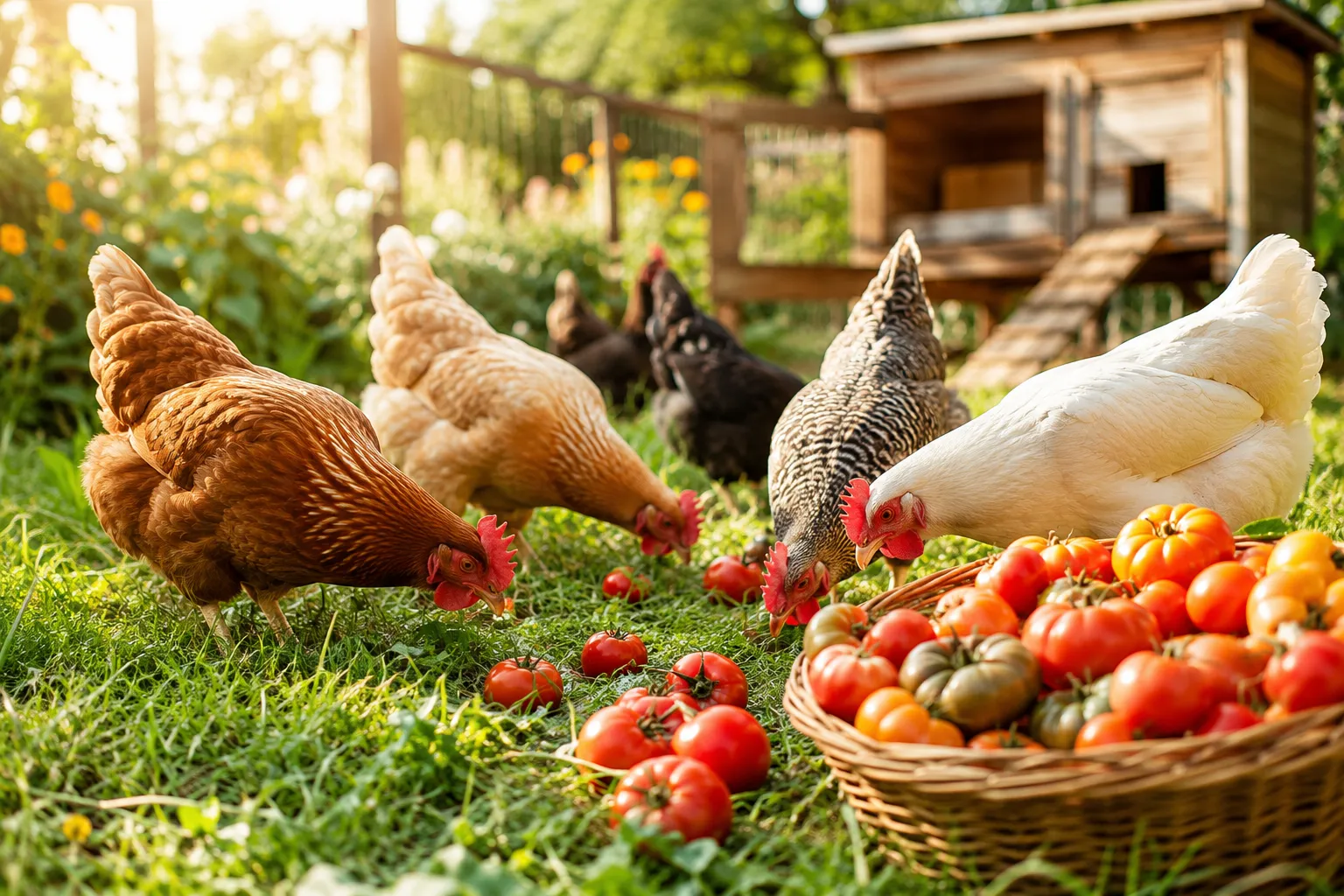
Quick Answer: Yes, chickens can safely eat ripe tomatoes in moderation. Ripe red tomatoes are nutritious treats that provide vitamins A and C, but green tomatoes and all parts of the tomato plant (leaves, stems, vines) contain solanine, a toxic compound that can harm chickens. Feed only fully ripened tomatoes, remove them from the plant, and limit portions to avoid digestive upset.
Key Takeaways
- Ripe tomatoes are safe: Fully red, ripe tomatoes are non-toxic and nutritious for chickens when fed in moderation
- Green tomatoes are dangerous: Unripe green tomatoes contain solanine, a toxic alkaloid that can poison chickens
- Plant parts are toxic: Tomato leaves, stems, vines, and flowers all contain high levels of solanine and must never be fed to chickens
- Portion control matters: Tomatoes should make up no more than 10% of daily feed intake to prevent diarrhea and nutritional imbalance
- All tomato varieties work: Cherry tomatoes, grape tomatoes, beefsteak, and heirloom varieties are all safe when ripe
- Baby chicks should wait: Chicks under 3-4 weeks old should stick to starter feed; introduce tomatoes gradually after one month
- Cooked tomatoes are fine: Plain cooked tomatoes and homemade tomato sauce (without salt, onion, or garlic) are safe alternatives
- Watch for symptoms: Lethargy, weakness, difficulty breathing, and green-tinged droppings signal possible solanine poisoning
Are Tomatoes Safe for Chickens to Eat?
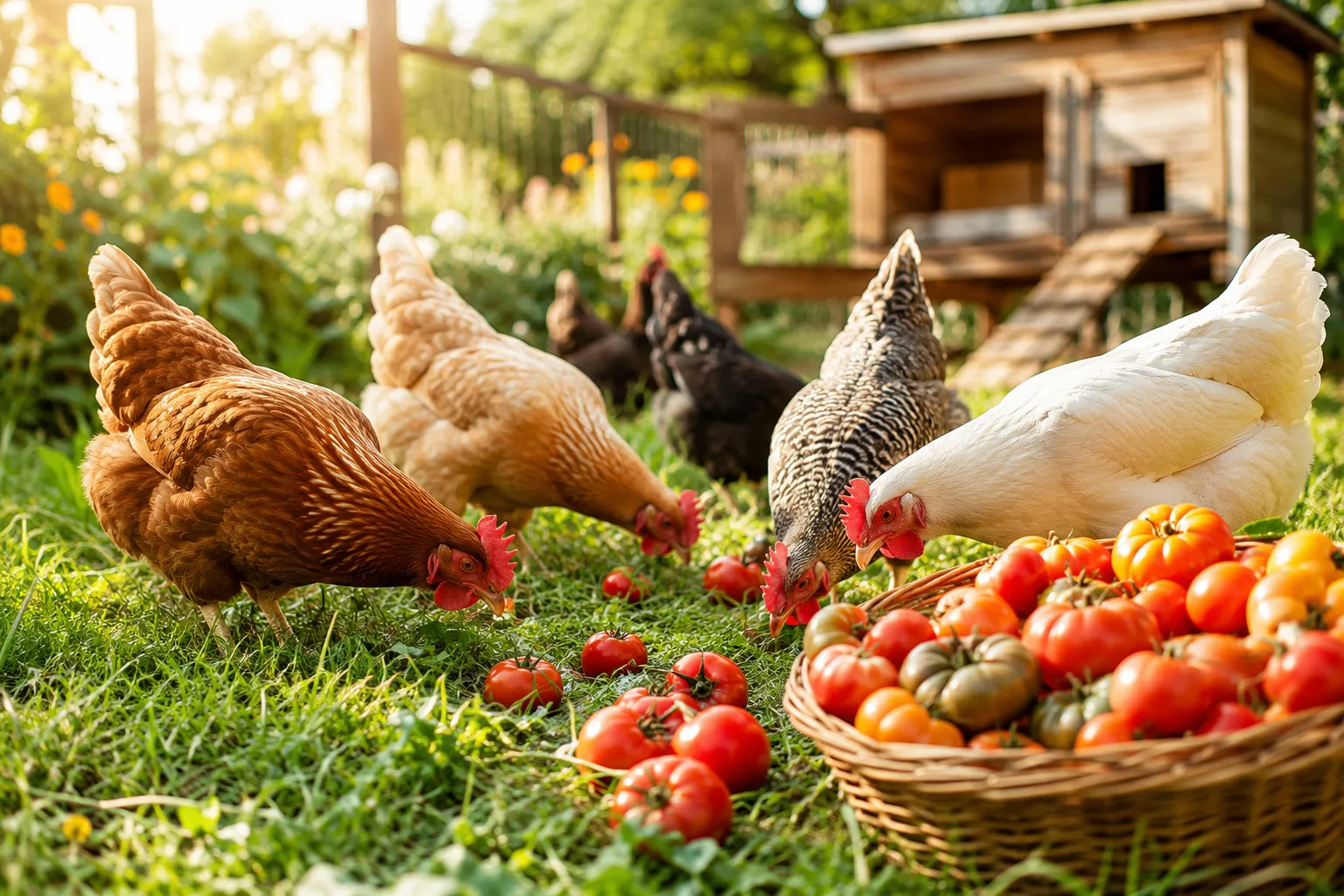
Yes, ripe tomatoes are completely safe for chickens to eat and offer valuable nutritional benefits. Fully ripened red tomatoes contain vitamins A, C, and K, along with antioxidants like lycopene that support immune function and overall health in backyard flocks.
The safety of tomatoes depends entirely on ripeness. When a tomato reaches full maturity and turns completely red (or yellow, orange, or purple depending on variety), the solanine levels drop to negligible amounts that pose no threat to chickens. This is the same reason humans eat ripe tomatoes without concern.
Nutritional benefits of ripe tomatoes for chickens:
- Vitamin A: Supports eye health, feather quality, and egg production
- Vitamin C: Boosts immune system, especially during heat stress
- Lycopene: Antioxidant that may enhance yolk color and reduce inflammation
- High water content: Helps with hydration during hot summer months
- Low calorie: Makes a guilt-free treat that won’t contribute to obesity
Choose ripe tomatoes if: Your chickens need a refreshing summer treat, you have excess garden tomatoes, or you want to add variety to their diet without disrupting nutritional balance.
Common mistake: Tossing entire tomato plants into the chicken run after harvest. Even if the tomatoes are ripe, the attached stems and leaves contain dangerous levels of solanine that can sicken your flock.
Can Chickens Eat Green Tomatoes or Just Ripe Ones?
Chickens should never eat green tomatoes because they contain high concentrations of solanine and tomatine, toxic alkaloids that can cause serious poisoning. Only fully ripened tomatoes that have changed color completely are safe for chicken consumption.
Green tomatoes, whether they’re unripe versions of red varieties or intentionally green heirloom types, maintain elevated toxin levels as a natural defense mechanism against pests and predators. As tomatoes ripen, these compounds break down and dissipate, making the fruit safe to eat.
Solanine content by ripeness stage:
- Fully green (unripe): High solanine levels, toxic to chickens
- Breaker stage (starting to turn): Moderate solanine, still unsafe
- Pink/light red: Reduced solanine but not yet safe
- Fully ripe (deep red/yellow/orange): Negligible solanine, safe to feed
Even “green when ripe” heirloom varieties like Green Zebra should be avoided unless you’re absolutely certain they’ve reached full maturity, which can be difficult to judge without experience. When in doubt, stick to obviously ripe red, yellow, or orange tomatoes.
Edge case: If a chicken accidentally pecks at a green tomato in your garden, a small bite likely won’t cause severe harm due to the bird’s size and the dilution effect. However, repeated consumption or eating a whole green tomato can lead to toxicity symptoms.
What Parts of the Tomato Plant Are Toxic to Chickens?
All green parts of the tomato plant are toxic to chickens, including leaves, stems, vines, flowers, and unripe fruit. These parts contain solanine and tomatine, glycoalkaloid compounds that interfere with nerve function and can cause serious illness or death in poultry.
The tomato plant belongs to the nightshade family (Solanaceae), which produces these toxic alkaloids as a defense against herbivores. While the ripe fruit becomes safe, every other part of the plant remains dangerous throughout the growing season and even after the plant dies.
Toxic tomato plant parts ranked by danger level:
- Leaves and stems: Highest concentration of solanine, most dangerous
- Green unripe tomatoes: High toxin levels, frequently accessible to free-range chickens
- Vines and stalks: Moderate to high toxin content
- Flowers: Lower but still significant toxin levels
- Roots: Contain toxins but rarely accessible to chickens
What happens if chickens eat tomato leaves: Even small amounts can cause gastrointestinal distress, while larger quantities may lead to neurological symptoms including tremors, weakness, paralysis, and potentially death. The severity depends on the amount consumed and the size of the bird.
Decision rule: If you’re clearing out your tomato garden at season’s end, dispose of all plant material in a compost bin or trash container that chickens cannot access. Never throw tomato plants into the chicken run, even if you’ve removed all the fruit.
How Much Tomato Can I Give My Chickens Per Day?
Chickens should receive no more than one or two small tomato pieces per bird per day, keeping total treats (including tomatoes) under 10% of their daily diet. For an average-sized laying hen, this translates to roughly one cherry tomato or two to three slices of a larger tomato.
The 10% rule applies to all treats, not just tomatoes. Chickens require a nutritionally balanced layer feed as their primary diet to maintain health, consistent egg production, and proper calcium levels. Too many treats, even healthy ones like tomatoes, can dilute essential nutrients and lead to deficiencies.
Portion guidelines by flock size:
- 1-3 chickens: One medium tomato total, divided among birds
- 4-6 chickens: Two medium tomatoes, chopped or quartered
- 7-10 chickens: Three to four medium tomatoes
- Large flocks (10+): One tomato per 2-3 birds
Why portion control matters: Tomatoes have high water content and natural acidity. Overfeeding can cause loose droppings or diarrhea, create competition and pecking order conflicts, and reduce consumption of nutritionally complete layer feed. During peak tomato season, it’s tempting to share your abundant harvest, but restraint protects flock health.
Common mistake: Dumping a bucket of overripe tomatoes into the coop daily during summer. While chickens will eagerly devour them, this practice can lead to nutritional imbalances, messy coops from diarrhea, and decreased egg quality over time.
Can Chickens Eat Cherry Tomatoes and Grape Tomatoes?
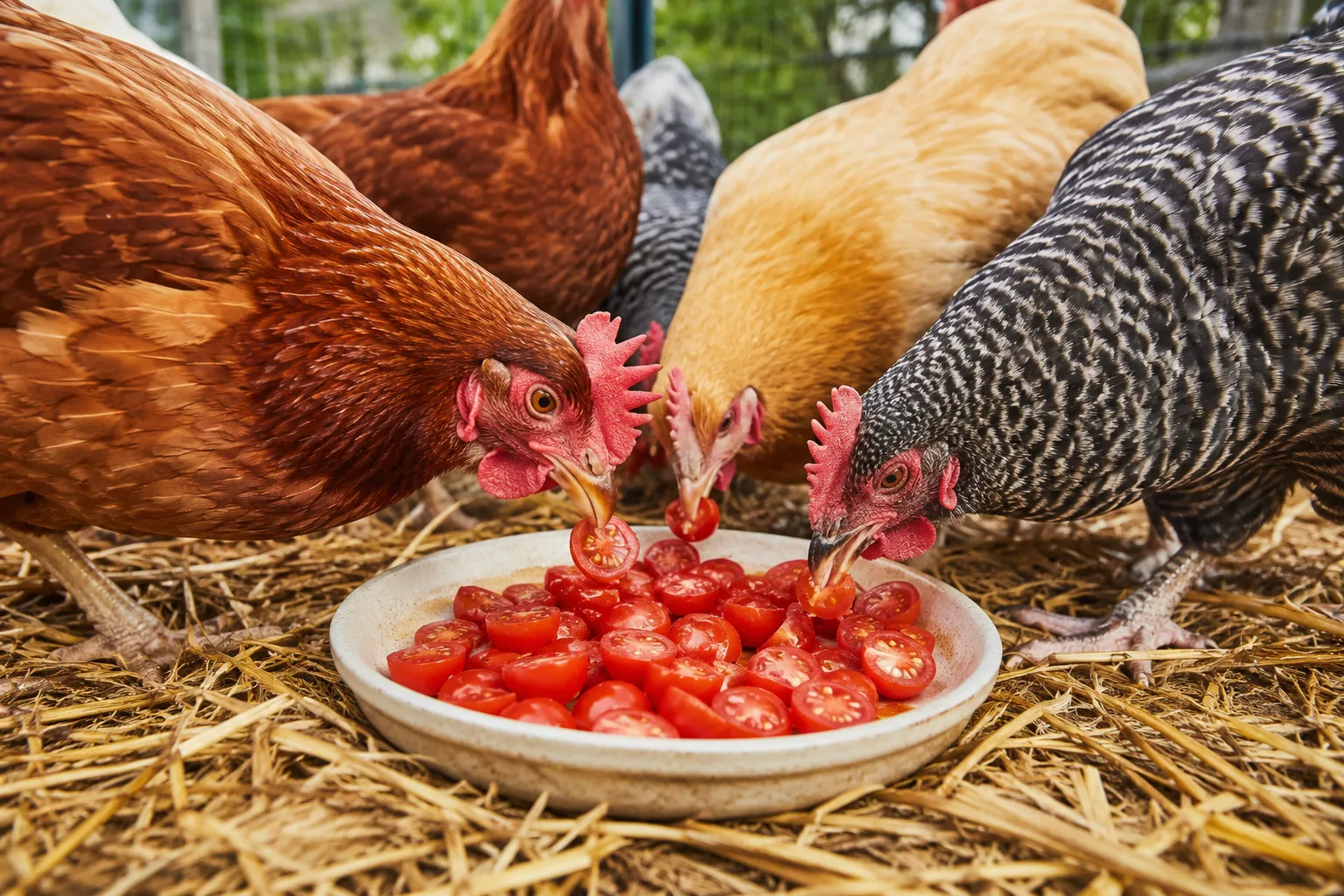
Yes, chickens can safely eat cherry tomatoes and grape tomatoes when fully ripe, and these smaller varieties are actually ideal treats because they’re easy to portion and less messy than larger tomatoes. Their bite-sized nature makes them perfect for tossing to chickens as enrichment activities.
Cherry and grape tomatoes offer the same nutritional benefits as full-sized varieties but with added convenience. Chickens can eat them whole or you can cut them in half to make them easier to peck and to create a fun foraging challenge that keeps birds mentally stimulated.
Advantages of small tomato varieties for chickens:
- Perfect portion size: One cherry tomato per bird is easy to measure
- Less waste: Chickens consume them completely without leaving messy remnants
- Enrichment value: Whole cherry tomatoes roll and bounce, encouraging natural foraging behavior
- Faster ripening: You’ll have safe treats available earlier in the season
- Lower acidity: Some cherry varieties are sweeter and gentler on digestion
How to serve cherry and grape tomatoes:
- Ensure they’re fully ripe (deep red, orange, or yellow depending on variety)
- Rinse to remove any dirt or pesticide residue
- Toss whole into the run for entertainment, or halve them for easier eating
- Remove any that fall from the vine with stems still attached
- Collect uneaten pieces after 2-3 hours to prevent spoilage and pests
Choose cherry tomatoes if: You want convenient, pre-portioned treats, your chickens need boredom-busting activities, or you’re introducing tomatoes for the first time and want to start small.

Are Tomato Leaves and Stems Poisonous to Chickens?
Yes, tomato leaves and stems are highly poisonous to chickens due to their concentrated levels of solanine and tomatine. These alkaloid toxins can cause severe neurological and gastrointestinal symptoms, and in sufficient quantities, can be fatal to poultry.
The leaves contain the highest concentration of toxins in the entire plant, making them the most dangerous part. Even dried or wilted tomato plant material retains its toxicity, so fallen leaves in the garden pose a risk to free-ranging chickens.
Symptoms of tomato plant poisoning in chickens:
- Gastrointestinal signs: Diarrhea, loss of appetite, crop stasis
- Neurological symptoms: Weakness, lethargy, tremors, difficulty walking
- Respiratory issues: Labored breathing, gasping
- Behavioral changes: Depression, isolation from flock, reluctance to move
- Severe cases: Paralysis, seizures, death
Timeline of symptoms: Mild poisoning symptoms typically appear within 2-6 hours of consumption, while severe toxicity can manifest within 30 minutes to 2 hours. The speed and severity depend on the amount consumed and the individual bird’s size and health status.
What to do if a chicken eats tomato leaves:
- Remove the bird from access to any more plant material immediately
- Provide fresh water to help flush toxins
- Monitor closely for symptoms over the next 24 hours
- Contact a veterinarian if symptoms appear or worsen
- Separate the affected bird if it shows signs of distress
Prevention tip: If you grow tomatoes near your chicken run, install barriers or fencing to prevent chickens from reaching low-hanging leaves or accessing pruned plant material. Never use tomato plant trimmings as coop bedding or compost material in areas chickens can access.
What Happens If a Chicken Eats a Green Tomato?
If a chicken eats a green tomato, it may experience solanine poisoning ranging from mild digestive upset to severe neurological symptoms depending on the amount consumed. A small peck or bite typically causes minor issues, but eating an entire green tomato or multiple green tomatoes can lead to serious toxicity.
The severity of poisoning correlates directly with body weight and dose. Bantam chickens and young birds face higher risk from smaller amounts, while larger breeds may tolerate a few bites without obvious symptoms.
Likely outcomes by consumption amount:
- One or two pecks: Minimal to no symptoms; monitor for 24 hours
- Quarter of a green tomato: Possible mild diarrhea, temporary lethargy
- Half to whole green tomato: Moderate to severe symptoms; veterinary consultation recommended
- Multiple green tomatoes: High risk of severe poisoning; emergency veterinary care needed
Immediate response steps:
- Remove access: Ensure no other chickens can reach green tomatoes
- Isolate if needed: Separate the affected bird if symptoms appear
- Hydration: Provide fresh, clean water to help dilute and flush toxins
- Observation: Watch for symptoms over the next 6-12 hours
- No home remedies: Avoid giving oils, milk, or other substances without veterinary guidance
- Document: Note the time of consumption and any symptoms for your vet
Recovery timeline: Chickens that consume small amounts of green tomato and show only mild symptoms typically recover within 24-48 hours with supportive care. Severe cases may require several days to a week of recovery, and some birds may not survive significant poisoning.
Edge case: Some chickens seem to instinctively avoid green tomatoes, while others will peck at anything novel. If you have particularly curious or food-motivated birds, extra vigilance around tomato plants is essential.
Can Baby Chicks Eat Tomatoes or Only Adult Chickens?
Baby chicks should not eat tomatoes until they’re at least 3-4 weeks old and have transitioned from starter feed to a more varied diet. Even then, tomatoes should be introduced gradually and in very small amounts, as young digestive systems are more sensitive to new foods and acidity.
Chicks under three weeks old require nutritionally complete starter feed that provides the precise protein, vitamins, and minerals needed for rapid growth and development. Introducing treats too early can cause digestive upset, nutritional imbalances, and a condition called “sour crop.”
Age-based tomato introduction guidelines:
- 0-3 weeks: No tomatoes; starter feed only with clean water
- 3-6 weeks: Tiny taste (pea-sized piece) of ripe tomato once or twice weekly
- 6-12 weeks: Small pieces (half a cherry tomato) 2-3 times per week
- 12+ weeks (pullets/adults): Normal adult portions following the 10% treat rule
Why wait to introduce tomatoes:
- Digestive development: Young chicks lack the gut flora to process acidic foods efficiently
- Nutritional needs: Growing chicks need higher protein (18-20%) than treats provide
- Grit requirement: Chicks need access to chick-sized grit before eating treats
- Imprinting risk: Early treat feeding can cause chicks to prefer treats over essential starter feed
How to introduce tomatoes to young chickens:
- Wait until chicks are at least 3-4 weeks old
- Ensure they have access to appropriately sized grit
- Offer a tiny piece (smaller than a pea) to one or two chicks first
- Monitor droppings for 24 hours for signs of diarrhea
- If no issues appear, gradually increase portion size over several weeks
- Always provide tomatoes after they’ve eaten their regular feed
Decision rule: If you’re unsure whether your chicks are ready for tomatoes, wait another week or two. There’s no benefit to rushing treat introduction, and patience protects their developing digestive systems.
Tomatoes vs Cucumbers: Which Is Better for Chickens?
Both tomatoes and cucumbers are safe, hydrating treats for chickens, but cucumbers have a slight edge for frequent feeding because they’re less acidic, lower in natural sugars, and less likely to cause digestive upset. However, tomatoes offer more vitamins and antioxidants, making both valuable additions to a varied treat rotation.
The “better” choice depends on your goals, climate, and what you have available. In hot weather, cucumbers provide superior hydration with 96% water content compared to tomatoes’ 95%. For nutritional enrichment, tomatoes deliver more vitamin A and lycopene.
Comparison of tomatoes and cucumbers for chickens:
| Factor | Tomatoes (Ripe) | Cucumbers |
|---|---|---|
| Safety | Safe when ripe; plant parts toxic | Entirely safe; all parts edible |
| Water content | 95% | 96% |
| Acidity | Moderate (pH 4.3-4.9) | Low (pH 5.1-5.8) |
| Vitamin A | High | Low |
| Vitamin C | Moderate | Low |
| Digestive impact | Can cause loose droppings if overfed | Gentler on digestion |
| Mess factor | Moderate (seeds, juice) | Low (less messy) |
| Preparation | Must be ripe; remove from plant | Can feed whole, no prep needed |
Choose tomatoes when:
- You want to boost vitamin A intake for better egg yolk color
- You have excess garden tomatoes during peak season
- Your chickens need antioxidant support
- You’re looking for variety in treat options
Choose cucumbers when:
- You need a daily hydration treat during extreme heat
- Your chickens have sensitive digestion
- You want a low-mess treat option
- You’re feeding young chickens (gentler introduction)
Best practice: Rotate both vegetables along with other safe treats like leafy greens, berries, and melons. Variety ensures chickens receive diverse nutrients and prevents boredom with any single food.
Do Tomatoes Cause Diarrhea in Chickens?
Tomatoes can cause diarrhea in chickens when fed in excessive amounts due to their high water content, natural acidity, and fiber. Occasional loose droppings after eating tomatoes are normal, but persistent watery diarrhea indicates overfeeding and requires dietary adjustment.
Chicken droppings naturally vary in consistency, and it’s important to distinguish between normal cecal droppings (which are naturally loose and brown) and true diarrhea caused by dietary issues. Tomato-induced diarrhea typically appears watery, may have a reddish tinge, and occurs in multiple birds if they’ve all consumed excess tomatoes.
Factors that increase diarrhea risk:
- Portion size: Feeding more than 10% of daily diet in tomatoes
- Frequency: Offering tomatoes daily rather than 2-3 times weekly
- Ripeness: Overripe, fermenting tomatoes are harder to digest
- Individual sensitivity: Some chickens have more sensitive digestive systems
- Sudden introduction: Adding tomatoes without gradual acclimation
- Hot weather: Combined with high water intake, tomatoes can create very loose droppings
How to prevent tomato-related diarrhea:
- Limit portions: Stick to the one cherry tomato per bird guideline
- Feed intermittently: Offer tomatoes 2-3 times weekly, not daily
- Time it right: Give tomatoes in the afternoon after chickens have eaten their layer feed
- Gradual introduction: Start with small pieces and increase slowly over a week
- Monitor droppings: Check for changes in consistency within 6-12 hours of feeding
- Balance with dry treats: Pair tomatoes with scratch grains or dried mealworms
When to worry: If diarrhea persists for more than 24 hours after stopping tomatoes, if birds show lethargy or decreased appetite, or if droppings contain blood, consult a veterinarian. These symptoms may indicate illness unrelated to tomato consumption.
What Vegetables Should Chickens Never Eat?
Chickens should never eat raw or dried beans, onions, garlic, avocado, raw potatoes, rhubarb leaves, or any part of nightshade plants (except ripe tomatoes and peppers). These vegetables contain compounds toxic to poultry that can cause illness ranging from digestive upset to organ failure and death.
Understanding which vegetables are dangerous helps prevent accidental poisoning when sharing kitchen scraps or allowing chickens to forage in gardens. Some toxic vegetables are obvious, while others surprise new chicken keepers who assume all vegetables are safe.
Toxic vegetables and their dangers:
Never feed these:
- Raw or dried beans: Contain phytohaemagglutinin (kidney bean lectin), which is highly toxic and can be fatal
- Onions and garlic: Contain thiosulfate, which damages red blood cells and causes anemia
- Avocado: Skin, pit, and leaves contain persin, toxic to most birds; even flesh is risky
- Raw potatoes and peels: High in solanine, especially green potatoes and sprouts
- Rhubarb leaves: Contain oxalic acid, which causes kidney damage
- Green tomatoes and tomato plants: Solanine toxicity (as discussed earlier)
- Raw green potato peels: Concentrated solanine in the skin
Feed with caution (small amounts only):
- Cooked potatoes: Safe in moderation; cooking destroys most solanine
- Cooked beans: Safe after thorough cooking; never feed raw or undercooked
- Citrus fruits: High acidity may reduce calcium absorption; limit to rare treats
- Salty or processed foods: Can cause salt toxicity and nutritional issues
Safe vegetable alternatives:
- Leafy greens (lettuce, kale, spinach, cabbage)
- Squash and pumpkin (including seeds)
- Cucumbers and zucchini
- Carrots and beets
- Broccoli and cauliflower (in moderation)
- Peas and corn
- Bell peppers (ripe, any color)
Decision rule: When in doubt about a vegetable’s safety, research it specifically or skip it entirely. Chickens thrive on their complete layer feed, and treats are optional extras, not necessities.
Can Chickens Eat Cooked Tomatoes and Tomato Sauce?
Yes, chickens can safely eat plain cooked tomatoes and homemade tomato sauce without added salt, sugar, onions, or garlic. Cooking doesn’t create toxicity in ripe tomatoes, and the heat actually breaks down cell walls, making nutrients like lycopene more bioavailable.
However, most commercial tomato sauces and products contain ingredients that are harmful to chickens, including salt, onion powder, garlic powder, and excessive sugar. These additives can cause serious health problems, so only plain, homemade preparations are appropriate.
Safe cooked tomato options:
- Plain cooked tomatoes: Roasted, boiled, or steamed without seasonings
- Homemade tomato sauce: Made with only tomatoes, no salt or aromatics
- Tomato puree: Plain, unseasoned, no additives
- Cooked tomato pieces: Leftover from meal prep, rinsed of seasonings
Unsafe tomato products:
- Commercial pasta sauce: Contains onion, garlic, salt, and sugar
- Ketchup: High in salt and sugar
- Tomato soup: Usually contains cream, salt, and seasonings
- Pizza sauce: Contains garlic, onion powder, and excessive salt
- Salsa: Contains onions, peppers, and salt
- Canned tomatoes: Often have added salt
Nutritional consideration: Cooked tomatoes actually provide more lycopene than raw tomatoes because heat breaks down cell walls and makes this antioxidant more accessible. This can benefit chickens by supporting immune function and potentially enhancing egg yolk color.
How to safely share cooked tomatoes:
- Prepare tomatoes without any salt, seasonings, oils, or aromatics
- Allow to cool completely before offering to chickens
- Follow the same portion guidelines as raw tomatoes (10% of diet)
- Mix with other foods if the texture is too soft or messy
- Remove uneaten portions within 2-3 hours to prevent spoilage
Edge case: If you accidentally dropped a small amount of seasoned tomato sauce in the coop, one or two pecks won’t harm your chickens. However, don’t make it a habit, and never intentionally feed seasoned products.
How to Prepare Tomatoes for Chickens
Preparing tomatoes for chickens requires only three simple steps: ensure they’re fully ripe, remove them from any plant material, and cut them into appropriate sizes for your flock. This minimal preparation keeps chickens safe while maximizing nutritional benefits and reducing waste.
The goal is to make tomatoes easy to eat, prevent choking hazards for smaller birds, and eliminate any toxic plant parts that might be attached. Proper preparation also reduces mess in the coop and prevents competition among flock members.
Step-by-step tomato preparation:
- Check ripeness: Tomatoes must be completely red, yellow, orange, or purple (depending on variety) with no green areas
- Wash thoroughly: Rinse under cool water to remove dirt, debris, and any pesticide residue
- Remove all plant parts: Cut or twist tomatoes away from stems, removing any attached leaves or vine pieces
- Size appropriately:
- Cherry/grape tomatoes: Serve whole or halved
- Medium tomatoes: Quarter or cut into 1-2 inch chunks
- Large tomatoes: Cut into wedges or 2-inch pieces
- Remove problem areas: Cut out any moldy, rotten, or damaged sections
- Serve fresh: Offer immediately or refrigerate for up to 24 hours
Presentation methods:
- Scatter in run: Toss pieces around to encourage foraging behavior
- Feeding dish: Place in a shallow bowl to reduce mess and dirt contamination
- Hanging treat: Skewer large tomato pieces on a treat holder for entertainment
- Mixed treat bowl: Combine with other safe vegetables for variety
- Frozen treats: Freeze tomato pieces for hot summer days (thaw slightly before serving)
Timing tips: Feed tomatoes in the afternoon after chickens have consumed their layer feed. This ensures they get essential nutrients first and prevents them from filling up on treats. Remove uneaten pieces after 2-3 hours to prevent spoilage, especially in warm weather.
Common mistake: Tossing whole tomatoes with stems still attached into the chicken run. Even though the fruit is safe, chickens may peck at the toxic stem, or the stem may contaminate the eating area.
Signs of Solanine Poisoning in Chickens from Tomatoes
Solanine poisoning in chickens presents with gastrointestinal distress, neurological symptoms, and respiratory difficulty, typically appearing within 2-6 hours of consuming green tomatoes or tomato plant material. Early recognition and intervention are critical for recovery, as severe poisoning can be fatal.
The severity of symptoms correlates with the amount of toxic material consumed and the individual bird’s size and overall health. Bantams and young chickens show symptoms faster and more severely than large, healthy adult birds.
Primary symptoms of solanine poisoning:
Gastrointestinal signs:
- Loss of appetite or refusal to eat
- Diarrhea (may have greenish tinge)
- Crop stasis or slow crop emptying
- Vomiting or regurgitation (rare in chickens but possible)
Neurological symptoms:
- Lethargy and weakness
- Difficulty walking or standing
- Tremors or shaking
- Loss of coordination
- Drooping wings
- Paralysis (severe cases)
- Seizures (rare, indicates critical poisoning)
Respiratory issues:
- Labored breathing or gasping
- Open-mouth breathing
- Respiratory distress
Behavioral changes:
- Isolation from flock
- Reluctance to move
- Depression or unresponsiveness
- Unusual vocalizations
Symptom timeline:
- 30 minutes – 2 hours: Severe poisoning symptoms begin
- 2-6 hours: Moderate poisoning symptoms appear
- 6-12 hours: Mild symptoms may become noticeable
- 24-48 hours: Recovery begins if poisoning was mild and supportive care provided
Emergency response protocol:
- Isolate the bird: Separate from the flock to reduce stress and allow monitoring
- Remove toxin source: Ensure no other chickens can access green tomatoes or plant material
- Provide fresh water: Encourage drinking to help flush toxins
- Keep warm: Maintain body temperature with a heat lamp if bird is lethargic
- Contact veterinarian: Seek professional guidance, especially for moderate to severe symptoms
- Monitor closely: Check every 1-2 hours for symptom progression
- Document: Note time of consumption, amount (if known), and symptom timeline
Treatment options: There is no specific antidote for solanine poisoning. Treatment focuses on supportive care including hydration, maintaining body temperature, and in severe cases, veterinary administration of activated charcoal to bind toxins or intravenous fluids.
Prognosis: Chickens that consume small amounts and receive prompt supportive care typically recover within 24-48 hours. Moderate poisoning may require 3-5 days of recovery. Severe poisoning has a guarded prognosis, and some birds may not survive despite treatment.
Prevention is key: The best treatment for solanine poisoning is prevention. Keep chickens away from tomato plants, never feed green tomatoes, and immediately remove any toxic plant material from areas where chickens forage.
Frequently Asked Questions
Can chickens eat tomato seeds?
Yes, chickens can safely eat tomato seeds from ripe tomatoes. The seeds are non-toxic and provide small amounts of protein and healthy fats. Chickens will either digest them or pass them through their system without harm.
Are yellow and orange tomatoes safe for chickens?
Yes, fully ripe yellow, orange, and even purple heirloom tomatoes are safe for chickens. The color doesn’t matter as long as the tomato has reached full ripeness and the solanine has broken down.
Can chickens eat tomatoes every day?
While technically safe, feeding tomatoes daily isn’t recommended because it can cause loose droppings and may displace more nutritious layer feed. Offer tomatoes 2-3 times per week as part of a varied treat rotation.
Will tomatoes change my egg yolk color?
Tomatoes may slightly enhance egg yolk color due to their carotenoid content, particularly lycopene. However, the effect is subtle compared to foods like marigold petals, pumpkin, or commercial yolk-enhancing feeds.
Can chickens eat sun-dried tomatoes?
Plain, unsalted sun-dried tomatoes are safe in very small amounts, but they’re concentrated and should be rehydrated before feeding. Avoid any with added salt, oil, or seasonings. Fresh tomatoes are a better choice.
What should I do with tomato scraps from canning?
Ripe tomato flesh and cores from canning are safe for chickens. However, discard all skins if they’re tough, any green portions, and especially any stems or leaves that may have been trimmed during preparation.
Can chickens eat fried green tomatoes?
No, even when cooked, green tomatoes retain enough solanine to be potentially harmful. The breading and frying oil also add unnecessary fat and salt. Only feed ripe tomatoes, whether raw or cooked.
How long do tomatoes last in the chicken coop?
Fresh tomato pieces should be removed within 2-3 hours, especially in warm weather. They spoil quickly, attract flies and pests, and can develop harmful bacteria that cause digestive issues.
Can chickens eat tomato hornworms?
Yes, chickens can eat tomato hornworms and often enjoy them as a protein-rich treat. However, hornworms that have been feeding on tomato plants may contain small amounts of solanine, so limit quantities.
Will chickens destroy my tomato plants?
Yes, free-ranging chickens will peck at tomato plants, eating leaves, green tomatoes, and potentially damaging ripe fruit. Protect tomato plants with fencing or netting if chickens have access to your garden.
Are heirloom tomatoes safer than hybrid varieties?
Ripeness matters more than variety. Both heirloom and hybrid tomatoes are equally safe when fully ripe and equally toxic when green. Choose based on what you grow or have available.
Can I compost tomato plants in my chicken run?
No, never compost tomato plants where chickens can access them. The leaves, stems, and any green tomatoes remain toxic even as they decompose. Compost tomato plants in a separate, chicken-proof area.
Conclusion
Ripe tomatoes make excellent, nutritious treats for backyard chickens when offered in moderation as part of a balanced diet. The key to safely feeding tomatoes lies in understanding the critical distinction between ripe fruit and toxic plant parts: fully red, yellow, or orange tomatoes are safe and beneficial, while green tomatoes, leaves, stems, and all other plant material contain dangerous levels of solanine.
By following the 10% treat rule, limiting portions to one or two small pieces per bird, and ensuring tomatoes are completely ripe before feeding, chicken keepers can safely share their garden bounty with their flocks. Remember to introduce tomatoes gradually, especially to young chickens, and monitor for any digestive upset.
Action steps for feeding tomatoes safely:
- Verify ripeness: Only feed tomatoes that have completely changed color with no green areas
- Remove from plant: Cut or twist tomatoes away from all stems, leaves, and vines
- Portion appropriately: Limit to 10% of daily diet, roughly one cherry tomato per bird
- Prepare properly: Wash, cut to size, and serve fresh in the afternoon
- Protect your garden: Fence tomato plants to prevent chickens from accessing toxic leaves
- Rotate treats: Offer tomatoes 2-3 times weekly alongside other safe vegetables
- Watch for symptoms: Monitor droppings and behavior after introducing tomatoes
The nutritional benefits of tomatoes, including vitamins A and C, lycopene, and high water content, make them valuable additions to your chickens’ treat rotation, especially during hot summer months. By respecting the safety guidelines around plant toxicity and portion control, you can confidently share this garden favorite with your flock while keeping them healthy and productive.


