
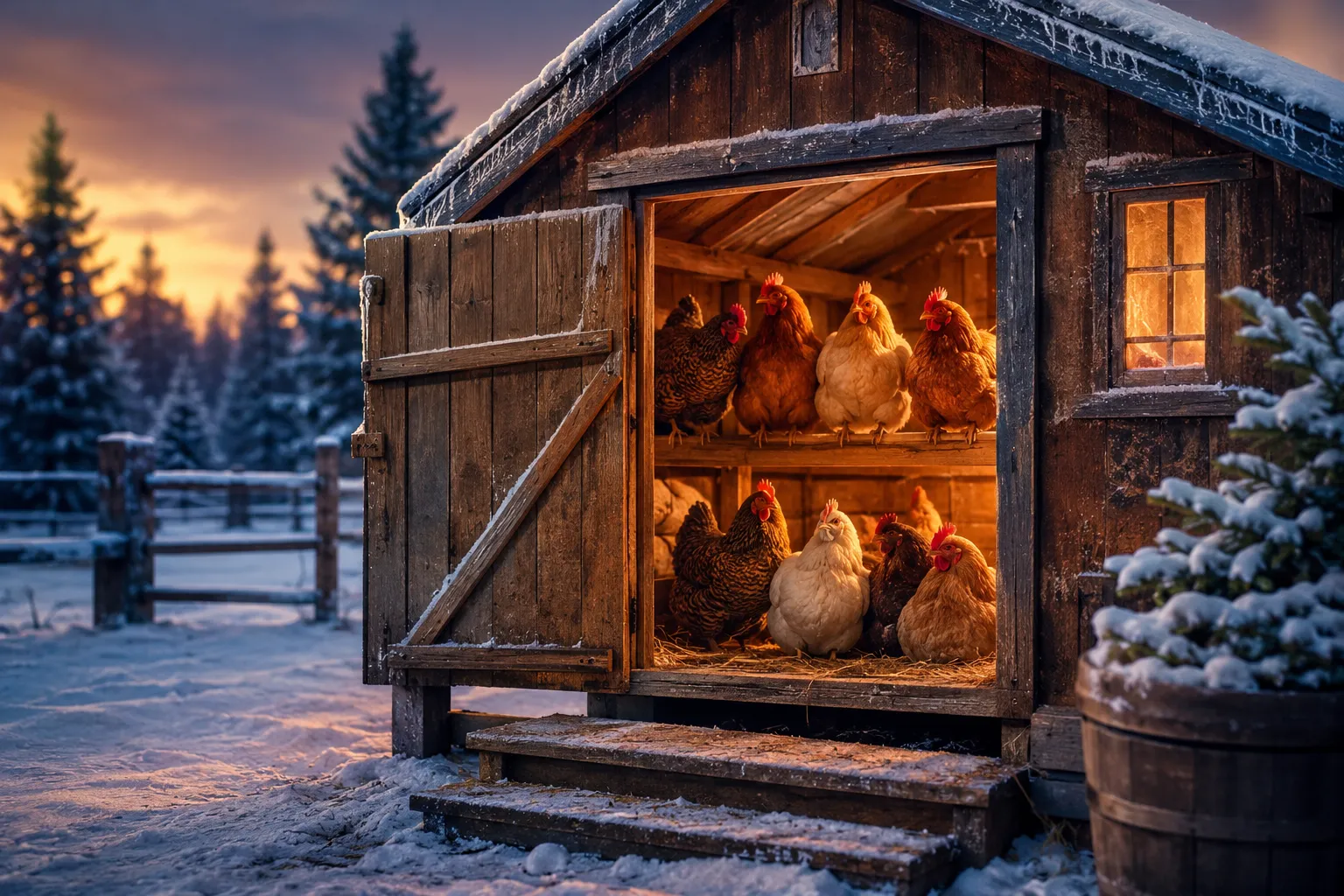
Most adult chickens do not need supplemental heat in winter, even in cold climates. Healthy chickens with proper shelter can comfortably survive temperatures well below freezing thanks to their natural insulation and ability to generate body heat. The exceptions are young chicks, sick or injured birds, and certain tropical breeds in extreme cold.
Key Takeaways
- Adult chickens tolerate cold remarkably well and can handle temperatures down to -10°F to -20°F without supplemental heat when properly housed
- Heat lamps pose serious fire risks and are responsible for hundreds of coop fires annually; safer alternatives exist
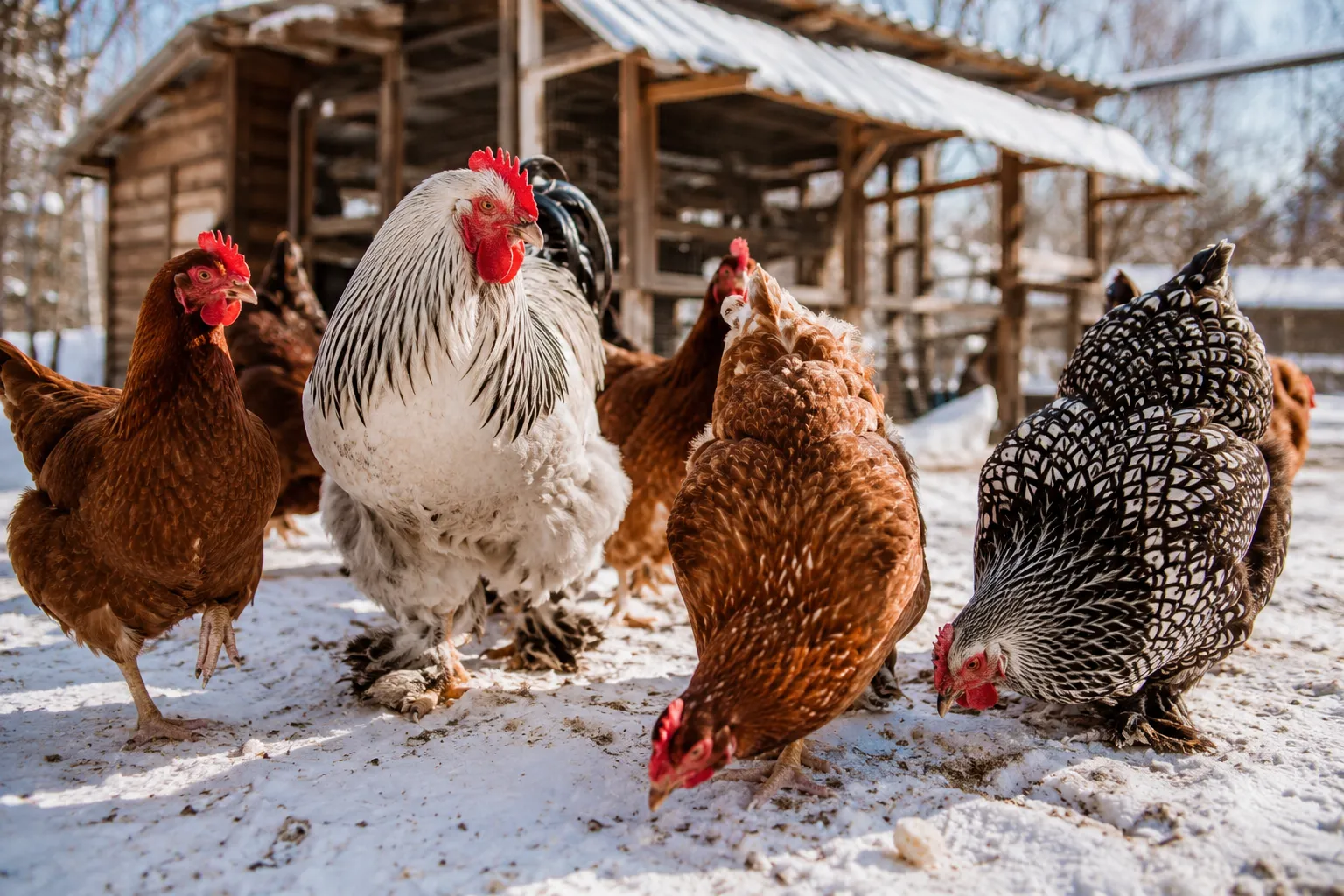
- Cold-hardy breeds like Brahmas, Wyandottes, and Orpingtons thrive in winter with minimal intervention
- Proper coop ventilation matters more than warmth because moisture and ammonia buildup cause frostbite and respiratory issues
- Chickens generate significant body heat when roosting together, often raising coop temperatures 10-20°F above outdoor temps
- Sudden temperature changes are more dangerous than consistent cold, making heat lamps potentially harmful if power fails
- Winterizing your coop through draft prevention, deep litter method, and proper ventilation protects chickens better than artificial heat
- Baby chicks require heat until fully feathered (6-8 weeks), but adult birds have different needs entirely
What Temperature Is Too Cold for Chickens?
Adult chickens can safely tolerate temperatures down to -10°F to -20°F when they have proper shelter, are well-fed, and belong to cold-hardy breeds. Most chickens begin experiencing stress around 0°F, but the real danger comes from wind, moisture, and frostbite on combs and wattles rather than the cold itself.
The critical factors that determine cold tolerance include:
- Breed type: Cold-hardy breeds with small combs handle extreme cold better than Mediterranean breeds with large combs
- Feather condition: Healthy, full plumage provides excellent insulation; molting birds are more vulnerable
- Coop conditions: Dry, draft-free (but ventilated) housing protects against wind chill and moisture
- Flock size: Multiple chickens roosting together generate substantial shared body heat
- Nutrition: Well-fed chickens produce more metabolic heat; increase feed during cold snaps
Common mistake: Focusing solely on temperature numbers while ignoring humidity and ventilation. A chicken in a dry, well-ventilated coop at -5°F is safer than one in a damp, poorly ventilated coop at 20°F.
Chickens are far more cold-hardy than most new keepers realize. Their body temperature runs around 106°F, and their feathers trap warm air close to their skin, creating natural insulation that rivals a down jacket.
How Do Chickens Stay Warm in Cold Weather Naturally?
Chickens stay warm through a combination of thick feather insulation, metabolic heat production, behavioral adaptations, and communal roosting. Their bodies are remarkably efficient at generating and conserving heat without any human intervention.
Natural warming mechanisms include:
- Feather fluffing: Chickens puff up their feathers to trap more air, increasing insulation by up to 50%
- Reduced surface area: Birds tuck their heads and feet into their feathers to minimize heat loss
- Communal roosting: Flocks huddle together on perches, sharing body heat and raising local temperature significantly
- Increased feed consumption: Chickens eat 25-50% more in winter, burning calories to generate metabolic heat
- Reduced activity: Less movement conserves energy for heat production
- Fat reserves: Healthy chickens build subcutaneous fat in fall that provides insulation and energy
The deep litter method enhances natural warmth by allowing bedding to compost slowly inside the coop, generating heat through microbial activity. This can raise floor-level temperatures by 5-10°F while also absorbing moisture.
Choose natural methods if: Your chickens are healthy adults, your coop is properly winterized, and overnight temperatures stay above -20°F. This approach is safer, more sustainable, and helps chickens maintain their natural cold tolerance.
Do Chickens Need a Heat Lamp in Winter?
Most backyard chickens do not need a heat lamp in winter and are actually safer without one. Heat lamps are the leading cause of coop fires, killing thousands of chickens annually, and they can reduce your flock’s natural cold tolerance by preventing proper acclimation.
Reasons to avoid heat lamps:
- Fire hazard: Heat lamps reach 500°F+ and ignite dust, feathers, and bedding easily
- Power failure risk: Sudden temperature drops when electricity fails can shock or kill chickens accustomed to artificial heat
- Reduced cold hardiness: Chickens raised with supplemental heat don’t develop full cold tolerance
- False security: Keepers may neglect proper winterization when relying on heat
- Ongoing costs: Running a 250-watt lamp 24/7 costs $30-50 monthly in many areas
When heat lamps might be justified:
- Newly hatched chicks (under 6 weeks old)
- Sick, injured, or recovering birds
- Tropical breeds (Serama, Sumatra) in extreme cold below -10°F
- Extremely small coops with single birds lacking flock warmth
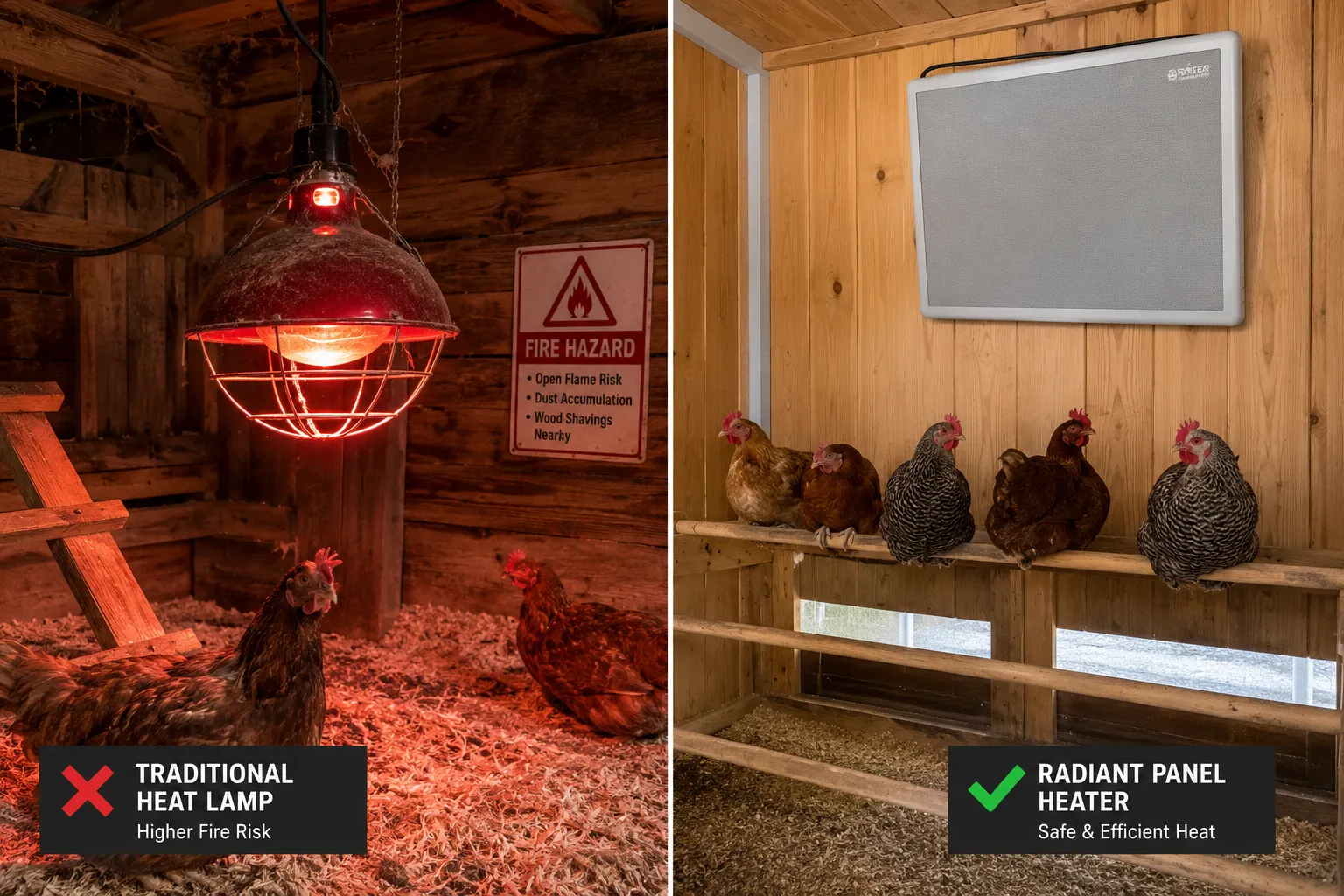
If you must use supplemental heat, choose safer alternatives like flat panel radiant heaters or heated perches rather than traditional heat lamps.
Fire Hazards of Heat Lamps in Chicken Coops
Heat lamps cause an estimated 1,000+ coop fires annually in the United States alone, resulting in total flock loss, property damage, and sometimes spreading to homes and barns. The combination of extreme heat, flammable materials, and vibration-prone mounting creates a perfect storm for disaster.
Primary fire risks include:
- Bulb temperature: Standard 250-watt heat lamps reach 500-700°F at the bulb surface
- Falling lamps: Vibration, pecking chickens, or weak mounting causes lamps to fall into bedding
- Dust accumulation: Fine dust coating the bulb can ignite spontaneously
- Improper clearance: Many keepers mount lamps too close to wood, bedding, or roosting bars
- Cord damage: Rodents chew wiring; chickens peck at cords
- Bulb failure: When bulbs shatter from moisture or impact, hot fragments fall
Real-world scenario: A heat lamp secured with a chain falls when a chicken flies up and hits it. The lamp lands in pine shavings, which ignite within 90 seconds. The entire wooden coop is engulfed in flames within 5 minutes. This scenario plays out hundreds of times each winter.
Even “secure” installations fail. The National Fire Protection Association recommends against heat lamps in agricultural settings entirely due to their poor safety record.
What Chicken Breeds Are Cold Hardy?
Cold-hardy chicken breeds have small combs, thick feathering, heavy body mass, and genetic adaptations for winter survival. These breeds thrive in northern climates and rarely need supplemental heat even in sub-zero temperatures.
Top cold-hardy breeds:
| Breed | Cold Tolerance | Key Features |
|---|---|---|
| Brahma | Excellent (-20°F+) | Massive size, feathered feet, tiny pea comb |
| Wyandotte | Excellent (-20°F+) | Rose comb, dense feathering, calm temperament |
| Orpington | Excellent (-15°F+) | Heavy body, fluffy feathers, good layers |
| Rhode Island Red | Very Good (-10°F+) | Hardy, productive, small comb |
| Plymouth Rock | Very Good (-10°F+) | Dual-purpose, adaptable, friendly |
| Australorp | Very Good (-10°F+) | Dense plumage, excellent winter layers |
| Cochin | Excellent (-20°F+) | Extremely fluffy, feathered feet, broody |
| Chantecler | Excellent (-30°F+) | Canadian breed, cushion comb, winter-developed |
Breeds to avoid in cold climates:
- Mediterranean breeds (Leghorn, Ancona) with large single combs
- Tropical breeds (Serama, Sumatra, Cubalaya)
- Game birds with tight feathering and large combs
- Any breed with long, exposed wattles
Choose cold-hardy breeds if: You live in USDA zones 3-5, experience regular sub-zero temperatures, or want a low-maintenance flock that doesn’t require supplemental heat.
Can Chickens Freeze to Death in Winter?
Yes, chickens can freeze to death in winter, but it’s relatively rare in properly managed flocks and usually involves specific risk factors beyond just cold temperature. Freezing deaths typically occur when multiple problems combine: extreme cold, wet conditions, poor shelter, inadequate nutrition, or compromised health.
High-risk scenarios:
- Wet feathers: Chickens caught in freezing rain or snow without shelter lose insulation rapidly
- Molting birds: Chickens regrowing feathers lack proper insulation
- Sick or injured: Compromised birds can’t generate adequate body heat
- Single birds: Lone chickens lack the communal warmth of flock roosting
- Inadequate shelter: Coops with drafts, leaks, or no wind protection
- Sudden cold snaps: Birds not yet acclimated to winter temperatures
Frostbite vs. freezing: Most cold-related injuries are frostbite on combs, wattles, and toes rather than life-threatening hypothermia. Frostbite occurs when these exposed tissues freeze, typically in temperatures below 10°F combined with high humidity.
Prevention is straightforward: Provide a dry, draft-free (but ventilated) coop, ensure adequate nutrition, protect birds from precipitation, and keep vulnerable individuals (molting, sick, or tropical breeds) under closer observation during extreme cold.
The vast majority of chicken deaths attributed to “freezing” actually result from moisture problems, poor ventilation causing respiratory disease, or predation rather than cold temperature alone.
How to Winterize a Chicken Coop Without Electricity
Winterizing a chicken coop without electricity focuses on passive strategies: preventing drafts, managing moisture, providing proper ventilation, and using the deep litter method. These approaches keep chickens comfortable and healthy without fire risks or ongoing energy costs.
Step-by-step winterization:
- Seal drafts but maintain ventilation: Close gaps at chicken level where birds roost, but keep upper vents open for moisture and ammonia escape
- Add roosting bars: Ensure 8-10 inches of roosting space per bird so chickens can huddle together
- Start deep litter: Build up 6-12 inches of pine shavings or straw, adding fresh layers weekly without removing old material
- Insulate water: Use rubber bowls (ice pops out easily) or the “bottle-in-bowl” method to slow freezing
- Weatherproof exterior: Check roof for leaks, repair any holes, consider adding a windbreak on prevailing wind side
- Increase roost height: Warm air rises; position roosts at least 2-3 feet off the floor
- Add extra bedding: Provide straw or hay for chickens to burrow into on extremely cold nights
- Protect combs: Apply petroleum jelly to large combs and wattles during extreme cold to prevent frostbite
The deep litter method deserves special attention. As bedding composts slowly, beneficial microbes generate heat and break down waste. This creates a warmer, drier environment while reducing ammonia. Turn the litter weekly with a pitchfork to prevent compaction.
Common mistake: Sealing the coop too tightly. Chickens produce significant moisture through respiration and droppings. Without adequate ventilation, this moisture condenses on cold surfaces, creating dampness that leads to frostbite and respiratory disease. Ventilation openings should be above roost level to prevent drafts while allowing moisture to escape.
Signs Your Chickens Are Too Cold
Chickens show clear behavioral and physical signs when they’re too cold, though these symptoms are less common than most new keepers expect. Recognizing genuine cold stress versus normal winter behavior helps you intervene appropriately.
Genuine cold stress indicators:
- Huddling during the day: Healthy chickens forage actively even in cold weather; constant huddling suggests a problem
- Lethargy and fluffed feathers while inactive: Normal in evening, concerning if persistent during daylight
- Pale or discolored combs: Blue, black, or white patches indicate frostbite
- Reduced egg production: Some decrease is normal, but sudden stops may signal stress
- Reluctance to leave coop: Chickens that refuse to venture outside even in moderate weather
- Shivering: Visible trembling (rare in healthy adult chickens)
- Standing on one foot repeatedly: Trying to warm feet alternately
Normal winter behaviors (not concerning):
- Fluffed feathers in evening or early morning
- Reduced activity compared to summer
- Spending more time in coop
- Tucking head under wing while roosting
- Standing on one foot while resting
What to do if chickens show cold stress:
- Check for moisture problems in the coop first
- Ensure adequate ventilation to reduce humidity
- Increase feed quantity, especially corn and scratch grains before roosting
- Add more bedding for insulation
- Check for illness or injury that might compromise heat generation
- Consider temporary heat only for affected individuals, not the whole flock
Most “cold” chickens are actually dealing with moisture, poor ventilation, or health issues rather than temperature alone.
Heat Lamp vs Heated Perch for Chicken Coop
Heated perches are significantly safer than heat lamps for chicken coops, though most flocks don’t need either option. If you must provide supplemental heat, heated perches offer targeted warmth where chickens actually roost while eliminating the fire risks associated with heat lamps.
Comparison:
| Feature | Heat Lamp | Heated Perch |
|---|---|---|
| Fire risk | Very high (500-700°F) | Low (100-110°F max) |
| Power consumption | 250W continuous | 30-50W continuous |
| Monthly cost | $30-50 | $5-10 |
| Heat distribution | Ambient (entire coop) | Targeted (feet only) |
| Natural behavior | Disrupts cold acclimation | Allows natural tolerance |
| Installation | Hanging (vibration risk) | Mounted (stable) |
| Failure risk | Sudden temperature drop | Minimal impact |
Heated perch advantages:
- Warms feet and legs where chickens actually roost
- Low surface temperature (around 100°F) prevents burns
- Chickens can choose heated or unheated sections
- Maintains natural cold tolerance for body core
- Minimal fire risk even if bedding contacts perch
- Lower energy costs
When to choose heated perches: Birds with frostbitten feet recovering, small flocks in extremely cold climates (below -20°F regularly), or coops housing tropical breeds that can’t be rehomed.
Better than both: Proper winterization, adequate flock size for communal warmth, and cold-hardy breed selection eliminate the need for any supplemental heat in most situations.
Alternatives to Heat Lamps for Chickens in Winter
Several safer alternatives to heat lamps exist for the rare situations where supplemental heat is genuinely needed. These options provide warmth without the extreme fire risk, sudden failure problems, and cold-acclimation issues associated with traditional heat lamps.
Safer heating alternatives:
Flat panel radiant heaters: Wall-mounted panels that radiate gentle heat (150-200°F surface temperature). They warm chickens directly without heating air, use 100-150 watts, and mount securely away from bedding. Cost: $40-80.
Heated perches: Low-wattage (30-50W) perches that warm feet and legs. Chickens self-regulate by moving between heated and unheated sections. Cost: $30-60.
Sweeter Heater: Flat panel designed specifically for coops, mounts to wall or ceiling, provides radiant warmth without extreme temperatures. Uses 150-200 watts. Cost: $70-100.
Oil-filled radiator heaters: Sealed electric heaters with no exposed elements. Slower to heat but maintain consistent temperature and won’t ignite bedding on contact. Use 500-1500 watts. Cost: $50-100.
Ceramic heat emitters: Screw into standard fixtures but emit only infrared heat (no light). Safer than bulbs but still reach 300-400°F. Use with extreme caution. Cost: $15-30.
Deep litter method: Not electric, but generates 5-10°F of passive heat through composting bedding. Free after initial bedding cost.
Choose alternatives if: You have sick birds recovering, tropical breeds in extreme cold, or very small coops where natural methods aren’t sufficient. Always pair any heat source with proper winterization rather than using heat as a substitute for good coop management.
Do Baby Chicks Need Heat in Winter vs Adult Chickens?
Baby chicks absolutely need supplemental heat until they’re fully feathered (6-8 weeks old), while adult chickens rarely do. This is one of the most important distinctions in chicken keeping, as chick requirements differ dramatically from adult bird needs.
Chick heating requirements:
- Week 1: 95°F at chick level
- Week 2: 90°F
- Week 3: 85°F
- Week 4: 80°F
- Week 5: 75°F
- Week 6+: 70°F or ambient if fully feathered
Chicks lack the insulating feathers and body mass to generate adequate heat. They’re also unable to regulate body temperature effectively until around 6 weeks old.
Safe chick heating methods:
- Brooder plates: Mimic mother hen, chicks go underneath for warmth, safest option
- Radiant heaters: Provide overhead warmth without extreme temperatures
- Heat lamps with extreme precautions: If used, secure with chain AND clamp, keep 18+ inches from bedding, use ceramic base, check daily
Adult chicken differences:
- Full feather insulation
- Larger body mass generates more metabolic heat
- Ability to regulate temperature through behavior
- Communal roosting provides shared warmth
- Fat reserves for energy
Common mistake: Applying chick-raising heat requirements to adult birds. Many new keepers assume that because chicks need heat, adult chickens must too. This leads to unnecessary heat lamp use and the associated fire risks.
Timing matters: If you’re raising chicks in winter, keep them indoors in a proper brooder until fully feathered. Don’t move them to an outdoor coop until they can handle ambient temperatures, typically 8-10 weeks old in cold climates.
Mistakes People Make Heating Chicken Coops
Even experienced chicken keepers make critical errors when deciding to heat their coops. Understanding these common mistakes helps you avoid dangerous situations and unnecessary expenses while keeping your flock genuinely safe.
Top heating mistakes:
1. Heating because of temperature numbers alone: Focusing on thermometer readings while ignoring moisture, ventilation, and breed factors. A dry coop at -5°F is safer than a damp one at 25°F.
2. Sealing ventilation to retain heat: Trapping moisture causes frostbite and respiratory disease. Ventilation above roost level is essential even in extreme cold.
3. Using heat instead of proper winterization: Heat lamps become a substitute for fixing drafts, improving bedding, or providing adequate roost space.
4. Creating heat dependency: Chickens raised with constant supplemental heat don’t develop natural cold tolerance, making them vulnerable to power failures.
5. Inadequate heat lamp security: Hanging lamps with only a hook or single attachment point. Proper installation requires both a chain and a clamp, with regular inspection.
6. Heating the entire coop: Ambient heating is unnecessary and expensive. If heat is needed, targeted warmth (heated perch) is more efficient and safer.
7. Ignoring fire prevention: Not maintaining clearance from combustibles, allowing dust buildup on bulbs, or using damaged cords.
8. Heating healthy adult birds: The most common mistake is assuming chickens need heat when they don’t. Most cold-hardy breeds in properly winterized coops thrive without any supplemental heat.
9. Sudden heat introduction: Adding heat during a cold snap rather than gradual acclimation prevents chickens from developing natural tolerance.
10. Mixing vulnerable and hardy birds: Heating the entire coop for one tropical breed or sick bird rather than providing separate accommodation.
Better approach: Invest time and money in proper coop winterization, cold-hardy breeds, and good management practices rather than ongoing heating costs and fire risks.
When to Turn Off Heat Lamp for Chickens
Turn off heat lamps for chicks when they’re fully feathered (typically 6-8 weeks old) and outdoor temperatures match their last brooder temperature (around 70°F), or when adult chickens show signs of overheating or when outdoor temperatures consistently stay above 50°F. Gradual reduction prevents shock and allows natural cold acclimation.
For chicks transitioning outdoors:
- Reduce brooder temperature by 5°F weekly starting at week 1
- Watch chick behavior: huddling under heat means too cold, spreading to edges means too warm
- At 6 weeks, if fully feathered and outdoor temps are 65-70°F+, move to unheated coop
- If moving earlier, provide temporary heat in coop and reduce gradually
- Complete heat removal when chicks are 8-10 weeks old in cold climates
For adult chickens (if heat was added):
- Spring transition: Turn off heat when nighttime temperatures consistently stay above 40-50°F
- Gradual reduction: If possible, reduce heat over 1-2 weeks rather than sudden removal
- Watch behavior: If chickens show no signs of cold stress after heat removal, they didn’t need it
- Consider permanent removal: Adult birds that needed heat may indicate other problems (poor coop, wrong breeds, health issues)
Signs it’s safe to remove heat:
- Chickens roosting away from heat source
- Active foraging and normal behavior in cold weather
- No huddling or cold stress symptoms
- Outdoor temperatures above breed tolerance threshold
Emergency heat removal: If you must turn off heat suddenly (fire risk, equipment failure), do it during the day so chickens can adjust gradually as evening cools. Provide extra bedding and ensure the flock can roost together for shared warmth.
Most backyard flocks never need heat turned on in the first place, making this question moot. If you’re regularly using heat for adult birds, reassess your coop setup, breed selection, and winterization rather than planning annual heating cycles.
Do Chickens in Northern Climates Need Supplemental Heat?
Chickens in northern climates (USDA zones 3-5, with winter temperatures regularly below 0°F) typically do not need supplemental heat if they’re cold-hardy breeds in properly winterized coops. Thousands of successful flocks thrive in Alaska, Canada, Minnesota, and other extreme-cold regions without any artificial heating.
Northern climate success factors:
Breed selection is critical: Brahmas, Wyandottes, Chanteclers, and other cold-hardy breeds with small combs handle -20°F to -30°F routinely. Mediterranean breeds with large combs struggle in these conditions.
Coop design matters more than heat: Northern coops need excellent ventilation (to remove moisture), draft prevention at roost level, adequate insulation in walls/ceiling, and proper roost spacing for communal warmth.
Flock size provides warmth: A group of 6+ chickens generates significant shared body heat. Single birds or tiny flocks face greater challenges.
Management practices: Deep litter method, increased feed (especially before roosting), fresh water access, and protection from wind make the difference.
Real-world examples:
- Alaska chicken keepers routinely manage flocks at -40°F without heat
- Canadian prairie farmers keep hundreds of chickens in unheated barns through harsh winters
- Minnesota backyard flocks thrive with proper breeds and coop design
When northern keepers might use heat:
- Sick or injured birds in isolation
- Tropical breeds that shouldn’t be in northern climates
- Extremely small coops with 1-2 birds
- Emergency situations (broken water, extreme weather events)
Choose no-heat management if: You’re willing to select appropriate breeds, invest in proper coop winterization, and maintain good flock size. This approach is safer, more sustainable, and produces hardier chickens.
The key insight: Northern climates don’t automatically require heat. They require appropriate breeds, proper housing, and good management. Heat becomes a crutch that masks deficiencies in these fundamental areas.
Frequently Asked Questions
What is the coldest temperature chickens can survive?
Cold-hardy chicken breeds can survive temperatures down to -20°F to -30°F when properly housed, well-fed, and in good health. The record for chicken survival is around -40°F for breeds like Chanteclers in well-managed northern flocks, though frostbite risk increases significantly below -10°F.
Should I heat my chicken coop in winter?
Most backyard chicken coops should not be heated in winter because adult chickens tolerate cold well naturally, heat lamps pose serious fire risks, and artificial heat prevents natural cold acclimation. Heat is appropriate only for chicks under 6 weeks, sick birds, or tropical breeds in extreme cold.
How can I tell if my chickens are cold at night?
Check for daytime huddling, lethargy, reluctance to leave the coop, pale or discolored combs, and persistent fluffed feathers during active hours. Normal roosting behavior includes fluffed feathers and tucked heads at night, which is not a sign of distress.
Do chickens need a heated coop in Canada?
Canadian chickens do not need heated coops if they’re cold-hardy breeds in properly winterized housing. Thousands of successful flocks across Canadian provinces thrive without heat, even in prairie and northern regions with extreme winter temperatures.
What’s the safest way to heat a chicken coop?
If supplemental heat is necessary, flat panel radiant heaters or heated perches are the safest options, operating at much lower temperatures than heat lamps (100-200°F vs 500-700°F) and mounting securely to walls. Always pair any heat source with proper coop winterization and fire prevention measures.
Can chickens die from cold weather?
Chickens can die from cold weather, but deaths typically result from moisture problems, frostbite complications, or inadequate shelter rather than temperature alone. Healthy adult chickens of cold-hardy breeds in dry, well-ventilated coops rarely die from cold exposure.
How do I keep my chickens warm without electricity?
Keep chickens warm without electricity using the deep litter method (generates passive heat), ensuring adequate flock size for communal warmth, providing draft-free but ventilated shelter, increasing feed quantity, and selecting cold-hardy breeds. These passive methods work effectively in most climates.
At what age can chickens go outside in winter?
Chickens can go outside in winter when they’re fully feathered (6-8 weeks old) and outdoor temperatures match their last brooder temperature, typically around 65-70°F. In cold climates, wait until 8-10 weeks and ensure gradual acclimation to outdoor conditions.
Do Silkie chickens need heat in winter?
Silkie chickens are more cold-sensitive than standard breeds due to their fluffy, non-waterproof feathers and need extra protection in winter. They can handle moderate cold (down to 20°F) in dry, draft-free coops but may need supplemental heat below 10°F or in wet conditions.
How much does it cost to heat a chicken coop?
Heating a chicken coop with a 250-watt heat lamp running 24/7 costs approximately $30-50 per month depending on electricity rates, while safer alternatives like heated perches (30-50 watts) cost only $5-10 monthly. Proper winterization eliminates heating costs entirely for most flocks.
Will chickens lay eggs in winter without heat?
Chickens will lay eggs in winter without heat, though production typically decreases by 30-80% due to shorter daylight hours rather than temperature. Cold-hardy breeds in well-managed coops continue laying moderately through winter, while some breeds stop entirely until spring regardless of temperature.
What bedding is best for chickens in winter?
Pine shavings are the best bedding for chickens in winter when used in the deep litter method, providing insulation, absorbing moisture, and generating passive heat through composting. Straw works well too but compacts more easily; avoid cedar (toxic) and sand (doesn’t insulate).
Conclusion
The question “Do chickens need heat in the winter?” has a clear answer for most backyard flocks: no. Healthy adult chickens of cold-hardy breeds are remarkably well-adapted to cold weather and thrive in properly winterized coops without any supplemental heat. The exceptions, young chicks, sick birds, and tropical breeds in extreme cold, are specific situations requiring targeted solutions rather than blanket heating of entire coops.
The real keys to winter chicken success are proper coop winterization (draft prevention with adequate ventilation), selecting appropriate breeds for your climate, maintaining good flock size for communal warmth, and providing excellent nutrition. These fundamentals create safe, comfortable conditions while avoiding the serious fire risks and ongoing costs associated with heat lamps.
Take these action steps now:
- Assess your current setup: Evaluate your coop for drafts, ventilation, moisture problems, and roost spacing before winter arrives
- Choose cold-hardy breeds: If you’re in a cold climate and planning to add chickens, prioritize breeds like Wyandottes, Brahmas, or Orpingtons
- Implement the deep litter method: Start building bedding layers in fall to establish the composting process before extreme cold
- Remove heat lamps: If you’re currently using heat lamps, develop a plan to phase them out and improve coop winterization instead
- Prepare for chicks separately: If raising chicks in winter, use a proper indoor brooder with safe heating (brooder plate or radiant heater) rather than heating the main coop
Remember that chickens have survived winters for thousands of years without human intervention. Your role is to provide appropriate shelter, nutrition, and breed selection, not to recreate summer conditions in January. Trust your birds’ natural abilities, focus on the fundamentals, and you’ll have a healthy, productive flock all winter long.


