
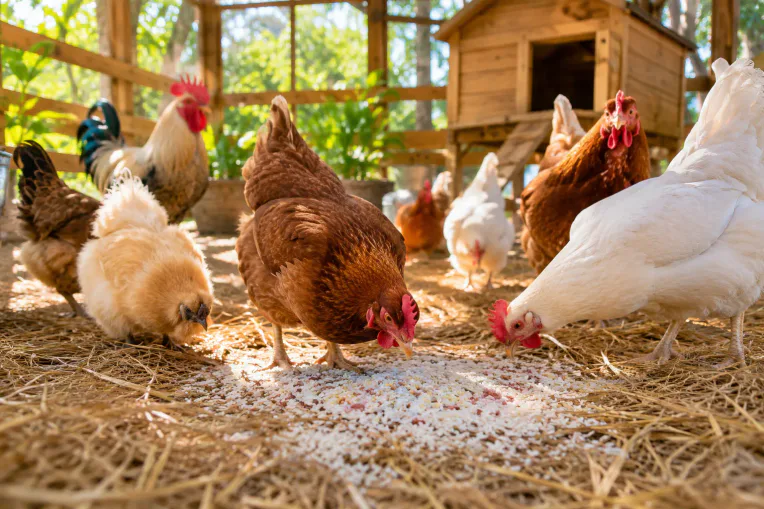
Quick Answer: Yes, chickens can safely eat rice, both cooked and uncooked. Rice is a nutritious, digestible grain that provides carbohydrates and energy for your flock. The old myth that uncooked rice expands dangerously in a chicken’s stomach is false, chickens have powerful digestive systems designed to process whole grains without issue.
Key Takeaways
- Rice is safe for chickens in both cooked and raw forms, despite persistent myths about expansion
- Cooked rice is easier to digest and preferred by most chickens, while raw rice is perfectly safe but harder
- Feed rice as a treat, making up no more than 10-15% of your chickens’ total diet
- Brown rice offers more nutrients than white rice, including fiber, vitamins, and minerals
- Baby chicks should avoid rice until at least 3-4 weeks old when their digestive systems mature
- Plain rice only,avoid fried rice, seasoned rice, or rice with salt, butter, or spices
- Mix with regular feed rather than replacing complete chicken feed, which provides essential nutrients
- Chickens love rice and will eagerly eat it, making it an excellent training treat or winter energy boost
- No digestive harm occurs from rice; chickens’ gizzards grind grains efficiently with the help of grit
- Moderation matters,too much rice can lead to nutritional imbalances and weight gain
Is Rice Safe for Chickens to Eat?
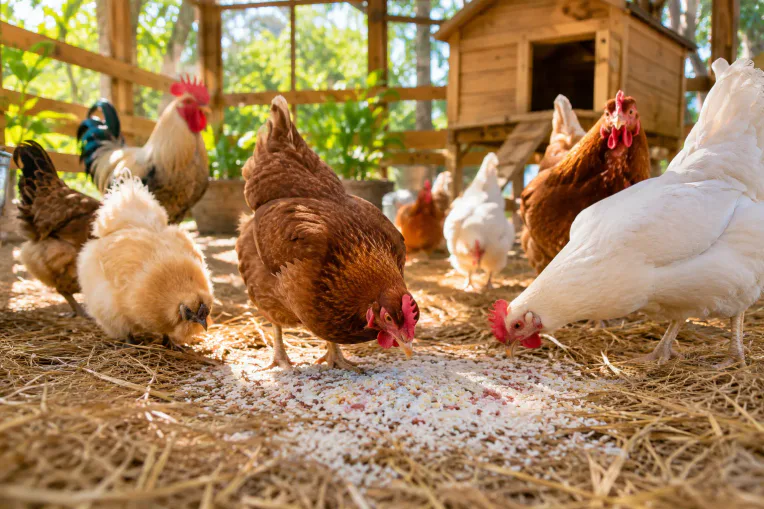
Rice is completely safe for chickens to eat and has been fed to poultry around the world for centuries. Chickens can digest rice without any health risks, and it provides a good source of carbohydrates and energy, especially during cold weather when birds need extra calories.
The concern about rice safety stems from an urban legend claiming that uncooked rice expands in birds’ stomachs and causes them to explode. This myth is entirely false. Chickens have a specialized digestive system that includes a muscular gizzard, which grinds food with the help of grit (small stones). This powerful organ easily breaks down whole grains, seeds, and even tougher materials.
Why rice is safe for chickens:
- Their digestive system evolved to handle whole grains and seeds
- The gizzard mechanically grinds rice before it reaches the stomach
- Rice absorbs water gradually, not explosively
- Chickens naturally regulate their food and water intake
- Poultry farmers worldwide use rice as a supplemental feed
The only real consideration is ensuring rice remains a treat rather than a dietary staple, since chickens need balanced nutrition from complete feeds.
Can Chickens Eat Cooked Rice vs Raw Rice?
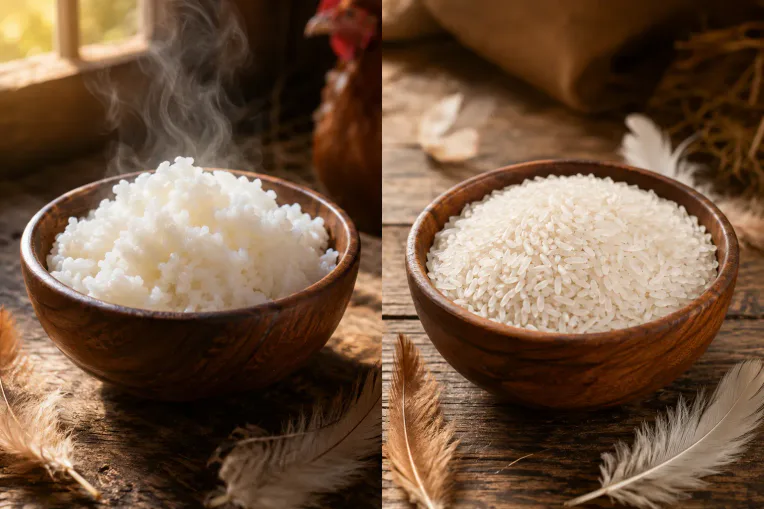
Chickens can safely eat both cooked and raw rice, though cooked rice is generally easier for them to digest and more appealing to most birds. Raw rice is harder and requires more work from the gizzard, but it poses no danger and many chickens enjoy pecking at the individual grains.
Cooked rice advantages:
- Softer texture that’s easier to swallow and digest
- More palatable for picky eaters and older hens
- Can be mixed with other foods or supplements
- Ideal for chickens recovering from illness
- Better moisture content for hydration
Raw rice advantages:
- Provides mental stimulation as chickens peck and forage
- Stores longer without spoiling
- No preparation time required
- Mimics natural foraging behavior for whole seeds
- Less messy in the coop
Choose cooked rice if you’re feeding leftovers or want to ensure easy digestion. Choose raw rice if you want a convenient, shelf-stable treat that encourages natural foraging behavior. Both options work well, and you can alternate based on what’s available.
Common mistake: Feeding rice that’s been sitting out too long. Cooked rice spoils quickly in warm weather and can develop harmful bacteria. Remove uneaten cooked rice within 2-3 hours, especially in summer.
How Much Rice Can I Feed My Chickens?
Rice should make up no more than 10-15% of your chickens’ total daily diet, with the remaining 85-90% coming from a nutritionally complete layer feed or grower feed. For an average laying hen eating about 1/4 pound of food per day, that translates to roughly 1-2 tablespoons of rice per bird.
Feeding guidelines by flock size:
- Small flock (3-5 chickens): 1/4 to 1/2 cup of rice total, 2-3 times per week
- Medium flock (6-12 chickens): 1/2 to 1 cup of rice total, 2-3 times per week
- Large flock (13+ chickens): 1-2 cups of rice total, 2-3 times per week
Think of rice as a treat or supplement, similar to how you’d feed scratch grains or mealworms. The bulk of your chickens’ nutrition must come from formulated feed that contains the right balance of protein (16-20%), calcium, vitamins, and minerals needed for health and egg production.
When to feed more rice:
- During winter months when chickens need extra calories for warmth
- As a training treat to encourage chickens to come when called
- Mixed with medications or supplements when treating illness
- To use up leftover plain rice rather than wasting food
When to feed less rice:
- If chickens are overweight or laying poorly
- During hot summer months when high-carb foods can cause heat stress
- If birds are ignoring their regular feed in favor of treats
- When chicks are still developing (under 8 weeks old)
Does Rice Expand in Chickens’ Stomachs?
Rice does not expand dangerously in chickens’ stomachs, and this persistent myth has been thoroughly debunked by poultry experts and veterinarians. While rice does absorb water and swell when cooked or soaked, this process happens gradually and poses no threat to birds.
The myth likely originated from wedding traditions where guests were discouraged from throwing rice at newlyweds due to concerns about wild birds. However, ornithologists have confirmed that birds regularly eat rice in agricultural areas without any ill effects.
Why the expansion myth is false:
- Rice expands to about 3 times its dry size, which is normal for grains
- Chickens’ crops (food storage pouches) easily accommodate swelling food
- The gizzard grinds rice into small particles before significant water absorption
- Chickens drink water separately and control their intake naturally
- Wild birds in rice-growing regions eat rice regularly without problems
A chicken’s digestive system is designed to handle seeds, grains, and other foods that absorb moisture. The crop holds and moistens food, the gizzard grinds it with muscular contractions and grit, and the intestines absorb nutrients. This process works efficiently with rice, corn, wheat, and other grains.
Real digestive concerns to watch for include impacted crops (from long fibrous materials like grass clippings), sour crop (from bacterial overgrowth), or blockages from non-food items. Plain rice causes none of these issues.
Can Chickens Eat Brown Rice or White Rice?
Chickens can eat both brown rice and white rice safely, though brown rice offers superior nutritional value with more fiber, B vitamins, magnesium, and phosphorus. White rice is still a good energy source but has had the nutritious bran and germ layers removed during processing.
Brown rice benefits:
- Higher fiber content aids digestion
- More B vitamins (thiamin, niacin, B6)
- Better mineral profile (magnesium, phosphorus, selenium)
- Contains more protein per serving
- Provides longer-lasting energy
White rice benefits:
- Easier to digest for chickens with sensitive stomachs
- Cooks faster and softer
- Less likely to spoil in hot weather
- More readily available as leftovers
- Chickens often prefer the texture
Both types work well as treats, and you can offer whichever you have available. If you’re buying rice specifically for your flock, brown rice provides better nutrition. If you’re using leftovers, white rice is perfectly acceptable.
Avoid these rice varieties:
- Fried rice (contains oil, salt, onions, and garlic that can harm chickens)
- Seasoned rice mixes (salt and spices are unhealthy for poultry)
- Rice with butter or sauces (too much fat causes digestive upset)
- Instant rice (often contains additives and preservatives)
Plain, cooked brown or white rice without any seasonings, oils, or additives is the safest choice for your flock.
What Happens If Chickens Eat Too Much Rice?
If chickens eat too much rice, they may experience nutritional imbalances, weight gain, and reduced egg production quality due to insufficient protein and calcium intake. Rice is high in carbohydrates but lacks the complete nutrition chickens need for optimal health.
Short-term effects of overfeeding rice:
- Reduced appetite for nutritionally complete feed
- Loose or watery droppings from excess carbohydrates
- Decreased interest in foraging for insects and greens
- Temporary energy spike followed by lethargy
Long-term effects of rice-heavy diets:
- Poor egg quality: Thin shells, smaller eggs, irregular laying
- Weight gain: Obesity leading to reduced mobility and health problems
- Protein deficiency: Feather loss, poor growth, weakened immune system
- Calcium deficiency: Weak bones, egg binding, skeletal problems
- Vitamin deficiencies: Particularly vitamin A, D, and E
Chickens need approximately 16-20% protein in their diet for proper health and egg production. Rice contains only about 7-8% protein, so a rice-heavy diet cannot meet their needs. Layer feed is specifically formulated with the right balance of nutrients.
Signs your chickens are getting too many treats:
- Ignoring their regular feed
- Weight gain or obesity (hard to feel keel bone)
- Soft-shelled or shell-less eggs
- Reduced egg production
- Dull, broken, or missing feathers
If you notice these signs, cut back on all treats including rice and ensure your flock has constant access to quality layer feed and fresh water.
Is Rice Bad for Chickens’ Digestive System?
Rice is not bad for chickens’ digestive systems and is actually quite easy for them to process when fed in appropriate amounts. Chickens’ digestive tracts are specifically designed to handle whole grains, and rice poses no unique challenges compared to corn, wheat, or other common poultry feeds.
The chicken digestive system works in stages:
- Beak and mouth: Chickens have no teeth, so they swallow food whole
- Crop: A pouch where food is stored and moistened for 8-12 hours
- Proventriculus: The true stomach where digestive enzymes are added
- Gizzard: A muscular organ that grinds food with grit (small stones)
- Intestines: Where nutrients are absorbed over several hours
- Cloaca: Where waste is expelled
Rice moves through this system smoothly. The gizzard’s powerful contractions, combined with grit, break rice down into digestible particles. The carbohydrates are then absorbed in the intestines, providing energy for daily activities and egg production.
Rice actually supports digestive health when:
- Fed in moderation as part of a varied diet
- Offered plain without harmful seasonings
- Given alongside proper grit for grinding
- Used to add variety and prevent boredom
- Mixed with other healthy treats like vegetables
Digestive problems occur when:
- Rice completely replaces balanced feed
- Chickens lack access to grit for grinding
- Spoiled or moldy rice is fed
- Rice is heavily seasoned with salt or spices
As long as you follow the 10-15% treat rule and provide grit, rice supports rather than harms digestive health.
Can Baby Chicks Eat Rice?
Baby chicks should not eat rice until they are at least 3-4 weeks old and their digestive systems have matured enough to handle treats beyond starter feed. Young chicks have delicate digestive tracts that require specially formulated starter feed with 18-20% protein for proper growth and development.
Why chicks need to wait:
- Their gizzards are small and not fully developed
- They may not have access to appropriately sized grit
- Treats can fill them up, reducing intake of essential starter feed
- Nutritional imbalances during growth cause permanent problems
- Chicks need higher protein than rice provides
Safe introduction timeline:
- 0-3 weeks: Starter feed only, no treats
- 3-4 weeks: Tiny amounts of soft treats (cooked rice, scrambled eggs)
- 5-8 weeks: Small portions of various treats, including rice
- 8+ weeks: Normal treat amounts (still limited to 10-15% of diet)
When you do introduce rice to older chicks, start with small amounts of cooked rice that’s easy to eat. Ensure they have access to chick-sized grit, which helps their gizzards grind food. Watch to make sure they continue eating their grower feed as their primary food source.
Better early treats for chicks (4+ weeks):
- Finely chopped hard-boiled eggs (protein boost)
- Tiny pieces of leafy greens
- Mealworms cut into small pieces
- Finely cracked grains mixed with their feed
Save rice for when your birds are fully grown and their nutritional needs are less critical for development.
Best Grains to Feed Chickens Instead of Rice
While rice is a good treat, several other grains offer better nutritional profiles for chickens and can be rotated to provide variety. The best alternative grains include whole corn, oats, wheat, and barley, each offering different benefits for your flock’s health.
Top grain alternatives to rice:
Whole corn:
- High energy content, excellent for winter feeding
- Chickens love the taste and will eagerly eat it
- Provides more calories per ounce than rice
- Best fed cracked or whole as scratch grain
- Can cause weight gain if overfed
Oats:
- Higher protein content than rice (11-15%)
- Good source of fiber for digestive health
- Contains beneficial B vitamins and minerals
- Can be fed whole, rolled, or as oatmeal
- Helps chickens feel full without excess calories
Wheat:
- Excellent protein source (12-14%)
- Rich in vitamins E and B complex
- Good for egg production support
- Can be fed whole or cracked
- More nutritionally complete than rice
Barley:
- High fiber content promotes healthy digestion
- Good protein levels (10-12%)
- Contains important minerals like selenium
- Chickens may need time to acquire the taste
- Best fed cracked or sprouted for easier eating
Quinoa:
- Complete protein with all essential amino acids
- Expensive but highly nutritious
- Good for molting chickens needing extra protein
- Feed in small amounts due to cost
Grain comparison table:
| Grain | Protein | Best For | Feeding Notes |
|---|---|---|---|
| Rice | 7-8% | Quick energy, winter warmth | Easy to digest, low protein |
| Corn | 8-9% | Cold weather, weight gain | High calories, feed moderately |
| Oats | 11-15% | Digestive health, protein boost | Very safe, hard to overfeed |
| Wheat | 12-14% | Egg production, balanced nutrition | Excellent all-around grain |
| Barley | 10-12% | Fiber, digestive support | May need to be cracked first |
Mixing strategy: Rotate different grains throughout the week to provide nutritional variety and prevent boredom. Monday might be rice, Wednesday oats, Friday wheat, and so on.
Do Chickens Like Eating Rice?
Yes, most chickens enjoy eating rice and will eagerly consume it when offered, though individual preferences vary by bird. Rice’s mild flavor and soft texture (when cooked) or satisfying crunch (when raw) appeal to chickens’ natural foraging instincts.
Chickens are omnivores with diverse tastes, and they typically enjoy:
- Cooked rice: Soft, easy to eat, and filling, most hens love it
- Raw rice: Provides pecking entertainment and mimics natural seed foraging
- Mixed rice: Combined with vegetables, mealworms, or other treats
Factors affecting rice preference:
- Individual personality: Some chickens are adventurous eaters, others are cautious
- Flock hierarchy: Dominant hens may eat first and consume more
- Previous exposure: Chickens familiar with rice eat it more readily
- Temperature: Cold rice is less appealing than room temperature
- Competition: Chickens eat more enthusiastically when others are eating
Signs your chickens enjoy rice:
- They run toward you when you bring it
- They make excited clucking sounds while eating
- They peck eagerly and compete for access
- They return to check for more after finishing
- They prefer rice over other treats when given choices
If your chickens won’t eat rice:
- Try cooking it first if you offered it raw (or vice versa)
- Mix it with favorite treats like mealworms or corn
- Ensure it’s fresh and not spoiled or moldy
- Offer it at different times of day
- Don’t force it, some chickens simply prefer other foods
Rice makes an excellent training treat because most chickens find it rewarding enough to come when called but not so irresistible that they ignore their regular feed.

Can Chickens Eat Leftover Fried Rice?
Chickens should not eat leftover fried rice because it typically contains ingredients that are harmful to poultry, including excessive salt, cooking oils, onions, garlic, and various seasonings. While plain rice is safe, the additives in fried rice can cause serious health problems.
Dangerous ingredients in fried rice:
Onions and garlic:
- Contain compounds that damage red blood cells
- Can cause anemia and weakness
- Even small amounts are toxic to chickens
- Present in most fried rice recipes
Excessive salt:
- Chickens need very little sodium
- Too much salt causes dehydration and kidney damage
- Can lead to salt poisoning and death
- Fried rice often contains high sodium levels
Cooking oils and fats:
- Cause digestive upset and diarrhea
- Lead to obesity and fatty liver disease
- Reduce nutrient absorption
- Make droppings messy and smelly
Soy sauce and seasonings:
- High sodium content
- May contain MSG and other additives
- Can include toxic spices
- Upset digestive balance
Other problematic additions:
- Processed meats (bacon, ham, sausage)
- Hot peppers or spicy seasonings
- Butter or margarine
- Artificial flavorings
Safe alternatives for leftovers:
If you have leftover plain white or brown rice without any seasonings, oils, or mix-ins, that’s perfectly safe to feed your chickens. Simply separate the plain rice from fried rice dishes and offer it as a treat.
Better leftover options for chickens:
- Plain cooked pasta
- Unseasoned cooked vegetables
- Plain scrambled eggs
- Cooked oatmeal without sugar
- Unseasoned cooked beans (in moderation)
When in doubt, remember that chickens thrive on simple, unseasoned foods. If you wouldn’t feed it to a baby due to salt or spices, don’t feed it to your chickens.
Will Rice Make Chickens Sick?
Plain rice will not make chickens sick when fed in appropriate amounts as part of a balanced diet. Rice is a safe, digestible grain that has been fed to poultry worldwide for generations without causing illness or health problems.
Rice is safe because:
- It contains no toxic compounds harmful to chickens
- The digestive system easily processes it
- It provides clean energy from carbohydrates
- It doesn’t cause allergic reactions in poultry
- It’s free from common chicken toxins
When rice might contribute to health problems:
Moldy or spoiled rice:
- Can contain dangerous mycotoxins
- Causes digestive upset and potential poisoning
- Always check rice for mold before feeding
- Discard any rice with off smells or visible mold
Replacing complete feed:
- Creates nutritional deficiencies over time
- Leads to poor egg production and health
- Results in protein and calcium shortages
- Weakens immune system function
Seasoned or prepared rice:
- Salt causes dehydration and kidney problems
- Oils and fats cause digestive issues
- Onions and garlic are toxic to chickens
- Spices can irritate digestive tract
Overfeeding rice:
- Causes obesity and related health problems
- Reduces intake of nutritionally complete feed
- May lead to fatty liver disease
- Can result in poor egg quality
Signs of illness to watch for:
- Lethargy or reduced activity
- Loss of appetite
- Watery or bloody droppings
- Labored breathing
- Swollen crop that doesn’t empty
- Sudden drop in egg production
If you notice these symptoms after feeding rice, remove all treats and provide only fresh water and layer feed. Contact a veterinarian if symptoms persist beyond 24 hours or worsen.
Prevention tips:
- Feed only plain, unseasoned rice
- Limit rice to 10-15% of total diet
- Store rice properly to prevent mold
- Remove uneaten rice within a few hours
- Ensure constant access to fresh water
- Provide balanced layer feed as the primary diet
Mixing Rice with Chicken Feed: Proper Ratios
When mixing rice with chicken feed, maintain a ratio of no more than 10-15% rice to 85-90% complete layer or grower feed to ensure your flock receives adequate nutrition. This ratio allows chickens to enjoy rice as a treat while still consuming the protein, calcium, vitamins, and minerals they need for health and egg production.
Practical mixing guidelines:
For daily feeding:
- 1 cup complete layer feed + 1-2 tablespoons rice per chicken
- Offer rice separately rather than pre-mixing to monitor intake
- Provide layer feed free-choice (always available)
- Offer rice as a treat 2-3 times per week
For scratch mix:
- 3 parts complete feed + 1 part rice and other grains
- Use as an afternoon treat, not morning meal
- Scatter on ground to encourage foraging
- Limit total scratch to 1-2 tablespoons per bird daily
For winter feeding:
- Increase rice slightly (up to 20%) for extra calories
- Feed rice in late afternoon for overnight warmth
- Combine with cracked corn for maximum energy
- Still maintain layer feed as primary food source
Mixing methods:
Separate feeding (recommended):
- Offer layer feed in feeders all day
- Give rice as a separate treat at specific times
- Easier to monitor how much rice chickens eat
- Prevents selective eating of only rice
Pre-mixed feeding:
- Combine rice with layer feed in a large container
- Ensures chickens eat both together
- Risk of chickens picking out preferred foods
- Harder to control exact ratios
Layered feeding:
- Put layer feed in feeder
- Sprinkle small amount of rice on top
- Chickens must eat through rice to reach feed
- Good for picky eaters avoiding their feed
Sample weekly feeding schedule:
- Monday: Layer feed only
- Tuesday: Layer feed + 1 tablespoon cooked rice per bird
- Wednesday: Layer feed only
- Thursday: Layer feed + mixed grains including rice
- Friday: Layer feed only
- Saturday: Layer feed + raw rice scattered for foraging
- Sunday: Layer feed only
Common mixing mistakes:
- Pre-mixing large batches that encourage selective eating
- Feeding rice every day instead of rotating treats
- Using rice to “stretch” expensive feed (causes malnutrition)
- Not adjusting for other treats given the same day
- Forgetting that kitchen scraps count toward the 10-15% treat limit
Remember that all treats combined, rice, scratch grains, mealworms, vegetables, and kitchen scraps, should total no more than 10-15% of your chickens’ daily food intake. If you’re feeding multiple treat types in one day, reduce the portion of each accordingly.
Frequently Asked Questions
Can chickens eat rice every day?
Chickens can eat rice every day in small amounts (1-2 tablespoons per bird), but it’s better to rotate different treats throughout the week to provide nutritional variety. Daily rice feeding is safe as long as it remains under 10-15% of total diet and doesn’t replace complete layer feed.
Is uncooked rice dangerous for chickens?
No, uncooked rice is not dangerous for chickens. The myth that raw rice expands and harms birds is false. Chickens’ gizzards easily grind raw rice into digestible particles, and wild birds regularly eat rice in agricultural areas without problems.
Can chickens eat rice with vegetables mixed in?
Yes, chickens can eat rice mixed with plain cooked vegetables like peas, carrots, or green beans. Avoid rice mixed with onions, garlic, excessive salt, oils, or seasonings. Plain rice and vegetable combinations make nutritious, safe treats.
Do I need to cook rice before feeding chickens?
No, you don’t need to cook rice before feeding chickens, both cooked and raw rice are safe. Cooked rice is softer and easier to digest, while raw rice provides foraging entertainment. Choose based on convenience and your chickens’ preferences.
Can chickens eat wild rice or specialty rice varieties?
Yes, chickens can eat wild rice, jasmine rice, basmati rice, and other specialty varieties as long as they’re plain and unseasoned. These varieties offer similar nutritional profiles to white and brown rice and are equally safe for poultry.
How long can cooked rice sit out for chickens?
Cooked rice should be removed within 2-3 hours in warm weather to prevent bacterial growth and spoilage. In cooler weather (below 50°F), cooked rice can remain available for up to 4-6 hours. Always remove uneaten cooked rice before nightfall.
Can rice help chickens gain weight?
Yes, rice can help underweight chickens gain weight due to its high carbohydrate content. Feed slightly larger portions of cooked rice (2-3 tablespoons per bird daily) along with protein-rich treats like scrambled eggs or mealworms for healthy weight gain.
Will feeding rice change egg taste or quality?
Feeding rice in appropriate amounts (10-15% of diet) will not change egg taste or quality. However, if rice replaces too much layer feed, egg quality may decline due to insufficient calcium and protein, resulting in smaller eggs with thinner shells.
Can chickens eat rice cakes or puffed rice?
Yes, chickens can eat plain rice cakes and puffed rice cereal in small amounts. Break rice cakes into smaller pieces for easier eating. Avoid flavored varieties with salt, sugar, or seasonings. These are less nutritious than plain cooked or raw rice.
Is rice good for chickens with diarrhea?
Cooked white rice can help firm up droppings in chickens with mild diarrhea, similar to its use in humans. Offer plain cooked rice along with fresh water and probiotics. If diarrhea persists beyond 24 hours or worsens, consult a veterinarian.
Can chickens eat sushi rice or sticky rice?
Chickens can eat plain sushi rice or sticky rice, but avoid any that’s been seasoned with rice vinegar, sugar, or salt. Plain sticky rice varieties are safe and chickens often enjoy the texture. Feed in the same moderate amounts as regular rice.
Do chickens need grit to digest rice?
Yes, chickens need access to grit (small stones or commercial chicken grit) to properly digest rice and other whole grains. The gizzard uses grit to grind food into digestible particles. Free-range chickens usually find natural grit, but confined birds need it provided.
Conclusion
Rice is a safe, nutritious, and enjoyable treat for chickens when fed properly as part of a balanced diet. Both cooked and raw rice are perfectly fine for your flock, and the old myth about rice expansion causing harm has been thoroughly debunked by poultry experts. Your chickens can benefit from rice’s energy-boosting carbohydrates, especially during cold weather, while enjoying the variety it brings to their diet.
The key to successfully feeding rice to chickens is moderation and balance. Keep rice and all other treats to 10-15% of your flock’s total diet, ensuring that high-quality layer feed remains their primary nutrition source. This approach provides the protein, calcium, vitamins, and minerals chickens need for optimal health and egg production while still allowing them to enjoy tasty treats.
Action steps for feeding rice to your chickens:
- Start with small amounts (1-2 tablespoons per bird) 2-3 times weekly
- Choose plain rice, either cooked or raw, brown or white, without seasonings
- Ensure your chickens have access to grit for proper digestion
- Monitor your flock’s weight and egg production quality
- Remove uneaten cooked rice within 2-3 hours to prevent spoilage
- Maintain layer feed as the primary food source at all times
- Rotate rice with other healthy treats for nutritional variety
Whether you’re using leftover rice from dinner or buying grains specifically for your flock, rice can be a valuable addition to your chicken-keeping routine. Your birds will appreciate the treat, and you’ll have the satisfaction of knowing you’re feeding them safely while reducing food waste. Just remember: rice is the side dish, not the main course, in your chickens’ daily menu.


