
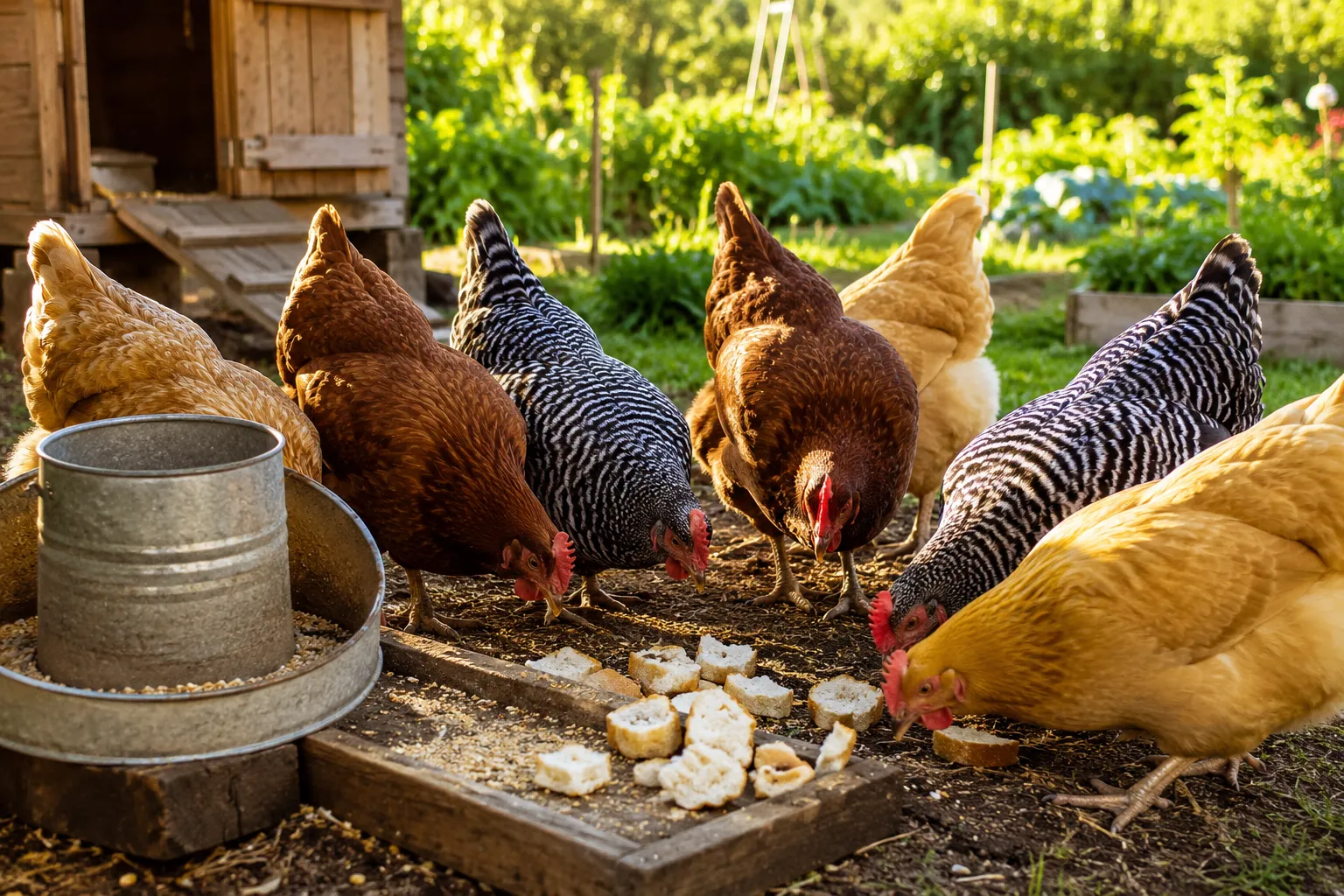
Quick Answer: Yes, chickens can eat bread in small amounts as an occasional treat, but it should never replace their regular feed. Bread offers minimal nutritional value and can cause health problems if fed in excess, including nutritional deficiencies, obesity, and crop impaction. Limit bread to less than 5% of their total diet and always ensure chickens have access to complete layer feed and fresh water.
Key Takeaways
- Bread is safe in moderation, Chickens can eat bread occasionally, but it lacks the protein, vitamins, and minerals they need for health and egg production
- The 5% rule, Treats including bread should make up no more than 5% of a chicken’s daily diet
- Moldy bread is dangerous, Never feed moldy bread to chickens; it contains toxins that can cause serious illness or death
- White vs. whole wheat, Whole wheat bread offers slightly more nutrients than white bread, but both are still nutritionally poor compared to proper feed
- Crop impaction risk, Dry bread can swell in the crop and cause blockages, especially if chickens don’t have adequate water access
- Baby chicks should avoid bread, Growing chicks need high-protein starter feed; bread can stunt their development
- Better treat alternatives exist, Vegetables, fruits, mealworms, and scratch grains provide far superior nutrition
- Egg quality can suffer, Excessive bread feeding may reduce egg size, shell quality, and yolk color
Is Bread Safe for Chickens to Eat?
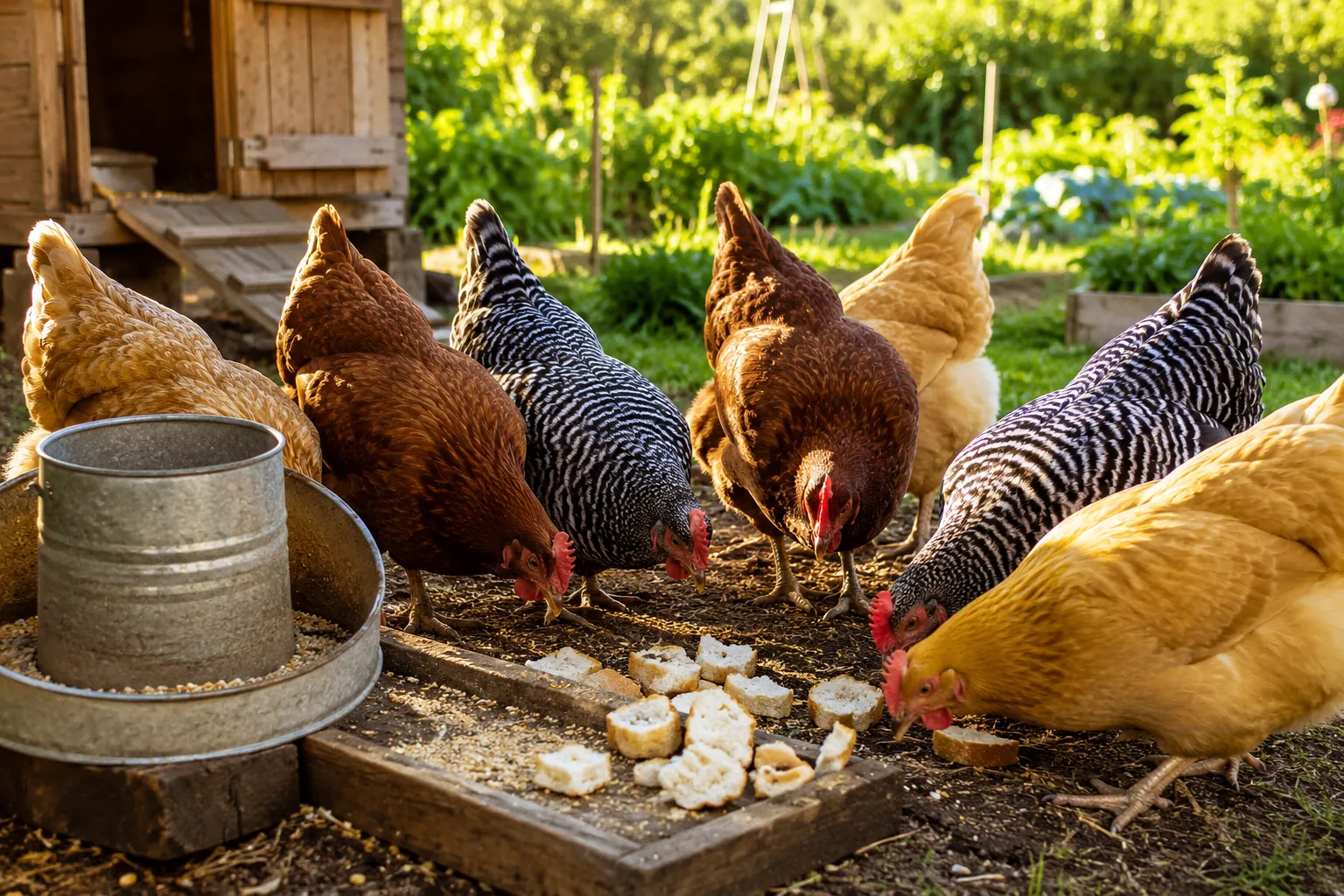
Bread is generally safe for chickens to eat in small quantities, but it’s far from an ideal food. Chickens can digest bread without immediate harm, and many backyard flock owners have fed bread scraps to their birds for generations. However, bread is essentially empty calories, it fills chickens up without providing the essential nutrients they need for optimal health, strong immune systems, and consistent egg production.
The main safety concerns with bread include:
- Nutritional displacement, When chickens fill up on bread, they eat less of their balanced layer feed
- Choking hazard, Large, dry pieces can get stuck in the throat or crop
- Mold toxicity, Even small amounts of mold produce mycotoxins that are harmful to poultry
- Digestive upset, Too much bread can cause sour crop or impaction
Choose bread as a treat if: You have small amounts of fresh bread scraps, your chickens already receive complete layer feed, and you limit bread to occasional offerings (once or twice per week at most).
Common mistake: Tossing entire loaves of stale bread into the coop and assuming chickens will self-regulate. Chickens will often gorge on tasty treats like bread, ignoring their nutritious feed.
What Happens If Chickens Eat Too Much Bread?
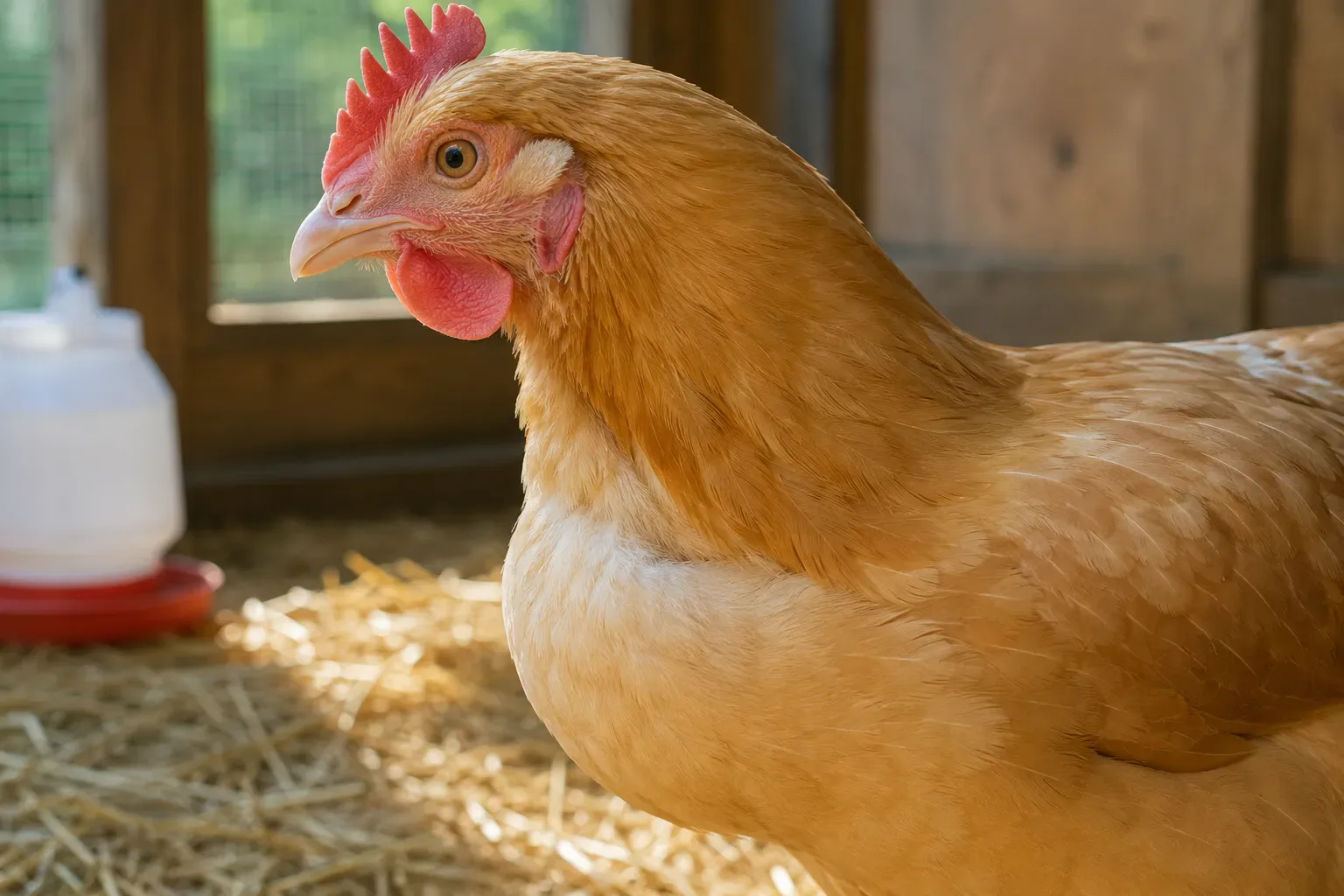
When chickens consume excessive amounts of bread, several health problems can develop over time. The most immediate concern is nutritional deficiency, bread lacks adequate protein (chickens need 16-20% protein for laying), calcium for strong eggshells, and essential vitamins like A, D, and E.
Short-term effects of overfeeding bread:
- Reduced egg production or smaller eggs
- Pale egg yolks (lack of pigment from proper nutrition)
- Weight gain and obesity, especially in less active breeds
- Lethargy and decreased foraging behavior
- Soft-shelled or thin-shelled eggs due to calcium deficiency
Long-term consequences:
- Fatty liver disease from excessive carbohydrates
- Weakened immune system leading to increased disease susceptibility
- Poor feather quality and delayed molting
- Reproductive problems in hens
- Shortened lifespan
A flock that regularly receives too much bread may appear healthy initially but will show declining condition over weeks or months. The birds may become overweight yet malnourished, a condition sometimes called “hidden hunger.”
Edge case: If chickens accidentally access a large amount of bread (such as a fallen bag of rolls), monitor them closely for 24-48 hours. Ensure they have plenty of water to help process the food and watch for signs of crop impaction like a hard, swollen crop that doesn’t empty overnight.
Can Chickens Eat Moldy Bread?
No, chickens should never eat moldy bread under any circumstances. This is one of the most important rules for chicken keepers. While chickens have relatively robust digestive systems, mold produces mycotoxins that can cause severe illness and death in poultry.
Dangers of moldy bread:
- Aspergillosis, A respiratory disease caused by inhaling Aspergillus mold spores
- Mycotoxicosis, Poisoning from mold toxins that damage the liver, kidneys, and immune system
- Sudden death, Some molds produce toxins potent enough to kill chickens within hours
- Chronic illness, Low-level mold exposure can cause ongoing health problems
Even if you remove visible mold from bread, microscopic mold threads (mycelia) penetrate throughout the entire piece. The “clean” parts are not safe.
What to do instead: Compost moldy bread in a hot compost pile where chickens cannot access it, or dispose of it in your regular trash. Never take the risk of feeding it to your flock, even if they’ve eaten moldy food before without obvious problems. Cumulative toxin exposure can cause delayed effects.
Bread vs. Chicken Feed: Nutritional Value Comparison
The nutritional gap between bread and proper chicken feed is substantial. Understanding this difference helps explain why bread should only be an occasional treat.

| Nutrient | White Bread | Whole Wheat Bread | Layer Feed |
|---|---|---|---|
| Protein | 8-9% | 12-13% | 16-20% |
| Calcium | Low (0.1%) | Low (0.2%) | 3.5-4.5% |
| Vitamins A, D, E | Minimal | Minimal | Fortified |
| Essential Amino Acids | Incomplete | Incomplete | Complete |
| Carbohydrates | High (50%+) | High (45%+) | Balanced |
Layer feed is scientifically formulated to meet all of a chicken’s nutritional requirements. It contains the right balance of protein for egg production, calcium for strong shells, and essential vitamins and minerals. Bread, by contrast, is primarily refined carbohydrates with minimal nutritional benefit.
The bottom line: Feeding bread is like giving chickens candy, it tastes good and provides quick energy, but it doesn’t support their health or productivity.
How Much Bread Can I Give My Chickens Per Day?
The general guideline for all chicken treats, including bread, is the 5% rule: treats should make up no more than 5% of a chicken’s total daily food intake. For most adult chickens, this translates to roughly one small handful of treats per bird per day, split among all treat types.
Practical bread portions:
- For a single chicken: One or two small pieces (about 1-2 tablespoons) of torn bread, 2-3 times per week maximum
- For a small flock (4-6 birds): Half a slice of bread, torn into small pieces, as an occasional treat
- For a large flock (12+ birds): 1-2 slices maximum, offered no more than twice weekly
Best practices for feeding bread:
- Tear into small pieces, Bite-sized portions prevent choking and help chickens eat slowly
- Soak in water, Moistened bread is easier to digest and less likely to cause crop problems
- Mix with nutritious foods, Combine small bread pieces with vegetables or scrambled eggs to improve overall treat nutrition
- Feed in the afternoon, Offer treats after chickens have eaten their fill of layer feed in the morning
- Remove uneaten portions, Don’t leave bread in the coop where it can attract pests or grow mold
Decision rule: If you’re feeding bread more than twice per week, or if your chickens are ignoring their layer feed in favor of waiting for treats, you’re feeding too much.
What Foods Should Chickens Never Eat?
While bread is safe in moderation, several common foods are toxic to chickens and should never be fed under any circumstances.
Toxic foods for chickens:
- Avocado, Contains persin, which causes heart damage and respiratory distress
- Chocolate, Theobromine is toxic to chickens, causing seizures and death
- Raw or dried beans, Contain phytohaemagglutinin, a toxin that can be fatal (cooked beans are safe)
- Green potatoes or tomatoes, Contain solanine, which causes neurological problems
- Onions and garlic, In large amounts, can cause anemia and taint egg flavor
- Apple seeds, Contain cyanide compounds (small amounts are usually harmless, but avoid feeding cores)
- Rhubarb leaves, High in oxalic acid, which is toxic
- Alcohol, Even small amounts can cause organ damage
- Salty foods, Excessive salt causes dehydration and kidney problems
- Sugary foods, Candy, cookies, and pastries promote obesity and nutritional imbalance
Moderately problematic foods:
- Citrus fruits, Some evidence suggests large amounts may reduce egg production
- Raw potato peels, Contain lower levels of solanine; best avoided
- Processed foods, Chips, crackers, and junk food offer no nutritional value
Common mistake: Assuming that because chickens will eat something, it must be safe. Chickens are opportunistic eaters and will consume many foods that are harmful to them.
Can Baby Chicks Eat Bread?
Baby chicks should not eat bread. Chicks have very different nutritional requirements than adult chickens, and bread can seriously compromise their growth and development.
Why bread is harmful to chicks:
- Insufficient protein, Chicks need 18-20% protein for proper growth; bread provides less than half that amount
- Developmental problems, Poor nutrition during the first 8 weeks can cause permanent skeletal issues, weak immune systems, and stunted growth
- Choking risk, Chicks have tiny throats and can easily choke on bread pieces
- Digestive upset, Chick digestive systems are delicate and not equipped to handle bread
What to feed chicks instead:
Chicks should receive chick starter feed exclusively for the first 8 weeks of life. This specially formulated feed contains:
- High protein (18-20%) for rapid growth
- Proper calcium-to-phosphorus ratios for bone development
- Essential vitamins and minerals
- Appropriate particle size for small beaks
After 8 weeks, you can begin introducing tiny amounts of appropriate treats like finely chopped greens or small mealworms, but bread should still be avoided until birds reach maturity at around 16-20 weeks.
Edge case: If you’re raising chicks and accidentally drop a small piece of bread in the brooder, remove it immediately. One tiny exposure likely won’t cause harm, but don’t make it a habit.
Best Healthy Treats for Backyard Chickens
Instead of bread, offer your chickens treats that provide genuine nutritional benefits. These alternatives will keep your flock healthier and more productive.
Top nutritious treats:
Vegetables (unlimited):
- Leafy greens (kale, lettuce, spinach, cabbage)
- Squash and pumpkin (including seeds)
- Cucumbers and zucchini
- Broccoli and cauliflower
- Carrots (shredded or cooked)
Fruits (moderate amounts due to sugar):
- Berries (blueberries, strawberries, raspberries)
- Melons (watermelon, cantaloupe)
- Apples (without seeds)
- Grapes (cut in half to prevent choking)
Protein-rich treats:
- Mealworms (dried or live)
- Black soldier fly larvae
- Scrambled eggs (excellent protein source)
- Cooked fish or meat scraps (unseasoned)
- Sunflower seeds (in moderation)
Grains and seeds:
- Scratch grains (cracked corn, wheat, oats)
- Cooked rice or pasta (plain)
- Oatmeal (cooked or raw)
- Quinoa
Special nutritional boosters:
- Crushed oyster shell (free-choice for calcium)
- Grit (helps digest treats and whole grains)
- Fresh herbs (oregano, parsley, basil)
- Fermented feed (improves gut health)
Treat feeding strategy: Rotate different treats throughout the week to provide variety and ensure balanced nutrition. For example, offer leafy greens on Monday, mealworms on Wednesday, and fruit on Friday.
Does Bread Cause Crop Problems in Chickens?
Yes, bread can contribute to crop problems in chickens, particularly crop impaction and sour crop. The crop is a pouch in a chicken’s throat where food is stored and softened before moving to the stomach. When chickens eat dry bread, especially in large quantities, it can create issues.
How bread causes crop impaction:
Dry bread absorbs moisture and swells significantly in the crop. If a chicken eats too much dry bread without adequate water, the bread can form a dense, dough-like mass that becomes too large to pass through to the stomach. This blockage is called crop impaction.
Symptoms of crop impaction:
- Crop feels hard and swollen
- Crop doesn’t empty overnight (a healthy crop should be nearly flat in the morning)
- Lethargy and loss of appetite
- Foul-smelling breath
- Difficulty breathing if the swollen crop presses on the windpipe
Sour crop risk:
When food sits in the crop too long due to impaction or slow digestion, it can ferment, leading to a yeast or bacterial infection called sour crop. Bread’s high carbohydrate content makes it particularly prone to fermentation.
Prevention strategies:
- Always provide fresh water when offering any treats
- Soak bread in water before feeding to prevent swelling in the crop
- Tear into small pieces so chickens can’t gulp large chunks
- Offer grit to help chickens grind food in their gizzard
- Feed bread in the afternoon after chickens have eaten their regular feed
- Limit quantity to prevent overconsumption
If you suspect crop impaction: Separate the affected bird, withhold food for 12 hours while providing water, and gently massage the crop to help break up the blockage. If the condition doesn’t improve within 24 hours, consult a veterinarian experienced with poultry.
Can Chickens Eat Whole Wheat Bread vs. White Bread?
Chickens can eat both whole wheat and white bread, but whole wheat bread is marginally better due to its slightly higher nutritional content. However, the difference is not significant enough to make either a good dietary staple.
Whole wheat bread advantages:
- Higher protein content (12-13% vs. 8-9%)
- More fiber, which aids digestion
- Contains more B vitamins and minerals
- Lower glycemic index, providing more sustained energy
White bread characteristics:
- Highly refined with most nutrients removed
- Higher in simple carbohydrates
- Less fiber
- Often contains more added sugar and preservatives
The reality: While whole wheat is technically better, both types of bread are still nutritionally inadequate for chickens. The protein content in whole wheat bread (12-13%) is still well below the 16-20% chickens need for optimal health and egg production.
Best practice: If you’re going to feed bread, choose whole wheat or multigrain varieties over white bread. Better yet, use the bread for your own consumption and feed your chickens more nutritious treats like vegetables, mealworms, or scratch grains.
Decision rule: Choose whole wheat bread if you have leftover scraps to share, but don’t purchase bread specifically to feed chickens. The money is better spent on quality layer feed or nutritious treats.
Why Do People Say Bread Is Bad for Chickens?
The reputation of bread as a poor chicken food stems from several legitimate concerns that experienced chicken keepers have observed over time. While bread isn’t toxic, its negative effects on flock health have led many experts to discourage its use.
Main reasons bread gets a bad reputation:
Nutritional displacement: This is the primary concern. When chickens fill up on bread, they consume less of their nutritionally complete layer feed. Over time, this leads to deficiencies in protein, calcium, vitamins, and minerals. The result is reduced egg production, poor shell quality, and compromised immune function.
“Chicken junk food” comparison: Bread to chickens is like candy to humans, it provides quick energy but no real nutrition. Chickens find bread palatable and will often choose it over healthier options, similar to how children might prefer cookies over vegetables.
Historical misuse: Many backyard chicken keepers, especially in previous generations, fed excessive amounts of bread and table scraps as a way to reduce feed costs. This practice often resulted in unhealthy, unproductive flocks, giving bread a lasting negative association.
Crop and digestive issues: As discussed earlier, bread’s tendency to swell and cause impaction has led to numerous health problems in backyard flocks, reinforcing the message that bread should be avoided.
Weight gain without nutrition: Bread’s high carbohydrate content can cause chickens to become overweight while simultaneously being malnourished, a particularly problematic combination for laying hens.
The balanced perspective: Bread isn’t poison, but it’s also not a beneficial food for chickens. The strong warnings against feeding bread are meant to prevent overfeeding and the health problems that result. Small amounts as an occasional treat are unlikely to cause harm in an otherwise well-fed flock.
Alternatives to Bread for Chicken Treats
If you’re looking for ways to use kitchen scraps or provide treats without the drawbacks of bread, many excellent alternatives exist that chickens love and that actually benefit their health.
Kitchen scrap alternatives:
- Vegetable trimmings, Carrot peels, broccoli stems, lettuce cores, and squash scraps are all excellent
- Fruit scraps, Apple cores (without seeds), melon rinds, and berry tops
- Cooked grain leftovers, Plain rice, pasta, or oatmeal (much better than bread)
- Egg shells, Crushed and baked, they provide calcium (chickens won’t recognize them as eggs)
Purchased treat alternatives:
- Dried mealworms, High in protein, chickens go crazy for them
- Scratch grains, A mix of cracked corn, wheat, and other grains
- Black soldier fly larvae, Excellent protein source
- Sprouted seeds, Wheat, barley, or lentil sprouts are nutritious and easy to grow
- Chicken-specific treat blocks, Compressed seeds, grains, and insects
Garden-based treats:
- Compost worms, Let chickens forage in your compost pile
- Weeds and grass clippings, Free and nutritious (ensure no pesticides)
- Garden vegetables, Overripe tomatoes, cucumbers, and squash
- Herbs, Fresh or dried oregano, parsley, thyme, and basil
Interactive treat ideas:
- Hanging cabbage, Suspend a whole cabbage for chickens to peck at
- Frozen fruit blocks, Freeze berries in water for a summer treat
- Treat balls, Fill with vegetables or mealworms for enrichment
- Scratch scatter, Toss scratch grains in bedding to encourage natural foraging behavior
Cost-effective strategy: Instead of buying bread to feed chickens, invest in a bag of scratch grains or dried mealworms. These last longer, provide better nutrition, and are often more economical per feeding than bread.
Will Feeding Bread to Chickens Affect Egg Quality?
Yes, regularly feeding bread to chickens can negatively impact egg quality in several measurable ways. While occasional small amounts are unlikely to cause noticeable changes, consistent bread feeding often leads to observable differences in eggs.
How bread affects egg quality:
Egg size reduction: Protein is essential for egg production. When chickens consume bread instead of protein-rich layer feed, they have less protein available for creating eggs. This often results in smaller eggs over time.
Shell quality problems: Calcium is crucial for strong eggshells. Bread contains minimal calcium, and when it displaces calcium-rich layer feed, hens may produce eggs with thin, weak, or soft shells. Some eggs may even be shell-less.
Pale yolk color: The rich, golden-orange color of egg yolks comes from carotenoids in a chicken’s diet, found in greens, insects, and quality feed. Bread lacks these pigments, so a bread-heavy diet produces pale, anemic-looking yolks that are less appealing and nutritious.
Reduced laying frequency: Hens need optimal nutrition to maintain consistent egg production. Poor nutrition from excessive bread consumption can cause hens to skip days or stop laying altogether.
Egg taste changes: While less common, some chicken keepers report that excessive bread feeding can subtly affect egg flavor, making eggs taste less rich or slightly “off.”
Timeline of effects: You won’t see immediate changes from feeding bread once or twice. However, if bread becomes a regular part of the diet (several times per week in significant quantities), egg quality typically begins to decline within 2-4 weeks.
Recovery: The good news is that egg quality usually improves within 1-2 weeks of returning to a proper diet of layer feed and nutritious treats. The effects of bread feeding are generally reversible if caught early.
For egg sellers: If you sell eggs from your backyard flock, maintaining high egg quality is essential for customer satisfaction. Avoid feeding bread and focus on layer feed supplemented with vegetables, insects, and other nutritious treats to ensure your eggs remain top quality.
Frequently Asked Questions
Can chickens eat bread crusts?
Yes, chickens can eat bread crusts just like the rest of the bread. Crusts are slightly harder and may take longer to soften in the crop, so tearing them into smaller pieces or soaking them in water is recommended. Crusts have the same nutritional limitations as the rest of the bread.
Is sourdough bread better for chickens than regular bread?
Sourdough bread is marginally better because the fermentation process makes it slightly more digestible and reduces some anti-nutrients. However, it still lacks the protein, calcium, and vitamins chickens need, so it should be treated as an occasional treat like any other bread.
Can chickens eat bread with seeds or nuts in it?
Yes, bread containing seeds or nuts is safe and actually slightly more nutritious than plain bread. The seeds and nuts add protein and healthy fats. However, avoid bread with chocolate chips, raisins in large quantities, or excessive salt.
How do I know if my chicken has crop impaction from bread?
Check your chicken’s crop (the bulge on the chest/throat area) first thing in the morning before feeding. A healthy crop should be nearly empty and soft. If it’s hard, swollen, and doesn’t empty overnight, this suggests impaction. The bird may also be lethargic and refuse food.
Can chickens eat toast instead of fresh bread?
Yes, chickens can eat toast. Toasting doesn’t significantly change the nutritional value, though it does make the bread drier and potentially more likely to cause crop issues. If feeding toast, break it into small pieces and ensure chickens have plenty of water.
Will bread attract rats to my chicken coop?
Yes, bread left in the coop can attract rodents. Any uneaten bread should be removed within an hour or two. Rats and mice are attracted to the carbohydrates and will quickly learn that your coop is a food source if bread is regularly available.
Can I feed my chickens bread dough or raw dough?
No, never feed raw bread dough to chickens. The dough can continue to rise in their crop, causing dangerous expansion and potentially fatal blockages. The yeast fermentation also produces alcohol, which is toxic to chickens. Only feed fully baked bread.
Is it okay to feed chickens bread every day in small amounts?
While small daily amounts are less harmful than large occasional portions, it’s still not recommended. Even small amounts of bread every day can gradually displace nutritious feed and lead to deficiencies over time. Limit bread to 2-3 times per week at most.
Can chickens eat bagels, muffins, or other bread products?
Chickens can eat these items in the same limited quantities as regular bread. However, many muffins and sweet bread products contain high amounts of sugar, which is even less healthy for chickens. Plain, whole-grain options are always better choices.
Do chickens need grit if they eat bread?
Yes, chickens need grit (small stones) to help grind food in their gizzard, especially when eating treats like bread. Free-range chickens usually find their own grit, but confined birds should have grit available in a separate container. Grit helps prevent digestive problems.
Can I use bread to train my chickens or get them to come when called?
While bread can work as a training treat because chickens find it tasty, better options include mealworms, scratch grains, or small pieces of fruit. These provide the same training motivation with better nutritional value.
Will feeding bread to chickens make them stop laying eggs?
Bread alone won’t immediately stop egg production, but excessive bread feeding that displaces nutritious feed can reduce or halt laying over time. Hens need proper nutrition to produce eggs consistently, and bread doesn’t provide the necessary protein and calcium.
Conclusion
Can chickens eat bread? Yes, but with important limitations. Bread is safe for chickens in small, occasional amounts, think of it as an infrequent treat rather than a regular part of their diet. The key is moderation and maintaining perspective on what bread actually provides: quick energy with minimal nutritional value.
The healthiest approach to feeding chickens is to prioritize complete layer feed as the foundation of their diet, making up at least 90-95% of their food intake. The remaining 5% can include treats, and while bread can occasionally fill that role, far better options exist. Vegetables, fruits, mealworms, and scratch grains all provide superior nutrition while still giving your flock variety and enrichment.
Action steps for chicken keepers:
- Audit your current feeding practices, If you’re feeding bread more than twice per week, scale back and replace it with more nutritious treats
- Never feed moldy bread, This is non-negotiable; moldy bread can kill chickens
- Prepare bread properly, Tear into small pieces, soak in water, and remove uneaten portions promptly
- Monitor your flock, Watch for signs of nutritional deficiency like reduced laying, pale yolks, or thin shells
- Invest in quality feed, A good layer feed is the best investment you can make in your flock’s health
- Explore better treats, Stock up on mealworms, scratch grains, and learn which kitchen scraps are truly beneficial
Remember that keeping chickens healthy and productive isn’t complicated, but it does require attention to their nutritional needs. Bread might be convenient and your chickens might love it, but it’s not doing them any favors. By choosing more nutritious treats and maintaining a diet based on quality layer feed, you’ll have a healthier, more productive flock that rewards you with beautiful eggs and years of enjoyment.
Your chickens depend on you to make good nutritional choices for them. When in doubt, skip the bread and reach for something that will actually benefit their health.


