
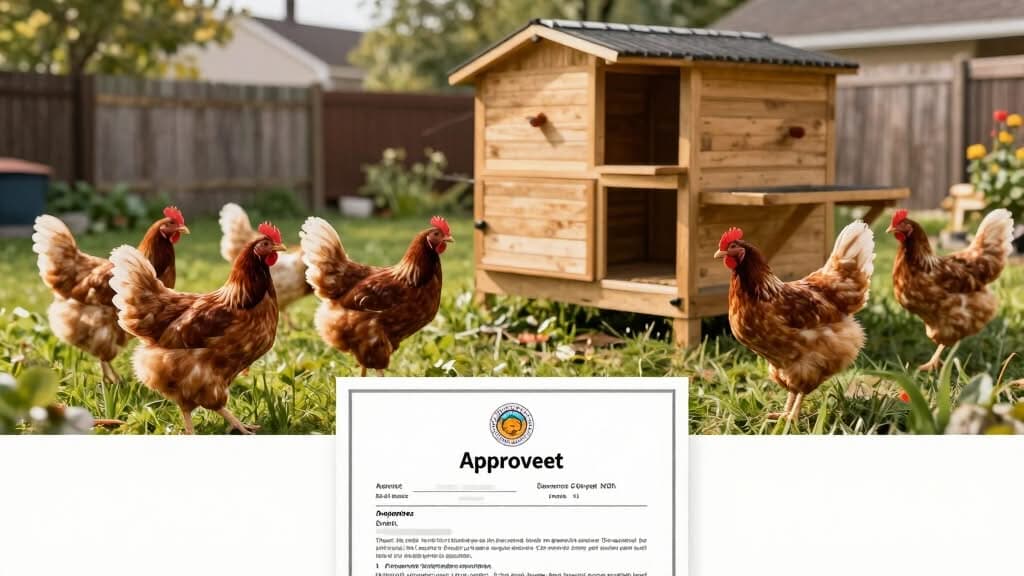
More than 13 million U.S. households now keep backyard chickens, but most cities require a permit before you can legally house even a single hen. Learning how to get a chicken permit approved means understanding your local zoning rules, preparing the right documents, and avoiding the common mistakes that lead to rejection. Most applications take 2-8 weeks to process, and approval rates vary widely depending on how well you address neighborhood concerns and meet specific coop requirements.
Key Takeaways
- Check zoning first: Residential chicken permits depend on local ordinances that vary by city, county, and even neighborhood HOA rules
- Prepare documentation early: Most applications require a site plan, coop specifications, neighbor notifications, and sometimes written consent
- Timeline matters: Permit approval typically takes 2-8 weeks, but incomplete applications can delay the process by months
- Costs range widely: Application fees run from $0 to $150+, with some jurisdictions charging annual renewal fees
- Neighbor relations are critical: Many denials stem from neighbor complaints about noise, odor, or property values rather than technical violations
- Renters need landlord approval: Tenant applications require written property owner consent in addition to municipal permits
- Appeal options exist: Most jurisdictions allow you to contest a denial through a formal appeal or variance request process
- Common mistakes are avoidable: Incomplete site plans, inadequate setback distances, and missing neighbor signatures cause most rejections
- Alternatives may apply: Some areas allow a small number of hens without a full permit, or offer temporary/seasonal permits
What Is a Chicken Permit and Do I Need One?
A chicken permit is a legal authorization from your local government that allows you to keep a specific number of chickens on residential property. Most cities and counties in the U.S. require this permit before you can legally house backyard poultry, even if you only plan to keep two or three hens for personal egg production.
Whether you need a permit depends on three factors:
- Municipal zoning laws: Cities classify residential zones differently, and many prohibit livestock (including chickens) without special permission
- Number of birds: Some jurisdictions allow 3-5 hens without a permit but require one for larger flocks
- Roosters vs. hens: Nearly all residential permits prohibit roosters due to noise complaints; hens-only flocks are more commonly approved
Check with your city’s planning department, zoning office, or animal control division to confirm local requirements. Even if your city allows chickens, your homeowners association (HOA) may have additional restrictions that override municipal permissions.
Who Qualifies for a Backyard Chicken Permit in Residential Areas?
Property owners in residential zones typically qualify if they meet minimum lot size requirements, maintain proper setbacks from property lines, and comply with flock size limits. Most cities approve permits for single-family homes on lots of at least 5,000-7,000 square feet, though requirements vary significantly.
Standard qualification criteria include:
- Ownership or landlord consent (renters must provide written authorization)
- Minimum lot size (commonly 5,000-10,000 sq ft)
- Setback requirements (coops must be 10-25 feet from neighboring homes)
- Maximum flock size (typically 4-10 hens, no roosters)
- Enclosed coop and run meeting structural standards
- No history of animal welfare violations or zoning complaints
Some cities exclude multi-family dwellings, condominiums, or properties within certain distances of schools or food establishments. If your property sits in a historic district or conservation area, additional restrictions may apply even if the base zoning allows chickens.
Choose a permit application if: You own or rent a single-family home with adequate yard space and no HOA restrictions. Skip the application if: Your property is in a zone explicitly prohibiting livestock, or your lot size falls below the minimum threshold (you may need a variance instead).
What Documents Do I Need to Apply for a Chicken Permit?
Most jurisdictions require a completed application form, a scaled site plan showing your property and proposed coop location, coop construction specifications, and proof of neighbor notification or consent. Gathering these documents before you apply significantly speeds up approval.
Core application documents:
- Application form: Available from your city’s planning or animal control department (often downloadable online)
- Site plan: A to-scale drawing (often 1 inch = 10 feet) showing property boundaries, existing structures, proposed coop location, and setback distances
- Coop specifications: Dimensions, materials, ventilation, predator-proofing, and square footage per bird (typically 2-4 sq ft per hen inside, 8-10 sq ft per hen in the run)
- Neighbor notification: Signed acknowledgment forms from adjacent property owners, or proof you mailed certified letters informing them of your application
- Property deed or lease: Proof of ownership or landlord consent letter if renting
- Application fee: Check or money order (fees range from $25-$150)
Some cities also require photos of your existing yard, a waste management plan describing how you’ll handle manure and bedding, or a signed affidavit promising to follow local animal welfare standards.
Common mistake: Submitting a hand-drawn site plan without measurements or scale. Use graph paper or a simple CAD tool, and include a north arrow, property dimensions, and distances from the coop to all property lines and structures.
How Long Does It Take to Get a Chicken Permit Approved?
Chicken permit approval typically takes 2-8 weeks from the date you submit a complete application. Processing time depends on your city’s workload, whether your application requires a public hearing, and how quickly neighbors respond to notification requirements.
Timeline breakdown:
- Initial review: 1-2 weeks for staff to check completeness and zoning compliance
- Neighbor notification period: 10-30 days (required in many jurisdictions to allow objections)
- Site inspection (if required): 1-2 weeks to schedule and complete
- Final approval: 1-2 weeks after all conditions are met
Applications that require a variance (because your property doesn’t meet standard setbacks or lot size) or a public hearing (common in cities with strict livestock rules) can take 2-4 months. Incomplete applications reset the clock, so double-check that you’ve included all required documents before submitting.
Pro tip: Call your zoning office before applying to ask about current processing times and whether any backlog exists. Some cities process permits within 10 business days during slow periods.
How Much Does a Chicken Permit Cost in My Area?
Chicken permit fees range from $0 in some rural counties to $150+ in urban areas with strict zoning oversight. Many cities charge a one-time application fee between $25 and $75, while others require annual renewal fees of $10-$50.
Cost factors to consider:
- Application fee: $0-$150 (one-time)
- Inspection fee: $0-$75 (if a site visit is required)
- Annual renewal: $0-$50 (varies by city; some permits are permanent)
- Variance or appeal fees: $100-$500 (if you need special approval)
- Coop construction: $200-$2,000+ (not part of the permit fee, but required for approval)
To find your local fee schedule, search “[your city name] chicken permit fee” or call your city’s planning department. Some municipalities waive fees for low-income applicants or offer discounts if you attend a backyard chicken keeping workshop.
Budget accordingly: If your city requires annual renewals, factor that recurring cost into your long-term chicken keeping budget. A $40 annual fee over 10 years adds $400 to your total cost of ownership.
Do I Need My Neighbors’ Approval to Get a Chicken Permit?
Most cities require you to notify adjacent neighbors about your permit application, but formal written approval is less common. Notification rules vary: some jurisdictions mandate signed consent forms from neighbors within 50-150 feet, while others only require proof that you informed them via certified mail.
Three common notification models:
- Consent required: You must obtain signatures from all adjacent property owners (or a majority within a certain radius)
- Notification only: You must inform neighbors, but they cannot veto your application unless they file a formal objection
- No neighbor involvement: The city processes your application without requiring neighbor contact (less common)
Even when consent isn’t legally required, proactively talking to neighbors improves your approval odds. Explain your plans, address concerns about noise and odor, and offer to share eggs. Many permit denials result from neighbor complaints during the notification period, so building goodwill early pays off.
Edge case: If a neighbor refuses to sign a consent form, ask your zoning office if you can proceed with a public hearing instead. Some cities allow the planning commission to override a single objection if your application otherwise meets all requirements.
Common Mistakes People Make When Applying for Chicken Permits
Incomplete site plans, inadequate setback distances, and missing neighbor signatures cause the majority of permit application rejections. Avoiding these errors saves weeks of resubmission delays and increases your approval chances significantly.
Top mistakes and how to avoid them:
- Vague coop location: Mark the exact coop placement on your site plan with measurements from property lines, not approximate sketches
- Ignoring setback rules: Measure twice before choosing a coop location; most cities require 10-25 feet from neighboring homes and 5-10 feet from property lines
- Skipping neighbor outreach: Even if not required, informing neighbors prevents surprise objections during the review period
- Underestimating coop size: Calculate square footage per bird carefully; overcrowding violations can lead to permit revocation
- Applying before reading the ordinance: Every city has unique rules about roosters, slaughter, free-ranging, and coop construction standards
- Forgetting landlord consent: Renters must include written property owner approval; verbal permission isn’t sufficient
- Submitting blurry photos: If photos are required, use clear, well-lit images that show your yard and proposed coop area
Real example: A homeowner in Portland, Oregon, had their application denied because their site plan showed a coop 8 feet from the property line, but the city required 10 feet. After moving the coop location on paper and resubmitting, approval came within two weeks.
Why Was My Chicken Permit Application Denied?
Permit denials typically result from zoning violations (inadequate setbacks, lot size, or flock limits), neighbor objections, incomplete documentation, or failure to meet coop construction standards. Understanding the specific reason for denial is the first step toward a successful reapplication or appeal.
Most common denial reasons:
- Setback violations: Coop too close to property lines or neighboring structures
- Lot size too small: Property doesn’t meet minimum square footage requirements
- Neighbor opposition: Formal objections filed during the notification period
- Incomplete application: Missing site plan, signatures, or required documents
- Coop doesn’t meet standards: Insufficient ventilation, square footage per bird, or predator-proofing
- HOA restrictions: Homeowners association prohibits chickens even though the city allows them
- Zoning classification: Property is in a zone that prohibits livestock without a variance
Your denial letter should specify the reason. If it doesn’t, call the issuing office and ask for clarification. Many denials are fixable: you can move the coop location, reduce flock size, or address neighbor concerns and reapply.
What to do next: If the denial is based on a technicality (wrong setback, missing signature), correct the issue and reapply. If it’s a zoning restriction, you may need to request a variance or conditional use permit, which involves a public hearing and higher fees.
How to Appeal a Rejected Chicken Permit Application
Most jurisdictions allow you to appeal a permit denial through a formal process that typically involves submitting a written appeal, paying an additional fee, and presenting your case at a public hearing before a zoning board or planning commission. Appeals must usually be filed within 10-30 days of the denial notice.
Standard appeal process:
- File a written appeal: Submit a letter explaining why the denial was incorrect or requesting a variance, along with any supporting documents
- Pay the appeal fee: Typically $100-$500, depending on your city
- Prepare your case: Gather evidence (photos, neighbor support letters, revised site plans) that addresses the denial reasons
- Attend the hearing: Present your case to the zoning board, answer questions, and respond to any objections
- Await the decision: The board will vote to uphold the denial, approve your permit, or approve with conditions
Tips for a successful appeal:
- Address every reason listed in the denial letter with specific solutions
- Bring letters of support from neighbors, especially those adjacent to your property
- Show photos of well-maintained coops in similar neighborhoods to demonstrate feasibility
- Offer to accept conditions (smaller flock, additional setbacks, annual inspections) to win approval
Edge case: If your appeal is denied, some cities allow a second-level appeal to the city council or a variance board. This process can take several more months and may require legal representation.
Can I Keep Chickens Without a Permit If I Only Have a Few?
Keeping chickens without a required permit is illegal in most cities and can result in fines, forced removal of your flock, and difficulty obtaining permits in the future. Even if you only have two or three hens, you must comply with local ordinances that mandate permits for any number of birds.
Risks of keeping unpermitted chickens:
- Fines: $50-$500 per day in some jurisdictions
- Forced removal: Animal control can seize your chickens
- Neighbor complaints: Unpermitted flocks are vulnerable to complaints that lead to enforcement action
- Difficulty getting future permits: Violations on record make future applications harder to approve
- Liability issues: If a chicken causes property damage or injury, lack of a permit can complicate insurance claims
Some cities do allow a small number of hens (typically 3-5) without a permit, but this is the exception rather than the rule. Always verify your local ordinance before assuming you’re exempt.
Better alternative: If the permit process seems burdensome, check whether your city offers a simplified registration or notification process for small flocks. Some jurisdictions allow you to keep a few hens by simply notifying animal control without a full permit application.
What Happens If I Get Chickens Before My Permit Is Approved?
Acquiring chickens before your permit is approved puts you at risk of fines, forced removal, and automatic permit denial if your application is still pending. Most cities consider this a zoning violation, and some will reject your application outright if they discover you’re already keeping chickens illegally.
Potential consequences:
- Automatic denial: Some jurisdictions deny permits to applicants who violate ordinances before approval
- Daily fines: Penalties accrue for each day you keep unpermitted chickens
- Removal orders: You may be required to rehome your flock immediately
- Delayed approval: Even if your permit is eventually approved, you may face back fines for the period you kept chickens illegally
What to do if you’ve already acquired chickens:
- Apply for the permit immediately if you haven’t already
- Contact your zoning office to explain the situation and ask about amnesty or expedited processing
- Temporarily rehome the chickens with a friend or farm until your permit is approved
- Pay any fines promptly to avoid escalating penalties
Pro tip: If you’re eager to start, use the permit waiting period to build your coop, prepare your yard, and attend local chicken keeping workshops. This demonstrates good faith and ensures you’re ready when approval comes through.
Chicken Permit vs Homestead Permit: What’s the Difference?
A chicken permit specifically authorizes backyard poultry keeping, while a homestead permit (also called an urban farm or agricultural permit) allows a broader range of activities including vegetable sales, beekeeping, small livestock, and sometimes limited commercial production. Homestead permits typically cost more, require larger lot sizes, and involve more extensive inspections.
Key differences:
| Aspect | Chicken Permit | Homestead Permit |
|---|---|---|
| Scope | Chickens only (sometimes ducks/rabbits) | Multiple livestock types, crops, sales |
| Lot size | 5,000-10,000 sq ft typical | 10,000-43,560 sq ft (1 acre) typical |
| Cost | $25-$150 | $100-$500+ |
| Inspections | Often none or one-time | Annual or biannual |
| Commercial activity | Prohibited (personal use only) | Limited sales allowed |
| Renewal | Often permanent or low-cost annual | Annual with higher fees |
Choose a chicken permit if: You only want a small flock for personal egg production and have a standard residential lot. Choose a homestead permit if: You plan to keep multiple types of animals, grow produce for sale, or operate a small-scale farm business.
Some cities don’t distinguish between the two and issue a single “urban agriculture” permit that covers all activities. Check your local ordinance to see which permit type applies to your plans.
Chicken Permit Requirements for Renters vs Homeowners
Renters must obtain written consent from their landlord or property owner in addition to the municipal chicken permit, while homeowners only need to satisfy city requirements. Landlord approval is typically documented through a signed letter or lease addendum that explicitly authorizes chicken keeping.
Renter-specific requirements:
- Landlord consent letter: Must include property address, permission to keep chickens, and landlord signature
- Lease addendum: Some landlords require a formal amendment to the lease specifying flock size, coop location, and maintenance responsibilities
- Damage deposit: Landlords may require an additional pet or livestock deposit
- Restoration clause: Agreement to remove the coop and restore the yard when you move out
Homeowner requirements:
- Property deed: Proof of ownership (some cities require this)
- HOA approval: If your property is in a homeowners association, you may need written HOA consent even if the city allows chickens
Common mistake: Renters sometimes assume verbal landlord permission is sufficient. Always get written authorization before applying for a permit, as most cities will reject applications without documented landlord consent.
Pro tip: If your landlord is hesitant, offer to sign a liability waiver, provide references from previous landlords, or agree to a trial period with a smaller flock. Some landlords warm to the idea when they realize they’ll receive fresh eggs.
Are There Alternatives to Getting a Full Chicken Permit?
Some cities offer simplified registration processes, temporary permits, or exemptions for small flocks that provide alternatives to full permit applications. Community garden plots, chicken co-ops, and shared flock arrangements also allow you to enjoy fresh eggs without navigating residential permit requirements.
Alternative options:
- Small flock exemption: A few cities allow 3-5 hens without a permit (verify your local ordinance)
- Temporary or seasonal permits: Some jurisdictions issue short-term permits for educational purposes or seasonal egg production
- Community garden coops: Join a community garden that maintains a shared flock; members contribute to care and share eggs
- Chicken co-op programs: Some urban farms and nonprofits offer “adopt-a-chicken” programs where you sponsor birds and receive eggs
- Neighbor partnerships: If your property doesn’t qualify, partner with a neighbor who has a permit and share coop space and eggs
- Variance or conditional use permit: If your property doesn’t meet standard requirements, apply for a special exception
Edge case: Some cities allow chickens on properties zoned for agriculture or rural residential without any permit. If you’re considering a move, research chicken-friendly jurisdictions before buying or renting.
Choose an alternative if: Your property doesn’t meet permit requirements, your landlord won’t consent, or you want to try chicken keeping before committing to a full setup.
Conclusion
Getting a chicken permit approved in 2026 requires careful attention to local zoning rules, thorough documentation, and proactive neighbor relations. Start by researching your city’s specific requirements, including lot size minimums, setback distances, and flock limits. Prepare a complete application with a scaled site plan, coop specifications, and neighbor notifications to avoid delays. Most permits are approved within 2-8 weeks if you submit all required documents and meet standard criteria.
If your application is denied, review the specific reasons and consider whether you can address them through a revised application or formal appeal. Renters must secure landlord consent before applying, and everyone should verify that HOA rules don’t override municipal permissions. Never keep chickens before your permit is approved, as violations can lead to fines and automatic denial.
Next steps:
- Contact your city’s planning or zoning department to confirm permit requirements and fees
- Measure your property to ensure you meet lot size and setback requirements
- Talk to your neighbors early to address concerns and build support
- Prepare your application documents including a detailed site plan and coop specifications
- Submit your application with all required fees and documentation
- Use the waiting period to build your coop and prepare your yard for your new flock
With the right preparation and attention to detail, most backyard chicken enthusiasts successfully navigate the permit process and enjoy fresh eggs from their own hens. Start your application today, and you could be welcoming your first flock in just a few weeks.
Frequently Asked Questions
How many chickens can I keep with a residential permit?
Most cities allow 4-10 hens per residential property, with the exact number depending on lot size. Roosters are typically prohibited in residential zones due to noise concerns. Check your local ordinance for specific flock limits.
Do I need a permit for ducks or quail in addition to chickens?
Many chicken permits cover ducks and sometimes rabbits or quail, but some cities require separate permits for different poultry species. Verify whether your permit includes other birds or if you need additional authorization.
Can my HOA block my chicken permit even if the city approves it?
Yes. Homeowners association rules can be more restrictive than city ordinances, and HOA covenants are legally binding. Check your HOA bylaws before applying for a city permit to avoid wasting time and fees.
What happens if I move to a new house after getting a chicken permit?
Chicken permits are property-specific, not owner-specific. You’ll need to apply for a new permit at your new address. The permit does not transfer with you when you move.
How often do I need to renew my chicken permit?
Renewal requirements vary by city. Some permits are permanent once approved, while others require annual renewal with fees ranging from $10-$50. Check your permit documentation for renewal terms.
Can I sell eggs from my backyard chickens if I have a permit?
Most residential chicken permits prohibit commercial activity, including egg sales. If you want to sell eggs, you may need a homestead permit, cottage food license, or agricultural exemption depending on your state and local laws.
What if my neighbor complains after my permit is approved?
Once approved, your permit protects you as long as you comply with all conditions (flock size, coop maintenance, noise limits). If a neighbor complains, animal control will inspect to verify compliance. Maintain good coop hygiene and follow all permit terms to avoid violations.
Do I need a building permit for my chicken coop in addition to a chicken permit?
Many cities require a separate building permit for structures over a certain size (often 100-200 square feet) or with permanent foundations. Check with your building department to determine if your coop design requires additional permits.
Can I keep chickens in my front yard if I have a permit?
Most ordinances require coops to be located in rear or side yards, not front yards. Setback requirements and visibility restrictions typically prohibit front-yard chicken keeping even with a valid permit.
What should I do if my city doesn’t allow backyard chickens at all?
Advocate for ordinance changes by attending city council meetings, gathering neighbor support, and presenting examples of successful chicken programs in similar cities. Some communities have successfully overturned chicken bans through organized advocacy efforts.
How do I prove my coop meets construction standards?
Submit detailed plans showing dimensions, materials, ventilation, and predator-proofing. Some cities require photos of the completed coop or a site inspection before final approval. Follow your city’s coop construction guidelines exactly as specified in the ordinance.
Can I appeal a permit denial if my neighbors object?
Yes. You can appeal and present evidence that your coop will not create the problems neighbors fear. Bring letters of support from other neighbors, photos of well-maintained coops, and offer to accept additional conditions to address concerns.