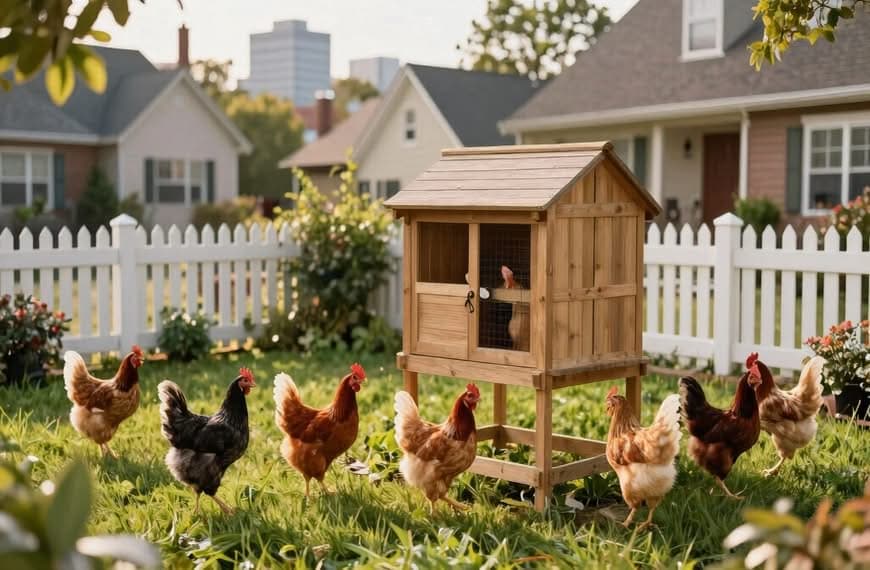
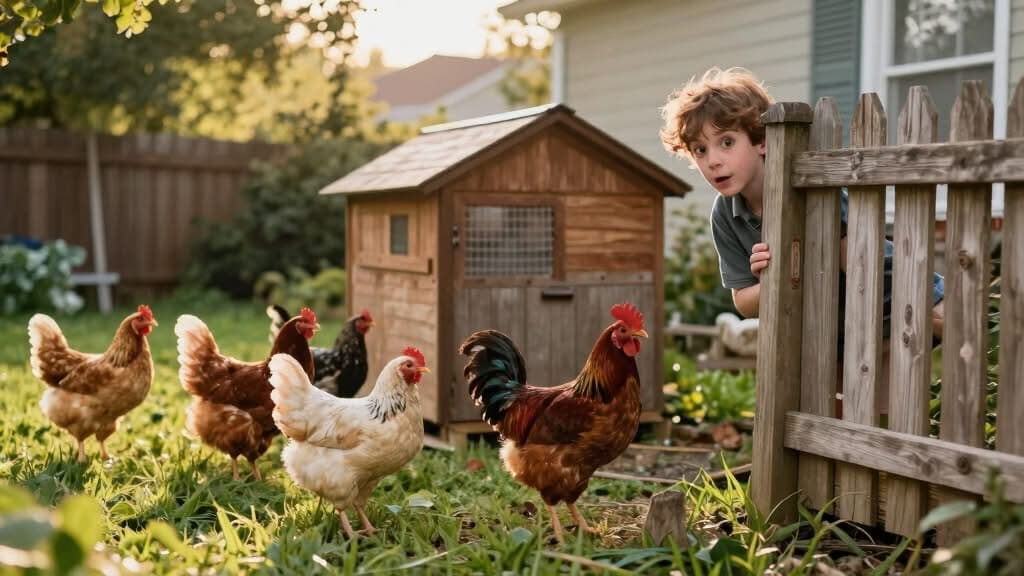
Most backyard chickens produce 40-70 decibels of sound during normal activity, roughly equivalent to human conversation and significantly quieter than a barking dog. Hens cluck intermittently throughout the day, with brief louder “egg songs” lasting 1-2 minutes after laying, while roosters (which many urban ordinances prohibit) crow at 90+ decibels and are the primary noise concern for neighbors.
Key Takeaways
- Hens without roosters produce 40-70 decibels during normal activity, quieter than most dogs and lawn equipment
- The “egg song” is the loudest hen sound, lasting 1-2 minutes after laying, typically reaching 60-70 decibels
- Chickens are quietest during mid-day and loudest in early morning (6-9 AM) when they’re most active
- Noise complaints are rare with hens alone but increase dramatically if you keep a rooster in residential areas
- Sound travels approximately 100-200 feet from your coop under normal conditions, less with barriers like fences and vegetation
- Quieter breeds include Buff Orpingtons, Cochins, and Australorps, while Mediterranean breeds tend to be more vocal
- Most residential ordinances allow hens but prohibit roosters specifically due to noise concerns
- Soundproofing strategies like strategic coop placement, vegetation barriers, and solid fencing can reduce neighbor impact by 30-50%
How Loud Are Backyard Chickens Compared to Dogs?
Backyard hens produce significantly less noise than most dogs. A hen’s typical clucking ranges from 40-60 decibels, while their loudest vocalizations (the egg song) reach 60-70 decibels. In contrast, a barking dog produces 80-90 decibels, and some breeds exceed 100 decibels during alert barking.
To put this in perspective:
- Normal hen clucking: 40-60 dB (similar to a quiet conversation)
- Hen egg song: 60-70 dB (comparable to a vacuum cleaner at distance)
- Barking dog: 80-100+ dB (similar to a lawnmower or blender)
- Rooster crow: 90-130 dB (as loud as a motorcycle or rock concert)
The key difference: Dogs often bark repeatedly for extended periods when triggered by passersby, delivery drivers, or other animals. Hens cluck intermittently and their loudest sounds (egg songs) last only 1-2 minutes per laying event. Most hens lay once per day, meaning neighbors hear brief louder sounds rather than sustained noise.
Common mistake: Many people worry about chicken noise before getting hens but don’t consider that their own air conditioning unit (60-70 dB), lawn equipment (90+ dB), or children playing outside produce comparable or greater sound levels that neighbors already tolerate.
Do Hens Make Noise Without a Rooster?
Yes, hens make noise without a rooster, but it’s considerably less and different in character. Hens produce soft clucking throughout the day as they forage, communicate with flock mates, and express contentment. The loudest sound a hen makes is the “egg song” after laying, which occurs regardless of whether a rooster is present.
What hens sound like without roosters:
- Soft clucking: Gentle, conversational sounds while foraging (40-50 dB)
- Contentment purrs: Low, rumbling sounds when dust bathing or roosting (30-40 dB)
- Egg songs: Louder, repetitive clucking after laying (60-70 dB for 1-2 minutes)
- Alert calls: Sharp, brief sounds when startled or warning flock mates (50-60 dB)
- Broody growls: Low, grumbling sounds if a hen goes broody (40-50 dB)
The rooster difference: Roosters crow at 90-130 decibels, often starting before dawn and continuing throughout the day. A single rooster may crow 12-15 times per day or more. This is why most urban and suburban ordinances specifically prohibit roosters while allowing hens.
Choose hens only if: You live in a residential neighborhood with close neighbors, your local ordinance prohibits roosters, or you want eggs without the noise and territorial behavior roosters bring.
What Does a Chicken Egg Song Sound Like?
The egg song is a distinctive, repetitive clucking pattern that sounds like “buk-buk-buk-buk-ba-GAWK” repeated several times in succession. It typically lasts 1-2 minutes and reaches 60-70 decibels, making it the loudest regular sound hens produce. Not all hens sing after laying, and some are much more vocal than others.
Egg song characteristics:
- Duration: Usually 1-2 minutes, occasionally up to 5 minutes
- Timing: Immediately after laying an egg, typically mid-morning to early afternoon
- Volume: 60-70 dB, roughly as loud as a vacuum cleaner heard from another room
- Pattern: Rhythmic, repetitive clucking with rising and falling pitch
- Contagious: One hen’s egg song often triggers other hens to join in briefly
Why hens sing: The exact reason remains debated, but theories include announcing the laying location to flock mates, expressing relief after laying, or an instinctive behavior to distract predators from the nest site.
Neighbor impact: Since most hens lay once per day and the song lasts only 1-2 minutes, neighbors typically hear this sound for a total of 5-10 minutes daily if you have 3-5 hens. Many neighbors don’t notice or mind this brief, predictable sound, especially if it occurs during mid-morning hours when ambient neighborhood noise is already present.
Are Chickens Louder in the Morning or All Day?
Chickens are loudest in the early morning (6-9 AM) when they first leave the coop, begin foraging, and start laying eggs. Activity and noise levels decrease significantly during mid-day heat, then pick up moderately in late afternoon before roosting. Hens are generally quiet from dusk until dawn.
Daily noise pattern:
Early morning (6-9 AM) – Loudest period:
- Hens exit the coop with excited clucking
- Foraging activity begins with frequent soft vocalizations
- Many hens lay eggs during this window, triggering egg songs
- Flock establishes daily pecking order with brief squabbles
Mid-day (10 AM-3 PM) – Quietest period:
- Hens rest in shade during hot weather
- Minimal vocalizations except occasional soft clucking
- Some late-morning egg songs from hens on delayed laying schedules
Late afternoon (3-6 PM) – Moderate activity:
- Foraging resumes as temperatures cool
- Increased clucking as hens move around the yard
- Occasional egg songs from late layers
Evening to dawn – Very quiet:
- Hens roost silently from dusk until dawn
- Minimal to no noise during nighttime hours
- Only disturbances are predator encounters (rare) or illness
Common mistake: Placing the coop directly under a neighbor’s bedroom window. Even though hens are quiet at night, their early morning activity will be most noticeable to neighbors who sleep late or work night shifts.
How to Keep Backyard Chickens Quiet for Neighbors
You can reduce chicken noise for neighbors by choosing quieter breeds, maintaining a healthy stress-free flock, providing adequate space and enrichment, and strategically placing your coop away from property lines. These strategies can reduce perceived noise by 30-50% compared to poorly managed flocks.
Effective noise reduction strategies:
Breed selection:
- Choose docile, quiet breeds like Buff Orpingtons, Cochins, or Australorps
- Avoid flighty Mediterranean breeds (Leghorns, Ancona) that tend to be more vocal
- Larger, heavier breeds are generally calmer and quieter than bantams
Flock management:
- Keep hens only (no roosters) in residential areas
- Maintain 3-6 hens for a stable, calm flock dynamic
- Avoid overcrowding (minimum 4 square feet per hen in coop, 10 square feet in run)
Environmental factors:
- Provide consistent feeding schedules to prevent hungry, agitated clucking
- Ensure adequate shade, water, and dust bathing areas to keep hens content
- Offer enrichment like perches, logs, and vegetation to reduce boredom-related noise
Physical barriers:
- Plant dense shrubs or install privacy fencing between coop and neighbor’s property
- Position coop 30+ feet from property lines when possible
- Use solid fencing rather than chain-link to absorb and deflect sound
Timing considerations:
- Keep coop doors closed until 7-8 AM on weekends to delay morning activity
- Provide automatic coop doors that open at a reasonable hour
- Ensure hens have food and water inside the coop so they’re not desperate to exit at dawn
Choose these strategies if: You have neighbors within 50 feet of your coop, live in a quiet suburban neighborhood, or want to proactively prevent complaints before they arise.
Can You Get Noise Complaints from Backyard Chickens?
Yes, you can receive noise complaints from backyard chickens, but complaints are relatively rare when you keep hens only (no roosters) and follow local ordinances. Most chicken-related complaints stem from roosters, excessive flock sizes, poor coop maintenance causing distress vocalizations, or violations of local regulations rather than normal hen sounds.
Complaint likelihood factors:
Low complaint risk:
- 3-6 hens only, no roosters
- Coop located 30+ feet from property lines
- Well-maintained, healthy flock
- Compliance with all local ordinances
- Proactive neighbor communication
High complaint risk:
- Keeping a rooster in residential areas
- Flocks larger than local limits (often 6-10 hens maximum)
- Coop directly adjacent to neighbor’s property
- Neglected birds that vocalize due to stress, hunger, or predator threats
- Surprise chickens without informing neighbors
Legal considerations: Most urban and suburban ordinances specifically address chicken noise by prohibiting roosters while allowing a limited number of hens. Violating these rules gives neighbors legal grounds for complaints. Even if you’re following regulations, persistent noise that disrupts neighbors’ “quiet enjoyment” of their property can sometimes trigger nuisance complaints.
Proactive approach: Inform neighbors before getting chickens, offer fresh eggs periodically, and address any concerns immediately. Most complaints can be prevented through good neighbor relations and responsible flock management.
Do Chickens Make Noise at Night?
Chickens are naturally quiet at night and make virtually no noise from dusk until dawn under normal circumstances. Hens roost silently once they settle for the evening and remain still and quiet until morning light triggers their activity. Nighttime noise only occurs when chickens are disturbed by predators, illness, or unusual disturbances.
Normal nighttime behavior:
- Hens roost motionless from dusk (around 8-9 PM in summer, 5-6 PM in winter) until dawn
- No vocalizations during normal sleep
- Minimal movement once settled on roosts
- Deep sleep state makes them vulnerable to predators but also completely quiet
Causes of nighttime noise:
Predator encounters:
- Raccoons, foxes, or opossums attempting to enter the coop
- Loud, distressed squawking and wing flapping
- Indicates serious security problem requiring immediate attention
Illness or injury:
- Respiratory infections causing labored breathing sounds
- Egg-binding distress (rare but serious)
- Usually accompanied by daytime symptoms
Environmental disturbances:
- Bright lights suddenly illuminating the coop
- Loud noises like fireworks or thunderstorms
- Usually brief reactions that settle quickly
Broody hen behavior:
- Broody hens may growl softly if disturbed on the nest at night
- Generally too quiet to disturb neighbors
Common mistake: Failing to secure the coop properly against predators. A single nighttime predator attack creates loud, prolonged distress calls that will definitely wake neighbors and indicates your flock is in danger.
What Chicken Breeds Are the Quietest?
The quietest chicken breeds are typically large, docile heritage breeds including Buff Orpingtons, Cochins, Australorps, and Brahmas. These breeds average 40-60 decibels during normal activity and tend to have calmer temperaments that result in less frequent vocalizations compared to flighty, active breeds.
Quietest breeds for residential areas:
Buff Orpingtons:
- Extremely docile and calm temperament
- Soft, infrequent clucking
- Moderate egg production (200-280 eggs/year)
- Excellent choice for beginners with close neighbors
Cochins:
- Very quiet, gentle birds
- Heavy, slow-moving breed that stays calm
- Moderate layers (150-180 eggs/year)
- Excellent for small urban yards
Australorps:
- Calm, friendly disposition
- Quiet vocalizations despite good egg production
- Excellent layers (250-300 eggs/year)
- Good balance of productivity and low noise
Brahmas:
- Gentle giants with quiet personalities
- Minimal vocalizations
- Moderate layers (150-200 eggs/year)
- Cold-hardy and docile
Wyandottes:
- Moderately quiet with calm temperament
- Good layers (200-240 eggs/year)
- Hardy and adaptable
Louder breeds to avoid in residential areas:
- Leghorns: Active, flighty, frequent vocalizations
- Ancona: Nervous, vocal Mediterranean breed
- Polish: Skittish due to limited vision from crest
- Most bantam breeds: Smaller birds tend to be more vocal and active
Choose quiet breeds if: You have neighbors within 50-100 feet, live in a noise-sensitive community, or want to minimize any potential for complaints while still enjoying fresh eggs.
How Far Away Can You Hear Chickens from Your Yard?
Under normal conditions, you can hear chickens clucking softly from approximately 50-100 feet away, while louder sounds like egg songs carry 100-200 feet depending on barriers, vegetation, and ambient noise levels. Sound transmission decreases significantly with solid fencing, dense plantings, and background noise from traffic or other neighborhood activity.
Sound transmission factors:
Distance and volume:
- Soft clucking (40-50 dB): Audible 50-100 feet in quiet conditions
- Normal activity (50-60 dB): Audible 100-150 feet
- Egg songs (60-70 dB): Audible 150-200 feet
- Distress calls (70-80 dB): Audible 200-300+ feet
Barriers that reduce sound:
- Solid wood fencing: Reduces sound transmission by 5-10 dB
- Dense vegetation (hedges, shrubs): Absorbs and deflects sound, reducing by 3-8 dB
- Buildings between coop and neighbors: Significant sound blocking
- Elevation changes: Sound travels farther downhill than uphill
Factors that increase sound travel:
- Open yards with no barriers: Sound carries farther
- Wind direction: Sound travels farther downwind
- Early morning quiet: Less ambient noise makes chicken sounds more noticeable
- Hard surfaces (concrete, buildings): Reflect and amplify sound
Practical example: If your coop is 30 feet from your property line and your neighbor’s house is another 40 feet beyond that (70 feet total), they’ll likely hear egg songs faintly but normal clucking will be barely noticeable, especially with a fence and some vegetation between properties.
Common mistake: Placing the coop in the corner of your yard closest to multiple neighbors’ properties, maximizing the number of people who can hear your flock rather than positioning it strategically to minimize sound impact.
Are Backyard Chickens Allowed in Residential Neighborhoods?
Backyard chickens are allowed in many residential neighborhoods, but regulations vary significantly by city, county, and homeowners association (HOA). As of 2026, most mid-sized and large U.S. cities permit hens with restrictions on flock size (typically 4-10 hens), coop setbacks from property lines (often 10-25 feet), and nearly universal rooster prohibitions in residential zones.
Common regulatory patterns:
Typical restrictions:
- Hen limits: Usually 4-10 hens maximum depending on lot size
- Rooster bans: Nearly universal in residential zones due to noise
- Setback requirements: Coops must be 10-25 feet from property lines and dwellings
- Coop standards: Enclosed, predator-proof structures required
- Permit requirements: Some cities require permits or registration
Where chickens are commonly allowed:
- Most cities over 100,000 population (with restrictions)
- Rural and agricultural zones (minimal restrictions)
- Suburban areas zoned for agricultural use
- Many progressive urban areas promoting urban agriculture
Where chickens face restrictions:
- HOA-governed communities (check CC&Rs)
- High-density urban apartments and condos
- Historic districts with strict zoning
- Some conservative suburban municipalities
Before getting chickens:
- Check municipal code (search “[your city] chicken ordinance”)
- Review HOA covenants, conditions, and restrictions (CC&Rs)
- Verify county regulations if outside city limits
- Confirm setback requirements for your lot size
- Determine if permits or inspections are required
Common mistake: Assuming chickens are allowed because neighbors have them. Regulations change, and existing flocks may be “grandfathered” under old rules. Always verify current ordinances before purchasing chickens.
Do Chickens Cluck Constantly or Just Sometimes?
Chickens cluck intermittently throughout the day rather than constantly. Hens produce soft vocalizations during active periods (morning and late afternoon) while foraging and interacting with flock mates, but they’re quiet during mid-day rest periods and completely silent at night. Total daily vocalization time for a typical hen is approximately 30-60 minutes spread across the day.
Vocalization patterns:
Normal clucking frequency:
- Active foraging: Soft clucks every 10-30 seconds
- Flock communication: Brief exchanges lasting 5-15 seconds
- Contentment sounds: Occasional purrs while dust bathing or roosting
- Egg songs: 1-2 minutes once per day per hen
Silent periods:
- Mid-day rest (often 2-4 hours)
- Nighttime roosting (8-12 hours)
- When hiding from perceived threats
- During extreme heat when conserving energy
Factors that increase vocalizations:
Normal causes:
- Feeding time excitement
- Free-ranging in new areas
- Flock establishing pecking order
- Egg laying and egg songs
Problem indicators (excessive noise):
- Hunger or thirst (empty feeders/waterers)
- Overcrowding and stress
- Predator pressure or threats
- Illness or injury
- Boredom from inadequate space or enrichment
What “constant” clucking indicates: If your chickens seem to cluck continuously rather than intermittently, something is wrong. Check for empty feeders, predator signs, overcrowding, or health issues. Healthy, content hens in a proper environment vocalize regularly but not constantly.
Common Mistakes That Make Chickens Noisier Than Normal
Several management mistakes cause chickens to vocalize more frequently and loudly than necessary. The most common errors include keeping roosters in residential areas, overcrowding, inconsistent feeding schedules, inadequate predator protection, and choosing high-strung breeds for urban settings.
Top noise-increasing mistakes:
1. Keeping a rooster:
- Single biggest noise mistake in residential areas
- Roosters crow 90-130 dB, often 12-15+ times daily
- Crowing starts before dawn and continues throughout the day
- Prohibited by most urban ordinances specifically due to noise
2. Overcrowding the flock:
- Less than 4 square feet per hen in coop or 10 square feet in run
- Increases stress, fighting, and distress vocalizations
- Creates constant low-level tension that manifests as more frequent clucking
3. Inconsistent feeding schedules:
- Hungry chickens vocalize loudly and persistently
- Empty feeders trigger agitated, repetitive clucking
- Creates morning desperation if food isn’t available when hens wake
4. Poor predator protection:
- Visible predators (hawks, neighborhood cats, dogs) cause alarm calls
- Nighttime predator attempts trigger loud distress vocalizations
- Chronic stress from feeling unsafe increases overall noise
5. Choosing vocal breeds:
- Mediterranean breeds (Leghorns, Anconas) are naturally more vocal
- Bantams tend to be more active and noisy than large fowl
- Flighty breeds vocalize more due to nervous temperament
6. Inadequate space and enrichment:
- Bored chickens vocalize more frequently
- Lack of foraging opportunities increases restless activity
- No dust bathing areas causes frustration and increased noise
7. Introducing new birds improperly:
- Sudden flock changes trigger loud pecking order disputes
- Integration conflicts create days of increased vocalizations
- Proper slow introductions minimize noise spikes
Fix these first if: Your chickens seem louder than expected or neighbors have mentioned the noise. Addressing these management issues typically reduces perceived noise by 30-50%.
Will My Neighbors Actually Complain About Chicken Noise?
Most neighbors will not complain about chicken noise if you keep hens only (no roosters), maintain a small flock (3-6 hens), follow local ordinances, and communicate proactively. Actual complaint rates are low for well-managed backyard flocks, with most issues arising from roosters, ordinance violations, or poor neighbor relations rather than normal hen sounds.
Factors that predict neighbor acceptance:
Low complaint probability:
- Proactive communication before getting chickens
- Offering fresh eggs to nearby neighbors
- Hens only, no roosters
- Flock size within local limits
- Coop well-maintained and odor-free
- Following all setback and permit requirements
- Friendly, responsive attitude to any concerns
Higher complaint probability:
- Surprise chickens without informing neighbors
- Keeping a rooster in residential areas
- Violating local ordinances (flock size, setbacks)
- Poor coop maintenance causing odors or pest issues
- Dismissive attitude toward neighbor concerns
- Pre-existing neighbor conflicts
Neighbor personality factors:
Likely to accept chickens:
- Families with children (educational interest)
- Gardeners and sustainability-minded neighbors
- Rural or agricultural background
- Pet owners who understand animal sounds
- People who appreciate fresh eggs
May be resistant:
- Noise-sensitive individuals (light sleepers, work-from-home)
- Neighbors with strong property value concerns
- People with bird phobias or allergies
- Those who value pristine, manicured yards
Proactive strategies:
- Talk to neighbors first: Explain your plans, address concerns, and gauge reactions before purchasing chickens
- Offer eggs regularly: Fresh eggs create goodwill and tangible benefits for neighbors
- Invite neighbors to meet the flock: Familiarity reduces fear and complaints
- Address concerns immediately: If a neighbor mentions noise, take it seriously and implement solutions
- Maintain excellent coop hygiene: Most complaints stem from odors and pests, not noise
Reality check: In most suburban neighborhoods with well-managed hen flocks, complaints are rare. The ambient noise from lawn equipment, air conditioners, dogs, and traffic typically exceeds chicken noise significantly. Proactive communication and responsible management prevent most issues before they arise.
How to Soundproof a Chicken Coop
You can reduce chicken coop noise transmission by 30-50% through strategic placement, physical barriers, sound-absorbing materials, and vegetation buffers. While true soundproofing is impractical and unnecessary for hens (which aren’t excessively loud), these modifications minimize sound reaching neighbors’ properties.
Effective sound reduction strategies:
Strategic placement:
- Position coop 30+ feet from property lines when possible
- Place coop on the side of your property farthest from neighbors’ living spaces
- Use your house or garage as a sound barrier between coop and neighbors
- Consider prevailing wind direction (sound travels farther downwind)
Physical barriers:
- Solid fencing: Wood privacy fences reduce sound by 5-10 dB compared to chain-link
- Sound-absorbing fence materials: Mass-loaded vinyl attached to fence (expensive but effective)
- Coop walls: Solid wood construction rather than wire-only runs
- Insulation: Adding insulation to coop walls provides minor sound dampening
Vegetation buffers:
- Dense evergreen hedges: Arborvitae, Leyland cypress create year-round sound barriers
- Layered plantings: Multiple rows of shrubs and small trees absorb more sound than single barriers
- Mature vegetation: Established plants provide better sound absorption than new plantings
- Strategic placement: Plant between coop and neighbor’s property line
Coop design modifications:
- Solid doors: Keep coop doors closed during early morning hours on weekends
- Ventilation placement: Position vents away from neighbor’s property
- Elevated coops: Raising coops 2-3 feet can direct sound downward rather than outward
- Covered runs: Roofed runs contain sound better than open-top designs
Management practices:
- Delayed morning release: Use automatic doors set to open at 7-8 AM rather than dawn
- Feeding inside: Provide morning food inside coop so hens aren’t desperate to exit
- Quiet hours: Keep hens confined during early morning weekend hours when neighbors sleep late
What doesn’t work:
- Foam panels inside the coop (chickens destroy them, minimal effect)
- Completely sealing the coop (creates dangerous ventilation issues)
- Acoustic blankets (impractical for outdoor structures, chickens damage them)
Realistic expectations: These strategies reduce sound transmission but won’t eliminate it entirely. The goal is minimizing neighbor impact, not creating a silent coop. For hens only (no roosters), basic strategies like solid fencing and vegetation buffers are usually sufficient.
Frequently Asked Questions
How loud is a chicken compared to a dog?
A chicken’s normal clucking (40-60 dB) is significantly quieter than a barking dog (80-100+ dB). Even the loudest hen sound, the egg song at 60-70 dB, is still 10-20 dB quieter than typical dog barking. Chickens also vocalize for shorter durations than dogs.
Can I keep chickens if my neighbor has complained about noise?
You can keep chickens if you’re following local ordinances, but you should address the complaint proactively. Ensure you have hens only (no roosters), implement sound reduction strategies, and communicate with the neighbor about specific concerns and your solutions. Offering fresh eggs can help improve relations.
Do chickens make noise when laying eggs?
Yes, most hens sing an “egg song” after laying, which is a loud, repetitive clucking pattern lasting 1-2 minutes. This is the loudest regular sound hens make, reaching 60-70 decibels. Not all hens sing, and some are much quieter than others.
What time of day are chickens noisiest?
Chickens are noisiest in early morning (6-9 AM) when they exit the coop, begin foraging, and lay eggs. Noise levels decrease significantly during mid-day and are moderate in late afternoon. Chickens are silent at night from dusk until dawn.
Will chickens wake up my neighbors?
Chickens may wake neighbors if your coop is very close to their bedroom windows and they’re light sleepers. However, most neighbors won’t be disturbed by hens if the coop is 30+ feet from property lines and you delay morning release until 7-8 AM on weekends using automatic doors.
Are bantam chickens quieter than standard chickens?
No, bantam chickens are typically not quieter than standard-sized chickens and are often more vocal. Smaller chickens tend to be more active, flighty, and nervous, which results in more frequent vocalizations. Large, docile breeds like Buff Orpingtons are usually quieter than bantams.
How can I tell if my chickens are too loud?
Your chickens are too loud if they vocalize constantly rather than intermittently, if neighbors mention the noise, or if you can clearly hear them from inside your house with windows closed. Excessive noise usually indicates a problem like hunger, predator stress, overcrowding, or illness.
Do chickens make noise when they’re happy?
Yes, happy chickens make soft, gentle sounds including quiet clucking while foraging, contentment purrs while dust bathing, and low murmurs while roosting. These sounds are typically 30-50 decibels and indicate a healthy, relaxed flock. Loud, repetitive, or distressed sounds indicate problems.
Can you train chickens to be quieter?
You cannot train chickens to be quieter through commands or conditioning, but you can manage their environment to reduce noise. Providing consistent food, adequate space, predator protection, and enrichment naturally reduces stress-related vocalizations. Choosing calm breeds also helps.
What’s the quietest way to keep backyard chickens?
The quietest approach combines docile breeds (Buff Orpingtons, Cochins), hens only (no roosters), a small flock (3-6 hens), strategic coop placement (30+ feet from neighbors), solid fencing, vegetation buffers, and delayed morning release (7-8 AM) on weekends.
Do chickens make noise in winter?
Chickens make less noise in winter because they’re less active due to shorter days and colder temperatures. They spend more time roosting quietly inside the coop and less time foraging. Egg production also decreases, resulting in fewer egg songs.
How do I respond to a neighbor’s chicken noise complaint?
Respond immediately and respectfully. Thank them for communicating, ask for specific concerns (time of day, particular sounds), verify you’re following local ordinances, implement sound reduction strategies, and follow up to confirm the issue is resolved. Offering fresh eggs can help rebuild goodwill.
Conclusion
Backyard chickens produce moderate, intermittent noise that’s significantly quieter than barking dogs and comparable to normal neighborhood sounds like conversation, air conditioners, and lawn equipment. Hens without roosters typically vocalize at 40-70 decibels during normal activity, with brief louder “egg songs” lasting 1-2 minutes after laying. The key to maintaining good neighbor relations is keeping hens only (no roosters), choosing calm breeds, following local ordinances, and implementing basic sound reduction strategies like strategic coop placement and vegetation barriers.
Take these steps to minimize chicken noise concerns:
- Verify local regulations before purchasing chickens and ensure you comply with flock size limits, setback requirements, and rooster prohibitions
- Choose quiet breeds like Buff Orpingtons, Cochins, or Australorps rather than flighty Mediterranean breeds
- Communicate proactively with neighbors before getting chickens, explaining your plans and addressing concerns
- Position your coop strategically at least 30 feet from property lines and away from neighbors’ bedroom windows
- Implement sound barriers including solid fencing and dense vegetation between your coop and neighbors’ properties
- Maintain a healthy flock with consistent feeding, adequate space, and predator protection to minimize stress-related vocalizations
- Consider delayed morning release using automatic coop doors set for 7-8 AM on weekends when neighbors may sleep later
Most neighbors won’t complain about well-managed hen flocks, especially when you maintain open communication and share fresh eggs. The reality is that backyard chickens are among the quieter pet and livestock options available, and with responsible management, they integrate seamlessly into residential neighborhoods while providing fresh eggs and educational opportunities for families.